

• Home
  • Industry
  • XHHW vs THHN Wire: A Comprehensive Guide to Selecting the Right Building Wire

XHHW vs THHN Wire: A Comprehensive Guide to Selecting the Right Building Wire

SIS wire
Navigating the world of electrical building wire can be complex, with various types designed for specific environments and applications. Two of the most common and sometimes confused types are XHHW and THHN wire. Choosing incorrectly can lead to code violations, safety hazards, or premature system failure. This guide will clearly explain the differences between XHHW and THHN, outlining their unique properties, applications, and helping you determine the right choice for your electrical project’s safety, compliance, and cost-efficiency.

What is XHHW Wire?

XHHW stands for Cross-linked Polyethylene High Heat-resistant Water-resistant. It is a robust electrical wire characterized by its cross-linked polyethylene (XLPE) insulation. This insulation material is known for its:
  • Excellent Thermal Stability:​ Can handle higher continuous operating temperatures.
  • Superior Moisture and Chemical Resistance:​ The XLPE insulation provides a strong barrier against water, humidity, and many corrosive elements.
  • Enhanced Durability:​ It is generally thicker and more resistant to abrasion and crushing compared to some other insulations.
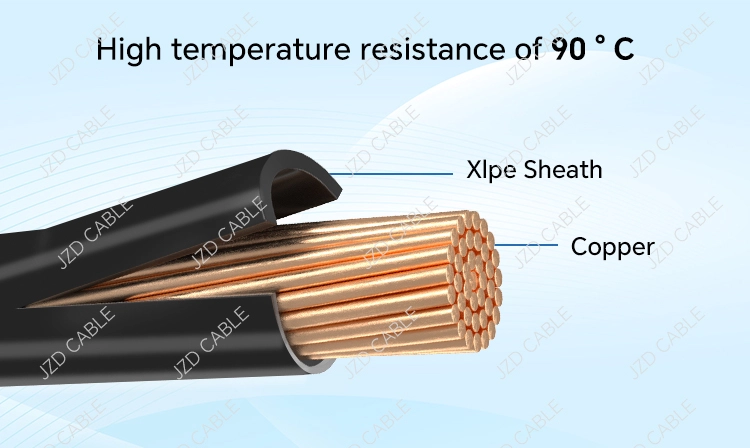
Key Ratings:​ Traditionally, standard XHHW is rated for up to 90°C (194°F) in dry locations​ and 75°C (167°F) in wet locations. However, the enhanced XHHW-2​ variant, now widely used, is rated for 90°C in both dry and wet locations.
xhhw wire

What is XHHW Cable Used For?

Thanks to its durable construction and environmental resistance, XHHW wire is specified for demanding applications:
  • Wet and Damp Locations:​ Conduit runs underground, in concrete slabs, or in outdoor locations where condensation or direct moisture is present.
  • Commercial and Industrial Buildings:​ As feeders, branch circuits, and in panel boards where reliability is critical.
  • Direct Burial (when specifically marked as XHHW-2, RHH/RHW-2, or USE-2):​ Suitable for underground runs without conduit.
  • High-Temperature Areas:​ Environments with elevated ambient temperatures where its 90°C rating is advantageous.

What is THHN Wire?

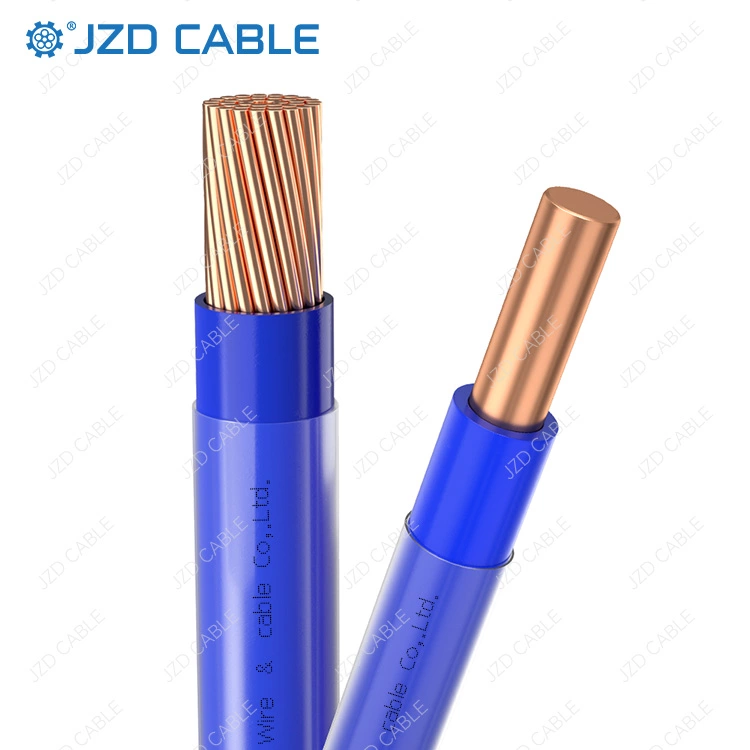
THHN stands for Thermoplastic High Heat-resistant Nylon-coated. It is an extremely popular and versatile type of building wire. Its construction features:
  • Thermoplastic (PVC) Insulation:​ A polyvinyl chloride insulation that is cost-effective and flexible.
  • Nylon Jacket:​ An outer nylon sheath that provides a smooth, tough surface for added abrasion resistance and makes the wire easier to pull through conduit.
  • Thinner Overall Diameter:​ Typically has a thinner wall than XHHW, allowing more wires to fit in a given conduit size (better conduit fill).
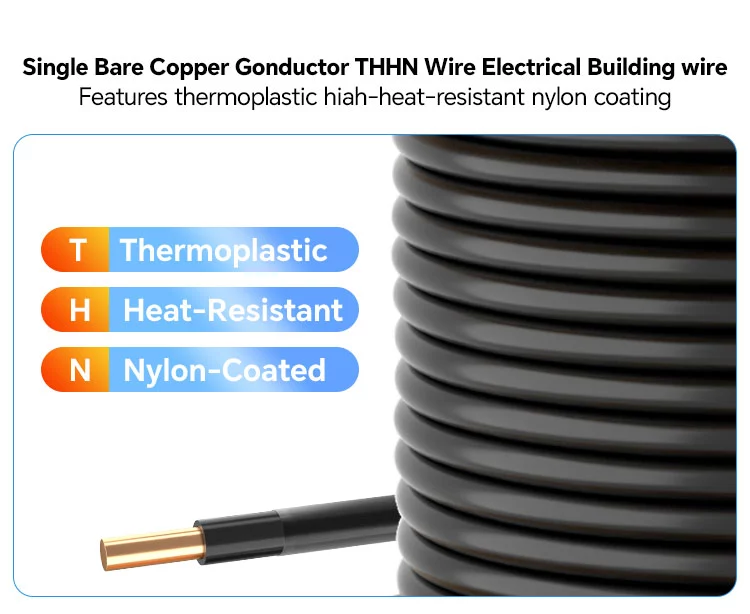
Key Ratings:​ THHN wire is commonly rated for up to 90°C in dry locations​ and 60°C (140°F) in wet or damp locations. Many THHN wires are also dual-rated as THWN-2, which upgrades the wet rating to 90°C.
thhn cable

What is THHN Wire Used For?

THHN/THWN-2 is the workhorse of the electrical industry due to its versatility and lower cost:
  • General Purpose Wiring:​ Inside conduit and cable trays in residential, commercial, and industrial dry locations.
  • Machine Tools and Control Circuits:​ Where flexibility and ease of installation are important.
  • Appliance and Equipment Wiring.
  • New Construction and Retrofits:​ Its ease of pulling makes it a favorite for electricians.

When to Use XHHW Wire vs. THHN Wire

The choice depends on the installation environment, code requirements, and specific project needs. The table below outlines the key decision factors.
Feature / Consideration
XHHW (XLPE Insulation)
THHN/THWN-2 (PVC/Nylon)
Best For Environment
Wet, Damp, Corrosive, or High-Temp areas.​ Superior long-term moisture/heat resistance.
Dry to moderately damp locations.​ General-purpose indoor use.
Key Advantage
Durability & Environmental Resistance.​ Thicker, tougher insulation for harsh conditions.
Cost & Installer-Friendly.​ More flexible, easier to pull, lower cost per foot.
Typical Wet Location Rating
75°C (XHHW) or 90°C (XHHW-2)
60°C (THHN) or 90°C (THWN-2)
Conduit Fill
Larger outside diameter may limit the number of wires in a conduit.
Smaller outside diameter allows for better conduit fill capacity.
Cost
Generally higher due to material and construction.
Generally more economical.
Ideal Use Case
Underground conduit, outdoor feeders, industrial plants, wastewater facilities, areas with chemical exposure.
Standard indoor branch circuits, commercial building wiring in dry locations, control panels.
Conclusoin:
  • Choose XHHW​ when the installation is in a harsh environment​ (persistent moisture, underground, corrosive, high ambient heat) and you need maximum long-term reliability and a 90°C wet rating.
  • Choose THHN/THWN-2​ for standard indoor, dry applications​ where cost, flexibility, and ease of installation are the top priorities. For damp indoor locations, ensure you are using the THWN-2​ rated version.

Why Choose JZD Cable?

Choosing the right wire is foundational to your project’s success. At JZD Cable, we stock a comprehensive range of high-quality XHHW, XHHW-2, and THHN/THWN-2 building wires​ in both copper and aluminum conductors, all manufactured to meet or exceed UL, CSA, and industry standards.
Our team of experts can help you navigate the specifications and ensure you get the most reliable and cost-effective cable for your specific job. Request a quote​ today and experience the JZD Cable commitment to quality and service.

Send inquiry

Cart
  • Your cart is empty Browse Shop
    Select the fields to be shown. Others will be hidden. Drag and drop to rearrange the order.
    • Image
    • SKU
    • Rating
    • Price
    • Stock
    • Availability
    • Add to cart
    • Description
    • Content
    • Weight
    • Dimensions
    • Additional information
    Click outside to hide the comparison bar
    Compare