


When specifying cables for your data center, factory automation, or any critical infrastructure, a seemingly small detail—the conductor class—can have an outsized impact on system reliability, safety, and total cost of ownership. Choosing between a Class 2 and a Class 5 conductor isn’t about picking a random option from a datasheet; it’s about matching the cable’s inherent design to its real-world operating environment.
At JZD Cable, we see the consequences of this mismatch too often: premature failures, unexpected downtime, and safety hazards. This guide will cut through the technical jargon and give you a clear, actionable comparison of Class 2 and Class 5 conductors (as per IEC 60228/GB/T 3956), focusing on their core differences and, most importantly, their critical impact on service life.
The Core Differences: It Starts with Structure
The most fundamental distinction lies in their construction, which dictates everything from flexibility to electrical performance.
1. Structure & Flexibility
- Class 2 Conductor (Stranded/Bunched): This conductor uses a compressed circular stranded structure. The individual strands are thicker and compacted during manufacturing, achieving a fill factor of over 0.9 (less than 10% air gaps). This results in a robust, mechanically stable conductor ideal for fixed installations like cable trays, conduits, or direct burial.
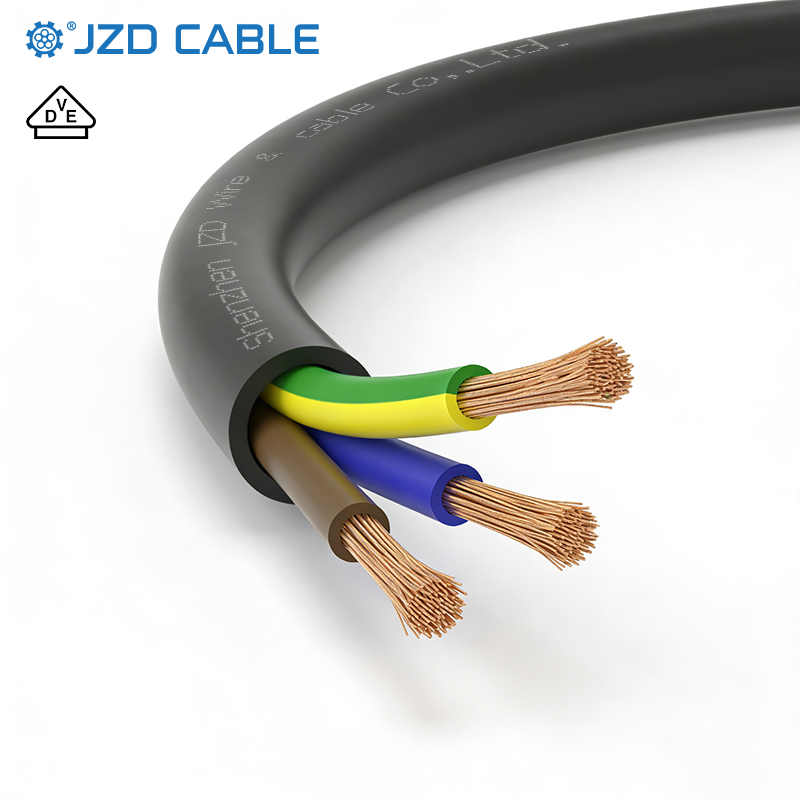
- Class 5 Conductor (Flexible): This is a soft conductor made from a larger number of much finer annealed copper strands. The annealing process and finer stranding give Class 5 its superior flexibility, making it perfect for applications requiring frequent movement or tight bends. However, this comes with a trade-off in raw mechanical strength.
2. Electrical Performance: Resistance & Heat
|
Parameter
|
Class 2 Conductor
|
Class 5 Conductor
|
Real-World Impact
|
|---|---|---|---|
|
DC Resistance
|
Lower (for the same cross-section)
|
Higher (by 5% to 15%)
|
Class 5 conductors inherently generate more heat under the same load.
|
|
Heat Dissipation
|
Better (thicker strands, smaller gaps)
|
Poorer (finer strands, more air gaps)
|
The structure of Class 5 can trap heat, accelerating insulation aging in high-temperature environments.
|
3. Mechanical & Installation
- Class 2: Superior tensile and crush strength. It maintains shape and stability in fixed routes, resisting deformation in cable trays or conduits.
- Class 5: Excellent bend and vibration resistance. It’s the go-to choice for moving parts, tight cabinet wiring, and connection to vibrating machinery. Its weakness is lower tensile strength and a higher risk of individual strand breakage if over-stressed.
4. Cost Considerations
- Class 2: Generally more cost-effective due to simpler manufacturing with thicker strands.
- Class 5: Higher cost, driven by the more complex process of drawing, annealing, and stranding a greater number of fine wires.
The Lifespan Verdict: Match for Longevity, Mismatch for Failure
Here’s the crucial takeaway many overlook: In their correctly matched application, both Class 2 and Class 5 conductors can deliver a reliable 20-30 year service life. The catastrophic shortening of lifespan occurs when they are mismatched.
Scenario 1: Matched Application = Optimal Life
- Class 2 in Fixed Installations (MV/LV power distribution, busways, static trays): Life is stable and excellent. Its lower resistance can even lead to marginally longer life due to reduced operating temperatures.
- Class 5 in Dynamic/Flexible Applications (equipment interconnect, drag chains, control cabinet wiring): Life meets specifications perfectly. Its superior fatigue resistance is a necessity here.
Scenario 2: Mismatched Application = Drastically Reduced Life (The Core Risk)
- Using Class 2 in a Dynamic Setting (e.g., in a robot arm or cable carrier): The thicker strands are prone to fatigue fracture from repeated bending. Failure can occur in months to a few years, not decades.
- Using Class 5 in a Fixed, High-Load Setting: Its higher resistance causes excess heat buildup. This overheats the insulation, accelerating thermal aging and potentially reducing lifespan by 30-50%.
- Connection/ Termination Risks with Class 5: The many fine strands require expert termination. Poor crimping or soldering can lead to strand oxidation, localized hot spots, arcing, and rapid connection failure.
Data Center & Industrial Selection for Maximum Life
1. Match the Scene for Lifetime #1 Priority
- Fixed Power Cables (UL 1072, UL 62/44 for Power): Always choose Class 2. Its current-carrying capacity, thermal performance, and strength ensure long-term reliability for main power runs.
- Cabinet Internal / Equipment Interconnect (UL 2464, Control/Signal Cables): Always choose Class 5. Its flexibility is essential for high-density patching, server racks, and connections to movable components.
- Drag Chains / Moving Machinery: Requires Class 5 or Class 6 (extra-flexible). This is non-negotiable for fatigue resistance.
2. Lifespan Optimization Tips
- For Class 2 in Fixed Installations: Do not exceed ampacity ratings, ensure adequate airflow for cooling, and avoid bending below the minimum recommended radius.
- For Class 5 in Flexible Routing: Strictly control the bending radius (≥ 8x cable diameter), minimize continuous flexing cycles, and use proper ferrules and connectors for termination.
- In High-Temp Environments (e.g., near hot aisles): Specify 105°C rated insulation. For Class 5 cables, consider derating the current load by 5-10% to compensate for its thermal characteristics.
Quick Selection Guide
|
Application Scenario
|
Conductor Class
|
Why?
|
|---|---|---|
|
Fixed Route, High Current (Power Mains, Distribution)
|
Class 2
|
Long Life, Cost-Effective, Better Current Carrying
|
|
Movement, Bending, Cabinet Wiring (Patch Panels, Robotics)
|
Class 5
|
Superior Flexibility, Fatigue-Resistant, Prevents Breakage
|
|
Mismatched Choice
|
Either Class
|
Risk: Halved Lifespan, Frequent Failures, Safety Hazards
|
Choosing the right conductor class is a fundamental decision for system integrity. It’s not just about the cable; it’s about ensuring decades of trouble-free operation for your capital investment.
Struggling with cable specification for your next project?
Let the experts at JZD Cable help. We provide more than just quality cables like ours at jzdcable.com; we provide the technical guidance to ensure they are the rightcables for your application. Contact us today for a free, professional consultation on your wiring needs.