

A reliable and efficient photovoltaic (PV) system depends on more than just high-quality solar panels and inverters. The cabling that connects all the components is the vital circulatory system, carrying generated power with minimal losses. Selecting the wrong cable type or installing it incorrectly can lead to significant efficiency drops, safety hazards, and system failures.
A common point of confusion is the use of YJV cables in solar installations. This guide will clarify exactly where and how to correctly specify and deploy YJV cables for optimal performance and safety in your PV project.
The Golden Rule: AC Side vs. DC Side
The first and most critical decision is understanding where to use which cable. PV systems are divided into two distinct electrical sides, each with unique demands.
- DC Side (Solar Panels to Inverter):
- Environment: Harsh, long-term outdoor exposure to UV radiation, extreme temperatures, and weather.
- Cable Type: PV DC Cable (e.g., H1Z2Z2-K).
- Why? These cables are specifically engineered with insulation and sheathing materials that offer superior resistance to sunlight, ozone, high temperatures (often up to 120°C), and mechanical stress. YJV cables are not suitable and must not be used here.
- AC Side (Inverter to Grid Connection Point):
- Environment: Typically from the inverter output to an AC combiner box, transformer, or the main grid connection point. May be indoors, in trenches, or on cable trays.
- Cable Type: Low-Voltage Power Cable (e.g., YJV series).
- Why? This is the correct application for YJV cables. The environment is generally less aggressive, and YJV’s design is perfectly matched for fixed installation and power distribution at grid-level AC voltages.
Application of YJV Cable: The YJV cable acts as the workhorse on the AC side, efficiently transporting the converted AC power from the inverter’s output to the point of interconnection with the electrical grid or local distribution network.
Key Selection Criteria for YJV Cables in PV Systems
Simply choosing a “YJV cable” is not enough. Proper specification is essential for safety, compliance, and long-term reliability.
1. Voltage Rating
- Select the cable’s rated voltage based on the system’s AC output voltage. For most low-voltage commercial and utility-scale PV systems, 0.6/1 kV YJV cables are the standard and most common choice.
2. Conductor Size (Cross-Section) and Core Count
- Core Count:
- For three-phase systems: 3-core or 3+1 core (with a separate Protective Earth conductor).
- For single-phase systems: 2-core.
- Conductor Size: This is calculated based on two main factors:
- Ampacity: The cable’s current-carrying capacity must continuously exceed the inverter’s maximum AC output current. A good practice is to size the cable so that it operates at 70-80% of its rated ampacity, providing a safety margin and accounting for ambient temperature.
- Voltage Drop: Over long cable runs, electrical resistance can cause a loss of voltage. To maximize energy yield, the voltage drop from inverter to connection point should typically be limited to 2-3%. A larger conductor size reduces resistance and minimizes this loss.
3. Construction and Protection
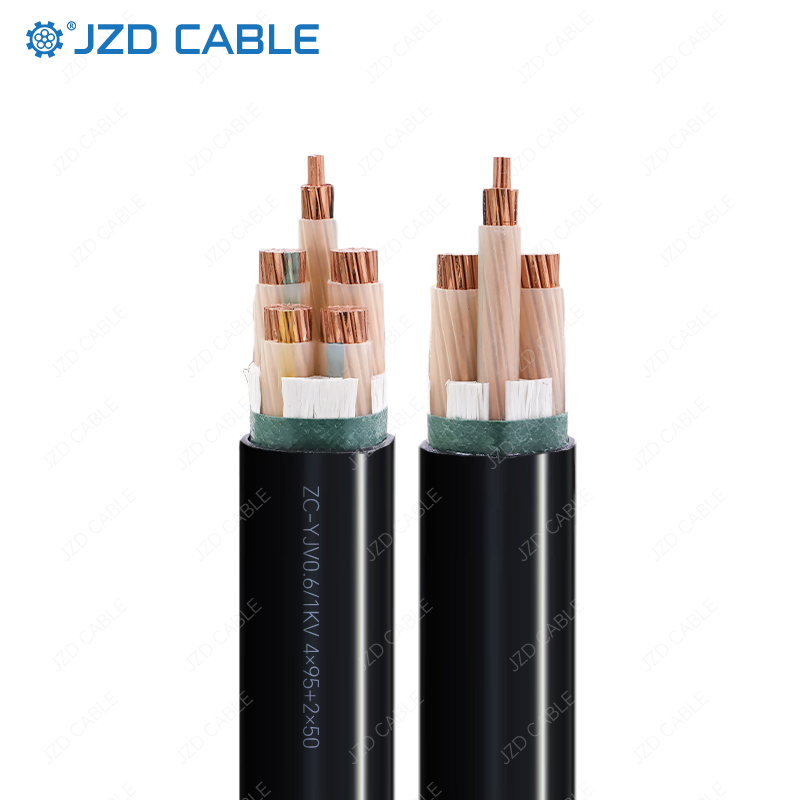
- Armoured (YJV22): Choose this variant for cables that will be directly buried underground, installed in cable trenches, or routed through areas with potential mechanical damage. The steel wire or tape armour provides crucial protection.
- Flame Retardant (ZC-YJV): Mandatory for installations within buildings, switch rooms, or any location with high fire safety requirements. It prevents or slows the spread of flame along the cable.
- Material Advantage: The cross-linked polyethylene (XLPE) insulation in YJV cables offers excellent thermal resistance (allowing a long-term operating temperature of around 90°C), making it durable for sustained operation.
4. Installation Method
- Follow engineering specifications for the chosen installation method—whether in conduits, cable ladders/trays, direct burial, or ducts. Always adhere to the specified minimum bending radius to avoid damaging the cable’s internal structure.
Critical “Do Not” List: Avoiding Common Mistakes
- NEVER Use on the DC Side: This cannot be overstated. YJV cable materials are not designed for prolonged, direct UV exposure and the specific environmental stresses of the DC side. Using it here will lead to premature insulation degradation and serious safety risks.
- NEVER Mix Cables: Within the same AC circuit, do not splice or mix cables of different types, sizes, or from different manufacturers. Inconsistencies can create points of failure and overheating.
- Separate DC and AC Cables: During installation, always route DC (PV) cables and AC (YJV) cables in separate conduits, trays, or with adequate spacing. This prevents electromagnetic interference and reduces potential fault hazards.
- Follow Local Codes: All selections and installation practices must comply with national and local electrical codes, as well as PV system design standards (e.g., IEC, NEC).
Conclusion
YJV cables are a robust, reliable, and cost-effective solution for the AC output side of a photovoltaic system. The key to success is disciplined application: use specialized PV DC cables for the solar array and correctly specified YJV cables for the grid-connection pathway. By carefully selecting the right voltage rating, conductor size, construction (armoured or flame retardant), and following strict installation guidelines, you ensure that your PV system operates safely, efficiently, and reliably for its entire lifespan.
Choosing the right partner for your cabling needs is just as crucial. At JZD Cable, we provide high-quality, standards-compliant YJV cables and expert technical support to help you design and implement a flawless PV power connection. Contact our team to discuss the specifications for your next solar project.