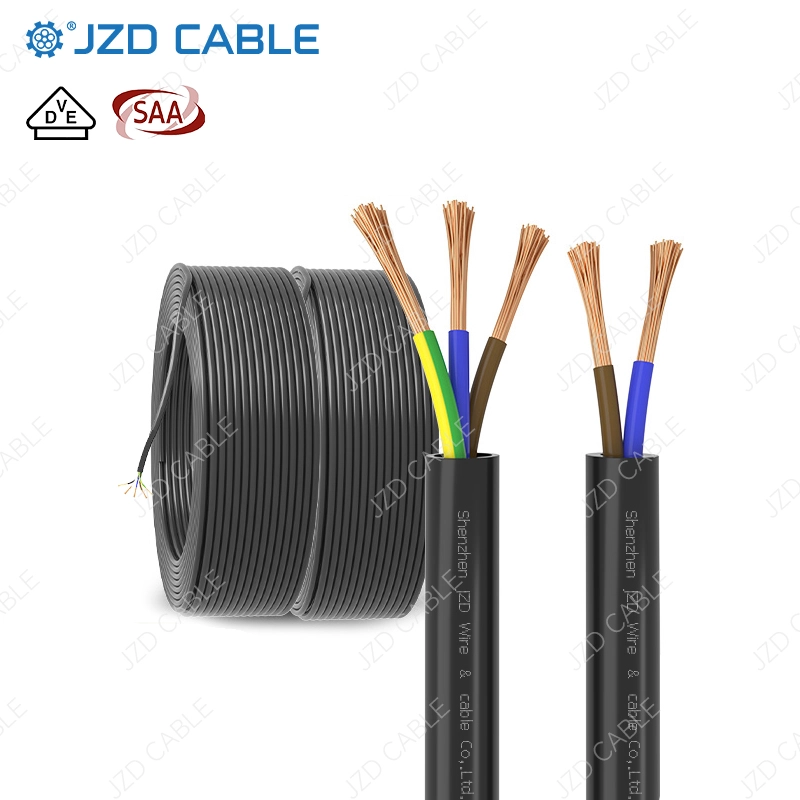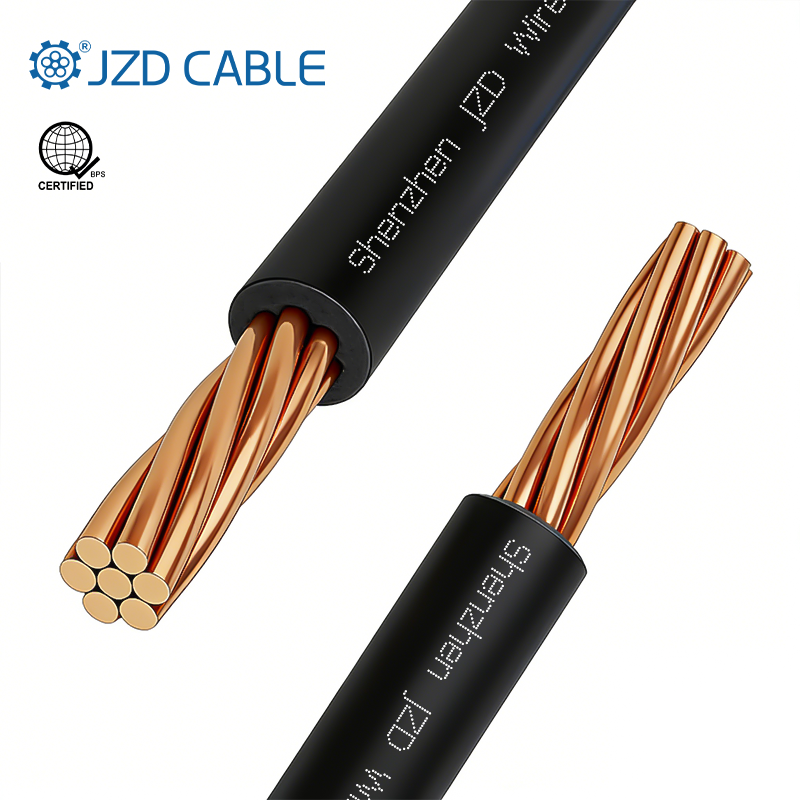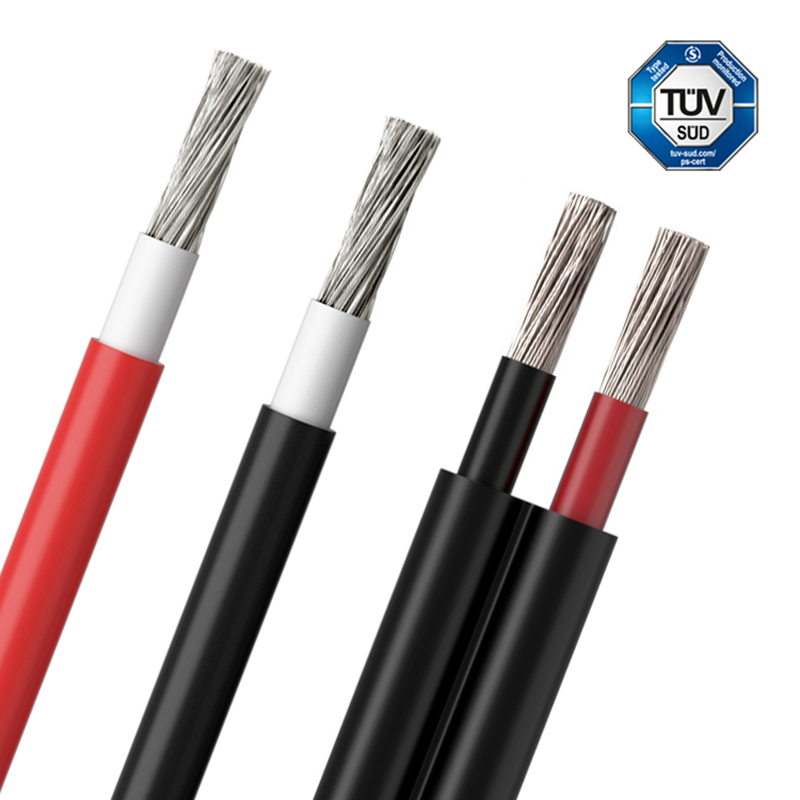


Power cables are specialized cable systems designed for the transmission and distribution of high-capacity electrical energy, forming the critical backbone of power grids worldwide. Engineered for reliability and safety, these cables integrate multiple structural layers to ensure efficient and stable electricity delivery across diverse environments—from urban underground networks to submarine crossings. At JZD Cable (jzdcable.com), we specialize in manufacturing robust power cables that meet rigorous industrial standards. This guide delves into the construction, classification, applications, and key considerations of power cables.
1. Structural Components: How Power Cables Are Built
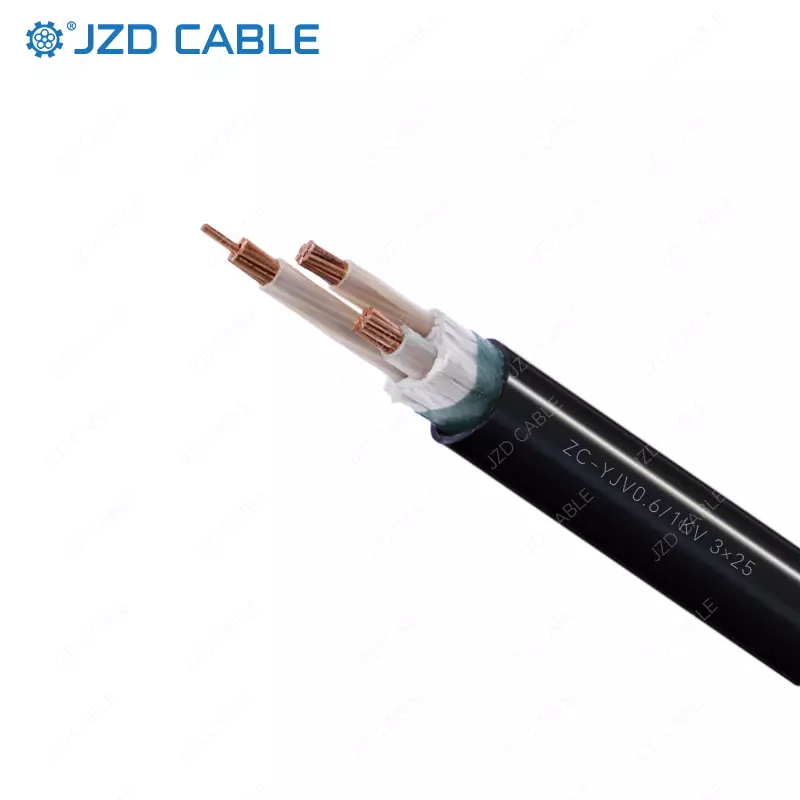
A power cable is a marvel of engineering, composed of several integrated layers, each serving a distinct protective or conductive function.
- Conductor (Core): Typically made of high-conductivity copper or lightweight aluminum, the conductor is the central pathway for electrical current.
- Insulation Layer: This critical layer isolates the conductor from external contact, preventing current leakage or short circuits. Common materials include PVC (Polyvinyl Chloride) and XLPE (Cross-Linked Polyethylene), prized for their durability and high-temperature resistance.
- Shield Layer (for MV/HV Cables): Primarily used in medium and high-voltage cables, this layer (often a metallic tape or semiconductive material) controls the electric field, reduces electromagnetic interference, and enhances safety.
- Protective Sheath & Armor: The cable’s outer defense system.
- Outer Sheath/Jacket: Provides protection against moisture, chemicals, abrasion, and environmental damage.
- Armor (Steel Tape/Wire): Adds mechanical strength for crush and tensile resistance, essential for direct burial, duct, or tunnel installations.
2. Classifying Power Cables: Finding the Right Type
Power cables are categorized based on key specifications to match application requirements.
By Voltage Rating
- Low Voltage (LV): Up to 1 kV – Used for final distribution to buildings and industrial equipment.
- Medium Voltage (MV): 6 kV to 35 kV – Common for urban distribution and industrial plant feed.
- High Voltage (HV) to Ultra-High Voltage (UHV): 66 kV to 750 kV and above – For long-distance transmission and grid interconnections.
By Insulation Material
- Plastic Insulated (e.g., XLPE, PVC): Widely used for excellent dielectric properties, flexibility, and low maintenance.
- Paper Insulated (Oil-Impregnated): A traditional type for high-voltage systems.
- Rubber Insulated: Offers superior flexibility for movable equipment or harsh environments.
By Application
- Power Transmission & Distribution Cables: The standard for grid networks.
- Control Cables: Used in automation and instrumentation circuits.
- Specialty Cables: Including Submarine Cables for underwater power transmission.
3. Key Applications and Installation Methods
Power cables are versatile, enabling electricity delivery where overhead lines are impractical or unsafe.
- Urban Infrastructure: Underground city grids, reducing visual impact and outage risks from weather.
- Industrial & Power Generation: Connecting power stations to the grid and supplying heavy machinery within plants.
- Critical Crossings: Deployed under rivers, oceans (submarine cables), highways, and railways.
Common Installation Methods: Engineers choose from direct burial, conduits/pipes, cable trenches, or dedicated tunnels based on soil conditions, space, and maintenance needs.
4. Advantages and Practical Considerations
Why Choose Power Cables?
- Space-Efficient & Aesthetic: Ideal for dense urban areas and sensitive landscapes.
- High Reliability & Safety: Less susceptible to weather-related outages compared to overhead lines.
- Lower Long-Term Maintenance: Once installed, operational costs are often minimal.
- Terrain Versatility: Capable of navigating challenging routes like water bodies or mountainous regions.
Challenges and Mitigation Strategies
- Physical Damage: Risk from excavation or settling. Solution: Proper burial depth, warning tapes, and armored cables.
- Insulation Degradation & Fire Risk: Over time or due to faults. Solution: Using advanced materials like XLPE, coupled with regular inspection, thermal monitoring, and fire-retardant sheaths.
At JZD Cable, we engineer solutions that balance performance with durability. Our power cables are designed to meet the specific demands of your project, ensuring safe and efficient power delivery for decades.
Ready to power your project with reliability? Explore our cable solutions or contact our team at jzdcable.com for expert technical support and specifications.