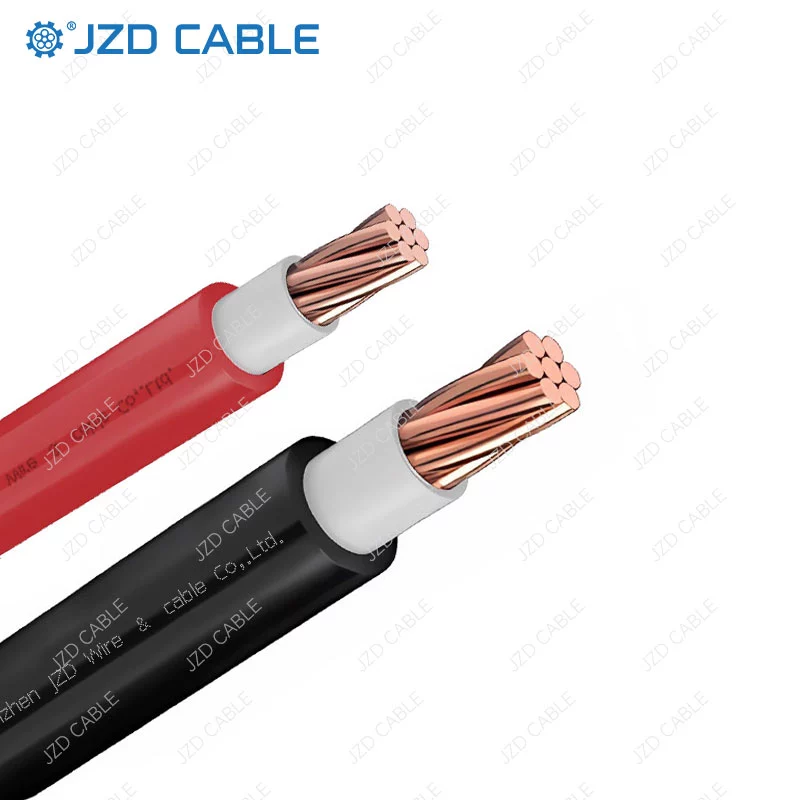


Selecting the correct service entrance cable is crucial for the safety, efficiency, and code compliance of any electrical installation. Among the most commonly specified types in North America are SER and SEU cables. While both fall under the Type SE category and share some similarities, their differences are significant and dictate specific use cases. Choosing the wrong one can lead to installation headaches, code violations, and potential safety hazards.
This guide from JZD Cable (jzdcable.com) will break down the core differences between SER and SEU cable, helping you make an informed decision for your next project.
Core Definitions: Structure is the Key
The most fundamental difference lies in their physical construction and internal configuration.
1.SER Cable (Service Entrance, Style R):
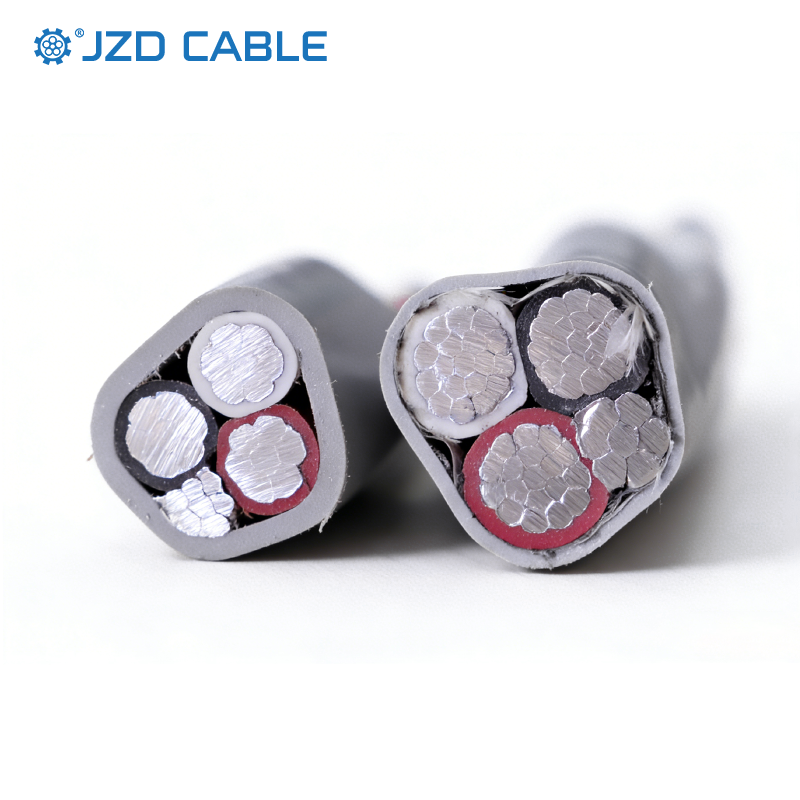
- Structure: The “R” stands for Round. It features 2 to 4 individually insulated conductors (phase and neutral) plus a separate, bare equipment grounding conductor. These conductors are bundled together with fillers, wrapped in a glass braid for strength, and sheathed in a round, sunlight-resistant gray PVC jacket.
- Identification: It is marked TYPE SE – STYLE R.
2.SEU Cable (Service Entrance, Style U):
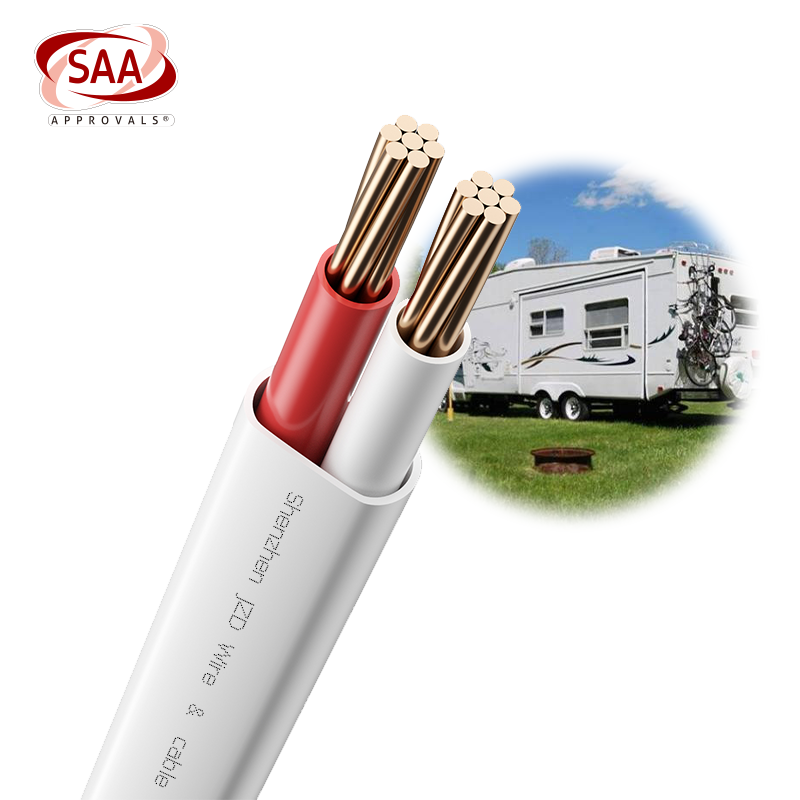
- Structure: The “U” stands for Unilay or indicates a concentric neutral. It has a flat or oval shape. It consists of two parallel, insulated phase conductors. These are then spirally wrapped with a bare copper conductor that acts as both the neutral and the equipment ground (a combined neutral/ground).
- Identification: It is marked TYPE SE – STYLE U.
Head-to-Head Comparison: SER Cable vs. SEU Cable
|
Feature
|
SER Cable
|
SEU Cable
|
|---|---|---|
|
Shape & Structure
|
Round, with separate insulated conductors and a bare ground.
|
Flat/Oval, with a concentric bare neutral/ground conductor.
|
|
Grounding Method
|
Separate Ground: Dedicated bare equipment grounding conductor (N and PE are separate).
|
Combined Neutral/Ground: The concentric bare conductor serves as both neutral and ground (N and PE are combined).
|
|
Conductor Count
|
Common configurations: 3-conductor (2P+N+PE) or 4-conductor (3P+N+PE).
|
Primarily 2-conductor (2P + concentric N/PE).
|
|
Installation Limitation
|
NOT permitted for direct burial (NEC 338.12). For above-ground use only: aerial, in conduit, or in cable trays.
|
NOT permitted for direct burial (NEC 338.12). For above-ground use, often surface-mounted on walls.
|
|
Conduit & Bending
|
Round shape is easier to pull through conduit and around bends.
|
Flat shape is difficult to pull through conduit; better suited for surface mounting.
|
|
Primary Application
|
From meter base to main panel (where N & PE must be separated), feeders, branch circuits.
|
Service drop from utility to meter base (the service entrance section before the disconnect).
|
|
NEC Compliance & Use
|
Supports N/PE separation. Used downstream of the main service disconnect (e.g., panel feeders).
|
N/PE combined. Typically used only upstream of the main service disconnect (meter feed).
|
Application Scenarios: Where to Use Each Cable
1.When to Choose SER Cable:
- Meter to Main Panel Feed: This is the most critical application, as the National Electrical Code (NEC) requires the neutral and equipment ground to be separated beyond the main service disconnect. SER’s dedicated ground wire makes it perfect for this “load-side” installation.
- Subpanels and Feeder Circuits: For running power from a main panel to a subpanel in a detached garage or outbuilding.
- Complex Installations Requiring Conduit: Its round profile makes it the only practical choice when cables need to be routed through metal or PVC conduit for protection.
- Commercial/Residential Branch Circuits: Where multiple circuits and dedicated grounding are needed in above-ground cable trays or racks.
2.When to Choose SEU Cable:
- Utility Service Entrance (Line Side): The classic use is for the overhead “service drop” from the utility’s lines to the customer’s meter base. Here, the neutral and ground are still combined.
- Surface Mounting on Walls: Its flat profile allows it to be mounted neatly and flush against a wall, saving space and providing a cleaner look than a round cable in exposed applications.
- Residential Meter Feed: Specifically for the section of the installation that is before the main service disconnect point.
Crucial Selection & Installation Reminders
1.Never Direct Bury: Both SER and SEU are for above-ground use only. NEC 338.12 explicitly prohibits their use for direct burial. Use USE or UF cable for underground applications.
2.Grounding Compliance is Non-Negotiable:
- SER with its separate ground is used after the main disconnect (load side).
- SEU with its combined neutral/ground is typically used before the main disconnect (line side). Do not use SEU to feed a subpanel or any downstream load where ground and neutral must be isolated.
3.Ratings & Material: Both are rated 600V, 90°C (wet or dry locations). Conductors can be copper or AA-8000 aluminum alloy. Always size the cable according to NEC Table 310.16 and local amperage requirements.
4.Installation Practicality: Consider the route. Choose SER for any run requiring conduit. Choose SEU for simple, exposed surface runs on walls where a low-profile installation is desired.
Conclusion: Making the Right Choice
The choice between SER and SEU boils down to your specific point in the electrical system and installation method.
- Use SEU Cable for the utility service drop to the meter (line-side, N/G combined).
- Use SER Cable for the run from the meter to the main panel and for any subpanel feeders or circuits (load-side, N/G separated).
By understanding these fundamental differences, you ensure code-compliant, safe, and efficient installations. For high-quality, NEC-compliant SER and SEU cables, explore the range of reliable building wire solutions at JZD Cable. Our products are manufactured to meet rigorous standards for performance and safety in both residential and commercial applications.
Contact JZD Cable today for your wiring project needs.