


When selecting cable for demanding applications, you’ll often encounter the “110°C” rating on Australian-standard cables. A common and critical question arises: Can this cable operate continuously at 110°C?
The short answer is yes, but with very specific and non-negotiable conditions. The 110°C rating is not a simple permission slip; it’s a carefully defined performance threshold governed by strict standards. Let’s demystify what this rating truly means for your project.
What Does the “110°C” Actually Refer To?
This is the most crucial point to understand. The 110°C denotes the maximum permissible continuous operating temperature of the conductor under defined conditions, as stipulated in Australian/New Zealand standards such as AS/NZS 5000.1 and AS/NZS 3008.1.
It is not the ambient or environmental temperature. Instead, it is the maximum safe temperature that the internal conductorcan reach continuously during normal operation. This limit is determined through rigorous testing of the cable’s insulation and sheath materials (like XLPE or other thermosetting compounds) for long-term thermal aging, mechanical stability, and electrical integrity. Operating above this temperature risks premature insulation degradation, embrittlement, and ultimately, electrical failure.
The Conditions for True “Continuous Operation” at 110°C
For a cable to reliably and safely operate continuously at its rated 110°C conductor temperature, all the following conditions must be met:
1. Correct Installation & Application:
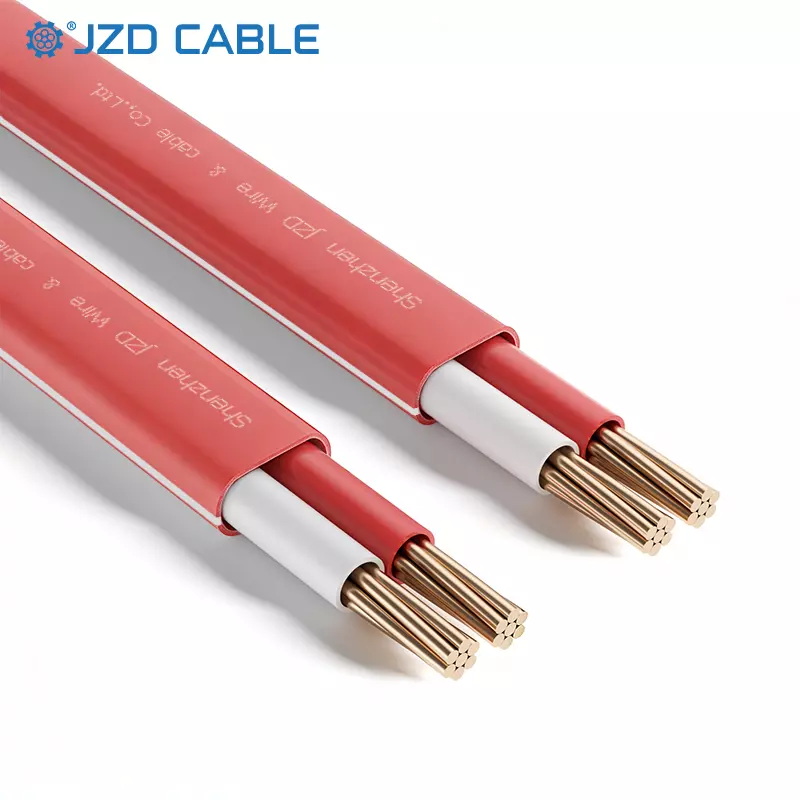
- Fixed Installation: Most 110°C rated cables (e.g., common types like X-HF-110) are designed for fixed wiring in conduits, trays, or direct burial. They are not typically designed for frequent flexing. For applications requiring movement, a lower temperature rating (like 90°C for some elastomeric cables) may be mandated, even if the insulation material itself is rated for 110°C.
2. Proper Current Carrying Capacity Derating:
- You cannot use standard room-temperature current ratings. The actual current the cable can carry must be selected from tables in AS/NZS 3008.1 (e.g., Table 9) and then derated based on:
- Ambient Temperature: The actual temperature of the space where the cable is installed. Higher ambient temperatures reduce the allowable current.
- Installation Method: Whether the cable is alone in air, bunched with other cables, enclosed in a conduit, or buried in the ground.
- Number of Loaded Conductors: Having multiple active conductors in one cable generates more collective heat.
3. Understanding Different Thermal Limits:
- Do Not Confuse Ratings: The continuous operating temperature (110°C) is completely separate from the short-circuit temperature. A cable with XLPE insulation might have a continuous rating of 110°C but must withstand a short-term short-circuit temperature of up to 250°C for, say, 5 seconds, as per other clauses in the standards. These are independent performance criteria.
Key Takeaways for Engineers and Buyers
- 110°C is a Conductor Limit: It’s the max safe internaltemperature, not the surrounding air temperature.
- Compliance is Mandatory: Continuous operation at this level is only possible when adhering to the full suite of relevant AS/NZS standards for selection, installation, and loading.
- Derating is Essential: Ignoring installation conditions and using basic current ratings will almost certainly lead to overheating and unsafe operation.
- Application Matters: Ensure the cable’s design (fixed vs. flexible) matches its intended use.
Choosing the right cable is about more than just a temperature rating on the sleeve. It requires a holistic understanding of the application, environment, and governing standards. At JZD Cable, we manufacture and supply a range of standards-compliant cables and our technical team is here to help you navigate these critical specifications.
Need help specifying the correct 110°C rated cable for your project? Contact our expert team at JZD Cable for a technical consultation.