

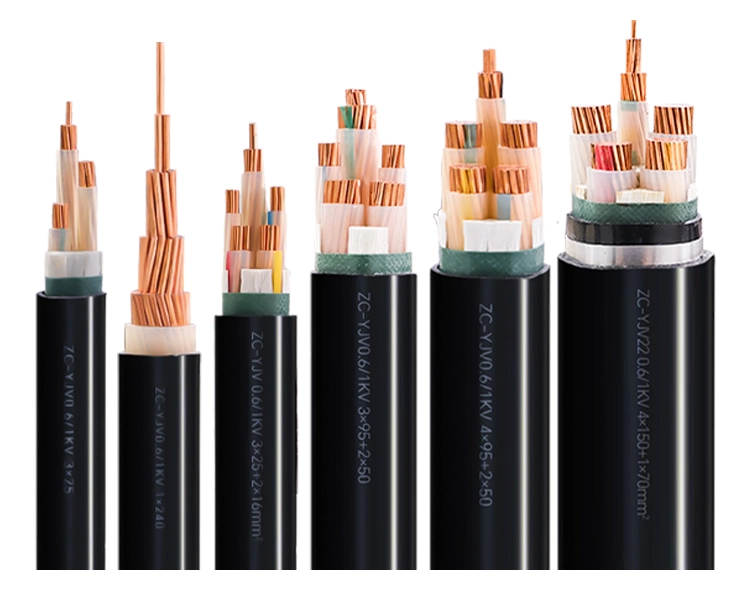
When selecting armored power cables for industrial, construction, or infrastructure projects, the choice between different types of armored cables can significantly impact safety, durability, and cost. Two commonly compared cables are YJV22 and YJV32. Both are widely used in fixed installations where mechanical protection is essential, but they are designed for different environmental conditions.
In this guide, we’ll break down what YJV22 and YJV32 cables are, their similarities, key differences, and provide a clear selection guide to help you make the best decision for your application.
What is YJV22 Cable?
YJV22 is a steel tape armored, PVC sheathed, XLPE insulated power cable. The “22” in its designation indicates double-layer steel tape armor. This construction provides robust mechanical protection against crushing, impact, and rodent damage, making it suitable for direct burial in the ground or installation in trenches, ducts, and tunnels where there is no significant tensile stress. However, it is not designed for environments with constant vibration or frequent movement.
What is YJV32 Cable?
YJV32 is a steel wire armored, PVC sheathed, XLPE insulated power cable. The “32” denotes single-layer round steel wire armor. This type of armor offers not only mechanical protection but also high tensile strength. YJV32 cables are designed for applications where the cable may be subjected to pulling forces, such as in vertical risers, inclined surfaces, or underwater installations. The wire armor effectively resists stretching and physical stress.
Similarities Between YJV22 and YJV32 Cables
- Conductor: Both typically use copper or aluminum conductors.
- Insulation: Both employ XLPE (cross-linked polyethylene) insulation, offering excellent thermal stability, high voltage withstand, and long service life.
- Inner Sheath: Both have a PVC inner sheath that acts as a bedding layer over the insulation.
- Outer Sheath: Both feature a PVC outer sheath for general environmental protection (moisture, chemicals, sunlight).
- Applications: Both are used in fixed power distribution networks, industrial plants, and utility projects requiring armored cables.
- Standards: Both are manufactured according to international standards like GB, IEC, and BS.
Key Differences Between YJV22 and YJV32 Cables
The core difference lies in the armoring type and the resulting mechanical performance.
|
Feature
|
YJV22 Cable
|
YJV32 Cable
|
|---|---|---|
|
Armor Type
|
Double Steel Tape Armor
|
Single Layer Round Steel Wire Armor
|
|
Key Strength
|
Excellent resistance to crushing and impact
|
High tensile strength; resists pulling forces
|
|
Bending Radius
|
Larger bending radius required
|
More flexible; smaller bending radius possible
|
|
Weight
|
Relatively lighter
|
Heavier due to wire armor
|
|
Cost
|
Generally more economical
|
Usually more expensive
|
|
Ideal Application
|
Direct burial, trenches, stable environments
|
Vertical runs, risers, dynamic/tension environments, underwater
|
|
Not Suitable For
|
High tension or frequent movement
|
Very high crushing load scenarios (tape armor spreads load better)
|
How to Choose: YJV22 or YJV32?
Your choice should be driven by the installation environment and mechanical stresses:
- Choose YJV22 if: Your project involves direct burial in stable ground, installation in ducts or tunnels with minimal pulling tension, and where cost-effectiveness is a priority. It’s the standard choice for most fixed, low-tension underground or indoor power networks.
- Choose YJV32 if: The installation requires the cable to bear its own weight (vertical shafts, multi-story buildings) or handle tensile forces (bridge cables, underwater crossings, mining tow lines). Its wire armor is designed precisely for these demanding conditions.
Need Expert Help?
Understanding the mechanical demands of your installation is crucial. While both cables provide excellent protection, using the wrong type can lead to premature failure or safety hazards.
At JZD Cable, we specialize in manufacturing high-quality YJV22 and YJV32 cables tailored to your project specifications. Our technical team can help you select the perfect cable, ensuring reliability, compliance, and value.
Contact us today for a quote and professional support!