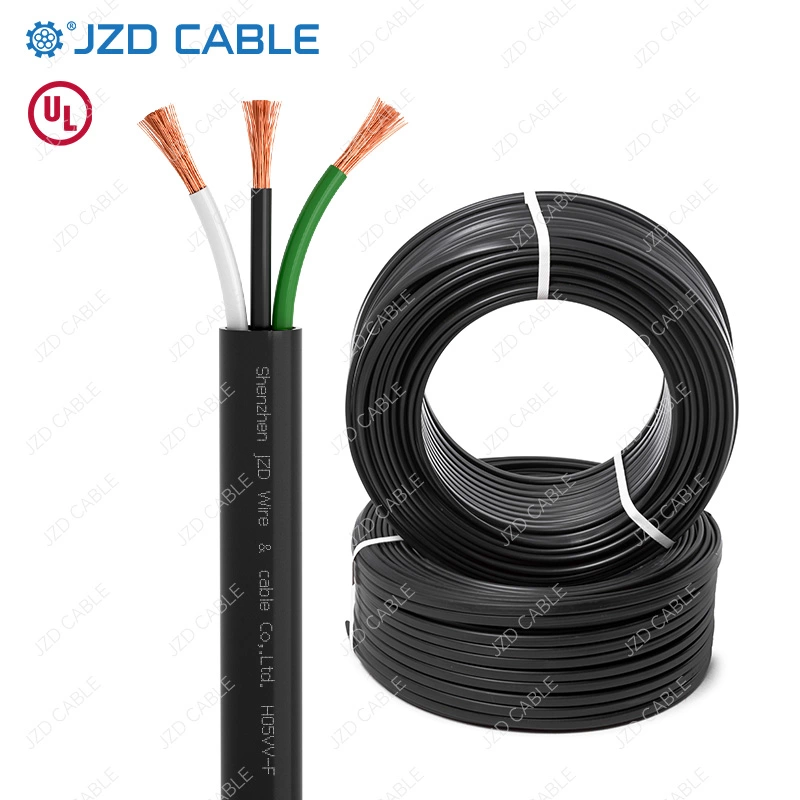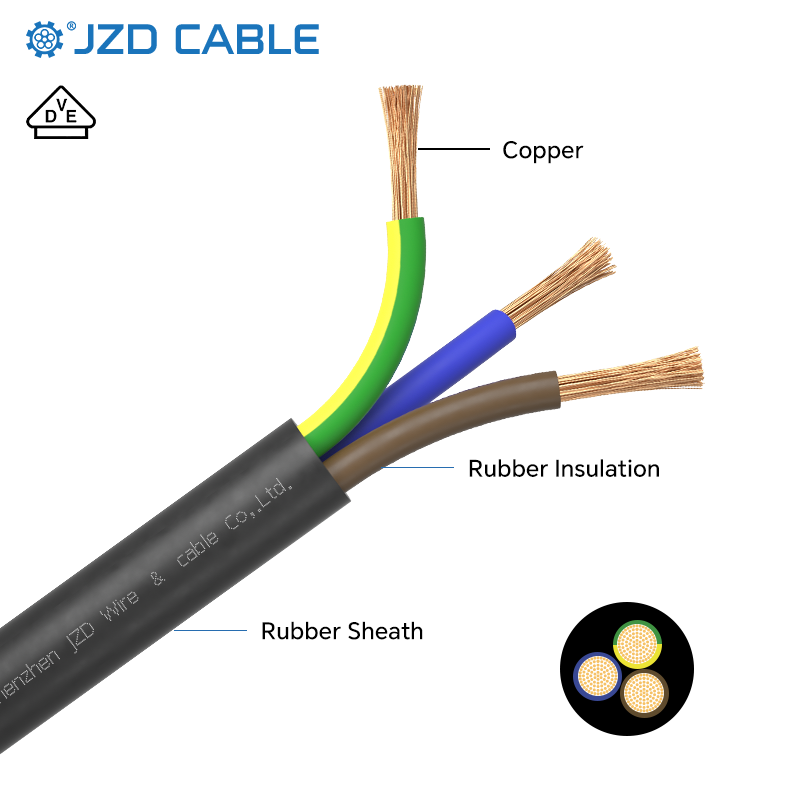


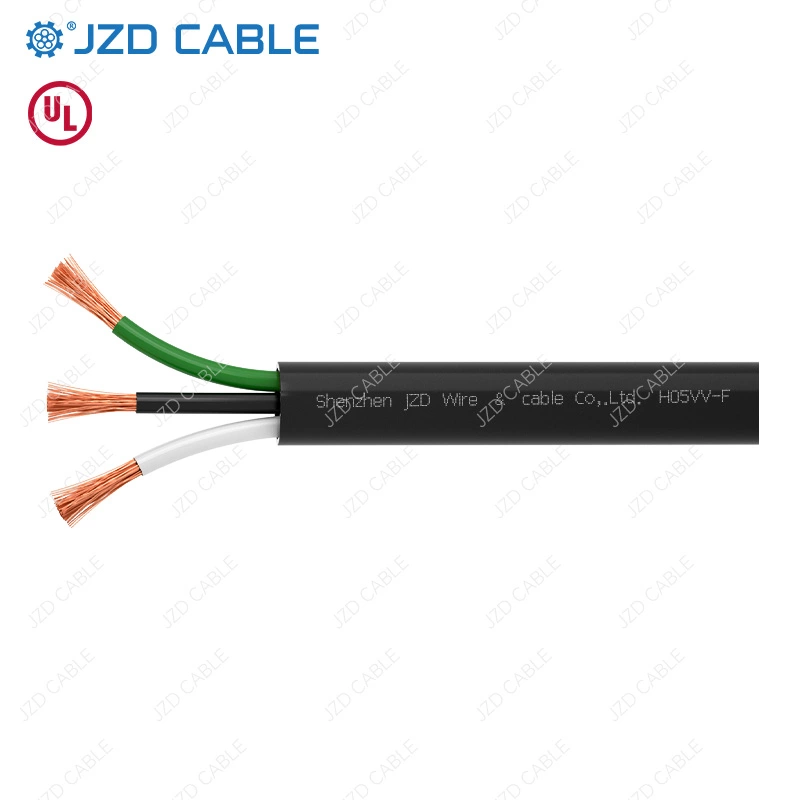
Selecting the right portable cord for your job site, workshop, or outdoor equipment is crucial for safety, performance, and compliance. Two of the most common types you’ll encounter are SJTW and SJOOW cables. While they look similar and are often used in comparable environments, understanding their distinct specifications is key to making an informed choice. This article breaks down what each cable is, their similarities, and their critical differences to guide your decision.
What is SJTW Cable?
SJTW is a designation for a common type of portable, jacketed electrical cord. The letters in its code, governed by Underwriters Laboratories (UL) and other standards, tell us about its construction:
- S: Service Grade (600V)
- J: Junior Service (300V) – Note: The ‘J’ indicates a thinner insulation and jacket than a non-J cord.
- T: Thermoplastic Insulation
- W: Weather and Water-Resistant
An SJTW cable typically has a tough, oil-resistant PVC (polyvinyl chloride) jacket. It is designed for indoor and occasional outdoor use. It can handle exposure to sunlight, moisture, and physical abrasion reasonably well, making it a versatile choice for extension cords, power tools, and temporary lighting. Its common temperature rating is -40°C to 60°C (-40°F to 140°F).
What is SJOOW Cable?
SJOOW represents a more robust and durable type of portable cord. Its code breakdown is as follows:
- S: Service Grade (600V)
- J: Junior Service (300V)
- O: Oil-Resistant Insulation
- O: Oil-Resistant Jacket
- W: Weather and Water-Resistant
The key distinction is the double ‘O’, signifying that both the insulation andthe outer jacket are specifically engineered to be oil-resistant. An SJOOW cable often uses a higher-grade thermoset or heavy-duty thermoplastic compound like EPDM or CPE for its jacket, providing superior protection. It is built for heavy-duty industrial, commercial, and outdoor applications where exposure to oils, chemicals, extreme temperatures, and severe mechanical stress is expected. Its standard temperature range is -50°C to 60°C (-58°F to 140°F) or better.
Common Ground: Similarities Between SJTW and SJOOW Cables
Despite their differences, SJTW and SJOOW share several important characteristics:
- Portable Cord Types: Both are flexible, jacketed cords designed for moveable equipment and temporary power distribution.
- Voltage Rating: Both are typically rated for 300V (due to the ‘J’).
- Weather Resistance: Both feature a ‘W’ rating, meaning their jackets are designed to withstand moisture, sunlight (UV), and weathering.
- General Applications: Both are used for extension cords, machinery, tools, and construction site power.
- Conductors: Both are commonly available with stranded copper conductors for flexibility.
Key Differences Between SJTW and SJOOW Cables
The primary differences lie in their construction, durability, and intended use environments. The following table provides a clear, side-by-side comparison:
|
Feature
|
SJTW Cable
|
SJOOW Cable
|
|---|---|---|
|
Jacket & Insulation
|
Thermoplastic PVC jacket. Oil-Resistant.
|
Heavy-duty thermoset/thermoplastic (e.g., EPDM/CPE). Oil-Resistant on both insulation & jacket (OO).
|
|
Primary Design
|
General-purpose, weather-resistant cord.
|
Industrial-grade cord for harsh conditions.
|
|
Oil & Chemical Resistance
|
Good resistance to mild oils and chemicals.
|
Excellent resistance to oils, acids, alkalis, and solvents.
|
|
Abrasion & Tear Resistance
|
Good for general use.
|
Superior cut, abrasion, and tear resistance.
|
|
Temperature Range
|
Standard: -40°C to 60°C (-40°F to 140°F).
|
Wider/Better: Often -50°C to 60°C+ (-58°F to 140°F+).
|
|
Flexibility in Cold
|
Can become stiff in very cold temperatures.
|
Remains more flexible in low-temperature environments.
|
|
Durability & Lifespan
|
Good for standard-duty applications.
|
Longer lifespan in demanding conditions.
|
|
Typical Cost
|
More economical.
|
Higher, reflecting enhanced materials and performance.
|
|
Best For
|
Indoor/occasional outdoor use, home workshops, light-duty tools, residential extension cords.
|
Industrial plants, automotive shops, shipyards, mining, heavy machinery, and permanent outdoor installations.
|
How to Choose: SJTW or SJOOW?
Your choice ultimately depends on the application’s demands:
Choose SJTW Cable if:
- Your use is primarily indoor or occasional outdoor.
- You need reliable cords for home workshops, gardening, general-purpose extension cords, or light commercial use.
- Exposure to oils and harsh chemicals is minimal or incidental.
- You are looking for a cost-effective solution for standard electrical tasks.
Choose SJOOW Cable if:
- The environment is tough: industrial, manufacturing, or automotive settings.
- There is regular exposure to oils, grease, fuels, or chemicals.
- The cord will be used outdoors permanently or in extreme weather.
- The application involves heavy machinery, construction, or mining where abrasion and physical damage are high risks.
- You need a cord that remains flexible in cold temperatures.
- Long-term durability and safety in harsh conditions are the top priorities, justifying a higher initial investment.
Partner with JZD Cable for Your Wiring Needs
Understanding cable specifications is the first step toward a safe and efficient operation. At JZD Cable, we specialize in manufacturing high-quality electrical cables, including a comprehensive range of SJTW, SJOOW, and other portable cords designed to meet rigorous standards.
Whether you need a standard-duty extension cord or a heavy-duty industrial power cable, our team can help you select the perfect product for your specific voltage, amperage, and environmental requirements. We ensure durability, compliance, and performance.
Contact JZD Cable today to discuss your project needs or to request a quote for reliable power cable solutions.