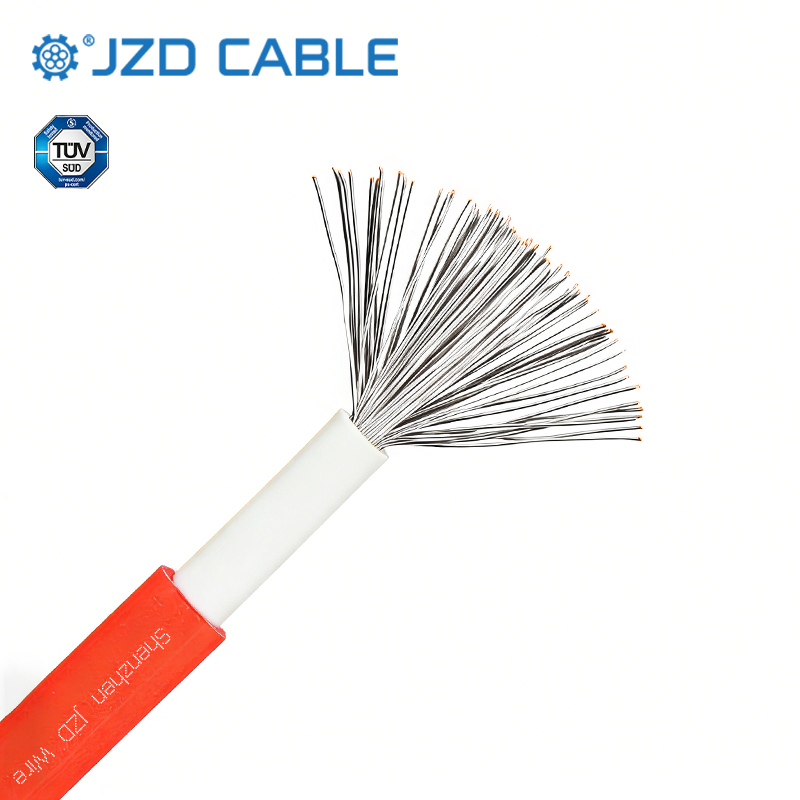


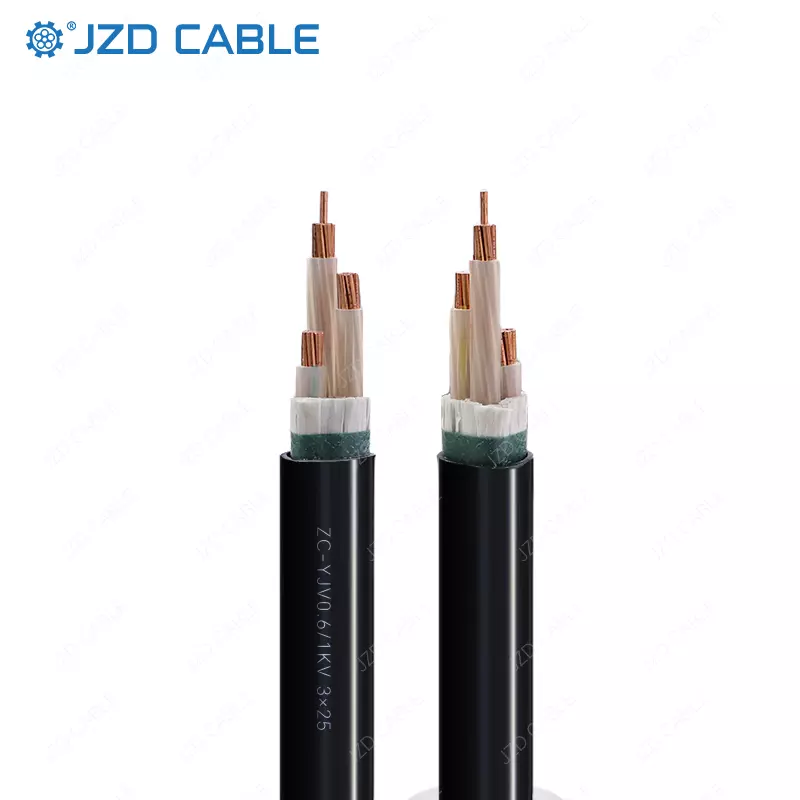
In the world of power distribution, selecting the correct cable is paramount for safety, compliance, and functionality. Two commonly specified types for building wiring and industrial applications are NH-YJV (Fire-Resistant) and ZC-YJV (Flame-Retardant, Class C) cables. At first glance, they appear similar: both are 0.6/1kV cables with XLPE insulation and a PVC sheath. However, their core mission in a fire event is fundamentally different and not interchangeable.
This guide from JZD Cable will break down the key distinctions, helping engineers, contractors, and project managers make informed, safe, and code-compliant choices.
Head-to-Head Comparison: NH-YJV vs. ZC-YJV
At their heart, both cables are designed with fire safety in mind, but they address different stages and requirements of a fire scenario.
|
Feature
|
NH-YJV (Fire-Resistant)
|
ZC-YJV (Flame-Retardant, Class C)
|
|---|---|---|
|
Code Meaning
|
NH: Fire-Resistant; YJ: XLPE Insulation; V: PVC Sheath
|
ZC: C-Level Flame-Retardant; YJ: XLPE Insulation; V: PVC Sheath
|
|
Core Function
|
Circuit Integrity & Power Supply. Maintains electrical circuit operation for a defined period during a fire.
|
Flame Propagation Control. Limits the spread of flame along the cable bundle and self-extinguishes. Does not guarantee continued operation.
|
|
Primary Standard
|
GB/T 19216, GB/T 12666.6 (Fire Resistance Test)
|
GB/T 19666, GB/T 18380.3x (Class C Flame Retardancy)
|
|
Fire Test
|
Withstands 750-1000°C flame for ≥90 minutes while energized (Class A/B). The critical test.
|
Class C Bundle Burn Test: Limits flame height to ≤2.5m; cables must self-extinguish.
|
|
Insulation/Sheath
|
XLPE Insulation + PVC Sheath plus a critical fire-resistant layer (e.g., mica tape) around the conductor.
|
XLPE Insulation + PVC Sheath, both made with flame-retardant modified compounds.
|
|
Long-Term Temp.
|
90°C
|
90°C
|
|
Short-Circuit Temp.
|
≤250°C (for 5 seconds)
|
≤250°C (for 5 seconds)
|
|
Key Structural Diff.
|
Additional fire-resistant barrier (like mica glass tape) over the conductor.
|
No additional barrier; fire performance comes from material formulation.
|
|
Relative Cost
|
Higher (due to specialized fire-resistant materials and construction)
|
Lower (standard construction with modified materials)
|
Diving Deeper: Core Functions Explained
NH-YJV: The “Lifeline” Cable
Think of NH-YJV as an emergency backup system made of copper and insulation. Its sole purpose is to keep critical circuits alive while actively exposed to fire. The special layer (e.g., mica) forms a ceramic char that insulates the conductors even after the plastic materials burn away, maintaining circuit integrity for at least 90 minutes. This allows emergency systems to function, saving lives and property.
ZC-YJV: The “Containment” Cable
ZC-YJV is designed to not make a fire worse. In a fault or external fire scenario, it resists igniting easily, limits how far flames travel along a bundled group of cables (C-Class rating), and will stop burning once the external fire source is removed. It’s about fire containment, not circuit survival. It’s the safer choice for general wiring where continued operation during a fire is not mandated.
Application Scenarios: Where to Use Each Cable
Choosing the wrong cable can be a critical safety violation. Always follow local building codes and project specifications.
✅ Use NH-YJV (Fire-Resistant) for “Life-Safety” and Critical Circuits:
- Fire-Fighting & Emergency Systems: Fire pumps, sprinkler system controls, emergency lighting, exit signage, smoke extraction fans, fire alarm circuits, and fire elevator power.
- Critical Life-Line Power: Hospital ICU/OR power, data center UPS feeds, security & surveillance systems, subway/tunnel emergency ventilation and lighting.
- Code-Mandated Areas: High-rise buildings, shopping malls, hospitals, schools, airports, and other densely-occupied structures where regulations require ≥90 minutes of continued circuit operation during a fire.
✅ Use ZC-YJV (Flame-Retardant) for General Power Distribution:
- General Building Wiring: Main risers, sub-circuits, lighting, and socket outlets in residential, commercial, and industrial buildings.
- Industrial Equipment Power: Motors, control cabinets, conveyor systems, and general machinery supply.
- Cable Management Areas: Cable trays, ladder racks, conduits, and vertical shafts where multiple cables are bundled, to prevent flame spread from one cable to another (known as “flashover”).
- Cost-Sensitive Projects: Any installation where there is no regulatory requirement for maintained circuit operation during a fire, but where basic flame retardancy is a safety best practice or required by code.
Conclusion: Safety Through Correct Specification
The choice between NH-YJV and ZC-YJV is not about quality—it’s about application-specific safety.
- NH-YJV = Survive the fire to save lives. (Function: Fire Resistance)
- ZC-YJV = Don’t feed the fire. (Function: Flame Retardancy)
Mistaking a ZC-YJV cable for an NH-YJV application could lead to catastrophic failure of emergency systems when they are needed most. Always consult the project’s electrical drawings, safety regulations, and when in doubt, consult with a qualified electrical engineer or your cable supplier.
Need help specifying the right cable for your project?
At JZD Cable, we manufacture both high-quality NH-YJV and ZC-YJV cables to relevant GB and international standards. Our technical team can help you navigate the specifications to ensure your project is safe, compliant, and reliable. Contact us today to discuss your cable requirements.