

In the vast and complex world of electrical infrastructure, cables are the unsung heroes that power our lives and connect our world. However, a common point of confusion arises between two fundamental types: Power Cables and Communication Cables. Using the wrong type is not just inefficient—it can be dangerous or render a system completely inoperative.
At JZD Cable, as a professional manufacturer of wire and cable solutions, we believe clarity is key. This guide will delve into the core differences between these two cable families, helping engineers, project managers, and procurement specialists make informed decisions.
The Core Divide: Function & Transmission
Think of it this way: Power Cables are the arteries of any system, carrying the lifeblood—electrical energy. Their sole purpose is to transmit and distribute high-power electricity from generation plants to substations, buildings, and industrial machinery. They handle high voltages and large currents (AC or DC).
Communication Cables, on the other hand, are the nerves. They transmit information—voice, data, video, and control signals. They carry low-voltage, high-frequency electrical signals or pulses of light, acting as the nervous system for telecom networks, IT infrastructure, and smart systems.
A Side-by-Side Look at Key Parameters
|
Parameter
|
Power Cables
|
Communication Cables
|
|---|---|---|
|
Voltage Level
|
Very High (0.6kV to 1000kV+)
|
Very Low (Typically < 60V)
|
|
Current
|
Very High (Amps to Thousands of Amps)
|
Very Low (Microamps to Milliamps)
|
|
Key Performance Metric
|
Ampacity (Current Carrying Capacity), Voltage Withstand
|
Characteristic Impedance, Attenuation, Crosstalk
|
|
Signal Frequency
|
Low Frequency (50/60 Hz Power Frequency)
|
High Frequency (MHz to GHz range)
|
Structure & Design Philosophy
The dramatic difference in function leads to radically different internal designs.
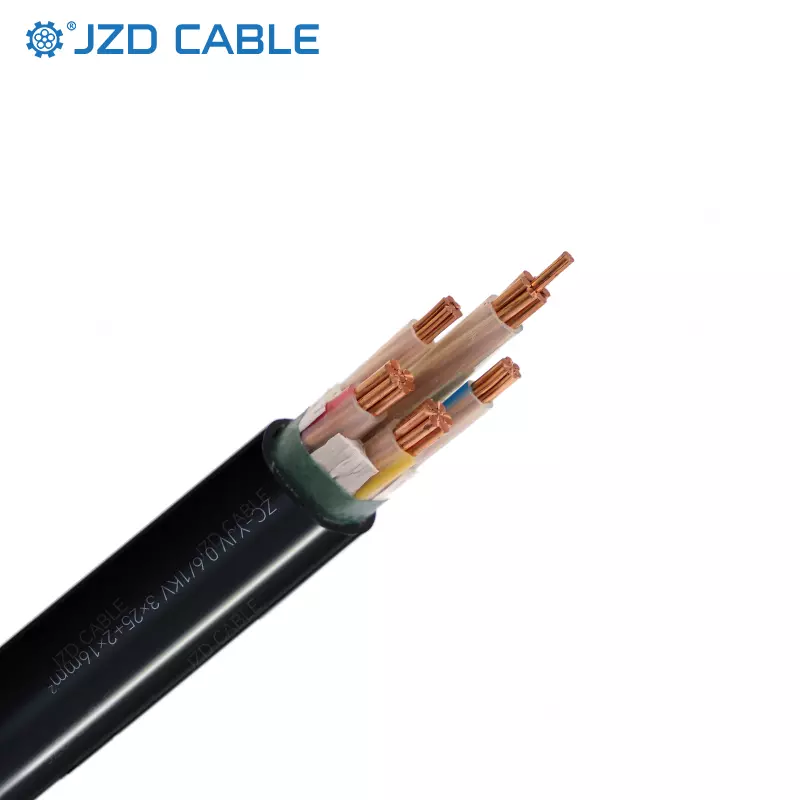
Power Cable Structure is Built for Strength & Safety:
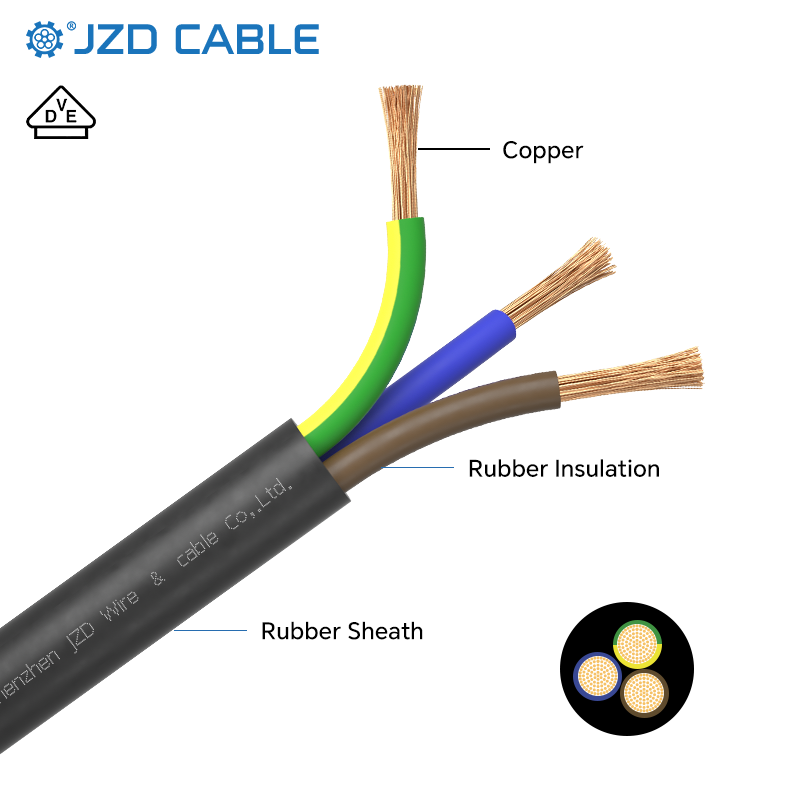
- Conductor: Uses thick, solid or stranded copper or aluminum (from 1.5mm² to 630mm²+) to minimize electrical resistance and maximize current flow.
- Insulation: Features a thick, robust layer (like XLPE or EPR) designed for high dielectric strength, preventing electrical breakdown under high voltage stress.
- Shielding: Often includes semiconductive and metallic shielding to control the electric field and prevent corona discharge.
- Sheath/Armor: Has a heavy, durable outer jacket, sometimes with steel wire/tape armor for mechanical protection, rodent resistance, and environmental durability.
Communication Cable Structure is Engineered for Signal Integrity:
- Conductor: Uses thin copper wires (0.4mm – 0.8mm), often stranded for flexibility. Precision is key for consistent electrical properties.
- Insulation: Uses a thin, uniform layer (like PE, PP) with a stable dielectric constant to ensure consistent signal speed and minimize delay.
- Core Design: Employs specialized geometries like twisted pairs, quads, or coaxial structures specifically to combat electromagnetic interference (EMI) and crosstalk between pairs.
- Shielding: Utilizes complex shielding (foil, braid, or both) not to contain voltage, but to protect the weak internal signals from external electromagnetic noise.
Choosing the Right Path: Applications in the Real World
Your project’s needs dictate the choice:
Typical Power Cable Applications:
- Main power distribution lines in urban grids and substations.
- Feeder cables in high-rise buildings, factories, and power plants.
- Heavy-duty power supply for mining, rail transit, and renewable energy (solar farms, battery storage).
- High-voltage transmission for undersea or cross-river projects.
Typical Communication Cable Applications:
- Twisted Pair (CAT5e/6/6a/7): The backbone of Local Area Networks (LAN), office networking, and IP-based systems.
- Coaxial Cable (RG6, etc.): Used for Cable TV (CATV), satellite signals, and CCTV video surveillance.
- Fiber Optic Cable (GYTA, etc.): The foundation of long-distance telecom, 5G backhaul, internet backbones, and data centers. (Note: Fiber optics, while a communication cable, uses light instead of electrical signals).
Conclusion
Understanding the distinction between power and communication cables is fundamental to designing safe, efficient, and reliable electrical and ICT systems. While they may look similar on the outside, their purposes, engineering, and applications are worlds apart.
At JZD Cable, we specialize in manufacturing high-quality cables for both domains. Whether you need robust XLPE insulated power cables for your industrial plant or reliable network cables for your data infrastructure, our expertise ensures you get a product engineered for performance and longevity.
Need help specifying the right cable for your project? Explore our product range at jzdcable.com or contact our technical team for a consultation. Let’s build and power your connections reliably.