

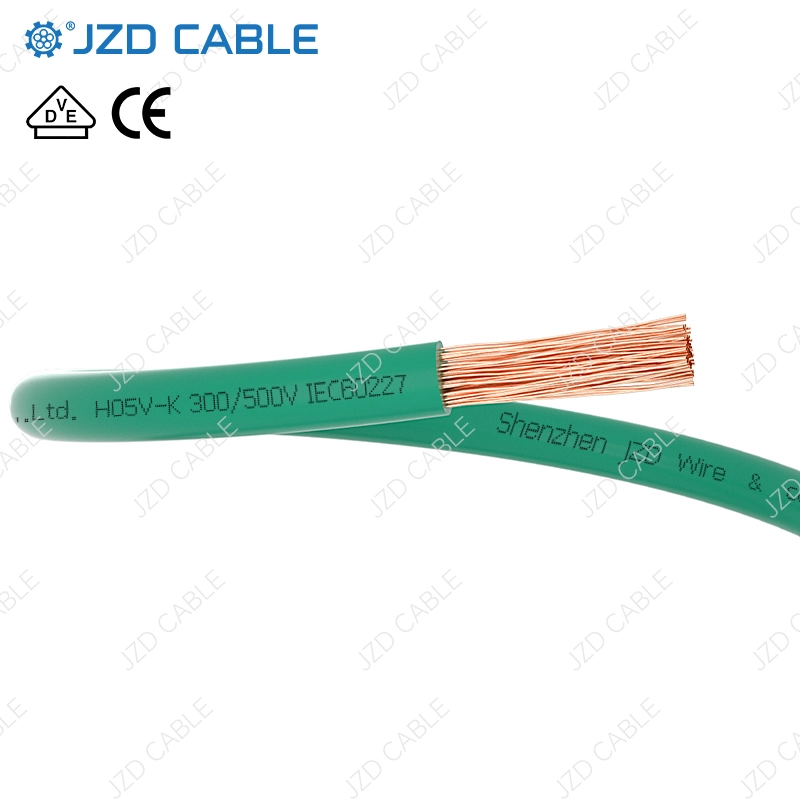
In today’s global marketplace, environmental compliance is not just a legal requirement but a mark of responsible manufacturing. For cable and wire producers like us at JZD Cable, navigating the landscape of EU environmental regulations is crucial. Two of the most critical frameworks are the RoHS and REACH regulations. While both aim to control hazardous substances, they are distinct in scope, application, and requirements. Understanding the difference between RoHS compliance and REACH compliance is essential for any business in the electronics and cable supply chain.
This guide breaks down the RoHS vs REACH debate, clarifying their unique roles and outlining what they mean for cable manufacturers and their customers.
1. Regulation Nature & Core Objective
- RoHS (Restriction of Hazardous Substances): This is a targeted EU Directive focused specifically on Electronic and Electrical Equipment (EEE). Its primary goal is to reduce environmental pollution from electronic waste by restricting the use of specific hazardous substances like lead, mercury, and cadmium in finished products.
- REACH (Registration, Evaluation, Authorisation, and Restriction of Chemicals): This is a comprehensive EU Regulation that manages the risks associated with chemical substances. Its scope is vast, aiming to protect human health and the environment across the entire lifecycle of chemicals, from production to disposal. It applies to virtually all sectors (excluding food and pharmaceuticals).
Key Takeaway: RoHS is a product-focuseddirective for electronics, while REACH is a substance-focusedregulation for nearly all industries.
2. Scope of Application
- RoHS Scope: Applies only to finished electrical and electronic equipment, such as household appliances, IT and telecommunications equipment, lighting, and cables used within these devices.
- REACH Scope: Extremely broad. It covers all products containing chemical substances, including industrial chemicals, textiles, toys, furniture, and of course, all materials used in cable manufacturing (polymers, metals, inks, etc.).
Key Takeaway: If you make cables for electronics, you must comply with both. REACH’s net is cast much wider than RoHS’s.
3. Controlled Substances & Limits
- RoHS Controlled Substances: It clearly restricts 10 specific substances (e.g., lead, cadmium, mercury, hexavalent chromium) with set concentration limits in homogeneous materials (e.g., 0.1% for most, 0.01% for cadmium).
- REACH Controlled Substances: It maintains a dynamically updated list of Substances of Very High Concern (SVHC), which now exceeds 200 entries. If an article contains an SVHC above 0.1% weight-by-weight, notification obligations may be triggered. It also mandates registration for substances produced or imported in volumes ≥ 1 ton per year.
Key Takeaway: RoHS has a fixed, short list; REACH has a growing, extensive list requiring ongoing monitoring.
4. Certification & Legal Status
- RoHS Compliance: Integrated into the broader EU CE marking framework. Compliance is typically demonstrated via test reports from accredited laboratories. It is a directive, meaning EU member states must transpose it into national law.
- REACH Compliance: There is no “REACH certificate.” Compliance is demonstrated through technical documentation, Safety Data Sheets (SDS), and registration dossiers submitted to the European Chemicals Agency (ECHA). As an EU regulation, it is directly binding in all member states.
Key Takeaway: RoHS is often part of your CE marking process. REACH is a continuous regulatory obligation with documentation requirements.
5. Impact on the Cable Industry: A Practical View
For a cable manufacturer, these regulations translate into specific material and process controls:
For RoHS Compliance, We Must Use:
- Lead-free copper and lead-free solder.
- Stabilizers and pigments that are cadmium-free.
- Halogen-free or low-halogen flame retardants (where specified).
- Environmentally friendly cross-linking agents.
- Focus: Ensuring that every homogeneous materialin the cable (insulation, conductor, etc.) is below the threshold for the 10 restricted substances.
For REACH Compliance, We Must Manage:
- The entire supply chain for all raw materials (PVC/PE insulation, sheathing compounds, copper, shielding materials, inks, adhesives).
- SVHC screening for every component, requiring detailed declarations from all material suppliers.
- Preparation of technical files and readiness for SCIP database notification if SVHCs are present above 0.1%.
- Focus: Supply chain transparency, risk assessment, and comprehensive documentation to prove the safe use of all chemical substances.
Conclusion: Two Sides of the Green Compliance Coin
In summary, RoHS and REACH are complementary yet distinct pillars of EU environmental policy. Think of RoHS as setting the “ingredient ban” for electronic products, mandating what cannotbe inside your cable. In contrast, REACH establishes a “chemical management and transparency” system, tracking and controlling the risks of substances throughout the supply chain.
For cable buyers, partnering with a manufacturer that has a deep, proactive understanding of both standards is critical. It mitigates your supply chain risk and ensures your products can access the EU market without barriers.
At JZD Cable, environmental compliance is embedded in our production DNA. We rigorously test our materials, maintain full supply chain documentation, and design our cables—from flexible cords to industrial cables—to meet both RoHS and REACH requirements from the outset. This proactive approach not only fulfills legal obligations but also future-proofs your projects and underscores our commitment to sustainability.
Need compliant, high-performance cables? Contact JZD Cable today for a solution that meets your technical and environmental standards.