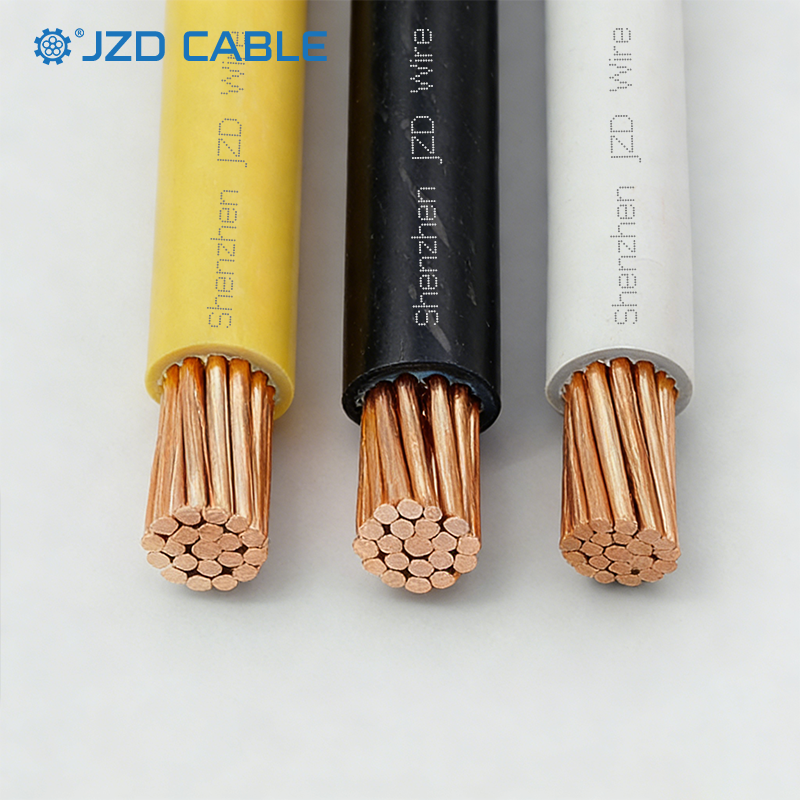


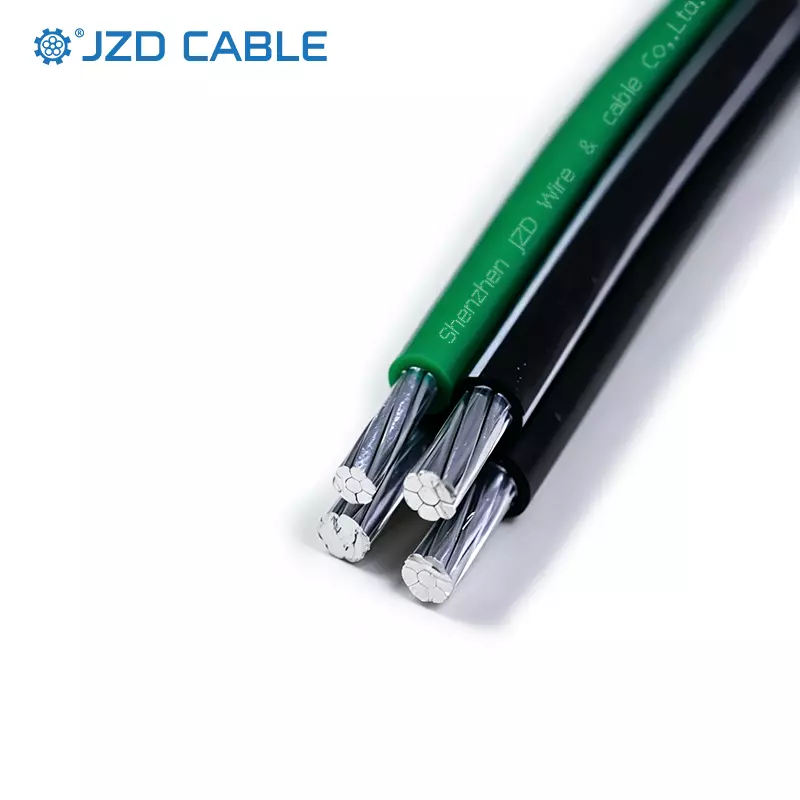
When specifying cable for direct burial or service entrance applications, you’ll encounter two key designations: USE and USE-2. While they sound similar, the performance differences are significant. Choosing the correct type impacts safety, compliance, and long-term reliability. This guide breaks down the key differences between USE and USE-2 cable, explaining why USE-2 has become the new standard for demanding applications like solar farms and EV charging stations.
1. Core Definitions: The Baseline and Its Successor
- USE Cable (Underground Service Entrance): The original standard for 600V-rated, direct burial cable designed to bring power from a utility transformer to a building’s meter without conduit. Its key limitation is a 75°C rating in wet locations (where it operates 90% of the time when buried), though it maintains a 90°C rating in dry conditions.
- USE-2 Cable: The upgraded version. The “-2” suffix specifically denotes a 90°C rating in both wet and dry locations. This enhanced thermal capability translates directly to higher ampacity (current-carrying capacity) and broader application suitability, making it the go-to choice for modern installations.
2. Key Differences: A Side-by-Side Comparison
|
Specification
|
USE Cable (Legacy)
|
USE-2 Cable (Current Standard)
|
|---|---|---|
|
Temp (Wet Location)
|
75°C
|
90°C
|
|
Temp (Dry Location)
|
90°C
|
90°C
|
|
Insulation Material
|
Standard XLPE
|
Enhanced, Heat & Moisture-Resistant XLPE
|
|
Ampacity
|
Baseline
|
Approx. 10-15% Higher (due to 90°C wet rating)
|
|
Common Listing
|
RHW
|
RHH / RHW-2 / USE-2 (Triple-Listed)
|
|
Primary Applications
|
Traditional residential service entrance
|
Direct Burial, Solar PV (NEC 690), Outdoor/Industrial, High-Moisture Areas
|
|
Status
|
Being Phased Out
|
Mainstream, NEC Recommended for Solar
|
3. Performance & Application Deep Dive
A. Temperature & Ampacity: The Critical Advantage
The most crucial difference lies in the wet location temperature rating. Since direct burial is inherently a “wet location,” the USE-2’s 90°C rating allows it to safely carry more current (higher ampacity) than a same-size USE cable when buried. This makes it ideal for:
- Solar Photovoltaic (PV) Systems: NEC Article 690 specifically recognizes USE-2 for DC solar circuits, where higher operating temperatures are common.
- High-Temperature Soil Areas.
- Situations with multiple cables in a conduit or trench.
B. Insulation & Durability
While both use XLPE insulation, USE-2 employs a more advanced formulation. It offers superior resistance to moisture absorption (hydrolysis), UV radiation, and long-term aging. This allows USE-2 to be directly exposed outdoors or buried without conduit, offering reliable, long-term performance in harsh environments.
C. Modern Application Scenarios
- Legacy USE: May still be found in older residential service entrance upgrades but is increasingly rare for new installations.
- Modern USE-2: The undisputed choice for:
- PV Solar Farm DC Collection Lines.
- Commercial/Industrial Direct Burial Feeders.
- Outdoor EV Charging Station Supplies.
- Projects in coastal or high-humidity regions.
Conclusion & Recommendation
USE-2 is not just an incremental improvement; it’s a necessary upgrade for contemporary electrical codes and application demands. Its 90°C wet rating, higher ampacity, robust triple-listing (RHH/RHW-2/USE-2), and enhanced material properties make it the safer, more versatile, and future-proof choice for virtually any direct burial, solar, or outdoor application.
When planning your next project, specifying USE-2 cable ensures compliance with current NEC standards, maximizes system efficiency, and provides a durable, long-life installation.
Upgrade to the right standard. For your solar, direct burial, or service entrance projects, choose high-performance USE-2 cables from a trusted manufacturer. Contact JZD Cable today to discuss your specifications or request a quote for our reliable, code-compliant wire and cable solutions. Visit our website at jzdcable.com to learn more.