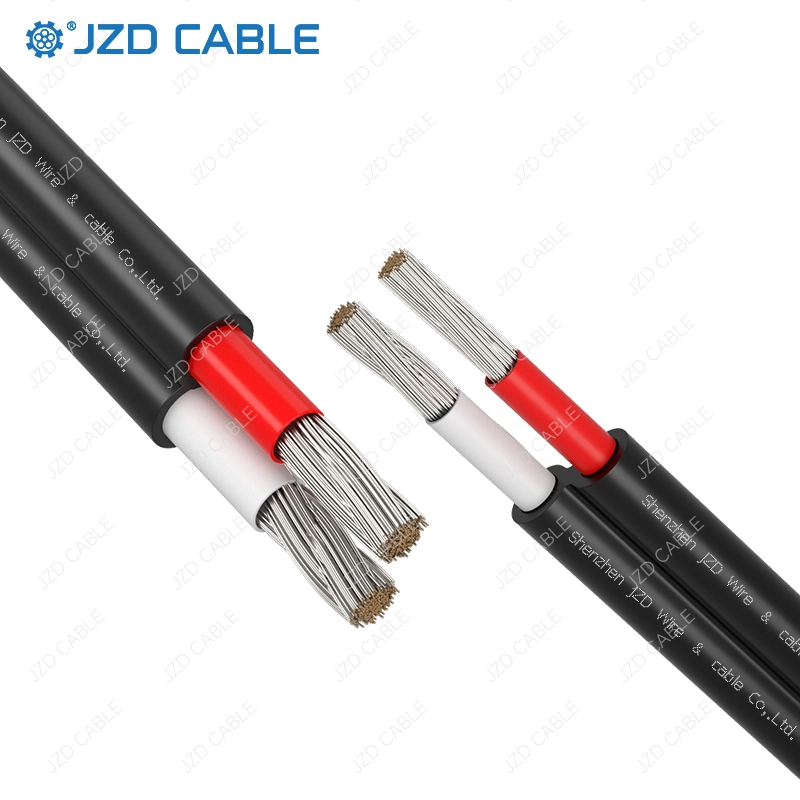


Selecting the right type of electrical cable is fundamental to any project’s safety, code compliance, and longevity. Two of the most common cables you’ll encounter are NM cable (often called Romex®) and BX cable (often used interchangeably with AC cable). While both deliver power, they are designed for different environments and challenges.
At JZD Cable, we want to empower you with the knowledge to choose correctly. This guide will break down the key differences in structure, application, and performance between NM and BX armored cable.
Core Comparison at a Glance
|
Feature
|
NM Cable (Romex®)
|
BX Cable (AC / Armored Cable)
|
|---|---|---|
|
Sheathing
|
PVC Plastic, flat and smooth
|
Spiral Metal Armor (steel/aluminum), round and flexible
|
|
Grounding
|
Dedicated bare copper ground wire
|
Metal sheath + bonding strip (no independent bare ground)
|
|
Protection
|
Basic (for dry, protected areas)
|
High (impact, rodent, and moisture-resistant)
|
|
Weight & Installation
|
Light, flexible, easier and faster to pull
|
Heavy, less flexible, more difficult and slower to install
|
|
Cost
|
Lower (standard for residential)
|
Higher (typically 25%–50% more)
|
|
Primary Use
|
Concealed in dry, interior walls
|
Exposed runs, commercial, industrial, or damage-prone areas
|
Part 1: Construction and Sheathing – Plastic vs. Metal
The most obvious difference is in the cable’s outer jacket, which defines its core characteristics.
NM Cable (Non-Metallic / Romex®)
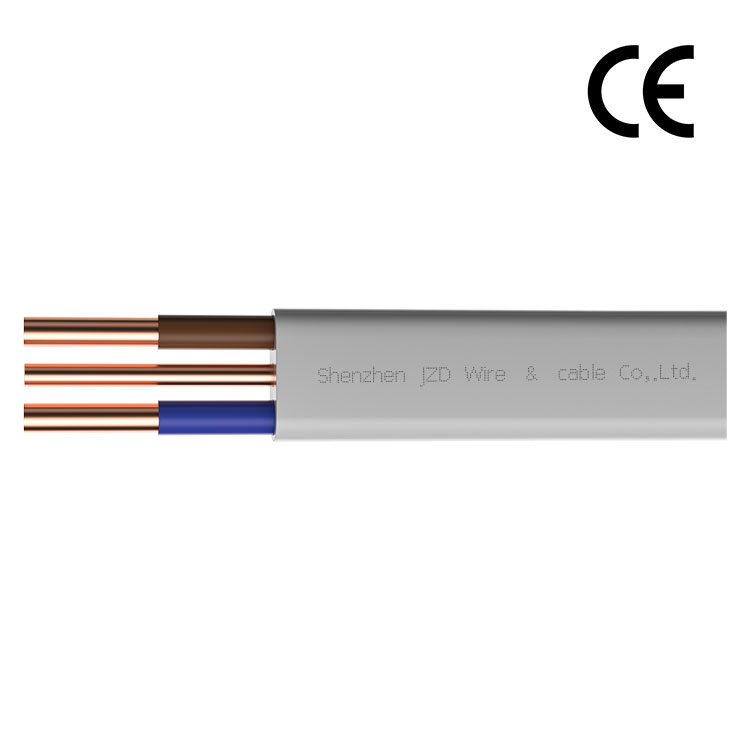
- Sheath: A tough, flexible PVC plastic jacket. It is typically flat and smooth.
- Internal Conductors: Contains 2 or 3 insulated current-carrying copper conductors (hot, neutral) plus a dedicated bare copper grounding wire.
- Common Type: NM-B is the modern standard, with 90°C rated insulation.
In short: NM cable is lightweight, easy to cut and strip, and relies on its internal bare wire for grounding. Its plastic sheath offers no physical protection against nails, screws, or rodents.
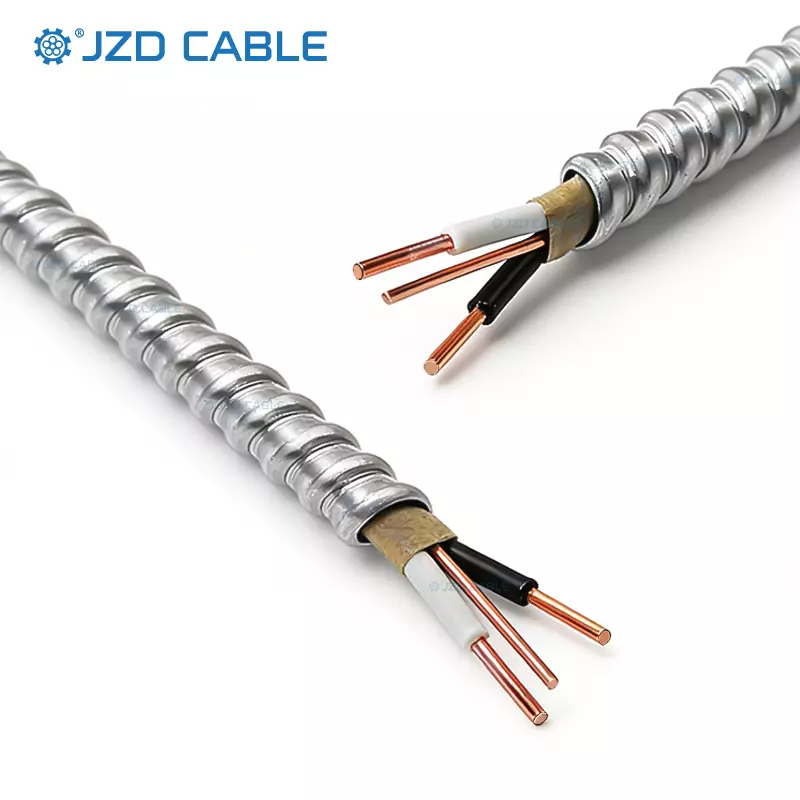
BX Cable (Armored Cable / AC)
- Sheath: A flexible spiral armor made of interlocking steel or aluminum strips. It is round and has a corrugated, textured surface.
- Internal Conductors: Contains insulated copper conductors. Crucially, it does not have a separate bare ground wire. Instead, it features a thin aluminum “bonding strip” or wire that runs under the armor and makes contact with it.
- Grounding Method: The metal armor itself acts as the equipment grounding path. The bonding strip ensures a reliable electrical connection between the armor and the metal box, completing the ground.
In short: BX cable is rigid, heavy, and provides a continuous metal jacket that protects the wires inside and serves as the ground.
Part 2: Key Differences in Application and Performance
1. Grounding: Internal Wire vs. The Armor Itself
- NM Cable: Grounding is straightforward via its dedicated bare copper wire, which is connected to ground terminals in boxes and panels.
- BX Cable: Grounding is provided by the metal armor. The bonding strip ensures conductivity. This is effective but requires all connections (especially at terminations) to be very tight to maintain ground continuity. It is not approved for use where subject to excessive moisture unless specifically listed.
2. Physical & Environmental Protection
- NM Cable: Offers minimal physical protection. It must be installed in locations where it will not be damaged—typically inside finished walls, ceilings, and floors of dry, interior spaces. It is vulnerable to punctures and rodent chewing.
- BX Cable: The metal armor provides excellent protection against accidental impact, crushing, and rodent damage. It is suitable for exposed runs in basements, workshops, and commercial spaces, and can handle slightly damper environments than NM (though not wet locations).
3. Installation & Cost
- NM Cable: Is lighter, more flexible, and much easier to install. It can be pulled quickly through studs and is the go-to for standard residential rough-ins. It is also the more economical choice.
- BX Cable: Is heavier, stiffer, and more difficult to cut and bend. Cutting requires a specialized rotary tool or hacksaw, and securing the armor to boxes requires specific connectors. Installation is slower and more labor-intensive, contributing to its higher overall cost.
Conclusion: How to Choose Between NM and BX Cable
The choice ultimately depends on your project’s location and requirements.
Choose NM Cable (Romex) if:
- You are wiring a standard residential home (single-family or apartment).
- The cable will be concealed inside dry, interior walls, attics, or crawl spaces.
- The area is dry and not prone to physical damage.
- Your priority is cost-effectiveness and ease of installation.
Choose BX Cable (AC/Armored) if:
- You need to run wiring exposed on basement or garage walls, in workshops, or in commercial settings.
- The location is in a damp environment (like an unfinished basement) or requires extra physical protection.
- The area has a potential risk for rodent activity or accidental impact.
- Local electrical codes or the specific application (like some commercial or retrofit work) require a metal-clad cable.
Always consult your local electrical codes and, when in doubt, a licensed electrician. For high-quality NM-B cables and a range of other wiring solutions, explore the catalog at JZD Cable. We provide reliable products that meet strict safety standards for any application.