

When specifying cables for your industrial, marine, or infrastructure project, the choice of insulation material is critical. Two of the most common types you’ll encounter are EPR (Ethylene Propylene Rubber) and XLPE (Cross-Linked Polyethylene). While both are excellent choices, they serve distinctly different purposes. Understanding the core differences between EPR rubber and XLPE insulation is key to ensuring long-term performance, safety, and cost-effectiveness.
At JZD Cable, we engineer cables for the most demanding environments. In this guide, we’ll demystify these two materials, compare their key properties, and clarify which one is the ideal solution for your specific application.
1. Core Definitions: Elasticity vs. Rigidity
The fundamental difference lies in their material nature.
-
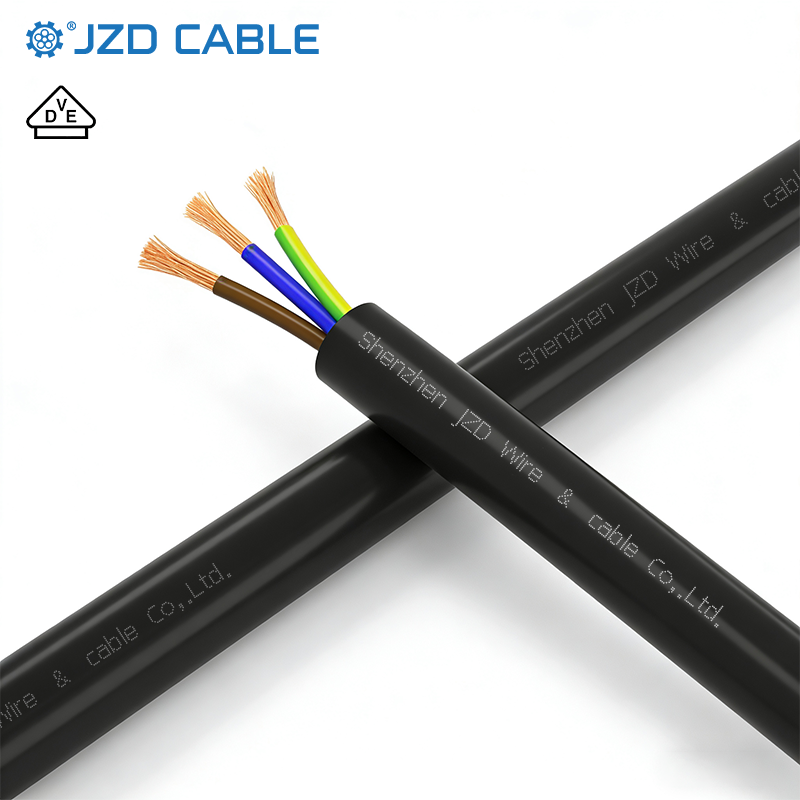
EPR (Ethylene Propylene Rubber): This is an elastomeric, rubber-based insulation. Primarily made from EPDM (a terpolymer of ethylene, propylene, and a diene), its molecular chains are flexible and amorphous. Even after cross-linking, it retains a high degree of elasticity, much like a rubber band.
-
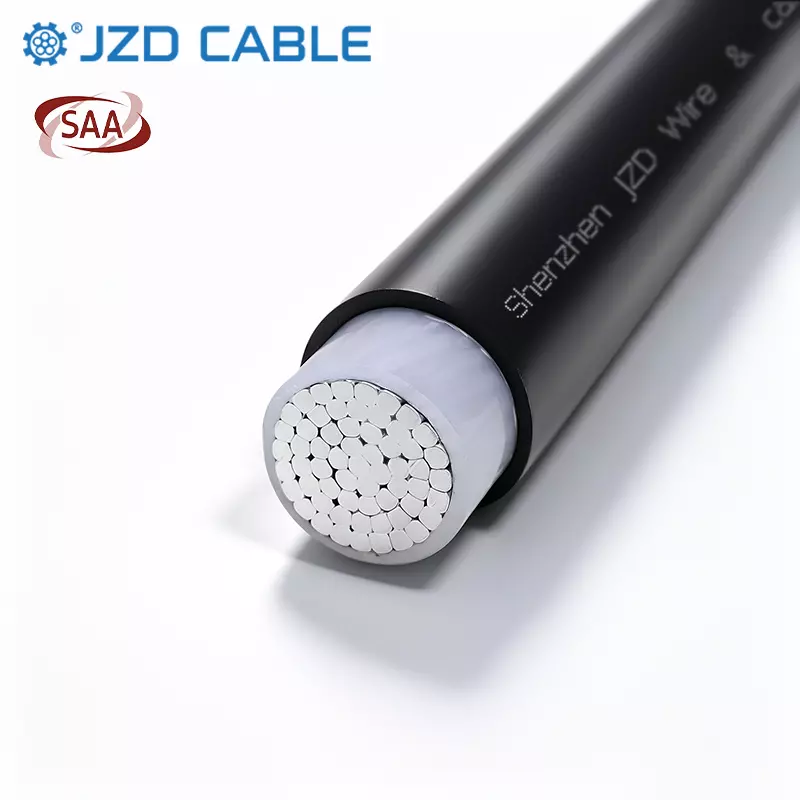
XLPE (Cross-Linked Polyethylene): This is a thermoset plastic insulation. It starts as standard polyethylene (PE), which is then treated chemically or via irradiation to create strong three-dimensional bonds between its molecular chains. This “cross-linking” process transforms it from a thermoplastic into a much more rigid, heat-resistant, and electrically robust material.
In short: EPR is inherently flexible; XLPE is inherently rigid and strong.
2. Key Performance Comparison: EPR vs XLPE
|
Property
|
EPR (Ethylene Propylene Rubber) Insulation
|
XLPE (Cross-Linked Polyethylene) Insulation
|
|---|---|---|
|
Material Type
|
Elastic Rubber
|
Thermoset Plastic
|
|
Flexibility & Feel
|
Very soft and pliable. Easy to bend and maneuver, even at low temperatures.
|
Stiff and hard. Becomes even more rigid in cold conditions.
|
|
Electrical Performance
|
Good insulator. Suitable for most applications. Has a higher dielectric loss.
|
Excellent insulator. Superior dielectric properties with very low loss, making it ideal for high-voltage, high-efficiency power transmission.
|
|
Temperature Range
|
Excellent low-temperature performance. Remains flexible down to -40°C to -55°C without cracking. Standard operating temperature: 90°C.
|
Poor low-temperature flexibility. Can become brittle below -20°C. Standard operating temperature: 90°C (with higher grades up to 125°C).
|
|
Environmental Resistance
|
Exceptional resistance to water, moisture, ozone, and UV exposure. Excellent chemical and oil resistance.
|
Good moisture resistance, but prone to “water treeing” degradation over the long term in wet environments. Requires protective sheathing for outdoor/ozone exposure.
|
|
Mechanical & Dynamic Stress
|
Perfect for constant movement. Highly resistant to cracking under repeated flexing, bending, and vibration.
|
Not suitable for movement. Rigid structure can lead to cracking and failure if frequently moved or flexed.
|
|
Typical Cost
|
Higher
|
Lower (more cost-effective for standard applications)
|
3. Applications: Where to Use EPR vs XLPE?
Choosing the right material is all about matching properties to the environment and use case.
When to Choose EPR Insulation: For Demanding, Dynamic, and Harsh Environments
EPR cables excel where flexibility, durability, and environmental resistance are non-negotiable.
-
Voltage: Primarily Low Voltage (450/750V) to Medium Voltage (up to 35kV for flexible designs).
-
Typical Applications:
-
- Marine & Offshore: Shipboard wiring, offshore platform cables, submarine cables.
- Mobile & Robotic Equipment: Drag chains, robotic arm power cables, automation systems.
- Transportation: Railway and locomotive cables, mining vehicle cables.
- Harsh Conditions: Areas with constant moisture, immersion, salt spray, chemicals, or extreme cold.
When to Choose XLPE Insulation: For Efficient, Fixed, and High-Voltage Installations
XLPE is the industry standard for fixed wiring where electrical efficiency and economy are paramount.
- Voltage: From Low Voltage (0.6/1kV) all the way up to Extra High Voltage (110kV, 220kV+).
- Typical Applications:
-
- Fixed Power Distribution: Building mains, industrial plant wiring, cable trays, conduits, and direct burial.
- Power Transmission & Grid: Utility distribution cables, overhead and underground transmission lines.
- Renewable Energy: Solar (PV) farm cables, wind turbine internal cabling.
- Long-Distance Runs: Where low electrical loss over distance is critical.
Conclusion: Making the Right Choice for Your Project
Choose EPR Insulation if your application involves movement, frequent flexing, exposure to extreme cold, moisture, oil, or chemicals. It’s the tough, flexible workhorse for challenging industrial and marine settings.
Choose XLPE Insulation if you need a cost-effective, highly efficient cable for fixed installations, especially for medium to high-voltage power distribution. It is the backbone of modern electrical grids and industrial power systems.
At JZD Cable, we don’t just sell cables; we provide engineered solutions. Whether your project demands the rugged flexibility of EPR or the efficient reliability of XLPE, our experts can help you select and source the perfect cable for your voltage, environmental, and budgetary needs.
Contact JZD Cable today for a technical consultation and let us power your project with confidence.