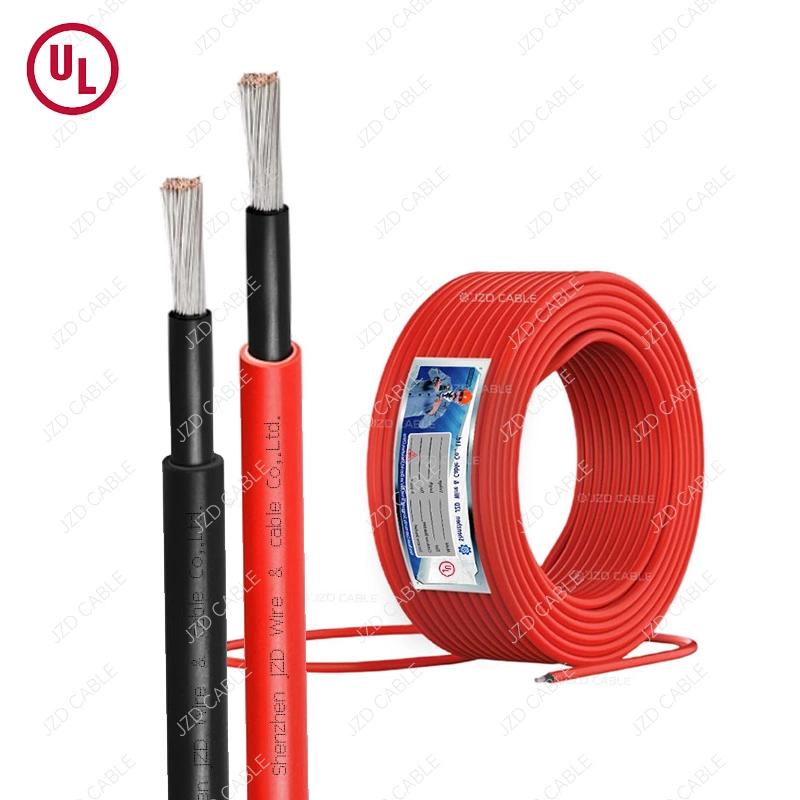



Choosing the right cable for your application is critical for safety, performance, and longevity. Two common types that often come up for discussion are Silicone Rubber (SiR) Cables and Ordinary Rubber Cables (like EPR, CSP, or Neoprene). While both offer flexibility, their core properties and ideal use cases are vastly different.
At JZD Cable, we specialize in providing cables that match your exact environmental and operational demands. This guide breaks down the key differences to help you make an informed decision.
Quick-Reference Comparison Table
|
Comparison Item
|
Silicone Rubber Cable (SiR)
|
Ordinary Rubber Cable (EPR/CSP)
|
|---|---|---|
|
Continuous Operating Temperature
|
-60°C to +180°C
|
-40°C to +90°C / 105°C
|
|
High/Low-Temperature Performance
|
Excellent. Resists aging at high heat; stays flexible when cold.
|
Good. Can degrade at high temperatures and harden in the cold.
|
|
Flexibility
|
Extremely soft. Allows for a very small bending radius.
|
Stiffer. Requires a larger bending radius.
|
|
Weather/Ozone/UV Resistance
|
Outstanding. Long-term outdoor use without cracking.
|
Moderate. Can crack or degrade with prolonged outdoor exposure.
|
|
Mechanical Strength
|
Fair. Less resistant to abrasion, tearing, and impact.
|
Good. More耐磨,抗撕裂, and handles physical stress better.
|
|
Oil & Chemical Resistance
|
Fair. Not ideal for oil or solvent exposure.
|
Good. Better resistance to oils and many chemicals.
|
|
Electrical Insulation
|
Excellent. Superior high-voltage and corona resistance.
|
Good. Performance can decrease at high temperatures.
|
|
Cost
|
Higher
|
More Economical
|
|
Typical Applications
|
Metallurgy, power generation, petrochemicals, automotive manufacturing, high-end electronics.
|
Household appliances, small power tools, agricultural electrification, general indoor use.
|
Understanding the Key Differences
1. Temperature Range & Stability
This is the most defining difference. Silicone rubber’s inorganic backbone allows it to perform reliably in extreme temperatures, from freezing -60°C to scorching +180°C, without losing its properties. Ordinary rubber cables, with an organic structure, have a narrower range and are prone to hardening, cracking, or accelerated aging at temperature extremes.
2. Flexibility & Installation
SiR cables are exceptionally supple, making them ideal for tight spaces, moving applications, or complex routing where a small bending radius is needed. Ordinary rubber cables are more rigid, which can limit installation options in confined areas.
3. Environmental Durability
For any outdoor, sunlight-exposed, or ozone-rich environment, silicone rubber is the clear winner. Its superior resistance ensures the cable jacket won’t become brittle and crack over time. Ordinary rubber requires more protection or may need more frequent replacement in harsh conditions.
4. Mechanical & Chemical Resistance
Here, ordinary rubber often takes the lead. Cables like EPR or CSP are typically tougher, more abrasion-resistant, and better at withstanding occasional impacts, crushing, or exposure to oils and solvents. SiR cables are more delicate and require careful handling and installation, often inside conduits or trays for protection.
5. Electrical Performance at High Heat
While both provide good insulation, silicone rubber maintains its dielectric strength and exhibits excellent resistance to electrical corona (partial discharge) even at its maximum operating temperature. The insulation properties of ordinary rubber can diminish as temperatures rise.
Silicone Rubber Cable vs. Ordinary Rubber: How to Choose?
Your choice ultimately depends on the application’s primary challenge.
Choose Silicone Rubber Cable (SiR) if:
- The environment involves extreme high heat (e.g., near furnaces, engines, heating elements) or severe low temperatures.
- The application requires maximum flexibility in a tight space.
- The cable will be installed outdoors or in areas with high ozone concentration without additional protection.
- The priority is long-term reliability and stability in harsh conditions, justifying the higher initial cost.
Choose an Ordinary Rubber Cable (EPR/CSP) if:
- The operating environment has moderate temperatures within its standard range.
- The cable needs good abrasion and tear resistance for rough industrial use.
- There is potential exposure to oils, fuels, or common chemicals.
- The project has budget constraints and the environment does not demand extreme performance.
Partner with JZD Cable for Your Specialist Needs
At JZD Cable, we understand that there is no one-size-fits-all cable solution. Whether your project demands the extreme environment performance of Silicone Rubber Cable or the robust, cost-effective reliability of high-quality Ordinary Rubber Cable, our experts are here to help you select the perfect match.
Contact us today to discuss your application requirements and request a quote for durable, high-performance cables built to last.