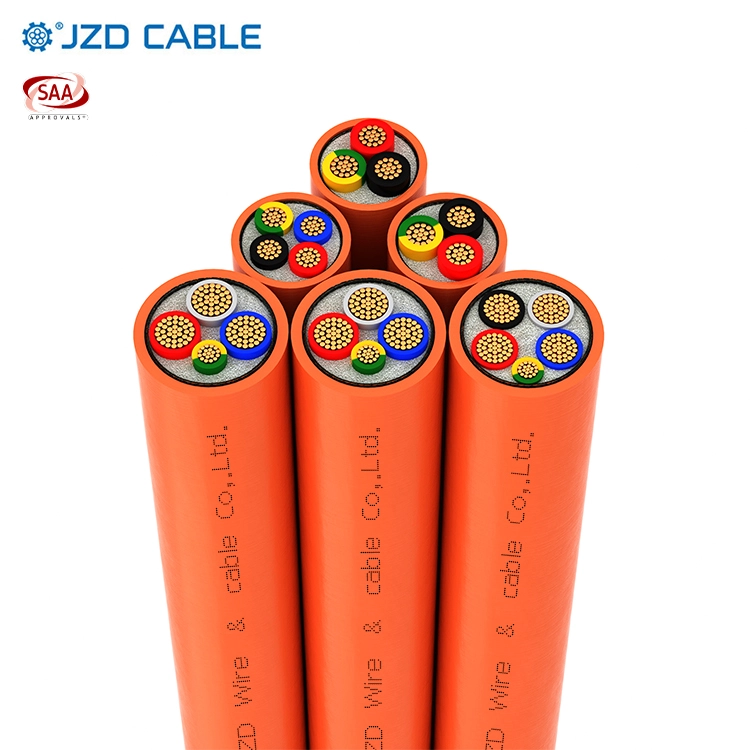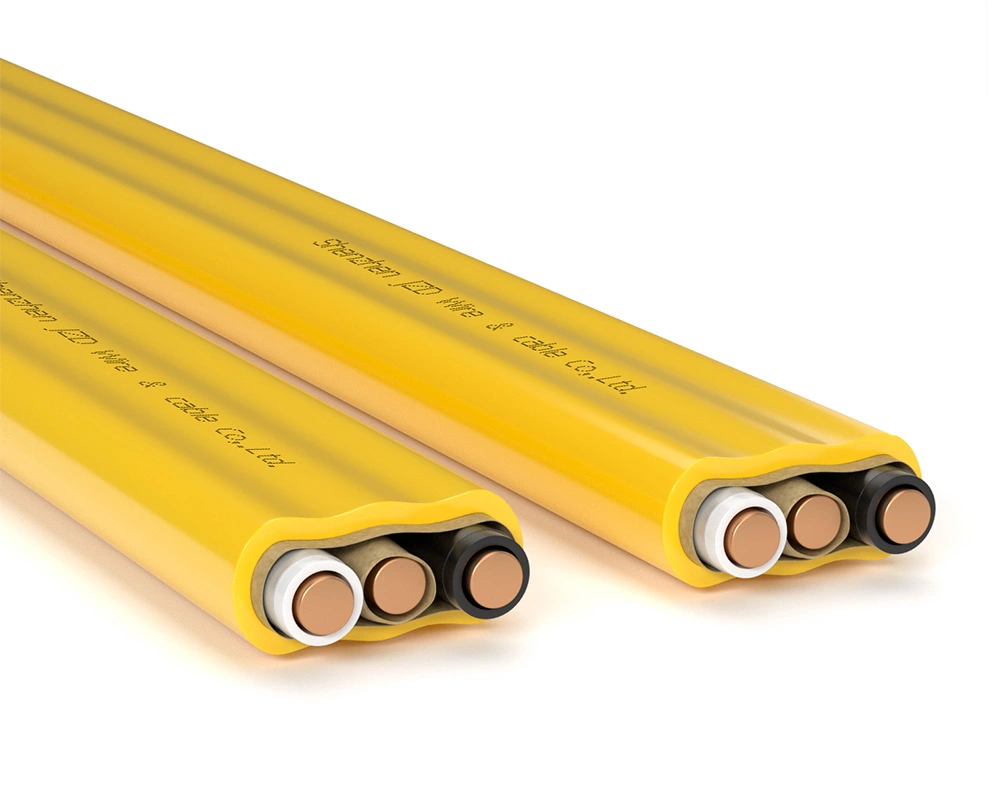


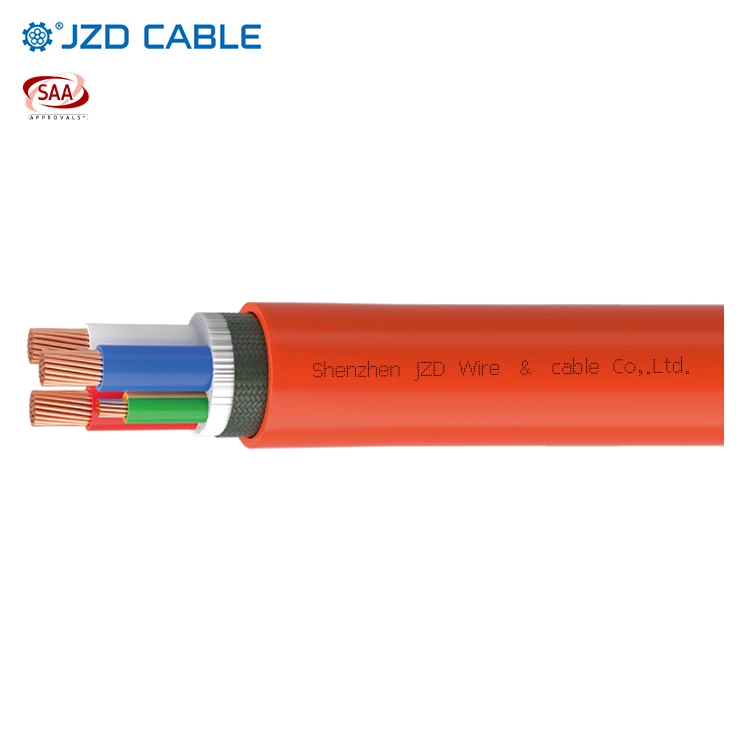
When specifying orange power cables for Australian projects, the choice between X-90 and V-90 insulated types is critical. While both share the iconic high-visibility orange sheath mandated for easy identification and share a 90°C continuous operating temperature rating, their core differences are substantial. Understanding the distinction between thermoset XLPE (X-90) and thermoplastic PVC (V-90) insulation is key to ensuring long-term reliability, safety, and cost-effectiveness for your installation. As a leading manufacturer, JZD Cable breaks down the essential comparison.
The Core Distinction: It’s All in the Material
The “X” and “V” in the cable designations refer to the insulating material. This fundamental difference dictates almost all other performance characteristics.
- X-90 Insulation: Uses Cross-linked Polyethylene (XLPE), a thermosetmaterial. A chemical or physical cross-linking process creates a three-dimensional network, making it irreversible and highly stable under heat.
- V-90 Insulation: Uses Polyvinyl Chloride (PVC), a thermoplasticmaterial. It softens with heat and hardens upon cooling, making it processable but less stable under continuous thermal stress.
Detailed Performance Comparison: X-90 vs V-90
|
Feature
|
X-90 (XLPE, Thermoset)
|
V-90 (PVC, Thermoplastic)
|
|---|---|---|
|
Core Material
|
Cross-linked Polyethylene (XLPE)
|
Polyvinyl Chloride (PVC)
|
|
Material Type
|
Thermoset
|
Thermoplastic
|
|
Continuous Op. Temp
|
90°C
|
90°C
|
|
Short-Circuit Withstand
|
Up to 250°C (for ≤5 seconds)
|
160°C – 180°C (for ≤5 seconds)
|
|
Electrical Performance
|
Excellent. High insulation resistance, stable dielectric strength, superior resistance to electrical treeing.
|
Good. Lower insulation resistance compared to XLPE, more susceptible to variation with temperature.
|
|
Thermal Aging & Lifespan
|
Excellent. Exceptional long-term aging resistance. Maintains flexibility and dielectric properties at high temperatures for decades.
|
Moderate. Prolonged exposure to high temperatures can lead to embrittlement, loss of plasticizers, and faster degradation.
|
|
Environmental & Safety
|
Inherently better. Standard XLPE is halogen-free, producing low smoke and low toxicity (LSF) when burned. Special LSZH formulations are also available.
|
Requires formulation. Standard PVC releases dense, corrosive hydrochloric acid (HCI) smoke when burned. Must be specially compounded to be Low Smoke Zero Halogen (LSZH) or flame retardant.
|
|
Flexibility & Handling
|
Moderate. Stiffer than PVC but perfectly suitable for fixed installations like trays, ducts, and direct burial.
|
Very Good. Softer and more pliable, making it easier for pulling through conduits and tight spaces in cable trays.
|
|
Overall Durability
|
Very High. Superior mechanical and thermal endurance due to the cross-linked structure.
|
Good. Mature technology with good general durability, but compromised by extreme heat.
|
|
Cost Consideration
|
Higher initial material and processing cost.
|
Mature technology, highly cost-competitive.
|
Application Guidelines: Choosing the Right Cable
The choice isn’t about which is “better” in a vacuum, but which is right for the application.
Choose X-90 (XLPE) Cable for:
- High-Load & High-Ambient Temperature Areas: Solar farms, industrial plants, transformer connections, and areas with high thermal loads.
- Critical Power Infrastructure: Where long lifespan (40+ years) and maximum reliability are paramount, such as in main power distribution feeds.
- Environments Demanding High Safety: Tunnels, submarines, ships, high-rise buildings, and public spaces where low smoke, zero halogen, and high short-circuit ratings are crucial for safety.
- Direct Burial or Harsh Conditions: Due to its superior moisture and stress cracking resistance.
Choose V-90 (PVC) Cable for:
- General Purpose, Cost-Sensitive Projects: Light commercial buildings, residential complexes, internal building wiring where ambient temperatures are controlled.
- Complex Pulls and Conduits: Where superior flexibility significantly eases installation in tight conduits or crowded cable trays.
- Non-Critical, Fixed Installations with stable, moderate thermal environments and where the highest tier of short-circuit protection is not the primary concern.
Key Takeaway: Look Beyond the Color
Remember, the orange sheath is for high visibility as per Australian standards and does not indicate the insulation type. Always check the cable markings and specifications.
For demanding, high-reliability, and long-lifecycle applications, the superior thermal aging, short-circuit rating, and safety profile of X-90 XLPE cables justify the investment. For standard applications with budget constraints and easier installation needs, V-90 PVC cables remain a proven and effective solution.
At JZD Cable, we manufacture both high-performance X-90 and reliable V-90 Australian Standard Orange Power Cables. Our experts can help you specify the correct cable for your project’s specific electrical, environmental, and longevity requirements.