

When it’s time to bring power from the utility lines into a building, choosing the right cable is critical for safety, compliance, and performance. Among the most common solutions in North America is the SER cable. This guide will explain what SER cable is, its construction, where and how it’s used, and key factors for selecting the right one for your project. As a leading manufacturer at JZD Cable, we provide high-quality SER cables that meet the stringent demands of modern electrical installations.
What is SER Cable?
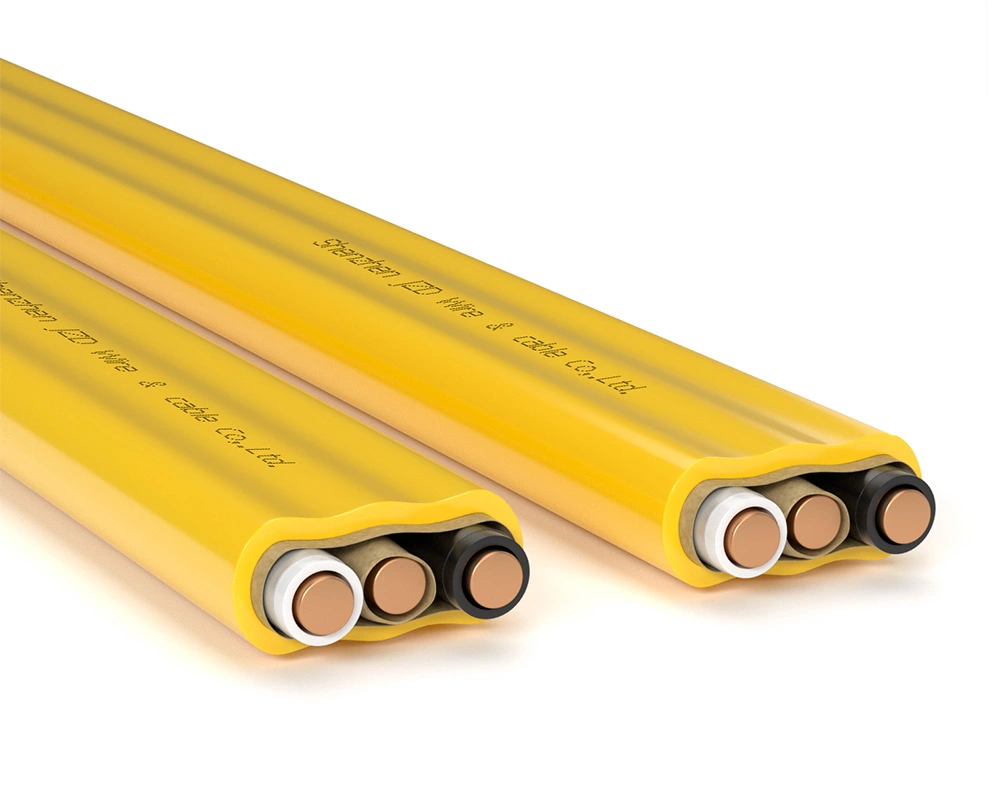
SER stands for Service Entrance Cable, Style R, where “R” denotes its Round shape reinforced with a tape layer. It is a key member of the Type SE cable family, designed specifically for overhead or above-ground power service entry applications, contrasting with the flat-style SEU cable.
Key Standards & Ratings:
- Primary Standards: Complies with UL 854, ASTM B800/B801/B836, and the National Electrical Code (NFPA 70, NEC).
- Voltage & Temperature: Rated for 600V and a maximum operating temperature of 90°C in both wet and dry locations.
- Conductor Insulation: Typically features XHHW-2-rated cross-linked polyethylene (XLPE) insulation for superior durability and heat resistance.
- Crucial Installation Note: As per NEC 338.12, SER cable is NOT permitted for direct burial. It is approved for aerial, above-ground, or in-conduit (where required) installations only.
Construction and Components
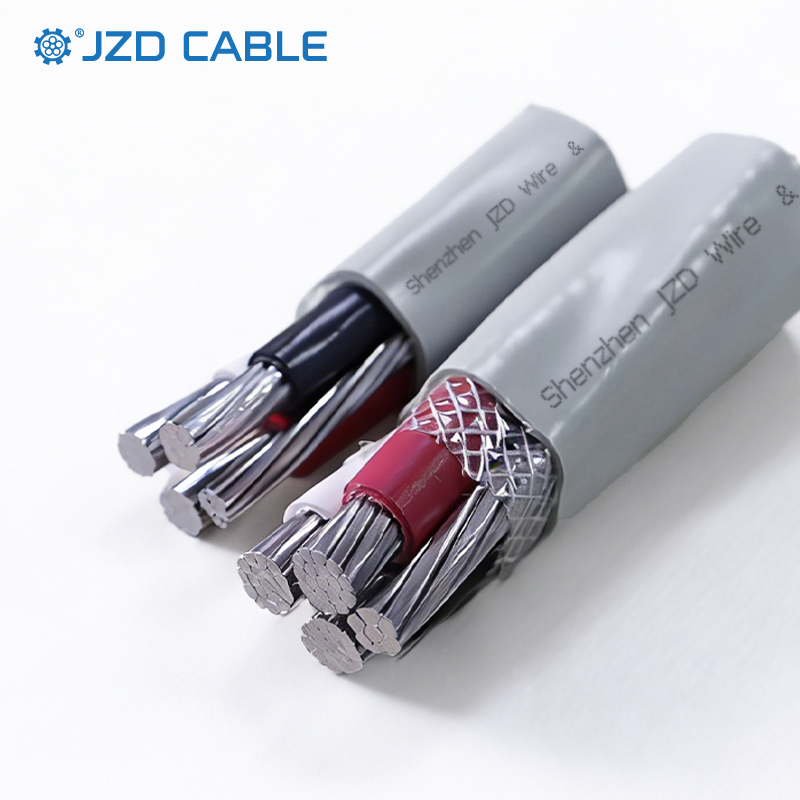
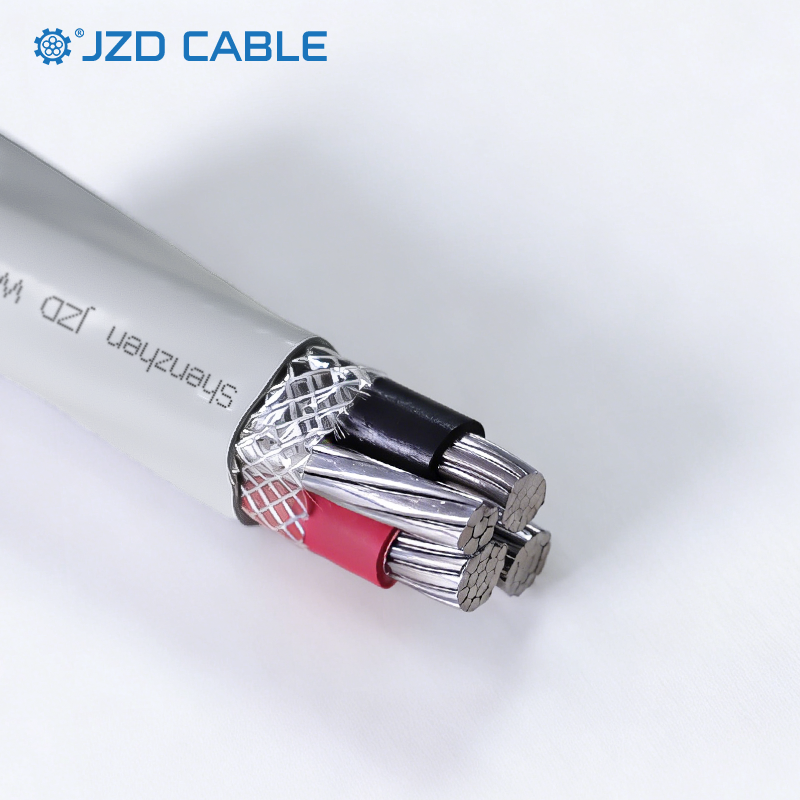
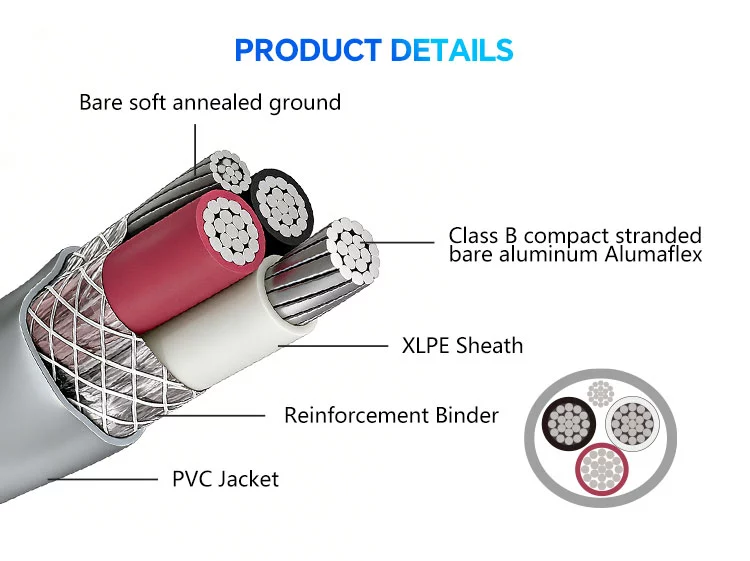
Understanding the build of SER cable explains its reliability. A standard configuration includes 2 to 4 insulated current-carrying conductors (phase/neutral) and one bare copper grounding conductor.
- Conductor: Available primarily in cost-effective, compact-stranded AA-8000 series aluminum alloy, with copper versions for applications requiring maximum conductivity and anti-creep performance.
- Insulation: Individual conductors are insulated with XHHW-2 XLPE, color-coded or striped for easy phase identification.
- Reinforcement: A fiberglass braid or reinforcing tape is applied over the cabled conductors. This layer provides mechanical strength, maintains the round shape, and enhances flame retardancy.
- Jacket: The final outer sheath is a sunlight-resistant (UV-resistant), flame-retardant gray PVC. This jacket protects against environmental elements, corrosion, and physical damage in outdoor settings.
Primary Applications and Uses
SER cable is the workhorse for bringing power from the utility’s point of connection to the main building distribution.
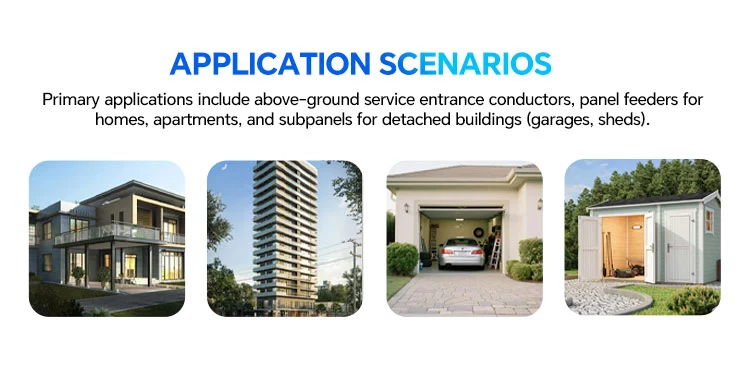
- Main Service Entry: The most common use is for the overhead “service drop” running from the utility pole to the meter base and then into the main service panel of a building.
- Building Feeder & Branch Circuits: It can be used as a feeder or for branch circuit wiring within a structure, provided it is installed in exposed, above-ground locations like within stud cavities or supported cable trays.
- Typical Installations: Ideal for single-family homes, apartments, and small commercial buildings as the primary power entrance cable.
- Important Limitations: SER is not suitable for direct burial underground, submersion in water, or use in high-voltage systems.
Key Performance and Selection Criteria
Choosing the correct SER cable ensures code compliance, efficiency, and long-term safety.
1.Electrical Parameters: Always reference NEC Table 310.16 for the correct ampacity (current-carrying capacity) based on the conductor material (copper/aluminum), size, and termination temperature ratings.
2.Material Choice – Aluminum vs. Copper:
- Aluminum Alloy SER: Offers an excellent balance of performance and cost, especially advantageous for longer runs. Modern AA-8000 alloy resists creep and oxidation better than old pure aluminum wiring.
- Copper SER: Provides higher conductivity and superior termination integrity. Best for high-current applications, situations with frequent load cycling, or where ultimate reliability is paramount.
3.Sizing (AWG): Available in a range of American Wire Gauge sizes, from larger service entry sizes like 2/0, 3/0, or 4/0 AWG down to smaller gauges for feeder circuits. Sizing must be based on the calculated electrical load.
4.Installation Compliance:
- Never direct bury SER cable.
- Outdoor runs must be securely fastened and protected from physical damage.
- Use connectors and lugs rated for the conductor material (especially AL-rated for aluminum cables) to prevent galvanic corrosion and ensure a safe, reliable connection.
Conclusion
SER cable is a reliable, code-compliant solution for overhead and above-ground service entrance installations. Its robust construction with XHHW-2 insulation and a weather-resistant jacket makes it a dependable choice for electricians and contractors. The choice between aluminum and copper depends on your project’s specific requirements for budget, run length, and current load.
Looking for reliable, specification-compliant SER cable? Explore JZD Cable’s range of wiring solutions. Contact us or visit our website to learn more about our products and commitment to quality.