


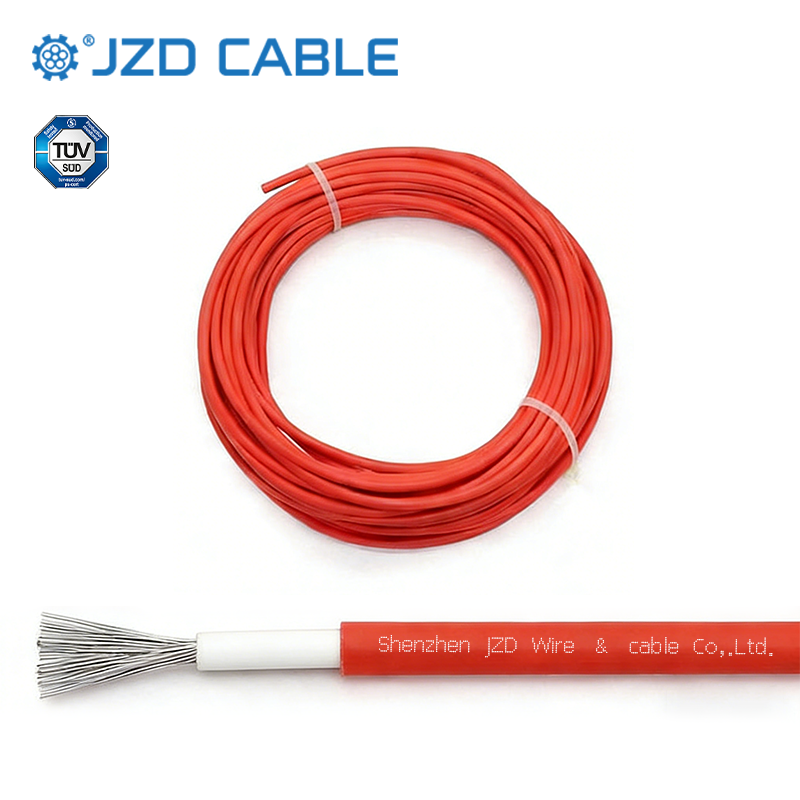
For a reliable and safe photovoltaic (PV) system, the choice of direct current (DC) cables is as critical as the panels themselves. Two certification marks dominate this space: TUV for EN 50618 and UL for UL 4703. These are not interchangeable; they represent different technical philosophies and are mandatory for different global markets. This guide breaks down the key differences between TUV and UL certification for PV cables, helping you select the right cable for your project’s location and requirements.
Core Standards and Geographic Dominance
The fundamental difference lies in the standard each certification body evaluates against.
1.TUV Certification for PV Cables (EN 50618)
- Governing Standard: EN 50618:2014 (H1Z2Z2-K).
- Issuing Bodies: Awarded by German notified bodies like TUV Rheinland, TUV Sud, etc.
- Market Position: The mandatory standard within the European Union and widely accepted as the benchmark for quality in most other global markets outside North America (e.g., Asia-Pacific, Middle East, Africa, Australia).
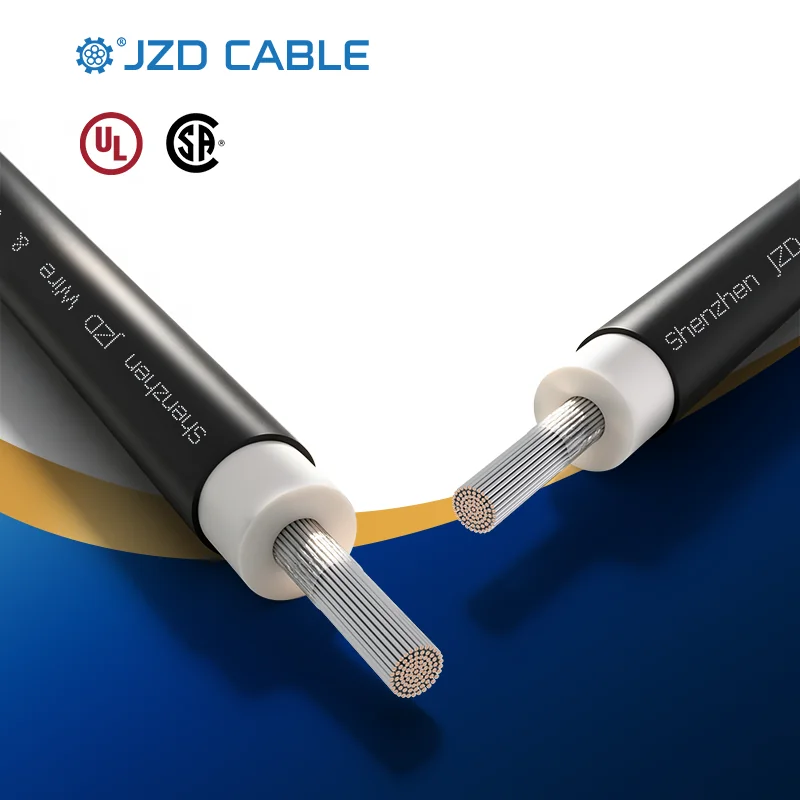
2.UL Certification for PV Cables (UL 4703)
- Governing Standard: UL Subject 4703.
- Issuing Body: Underwriters Laboratories (UL), the primary NRTL (Nationally Recognized Testing Laboratory) in North America.
- Market Position: The required standard for the United States and Canada. Compliance with UL 4703 is essential for obtaining system approval from Authorities Having Jurisdiction (AHJs) and utilities, as it aligns with the National Electrical Code (NEC).
Technical & Design Philosophy: A Detailed Comparison
The differing standards lead to significant variations in cable construction, material selection, and testing focus.
|
Aspect
|
TUV-Certified Cable (EN 50618)
|
UL-Certified Cable (UL 4703)
|
|---|---|---|
|
Standard Focus
|
Long-term Environmental Durability. Designed for 25+ year lifespan under harsh weather.
|
Electrical & Fire Safety Compliance. Designed to meet strict North American building and electrical codes.
|
|
Typical Insulation/Sheath Material
|
Primarily Cross-linked Polyolefin (XLPO). EN 50618 specifies a double-layer of XLPO (H1Z2Z2-K) for superior, homogeneous resistance.
|
More flexible. Allows PVC, XLPE, or other qualified materials that meet the standard’s safety tests. Material choice is performance-based.
|
|
Fire Test Focus
|
IEC 60332-1-2 (Vertical Flame Test for a single insulated wire/cable).
IEC 60332-3-25 (Test for vertical flame spread of bunched cables – Category C). Emphasizes limiting flame propagation in bundles. |
Vertical Tray Flame Tests (UL 1685): Includes stringent FT4 (Vertical Tray) test for plenum cables.
Small-scale flame tests: VW-1, FT1, FT2. Overall, fire safety requirements are extremely rigorous and tailored to U.S. building fire codes. |
|
Temperature Rating
|
Typically rated for a continuous conductor temperature of 90°C to 120°C. Focus on long-term thermal aging resistance.
|
Typically rated for 90°C wet/dry. Also includes testing for short-term thermal overload and stability under fault conditions.
|
|
Weathering & UV Resistance
|
Extremely stringent. Requires extended UV exposure, hydrolysis, and weathering tests to ensure performance over decades in direct sunlight.
|
Required, but the test regime is different and integrated with the material qualification process. The core emphasis remains on safety post-environmental exposure.
|
|
Voltage Rating (DC)
|
Commonly 1.8 kV (1500V systems).
|
Commonly 1.8 kV (1500V systems), with products available for 2 kV systems.
|
Philosophy in a Nutshell:
- EN 50618 (TUV) asks: “Will this cable maintain its insulation integrity and mechanical properties after 25 years in the sun, rain, and extreme temperatures?”
- UL 4703 (UL) asks: “Does this cable pose a fire risk in a building installation, and does it remain electrically safe under all conditions defined by the NEC?”
Application and Market Access: Which One Do You Need?
Your choice is dictated by geography and local regulations.
1.Choose TUV-Certified (EN 50618) PV Cable for:
- All projects in the European Union. It is a regulatory requirement for the CE marking.
- International projects outside North America, including the UK, Australia, the Middle East, Asia, Africa, and South America. It is the globally recognized quality benchmark.
- Projects where long-term field reliability in challenging environments (high UV, desert heat, coastal salt mist) is the primary concern.
2.Choose UL-Certified (UL 4703) PV Cable for:
- All projects in the United States and Canada. It is non-negotiable for code compliance, inspection sign-off, and insurance.
- Projects that must adhere strictly to the latest NEC requirements for PV system installation.
- Installations where local fire codes are paramount, especially in commercial or residential building applications.
Conclusion: The Right Tool for the Right Market
|
TUV (EN 50618) Cable
|
UL (UL 4703) Cable
|
|
|---|---|---|
|
Core Design Goal
|
Maximum Long-term Durability
|
Maximum Fire Safety & NEC Compliance
|
|
Key Material
|
Double-layer XLPO (H1Z2Z2-K)
|
PVC, XLPE, or other UL-recognized compounds
|
|
Your Decision Driver
|
Project location is OUTSIDE North America.
|
Project location is IN the United States or Canada.
|
1.For EPCs and Developers: Always verify the required certification with your local authorities and utility beforeprocurement. Using a cable without the correct regional certification can lead to costly delays, rejection, and safety liabilities.
2.For Distributors and Installers: Stocking cables with both certifications allows you to serve a global clientele. Clearly label and specify the certification for each product to avoid misapplication.
At JZD CABLE, we specialize in manufacturing high-performance photovoltaic cables that meet the most demanding standards. Our product line includes:
- TUV-Certified Cables compliant with EN 50618 (H1Z2Z2-K), offering exceptional long-term weather resistance for global applications.
- UL-Certified Cables compliant with UL 4703, ensuring full safety compliance for the North American market.
We ensure that regardless of your project’s destination, you have access to the correctly certified, reliable, and safe PV cable solution.
Unsure which certified PV cable you need for your specific market? Contact our technical experts at JZD CABLE for a consultation.

-4-3.jpg)