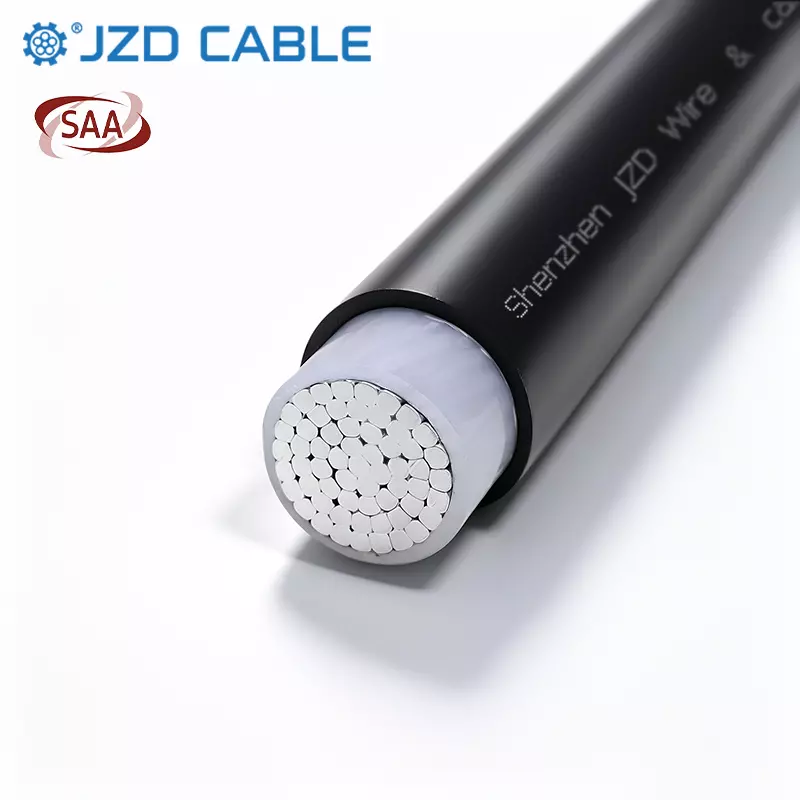


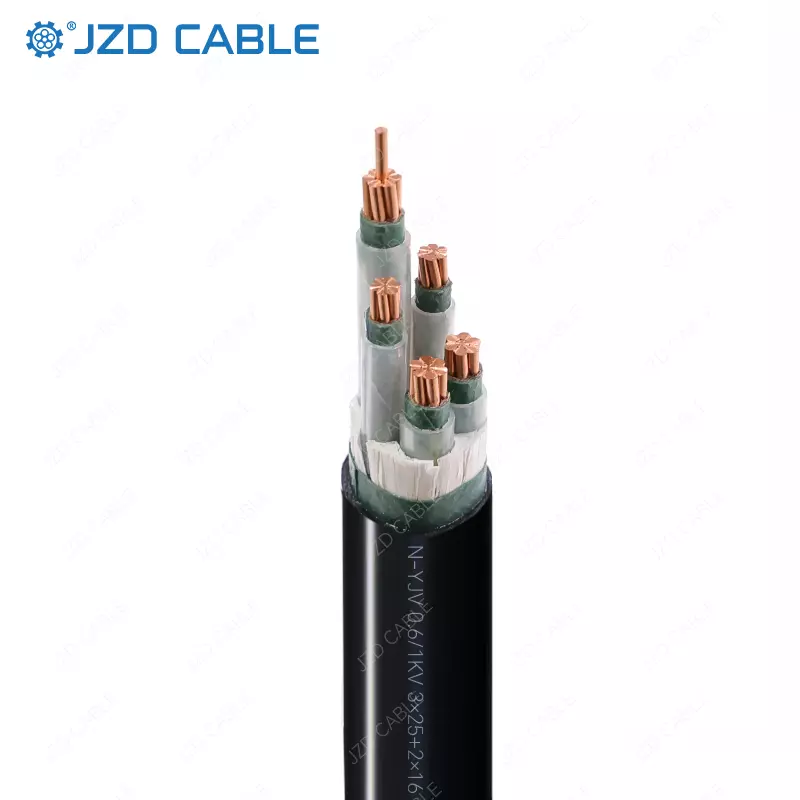
In critical safety systems, the phrase “fire resistant cable” can be misunderstood. The goal isn’t to create a cable that won’t burn—it’s to create one that won’t fail electrically during a fire. This is the exact principle behind NH-YJV Fire Resistant Cables. They are engineered to ensure that essential circuits for fire alarms, emergency lighting, and smoke extraction systems remain operational long enough for safe evacuation, even when engulfed in flames.
The core mechanism can be summarized in one sentence: A layer of fire-resistant mica tape forms a protective, ceramic-like barrier during a fire, which insulates the conductor and maintains circuit integrity.
1. The Core Structure: One Critical Layer
The fundamental difference between a standard cable and a fire-resistant cable lies in a single, added component.
1.Standard Power Cable (e.g., YJV):
- Conductor -> Insulation (XLPE) -> Outer Sheath (PVC)
2.Fire Resistant Cable (NH-YJV):
- Conductor -> Fire-Resistant Mica Tape -> Insulation (XLPE) -> Outer Sheath (PVC/LSZH)
The only component providing the fire-resistant function is the layer of Fire-Resistant Mica Tape. The insulation and sheath perform their standard roles, but the mica tape is the dedicated lifesaver.
2. How the Fire Resistance Works: A Step-by-Step Process
Here is what happens when fire hits an NH-YJV cable, based on the principle of its mica tape layer.
Step 1: The Outer Layers Burn
The outer PVC or LSZH sheath and the XLPE insulation are the first to be attacked by the flame. They will burn, melt, and char. This is expected. These layers are not designed to survive the fire intact.
Step 2: The Mica Tape Transforms
Under the intense heat (typically 800–1000°C in a building fire), the fire-resistant mica tape undergoes a critical change. Its primary component—natural mica, an inorganic mineral with a melting point above 1200°C—does not burn. Instead, it sinters and hardens, forming a rigid, ceramic-like shell that completely encases the copper conductor.
Step 3: The Ceramic Shell’s Three Key Functions
This newly formed, hard ceramic barrier does three essential things to keep the circuit alive:
- Heat Insulation: It acts as a thermal barrier, preventing the intense external flame temperature from rapidly transferring to the copper conductor inside.
- Electrical Insulation: It maintains excellent dielectric strength, preventing short circuits between phases or to ground.
- Structural Integrity: It forms a rigid structure that holds the conductor in place, preventing it from breaking apart or sagging, which would cause an open circuit.
The Result: “Circuit-Proof” Performance
Because of this process, the copper conductor remains intact, insulated, and functional. Its temperature stays within operational limits long enough to prevent short circuits and open circuits. The power continues to flow for the rated duration (e.g., 90, 120, or 180 minutes), ensuring the connected life safety system operates.
Applications of NH-YJV Cables
This reliable “circuit-proof” performance makes NH-YJV cables mandatory for:
- Fire alarm and detection systems
- Emergency lighting and exit signs
- Public address and evacuation voice systems
- Smoke control and extraction fans
- Fire pumps and emergency elevators
JZD Cable: Your Partner for Reliable Fire Safety Solutions
At JZD Cable, we manufacture NH-YJV cables that precisely implement this life-saving principle. Our cables use high-quality, calcined mica tape to ensure reliable ceramic formation under fire. Every batch is tested to comply with stringent international standards like IEC 60331 and SAA for circuit integrity.
We provide cables with optional Low Smoke Zero Halogen (LSZH) sheaths to complement the fire-resistant core with enhanced safety through minimal smoke and non-toxic fumes.
Choose JZD Cable for NH-YJV cables that deliver on the critical promise: to keep the power on when it matters most. Contact our team for technical specifications and support for your next project.