

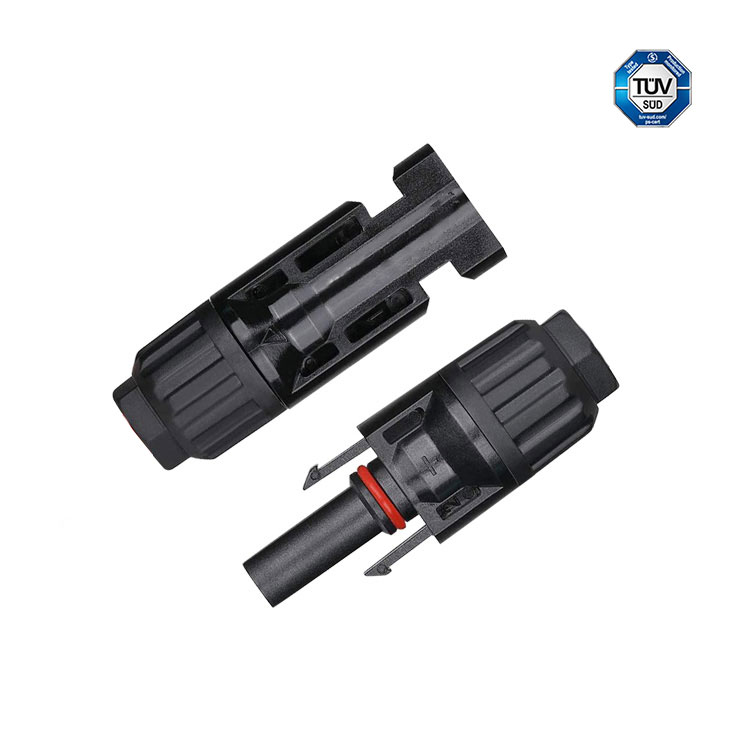
When it comes to connecting solar panels and building a reliable photovoltaic (PV) system, one component stands out as the global benchmark: the MC4 connector. Whether you are a solar installer, engineer, or DIY enthusiast, understanding the MC4 connector is essential for ensuring safety, efficiency, and long-term performance.
In this article, we’ll break down everything you need to know about MC4 connectors — from their origin and structure to technical specs, advantages, and real-world applications.
What Is an MC4 Connector?
The term MC4 stands for Multi-Contact 4mm. It was originally developed by the Swiss company Staubli (formerly Multi-Contact) and has become the de facto standard for DC-side connections in photovoltaic systems.
- MC = Multi-Contact (brand name)
- 4 = 4mm diameter of the contact pin
MC4 connectors are designed to provide a secure, weatherproof, and electrically safe connection between solar panels, cables, junction boxes, and inverters.
Core Structure: Male + Female Pairing
An MC4 connector consists of two mating parts:
- Male connector (plug): Features a 4mm exposed copper pin with tin plating.
- Female connector (socket): Contains a spring-loaded contact using MULTILAM technology — multiple elastic lamellae that wrap around the male pin for maximum contact area.
The housing is made of engineering plastics such as PC, PA, or PPO, rated UL94 V-0 for flame retardancy, UV-resistant, and weatherproof. A built-in locking mechanism ensures the connectors snap together automatically and require a special tool to unlock — preventing accidental disconnection and electric shock. When mated, the seal achieves IP67 or IP68 protection against dust and water ingress.
Key Technical Parameters
|
Parameter
|
Value
|
|---|---|
|
Rated Voltage
|
1000V DC / 1500V DC
|
|
Contact Resistance
|
≤ 0.25 mΩ (stable over 25 years)
|
|
Temperature Range
|
-40°C to +90°C (short-term up to 105°C)
|
|
Compatible Cables
|
2.5 / 4 / 6 / 10 mm² (14–8 AWG), XLPO double-insulated PV cable
|
|
Certifications
|
TÜV, UL 4703, CE, RoHS
|
These parameters ensure that MC4 connectors can handle the demanding conditions of outdoor solar installations for decades.
Working Principle & Key Advantages
1. MULTILAM Multi-Contact Technology
Inside the female connector, more than ten elastic contact strips surround the male pin. This design provides:
- Large contact surface → low resistance
- Excellent vibration resistance
- Long-term electrical stability
2. Safety Design
- Reverse polarity prevention: Male and female shapes are unique, so same-polarity connectors cannot be mated.
- Touch-safe: All live parts are fully enclosed. Even when unmated, the connector meets IP2X protection against finger contact.
- Self-locking: Strong pull force cannot separate the connector without the proper unlocking tool, making it resistant to wind and vibration.
3. Weather & Durability
- Resistant to UV, salt spray, and ammonia — ideal for harsh outdoor environments.
- Service life of 25+ years in the field.
- Flame retardant (UL94 V-0) — self-extinguishing to reduce fire risk.
Typical Applications in Solar PV Systems
MC4 connectors are used at almost every stage of a solar power system:
- At the panel side: Solar modules come pre-wired with female MC4 connectors (black for negative, red for positive).
- On the cable side: DC cables are crimped with male MC4 connectors to connect panels in series or parallel.
- Junction boxes & inverters: DC inputs typically feature MC4-compatible terminals.
System Topology Examples
- Series connection: Connect the positive of one panel to the negative of the next to increase voltage.
- Parallel connection: Use Y-branch MC4 connectors to combine strings and boost current.
Why Choose MC4 Connectors for Your Solar Project?
With proven reliability, global certifications, and a 25-year lifespan, MC4 connectors are the safest and most efficient choice for any photovoltaic installation. They simplify wiring, reduce maintenance, and comply with international standards.
At JZD Cable, we supply high-quality MC4 connectors and compatible PV cables that meet TÜV, UL, and CE requirements. Whether you are building a residential rooftop system or a large-scale solar farm, our products deliver the performance and durability your project demands.