

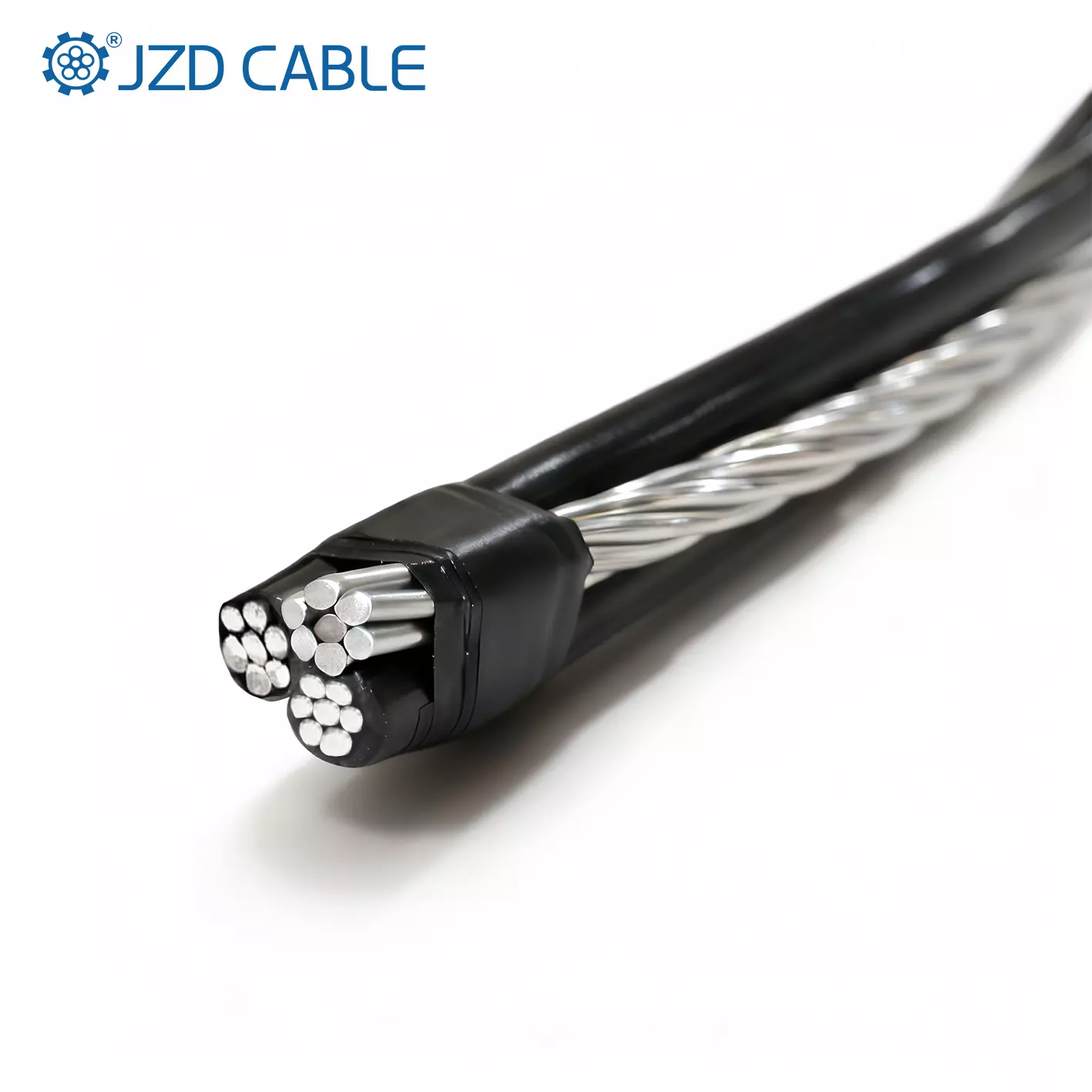
When planning an overhead power distribution network under AS/NZS 3560.1, one of the first decisions you face is conductor material: aluminium or copper?
While both materials are recognised by the standard, the reality is that aluminium is the absolute mainstream for low‑voltage Aerial Bundled Cables (ABC) in Australia. Copper is reserved for niche, high‑reliability scenarios. This article explains why—and helps you decide which is right for your project.
Standard & Basic Definitions (AS/NZS 3560.1)
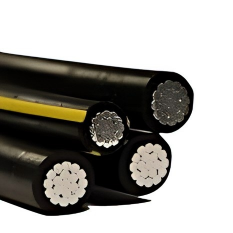
1.Aluminium ABC (Default Choice)
- Conductor: Class 2 compact stranded circular aluminium alloy 1350.
- Common cross‑section: 16 mm² to 95 mm².
- Insulation: XLPE with UV stabilisers.
- Messenger wire: Galvanised steel or aluminium alloy.
- Status: Default solution for low‑voltage distribution across Australia.
2.Copper ABC (Special‑Purpose Only)
- Conductor: Class 2 compact stranded copper per AS 1125.
- Insulation & messenger: Same as aluminium ABC.
- Status: Non‑mainstream; used only where high reliability, short spans, or extreme corrosion resistance are required.
Core Performance Comparison (Same Cross‑Section / Equivalent Ampacity)
1.Electrical Properties
|
Parameter
|
Aluminium
|
Copper
|
Impact
|
|---|---|---|---|
|
Conductivity (% IACS)
|
61%
|
100%
|
Copper conducts better, lower losses
|
|
Resistivity (Ω·mm²/m)
|
≈0.0283
|
≈0.0172
|
Aluminium has 1.6× higher resistance
|
|
Current rating (same section)
|
Baseline 100%
|
≈+30%
|
Copper carries ~30% more current
|
|
Equivalent section for same ampacity
|
16 mm² (Al)
|
10 mm² (Cu)
|
Al needs 1.6× larger section
|
|
Voltage drop
|
Higher
|
Lower (~60% of Al)
|
Copper gives longer stable runs
|
2.Physical & Mechanical Properties
|
Parameter
|
Aluminium
|
Copper
|
Impact
|
|---|---|---|---|
|
Density (g/cm³)
|
2.7
|
8.9
|
Al is only 30% of Cu weight – major advantage for overhead
|
|
Tensile strength (MPa)
|
60–100
|
200–250
|
Copper is stronger, less prone to breakage
|
|
Thermal expansion coefficient
|
23×10⁻⁶/°C
|
16.5×10⁻⁶/°C
|
Al expands/contracts more – joints may loosen
|
|
Melting point
|
660°C
|
1083°C
|
Copper withstands overloads better
|
|
Flexibility
|
Moderate (bends easily)
|
Excellent (resists fatigue)
|
Copper easier to install in tight spaces
|
Structural & Visual Differences
|
Aspect
|
Aluminium ABC
|
Copper ABC
|
|---|---|---|
|
Conductor colour
|
Silver‑white
|
Reddish‑purple (copper)
|
|
Insulation colour
|
Black / Red / Blue (same for both)
|
Same
|
|
Overall size (equal ampacity)
|
Thicker (larger diameter needed)
|
Thinner (smaller cross‑section)
|
|
Weight per metre
|
Light (lower pole loading)
|
Heavy (requires stronger supports)
|
|
Common cores
|
2‑core, 3‑core with steel messenger
|
Usually small sections ≤35 mm²
|
Application Scenarios
1.Aluminium ABC – Used in 95% of Australian Projects
- Low‑voltage distribution: Single‑phase / three‑phase service drops for houses, shops, farms (16–50 mm² typical).
- Long‑span overhead lines: Suburban/rural spans of 50–100 m – lightweight construction reduces pole and tower costs.
- Budget‑sensitive projects: Large‑scale municipal lighting, temporary power supplies, street lighting networks.
Why aluminium wins here:
- Lower material cost.
- Much lighter → cheaper installation, fewer poles.
- Proven long‑term performance in Australian conditions.
2.Copper ABC – Special Scenarios Only
- High‑reliability loads: Hospitals, data centres, fire‑fighting equipment requiring uninterrupted power.
- Short spans + high corrosion: Coastal areas, industrial zones with salt spray or chemical fumes – copper offers superior corrosion resistance.
- Space‑constrained locations: Tight ducts or confined routes where a smaller cross‑section (e.g., 10 mm² copper = 16 mm² aluminium) is necessary.
When copper makes sense:
- Extreme environments where aluminium’s corrosion rate is unacceptable.
- Critical infrastructure where downtime costs far outweigh material savings.
- Retrofitting into existing copper‑based systems.
Cost & Lifecycle Considerations
|
Factor
|
Aluminium
|
Copper
|
|---|---|---|
|
Material cost per metre
|
Low
|
High (3–4× more)
|
|
Installation cost
|
Low (lighter, fewer supports)
|
Higher (heavier, stronger poles)
|
|
Maintenance
|
Moderate (check joint tightness)
|
Low (more stable connections)
|
|
Lifespan in normal environment
|
30+ years
|
40+ years
|
|
Recyclability
|
Excellent (high scrap value)
|
Excellent (very high scrap value)
|
Summary Decision Guide
|
Your Project Condition
|
Recommended Conductor
|
|---|---|
|
Standard residential/commercial overhead feed
|
Aluminium ABC
|
|
Long span (>50 m)
|
Aluminium ABC
|
|
Budget‑sensitive large‑scale rollout
|
Aluminium ABC
|
|
Hospital / data centre / emergency supply
|
Copper ABC
|
|
Coastal / highly corrosive atmosphere
|
Copper ABC
|
|
Very limited space / duct size
|
Copper ABC (smaller section)
|
Final Recommendation
At JZD Cable, we manufacture both aluminium and copper ABC cables in full compliance with AS/NZS 3560.1. For the vast majority of projects, aluminium ABC is the smart, economical, and proven choice. Reserve copper for those rare but critical applications where its unique properties justify the premium.
Need a custom quote or technical advice? Visit jzdcable.com or contact our engineering team. We’ll help you select the right cable for your specific span length, load, and environmental conditions.