

When it comes to 600V/1000V building wire for North American commercial, industrial, and institutional projects, XHHW-2 is the workhorse. The “X” (XLPE insulation), “HH” (90°C), “W” (wet-rated), and “-2” (90°C in both dry and wet) make it the most versatile single-core building wire on the market — suitable for conduits, trays, and even outdoor exposed runs with SUN RES marking.
But XHHW-2 ships in two conductor flavours: copper (CU XHHW-2) and aluminum (AL XHHW-2, AA8000/AA8176 alloy). Both share the identical XLPE insulation, same voltage and temperature ratings, same FT4/SUN RES options — yet the conductor metal changes everything about ampacity, weight, termination labor, lifecycle cost, and where each one makes sense.
Specify wrong and you’ll either overpay for copper where aluminum would do, or create a termination nightmare (and insurance headache) by putting aluminum on a circuit that demands copper. This guide breaks down the two side-by-side so your next BOQ gets it right.
What is XHHW-2?
Per UL 44 and NEC Article 310 :
- Insulation: XLPE (cross-linked polyethylene) — thermoset, 90°C dry/wet
- Voltage: 600V (1000V available for PV applications)
- Temperature: 90°C dry, 90°C wet (the “-2” unified rating)
- Cold bend: –40°C installation
- Flame: FT1 standard; FT4 available for large gauges (≥8 AWG)
- SUN RES: Available for outdoor exposed runs
- Oil resistance: XLPE provides moderate oil/chemical resistance
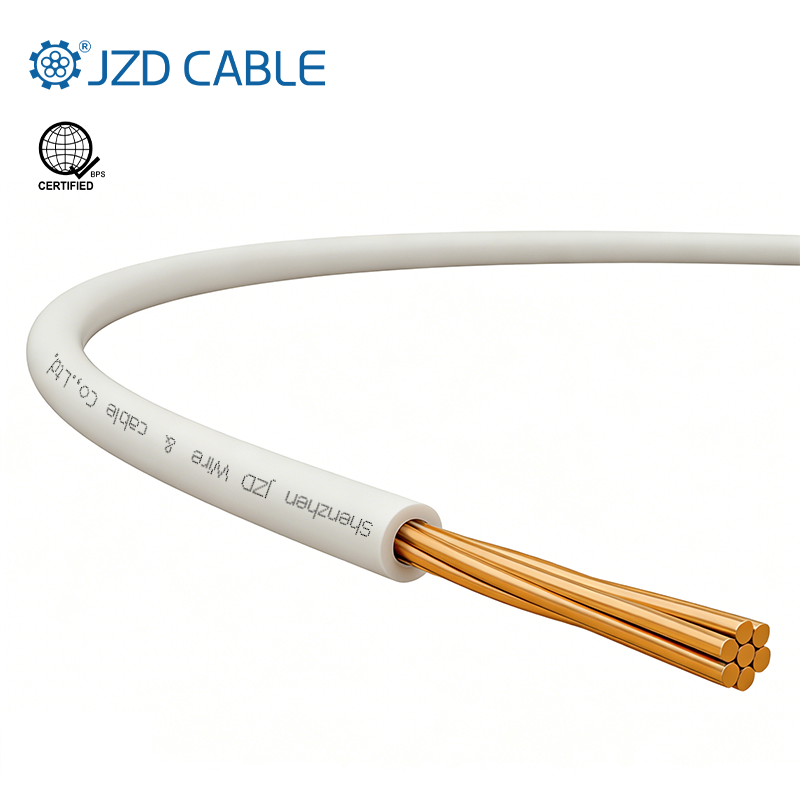
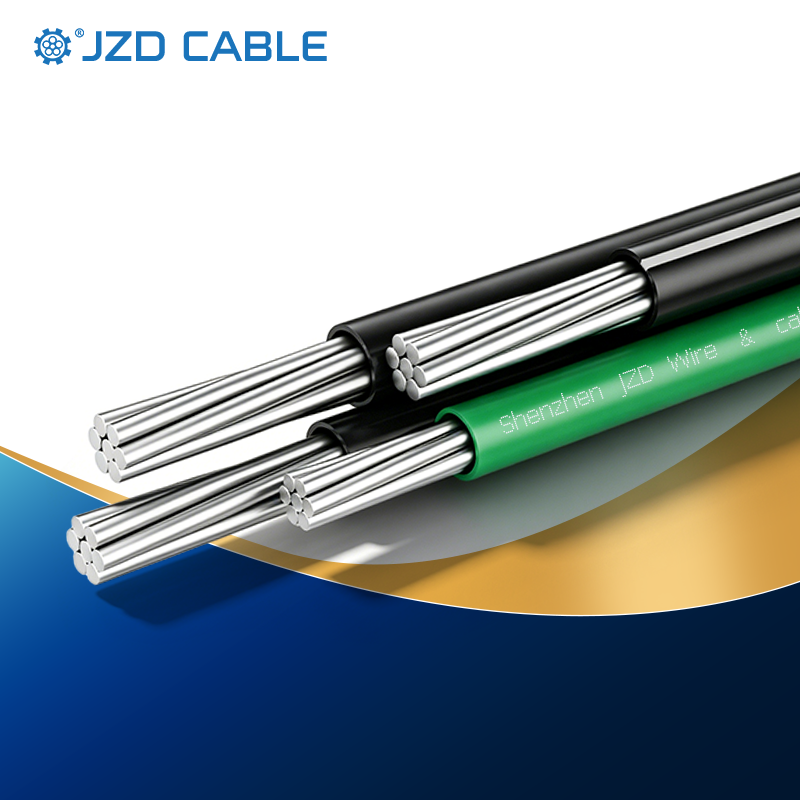
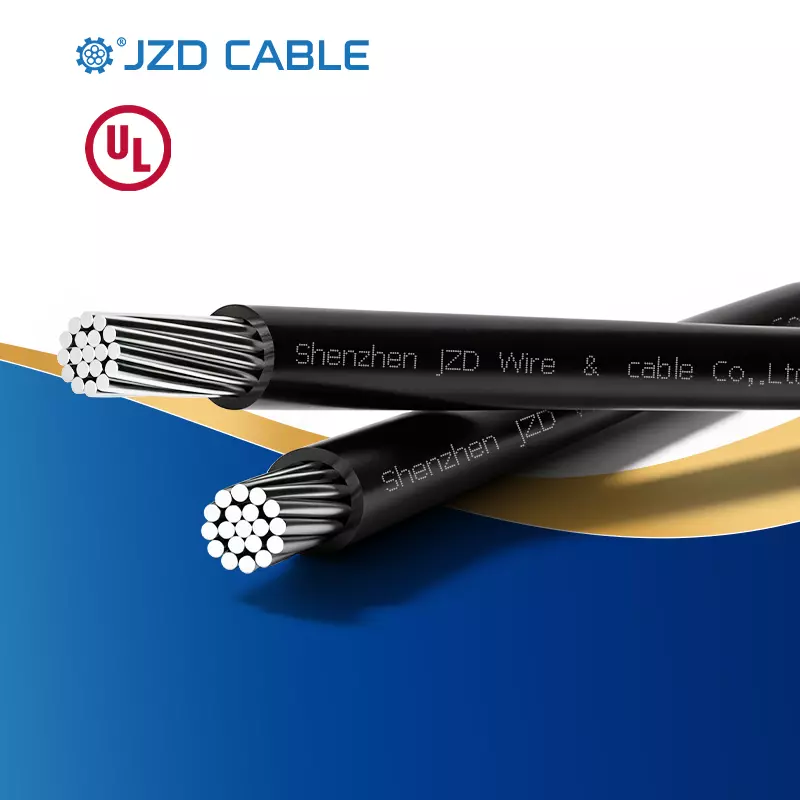
- Conductor options: Bare copper (ASTM B3/B8) or AA8000/AA8176 aluminum alloy (compact stranded)
- Marking: CU XHHW-2 or AL XHHW-2 (the “AL/ALUMINUM” prefix is mandatory on aluminum)
💡 Both copper and aluminum XHHW-2 share identical XLPE insulation and electrical ratings. The conductor metal is the only variable — but what a variable it is.
Full Side-by-Side Comparison
|
Comparison Dimension
|
CU XHHW-2 (Copper)
|
AL XHHW-2 (AA8000/AA8176 Aluminum)
|
|---|---|---|
|
Conductor material
|
Bare copper, ASTM B3/B8 compact stranded
|
AA8000 or AA8176 aluminum alloy, compact round stranded
|
|
DC resistance
|
Low — optimal conductivity
|
~1.68× copper — significantly higher per same AWG
|
|
Ampacity at 90°C (same AWG)
|
100% baseline
|
Only 62–68% of copper — must upsize 1–2 gauges
|
|
Equivalent sizing
|
2 AWG Cu ≈ 4/0 Al; 4 AWG Cu ≈ 2/0 Al
|
Must enlarge to match copper ampacity
|
|
Voltage drop
|
Minimal — ideal for long runs
|
Significantly higher per same gauge; upsizing required for distance
|
|
Weight
|
100% baseline (heavy)
|
~1/3 the weight of copper equivalent
|
|
Outer diameter
|
Baseline for given AWG
|
Larger when upsized for equivalent ampacity
|
|
Short-circuit withstand
|
Copper melting point 1083°C — excellent fault tolerance
|
Aluminum melting point 660°C — weaker fault tolerance, easier to melt under sustained fault
|
|
Flexibility / bend life
|
Excellent — copper ductile, multi-bend resistant
|
Brittle — repeated bending or sharp turns in tight cabinets can fracture strands; not for frequent flex
|
|
Conduit fill
|
Baseline
|
Larger gauge = more conduit space consumed per ampacity delivered
|
|
Termination
|
Standard copper lugs, direct crimp — simple, fast
|
Mandatory bi-metal (Al-Cu) transition lugs or Al-specific lugs; antioxidant paste (No-Ox) required
|
|
Oxidation
|
Copper oxide remains conductive — joints stable long-term
|
Aluminum forms insulating oxide film instantly; must abrade + paste or joint degrades rapidly
|
|
Galvanic corrosion
|
N/A (Cu-to-Cu)
|
Severe if Al touches copper or steel directly — bi-metal lugs are non-negotiable
|
|
Thermal expansion
|
Low
|
Higher — connections loosen over heating cycles; periodic re-torque needed
|
|
Maintenance
|
Set-and-forget
|
Periodic inspection and re-torquing required
|
|
Material cost (per metre)
|
High
|
~30–40% lower than copper for equivalent gauge
|
|
Total lifecycle cost
|
Higher upfront, lower maintenance
|
Lower upfront (large gauges), higher maintenance overhead
|
|
Energy loss (I²R)
|
Low line loss — energy efficient
|
Higher line loss — increased operating cost over decades
|
|
Common sizes
|
14 AWG – 750 kcmil
|
8 AWG – 750 kcmil (AA8000); larger gauges where Al economics favor
|
|
Best applications
|
Branch circuits, control cabinets, PCS DC input, data centers, medical, short runs, frequent-bend routes
|
Service entrances, large commercial feeders, outdoor mains, long-span bridges, solar farm collection, where weight/cost drive decision
|
|
Environments to avoid
|
(None — copper works everywhere XHHW-2 is rated)
|
Indoor tight-bend cabinets, vibrating equipment, areas where copper-Al termination cannot be properly maintained
|
Five Differences That Actually Matter on Site
1. Ampacity & Gauge Upsizing — The Core Trade-off
Aluminum’s higher resistivity forces you to upsize 1–2 gauges to match copper:
|
Desired Load
|
CU XHHW-2
|
AL XHHW-2 Equivalent
|
|---|---|---|
|
100A
|
2 AWG Cu
|
4/0 Al
|
|
150A
|
1/0 Cu
|
300 kcmil Al
|
|
200A
|
3/0 Cu
|
400 kcmil Al
|
|
250A
|
4/0 Cu
|
700 kcmil Al
|
Impact: At 2 AWG, aluminum’s weight advantage is modest. At 4/0 and above, the weight delta becomes dramatic — a 500 kcmil Cu XHHW-2 run weighs ~2.4× its Al equivalent. This is where aluminum starts winning on installation ergonomics.
2. Weight — Aluminum’s Decisive Advantage at Large Gauges
For long feeder runs in trays, bridges, or outdoor racks:
|
Gauge
|
CU XHHW-2 Weight
|
AL XHHW-2 Weight
|
Savings
|
|---|---|---|---|
|
2 AWG
|
~590 kg/km
|
~200 kg/km
|
66% lighter
|
|
4/0 AWG
|
~2,900 kg/km
|
~950 kg/km
|
67% lighter
|
|
500 kcmil
|
~3,700 kg/km
|
~1,200 kg/km
|
68% lighter
|
That weight difference transforms:
- Pulling effort — Al can be human-pulled where Cu requires mechanical tuggers
- Tray load capacity — Al allows more circuits per tray without overload
- Structural load — Al reduces building/tower stress
- Freight cost — Al ships at 1/3 the tonnage
3. Termination Complexity — Copper’s Massive Advantage
This is aluminum’s greatest weakness:
CU XHHW-2:
- Strip XLPE → crimp standard copper lug → done
- Copper oxide is still conductive — minor surface oxidation doesn’t compromise the joint
- Decades of stable service with zero maintenance
AL XHHW-2:
- Strip XLPE carefully (XLPE is tough — special tools needed)
- Mechanically abrade each strand to remove the insulating aluminum oxide film
- Apply antioxidant paste (Penetrox, No-Ox) generously
- Crimp bi-metal (Al-Cu) transition lug — NEVER direct Al-to-Cu contact
- Torque to spec; periodic re-inspection and re-torquing required
- Galvanic corrosion risk if any dissimilar metal touches aluminum without proper transition
⚠️ The 1960s–70s aluminum wiring crisis left a lasting scar on the industry. Modern AA8000 alloy + bi-metal lugs + antioxidant paste is code-compliant and safe — but the termination overhead is real, and improper installation causes fires. Copper is forgiving; aluminum is not.
4. Cost — Apparent Aluminum Win, Context-Dependent Reality
At the cable level, AL XHHW-2 costs 30–40% less per metre than CU XHHW-2 for equivalent gauge . But factor in:
- Bi-metal lugs: 3–8eachvs0.50 for copper lugs
- Antioxidant paste: Per-joint consumable + labor
- Upsizing: If you must jump from 4/0 Cu to 700 kcmil Al to hit 250A, material savings shrink
- Labor: Aluminum termination takes 2–3× longer
- Energy loss: Higher I²R over 20–30 year lifecycle = real electricity cost
Net result:
- Small gauges (8–2 AWG): Copper usually wins on total cost — aluminum’s termination overhead eats the material savings
- Large gauges (4/0 and above): Aluminum delivers 15–25% net project savings — the weight + material advantage overcomes termination costs
- Very large (500 kcmil+): Aluminum savings can reach 30%+
5. Application Suitability — Where Each Excels
CU XHHW-2 dominates:
- Branch circuits (any size)
- Control cabinets, switchboards, panelboards (tight bends, frequent routing changes)
- PCS DC input, data centers, medical facilities (reliability-critical, low voltage drop)
- Short runs where weight isn’t a concern
- Vibrating equipment, moving machinery
- Anywhere termination simplicity and long-term reliability trump initial cost
AL XHHW-2 dominates:
- Service entrance conductors (large gauge)
- Commercial/institutional building main feeders (4/0 and above)
- Outdoor campus distribution, long bridge/rack spans
- Solar farm collection systems (large gauge, long runs, weight-sensitive)
- Municipal/utility distribution where weight and material cost drive decisions
- Fixed installations with regular maintenance access
NEC Compliance Notes for Both
Per NEC Article 310 and related:
- Ampacity: Both use the 90°C column of NEC Table 310.16 for sizing (adjusted for termination temperature limitations per 110.14(C))
- Aluminum terminations: Must use listed bi-metal connectors; antioxidant compound required per 110.14(B)
- Conduit fill: Both comply with Chapter 9 Table 1; aluminum’s larger gauge for equivalent ampacity means more conduit space consumed
- Support: Per Article 300 — aluminum’s lighter weight reduces support burden on long runs
- Direct burial: XHHW-2 (both Cu and Al) is not for direct burial without conduit; use USE-2 or RWU90 for that
- Exposed outdoor: SUN RES marking required for both; aluminum’s lower coefficient of thermal expansion actually helps in outdoor temperature cycling
Application Decision Tree
|
Scenario
|
Recommended
|
Why
|
|---|---|---|
|
Branch circuits (14–6 AWG)
|
CU XHHW-2
|
Al not economical at small gauges; termination overhead dominates
|
|
Control cabinet wiring, switchboard
|
CU XHHW-2
|
Tight bends, frequent routing, reliability-critical
|
|
PCS DC input, data center, medical
|
CU XHHW-2
|
Low voltage drop, zero termination risk
|
|
4/0 service entrance, 200A
|
Either — Cu simpler, Al 30% cheaper on material
|
Al large-gauge savings meaningful; proper bi-metal termination routine for qualified electricians
|
|
500 kcmil+ main feeder
|
AL XHHW-2
|
Weight savings (2.4× lighter) transforms installation; 25–30% net project savings
|
|
Long-span bridge/tray run (>100m)
|
AL XHHW-2
|
Weight + material savings decisive over distance
|
|
Solar farm collection (large gauge, long runs)
|
AL XHHW-2
|
Weight + material savings decisive over distance
|
|
Outdoor campus distribution
|
AL XHHW-2
|
Weight savings + Al’s lower thermal expansion helps outdoor cycling
|
|
Vibrating equipment, tight cabinet bends
|
CU XHHW-2
|
Aluminum brittle — fractures under repeated flex
|
|
Building 3 stories or less, main feeder
|
CU XHHW-2
|
Simpler, insurer-friendly, termination overhead not justified
|
|
High-rise, large commercial, weight-critical
|
AL XHHW-2
|
Weight savings reduces structural load and pulling effort
|
|
Short run (<15m), any gauge
|
CU XHHW-2
|
Voltage drop not a concern; Cu simplicity wins
|
|
Municipal/utility, scheduled maintenance
|
AL XHHW-2
|
Large gauge economics + maintenance access justifies Al
|
FAQ
Q: Is aluminum XHHW-2 code-compliant?
A: Yes — AA8000/AA8176 aluminum XHHW-2 is fully UL 44 listed and NEC-compliant . The key requirements: bi-metal transition lugs, antioxidant paste, proper torque, and periodic inspection.
Q: Can I mix copper and aluminum XHHW-2 in the same conduit?
A: Yes, but never terminate them together. Each conductor runs independently; at the panel, copper conductors land on copper lugs, aluminum on bi-metal lugs. Direct Al-to-Cu contact = galvanic corrosion disaster.
Q: Why is aluminum only 62–68% of copper’s ampacity at the same gauge?
A: Aluminum’s resistivity is ~1.68× copper’s . For the same cross-sectional area, it simply cannot carry as much current. Hence the 1–2 gauge upsizing requirement.
Q: Does aluminum XHHW-2 have higher voltage drop?
A: Yes — significantly higher per same gauge due to higher resistance. For runs over 30–50 metres at high current, you must upsize to compensate, or accept higher line loss.
Q: Is the XLPE insulation identical on both?
A: Yes — both CU and AL XHHW-2 use the same XLPE compound, same 90°C dry/wet rating, same FT1/FT4 options, same SUN RES availability. The insulation performance is identical; only the conductor differs.
Q: Can I use AL XHHW-2 for a 100A sub-panel feeder?
A: Yes — 4/0 AL XHHW-2 is rated ~135A at 90°C (NEC Table 310.16), comfortably serving 100A after applying termination temperature corrections. Material cost ~30% less than 2 AWG Cu; weight ~66% less. Net project savings typically 15–20%.
Q: What’s the minimum size aluminum XHHW-2 available?
A: Typically 8 AWG is the smallest commercially common AL XHHW-2. Below that, copper is the standard — aluminum’s termination complexity isn’t justified for small branch circuits.
Q: Does aluminum XHHW-2 require special conduit?
A: No — same conduit/tray as copper. However, aluminum’s larger gauge (when upsized for ampacity) consumes more conduit fill, so you may need larger conduit for the same ampacity delivery.
Q: Is AL XHHW-2 acceptable for emergency systems / life safety?
A: Per NEC, yes — if properly terminated with bi-metal lugs and antioxidant. However, many engineers specify copper for life-safety circuits due to aluminum’s higher maintenance requirement and historical reliability concerns.
Q: How much can I save with AL XHHW-2 on a 500 kcmil main feeder run?
A: For a 50-metre run of 500 kcmil: AL XHHW-2 cable cost is ~35% less than CU, weight is ~68% less (transforming pulling from mechanical tugger to manual pull), and freight is dramatically cheaper. After adding bi-metal lugs and antioxidant paste, net project saving is typically 25–30%. Across a large commercial build with multiple such runs, savings reach six figures.
JZD Cable CU XHHW-2 & AL XHHW-2 Product Range
At JZD Cable, we manufacture both copper and aluminum XHHW-2 to full UL 44 compliance:
CU XHHW-2 (Copper):
- Sizes: 14 AWG – 500 kcmil (larger on request)
- Conductor: Bare copper, ASTM B3/B8 compact stranded
- Insulation: XLPE, 90°C dry/wet, –40°C cold bend
- Voltage: 600V (1000V PV-grade available)
- Flame: FT1 standard; FT4 available ≥8 AWG
- SUN RES: Available for outdoor exposed runs
- Colors: Black, Red, Blue, Yellow, Green, custom
AL XHHW-2 (Aluminum):
- Sizes: 8 AWG – 500 kcmil (AA8000), 600–750 kcmil (AA8176)
- Conductor: AA8000/AA8176 aluminum alloy, compact round stranded
- Insulation: Identical XLPE, 90°C dry/wet, –40°C cold bend
- Voltage: 600V (1000V PV-grade available)
- Flame: FT1 standard; FT4 available ≥8 AWG
- SUN RES: Available for outdoor exposed runs
- Colors: Black, Red, Blue, custom
- Termination kits available: Bi-metal (Al-Cu) transition lugs + antioxidant paste, per-joint or bulk
Shared compliance for both:
- UL 44 Listed
- NEC Article 310 compliant
- NEMA WC 70 / ICEA S-95-658
- FT1 / FT4 flame ratings
- 600V / 1000V (PV) ratings
- Reel lengths: 250 ft, 500 ft, 1000 ft, or cut-to-length
We serve electrical distributors, EPCs, commercial developers, and utility contractors across North America with full UL documentation and fast lead times.
📩 Need help deciding between Copper and Aluminum XHHW-2 for your project?
Contact the JZD team at https://jzdcable.com/contact-us/ — tell us your circuit ampacity, run length, conduit type, and whether termination/maintenance resources are available, and we’ll recommend the optimum conductor and gauge.