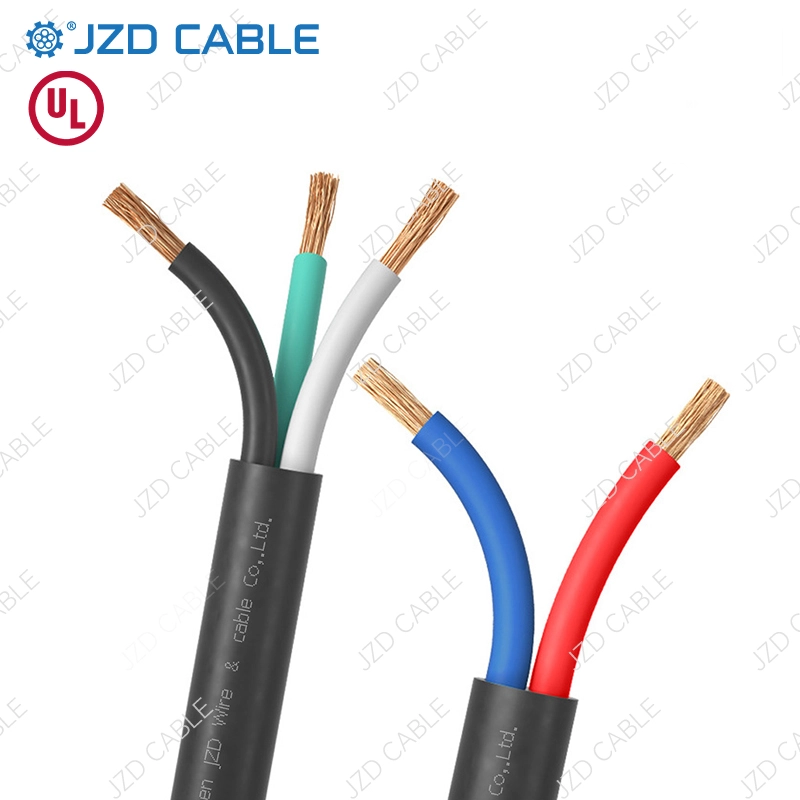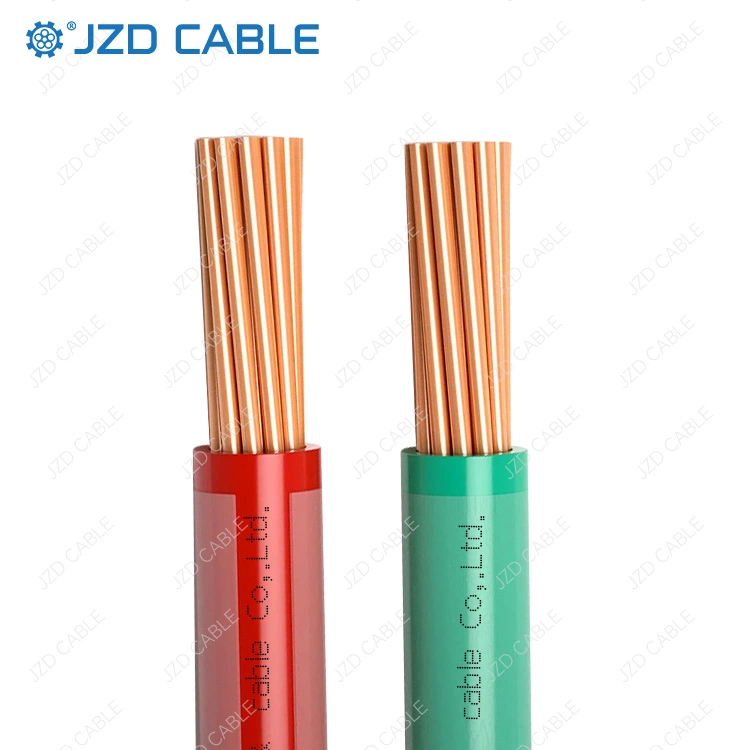


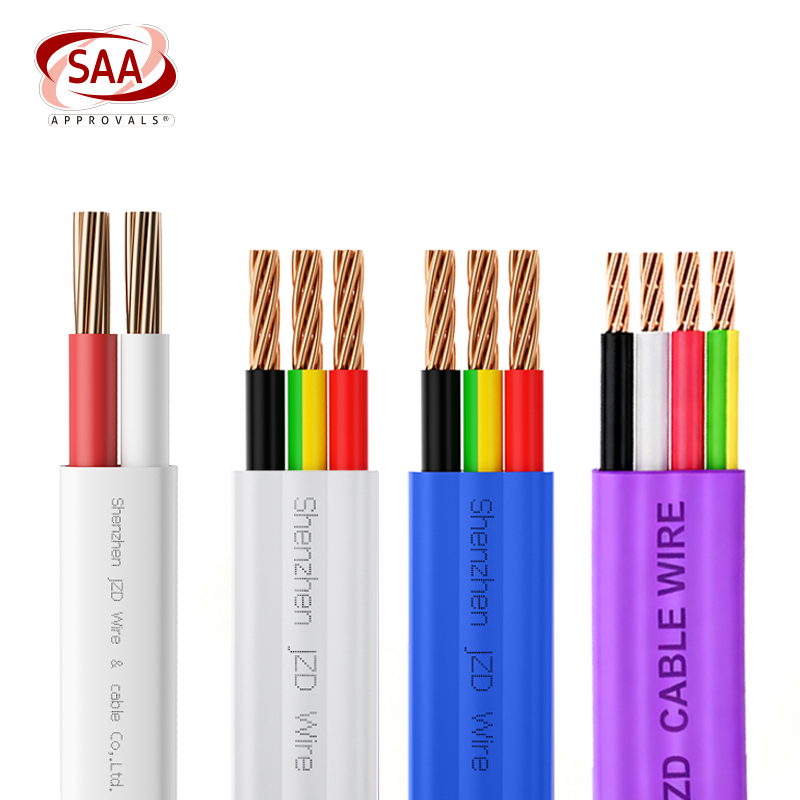
TPS cable (Thermoplastic Sheathed cable) is the standard fixed wiring cable for residential, commercial, and light industrial installations in Australia and New Zealand. It is a thermoplastic-insulated, thermoplastic-sheathed cable, typically with stranded copper conductors and a PVC outer sheath, rated 450/750V with a 90°C maximum conductor temperature.
TPS cable is governed by AS/NZS 5000.2, the Australian/New Zealand standard for thermoplastic-sheathed cables up to and including 450/750 V. For projects in these markets, compliance with AS/NZS 5000.2 and SAA certification are not optional—they are the baseline for inspection approval. This article covers construction, standards, ampacity derating, installation practice, and verification points for TPS cable in commercial and industrial projects.
Construction and Certification Standards
1. Construction
TPS cable consists of one or more insulated copper conductors, with or without a protective earth conductor, enclosed in a thermoplastic outer sheath. The internal conductors are insulated with V-90 PVC (V-90 refers to PVC insulation rated 90°C), with a continuous operating temperature of 90°C. The outer sheath is typically 3V-90 PVC, also rated 90°C, providing mechanical protection and flame retardancy. Conductors are plain annealed copper per AS/NZS 1125 (Australian conductor standard); the cable standard covers 450/750V and specifies conductor resistance, insulation thickness, sheath thickness, and test requirements.
TPS cable is available in flat and circular profiles. Flat TPS is most commonly used for fixed wiring in wall cavities, ceilings, and trunking, where its low profile allows neat routing and space savings. Circular TPS is used where a round profile is preferred for installation or protection.
2. SAA Certification and Market Access
For Australian and New Zealand projects, TPS cable must comply with AS/NZS 5000.2 and carry SAA certification. SAA certification confirms the product has been tested and approved against the applicable Australian Standard, providing market access and assurance of compliance. The certification process involves submitting cable samples to an SAA-accredited testing body, obtaining qualified test reports, and issuing a certificate of conformity valid for a defined period—typically five years. Without SAA certification, cable cannot be legally installed in Australian projects. Inspection will check the cable marking for the standard number and certification details.
Once certification confirms product compliance, selection must determine conductor size based on load and installation conditions.
Ampacity and Derating
1. Conductor Size and Current Rating
TPS cable is available in sizes from 1.0 mm² to 10 mm² and larger, depending on the application. Common sizes and typical applications:
| Size | Typical Application | Approximate Current Rating |
| 1.0 mm² | Lighting circuits, control wiring | 10–12A |
| 1.5 mm² | Lighting circuits, general purpose | 16A |
| 2.5 mm² | Power outlets, general circuits | 20–25A |
| 4.0 mm² | Ovens, cooktops, air conditioning | 25–32A |
| 6.0 mm² | High-power appliances, sub-mains | 32–40A |
| 10 mm² | Sub-mains, large equipment | 40–50A |
The current rating depends on installation conditions. The values above are indicative; final selection must account for ambient temperature, grouping, and installation method.
2. Ambient Temperature Derating
TPS cable is rated for 90°C conductor temperature. AS/NZS 3008.1.1 specifies a reference ambient temperature of 40°C for cables in air. When the actual ambient temperature exceeds the reference value, a correction factor applies.
For V-90 insulated cable, the correction factor at 40°C ambient is approximately 0.91. In Australian roof spaces, temperatures can exceed 50°C. A TPS cable rated at 20A at 30°C may need to be derated by 20–30% in a roof space reaching 50°C, bringing the effective rating to around 14–16A. Selecting cable without derating may result in conductor operating temperature exceeding the 90°C limit, accelerating insulation aging.
3. Grouping and Thermal Insulation Derating
When multiple TPS cables are grouped in the same enclosure, conduit, or trunking, heat dissipation is reduced. Grouping derating factors apply based on the number of circuits bundled together. In commercial installations where multiple circuits share a common pathway, this derating must be applied before selecting conductor size.
For cables installed in thermal insulation, additional derating applies. A 2.5 mm² TPS cable rated around 27A in open conditions may derate to 16A or less once bundled and partially covered in roof insulation. AS/NZS 3008 provides reference installation methods and correction factors.
4. Voltage Drop Verification
In addition to ampacity derating, voltage drop is another constraint in selection. AS/NZS 3008 requires that the maximum voltage drop between the point of supply and any point in the installation does not exceed 5% of nominal voltage. For long runs, even if ampacity is satisfied, voltage drop may exceed the limit, requiring a larger conductor size.
Based on the above ampacity and derating factors, the following items should be verified during selection.

Selection Verification Points
When specifying TPS cable for Australian projects, confirm the following:
- AS/NZS 5000.2 compliance, verified by SAA certification
- Conductor material: plain annealed copper per AS/NZS 1125
- Insulation and sheath: V-90 and 3V-90 PVC, rated 90°C
- Voltage rating: 450/750V
- Conductor configuration and size matching the load and installation method
- Derating applied for ambient temperature, grouping, and installation method
- Voltage drop checked per AS/NZS 3008, with maximum 5% of nominal voltage between point of supply and any point in the installation
- Batch consistency: conductor stranding, insulation thickness, sheath thickness, and marking consistent across reels
For SAA certified TPS cable specifications or certification documents, please contact us.
FAQ
1. Is TPS PVC or XLPE?
TPS uses PVC insulation and sheath. V-90 PVC for conductors, 3V-90 PVC for the outer sheath. Not XLPE.
2. Can TPS cable be buried?
No. Standard TPS is not rated for direct burial. Underground runs require conduit or a cable listed for buried installation.
3. Is TPS cable waterproof?
No. TPS is for dry, protected locations. It is not waterproof and should not be used in wet or damp areas.