

If you’ve ever done any electrical work on a house in the US or Canada, you’ve probably heard the word “Romex.” An electrician might say, “Run some Romex over to that box,” and the hardware store might list it right next to NM-B. But if you ask someone what Romex actually is, you’ll often get a vague hand gesture.
Here’s the thing: Romex started as a brand name. It became so popular that people started using it to describe an entire category of cable. The official name is NM-B cable, which stands for Non-Metallic Sheathed Cable. This article explains what Romex looks like, where it’s used, where it’s not allowed, and what to watch out for—in plain English.
Where Did the Name “Romex” Come From?
Back in the 1920s, a US company launched a non-metallic sheathed cable under the brand name “Romex.” At the time, most residential wiring used metal conduit—expensive and labor-intensive. Romex bundled a few wires together with a tough outer jacket, so it could be buried directly in walls without conduit. It saved a ton of labor and material, and it took off fast.
Because it became so common, “Romex” turned into a generic term for this type of cable—kind of like how people say “Kleenex” for any tissue. Today, almost all Romex you buy is NM-B, listed to UL 719.
Early NM cable had insulation rated only 60°C. Later it was upgraded to NM-B, which is rated 90°C. The ampacity is still based on 60°C, but NM-B handles heat in walls better and lasts longer.
What Does Romex Look Like?
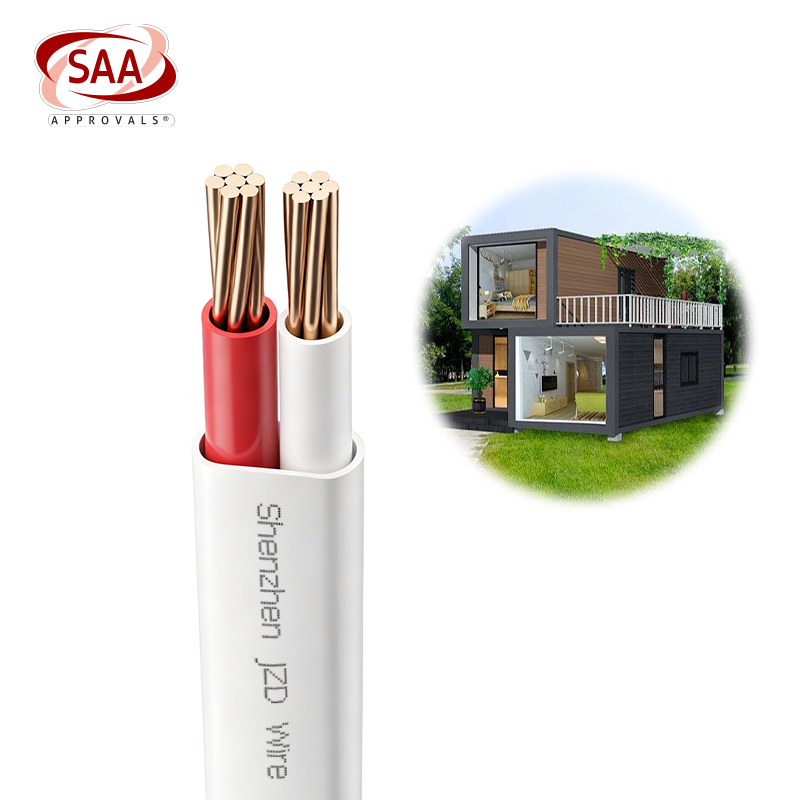
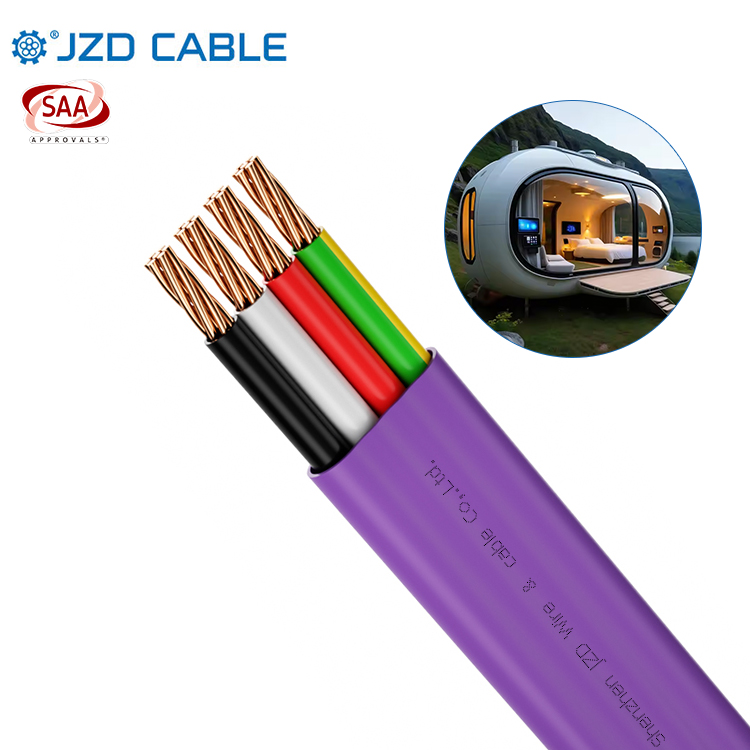
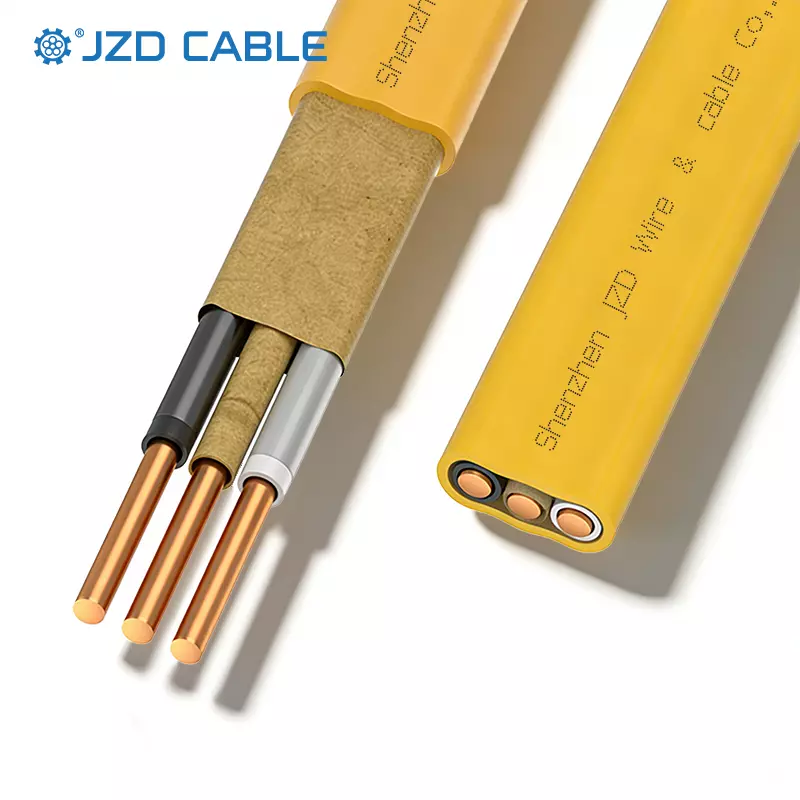
Pick up a piece of Romex and you’ll notice it’s flat—like a white plastic ribbon. Strip back the outer jacket and you’ll find:
- Insulated conductors: Two or three copper wires, each with colored plastic insulation. That insulation is usually THHN/THWN-2 grade, rated 90°C and 600V.
- Ground wire: A bare copper wire with no insulation; that’s the ground there to protect people.
- Outer jacket: A flame-retardant PVC jacket that holds everything together in a flat oval shape.
The flat design isn’t just for looks. It slides through small holes in wood framing more easily and takes up less space in wall cavities. It’s about 30–40% thinner than a round cable with the same current capacity, so you can drill smaller holes and weaken the structure less.
To make gauge identification easy, the jacket comes in different colors:
| Size | Jacket Color | Common Uses |
| 14/2 | White | Lighting circuits, bedroom outlets |
| 2-Dec | Yellow | Kitchen and garage outlets |
| 2-Oct | Orange | Water heaters, dryers |
| 3-Aug | Black | Air conditioners, heat pumps |
| 3-Jun | Black | Electric ovens, large HVAC |
The “/2” means two insulated wires plus a bare ground. “/3” means three insulated wires plus a ground.
Where Can You Use Romex?
Short answer: dry indoor locations. For example:
- Outlets, switches, and lighting circuits inside your walls.
- Wiring above ceilings.
- Wall cavities and floor joists in wood-frame homes.
The big advantage is convenience: no conduit needed. You just run it through the wall. That’s why residential electricians love it.
If you’re remodeling a room and adding a few outlets, running a 12/2 Romex from the panel to the new outlet is a classic use. Same if you’re adding a garage outlet for power tools—12/2 or 10/2 Romex is common.
Where Can’t You Use Romex?
Romex is handy, but it’s not allowed everywhere. Avoid these spots:
- Wet or damp locations: Bathrooms, outdoors, basements prone to moisture. The jacket isn’t waterproof, and moisture will degrade the insulation over time.
- Direct burial: Dirt and moisture will destroy the jacket. You need UF cable for underground runs.
- Embedded in concrete or masonry: Cement corrodes the jacket, and you can’t pull it out for repairs.
- Hazardous locations: Gas stations, chemical plants—those require explosion-proof wiring.
- Elevator shafts: Special safety rules apply; Romex isn’t allowed.
- Above suspended ceilings in commercial spaces: Non-residential ceilings generally don’t allow Romex unless it’s behind a special fire-rated barrier.
- As service-entrance cable: The run from the meter to the panel can’t be Romex.
Also, in commercial buildings, Romex usually needs to be concealed behind a 15-minute fire-rated wall assembly—no exposed runs.

Romex vs. THHN: What’s the Difference?
Since Romex has so many restrictions, when do you use THHN instead? A lot of people confuse the two. Here’s the simple version:
- THHN is a single conductor. It must be run inside conduit or raceway. Common in commercial and industrial work.
- Romex (NM-B) is a multi-conductor cable with its own jacket. It can be buried directly in dry walls.
Romex is cheaper and faster to install. THHN is tougher, handles harsher environments, and has higher ampacity because it dissipates heat better. If you’re wiring a factory, you use THHN in conduit. If you’re adding an outlet at home, Romex is the go-to.
What to Watch Out For
1. Ampacity Must Be Based on 60°C
Romex insulation is rated 90°C, but you must use the 60°C column for ampacity. Why? Because standard breakers and receptacles have terminations rated only 60°C or 75°C. It doesn’t matter how heat-tolerant the wire is if the terminal can’t take it.
Example: 12 AWG Romex has 90°C ampacity of 30A, but you must protect it with a 20A breaker, not a 30A one. If you use the 90°C column, you’ll oversize the breaker and create a fire hazard.
This rule is in NEC 334.80. It says NM-B ampacity can’t exceed the 60°C column value. The 90°C rating is only for derating calculations.
And if you bundle several Romex cables together in a wall or bury them in thermal insulation, you have to derate further. For example, four 12 AWG Romex cables bundled through one hole require a 70% derating, then you still cap at the 60°C value—which often lands back at 20A. So don’t assume thicker wire means you can pile on more load.
2. Installation Details
- Securing: Staple within 12 inches of every box, then every 4.5 feet.
- Jacket: Extend the jacket at least 1/4 inch beyond the box or clamp, but don’t strip too much.
- Bending: Don’t force sharp bends—too tight a radius damages the conductors inside.
- Fasteners: Never drive a nail or screw through the cable. Use proper cable staples.
The Bottom Line
Romex is the most common wiring in North American homes. Its official name is NM-B. It’s flat, self-jacketed, easy to install, and meant for dry indoor locations. Don’t use it in wet areas, outdoors, underground, or above commercial ceilings. And remember: ampacity is based on 60°C, not 90°C—don’t let the higher insulation rating fool you.
Know these basics, and you’ll be in good shape next time you’re talking to an electrician or tackling a DIY outlet project. Contact us to request a free sample.