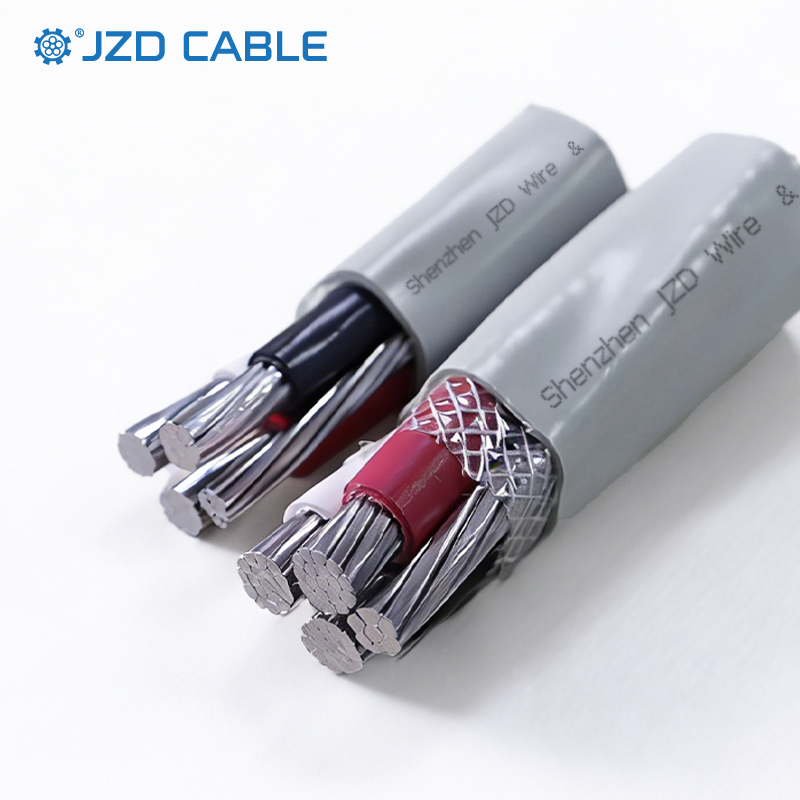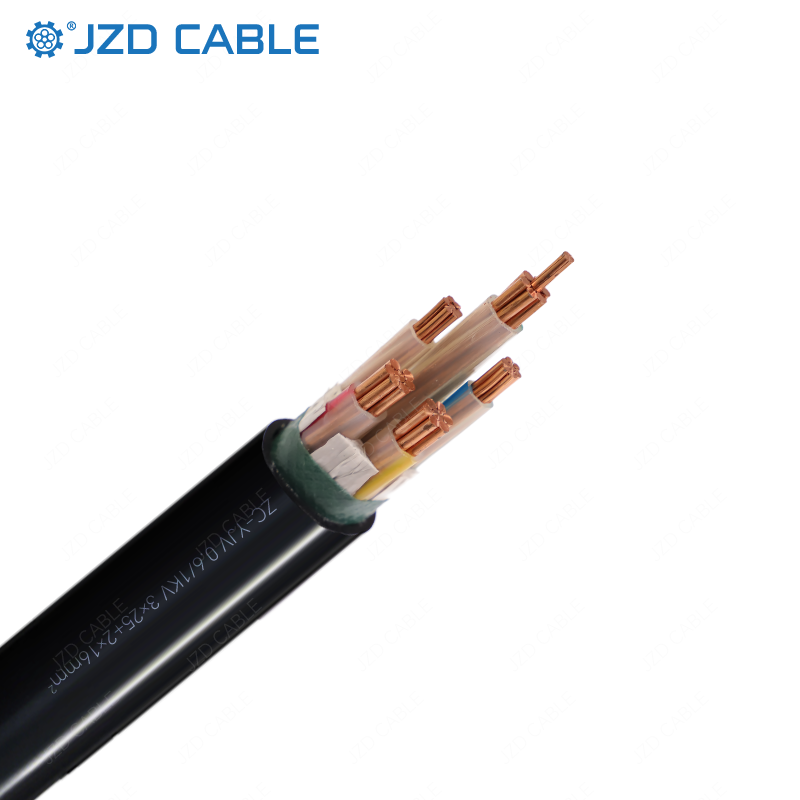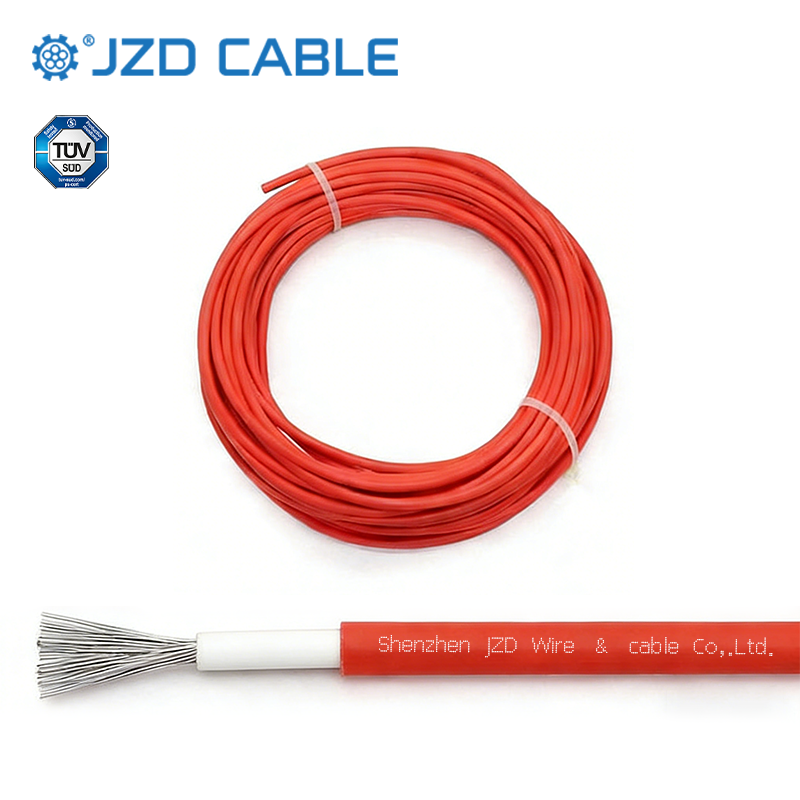


In the world of industrial, marine, and heavy-duty applications, standard cables often fall short. When the environment demands resilience—constant movement, extreme temperatures, moisture, or chemical exposure—a superior solution is required. Enter EPR (Ethylene Propylene Rubber) insulated cable, the engineered choice for mission-critical power distribution where reliability cannot be compromised. At JZD Cable, we specialize in manufacturing high-performance EPR cables designed to thrive where others fail.
What is EPR Rubber Cable?
EPR rubber cable utilizes an insulation layer made from a saturated copolymer of Ethylene and Propylene, often combined with a diene monomer (forming EPDM) to facilitate cross-linking. This formulation creates a thermoset, elastomeric material that is inherently flexible, stable, and highly resistant to environmental stressors. Unlike common thermoplastics, EPR maintains its exceptional properties over a wide temperature range and under continuous mechanical stress, making it the backbone of robust electrical systems.
Material & Construction: Built for Resilience
- The performance of an EPR cable stems from its deliberate construction:
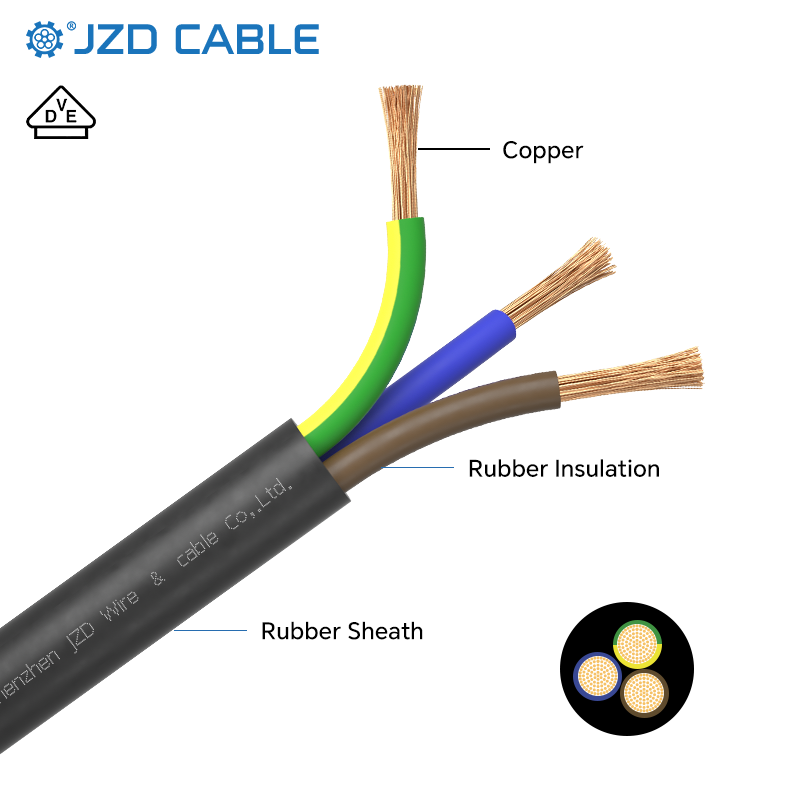
- Conductor: High-conductivity copper or aluminum, finely stranded to maximize flexibility and fatigue life.
- Insulation (Core): The EPR rubber layer itself. This is a cross-linked, thermoset material offering long-term thermal stability, high elasticity, and excellent dielectric properties.
- Sheath/Jacket: Typically made from Chlorosulfonated Polyethylene (CSPE/Hypalon) or Low-Smoke Zero-Halogen (LSZH) Polyolefin. This outer layer provides critical protection against abrasion, oils, chemicals, weathering, and UV/ozone exposure, while also offering flame retardancy.
- Typical Structure: Tinned Copper Conductor / EPR Insulation / CSPE Sheath.
Core Performance Advantages of EPR Cables
EPR cables outperform standard alternatives through a combination of key properties:
1. Exceptional Thermal & Temperature Performance
- High Heat Endurance: Rated for continuous operation at 90°C, with a short-circuit survival temperature of up to 250°C.
- Superb Low-Temperature Flexibility: Remains completely pliable and crack-resistant in extreme cold down to -40°C, ensuring reliable operation in freezing environments.
2. Superior Mechanical & Dynamic Properties
- Ultimate Flexibility: Features a very small minimum bending radius (approx. 6x cable diameter), allowing for easy installation in tight spaces.
- Designed for Movement: Excellent resistance to repeated flexing, torsion, dragging, and vibration. Its high tensile strength and tear resistance make it ideal for moving applications like cable carriers (drag chains) and reeling drums.
3. Outstanding Environmental & Chemical Resistance
- Water & Moisture Impervious: Excellent resistance to water immersion, humidity, and saltwater, making it perfect for marine and offshore use.
- High Resistance to Elements: Superior performance against ozone, UV radiation, and weathering, preventing premature aging and cracking.
- Chemical & Oil Resistant: Withstands exposure to a wide range of oils, acids, alkalis, and other chemicals common in industrial settings.
4. Enhanced Safety & Electrical Reliability
- Low-Smoke Zero-Halogen (LSZH): Most EPR cables use LSZH sheathing, which emits minimal smoke and no toxic halogen gases when exposed to fire, critical for enclosed public spaces and offshore platforms.
- Flame Retardant: Meets stringent flame propagation standards.
- Stable Electrical Parameters: Offers good dielectric strength (~20 kV/mm), high volume resistivity, and resistance to partial discharge, ensuring reliable performance up to 35kV (and even 138kV in specific designs).
Typical Applications: Where EPR Cables Excel
EPR cables are the specified choice across numerous demanding industries:
- Marine & Offshore: Shipboard wiring, offshore oil & gas platforms, submarine cables, and offshore wind farm connections. Resists constant salt spray, moisture, and mechanical movement.
- Mining & Tunneling: Heavy-duty mobile trailing cables for drills, shuttle cars, and continuous miners. Built to withstand brutal abrasion, crushing, and frequent dragging.
- Heavy Industry & Utilities: Steel mills, chemical & petrochemical plants, nuclear facilities, and power generation. Handles high ambient heat, chemical splash, and thermal cycling.
- Mobile Equipment & Transport: Power supply cables for port cranes, construction machinery, railway locomotives, and mass transit systems. Endures constant vibration and extreme temperatures.
- Renewable Energy & Construction: Flexible cabling for wind turbine nacelles, temporary site power for construction, and connections in harsh outdoor environments.
Conclusion: The Strategic Choice for Demanding Power Needs
When your application involves movement, harsh chemicals, wide temperature swings, or exposure to the elements, standard rigid cables are a liability. EPR rubber cable from JZD Cable provides a robust, reliable, and long-lasting solution. Its unique combination of flexibility, durability, and environmental resistance ensures uninterrupted power and safety, reducing downtime and maintenance costs.
Choosing the right cable is critical to your project’s success and safety. Contact the experts at JZD Cable today to discuss how our EPR rubber cable solutions can meet the specific challenges of your application.