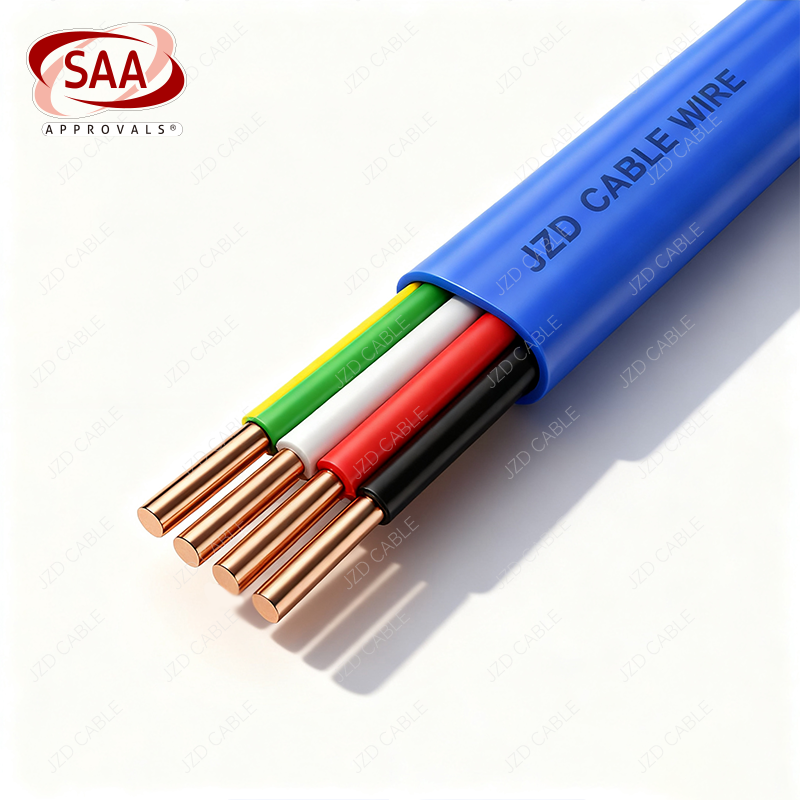


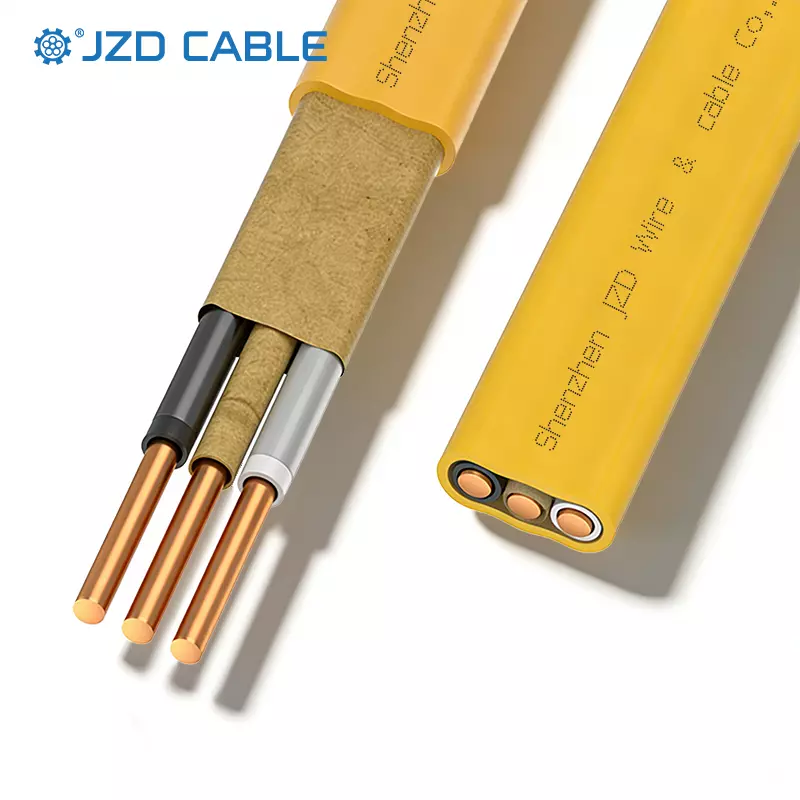
Unlike traditional construction, modular buildings are wired during factory production before final on-site assembly. This requires building wire that supports efficient installation, consistent quality, and reliable performance throughout transportation and operation.
For wood-frame modular buildings in dry indoor locations, UL Listed NM-B cable is a widely used wiring solution in the U.S.
What Is NM-B Cable?
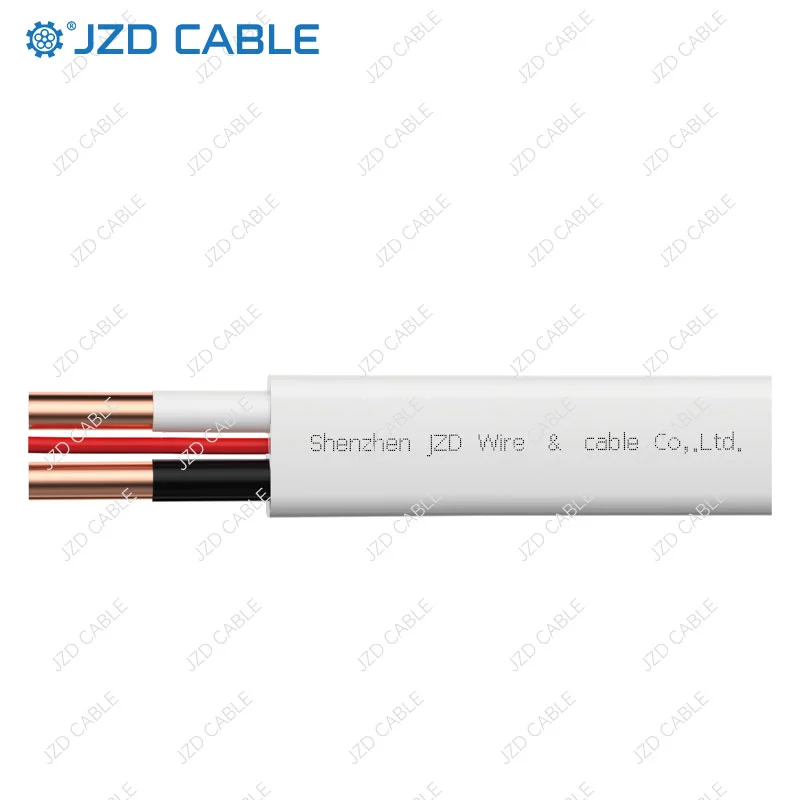
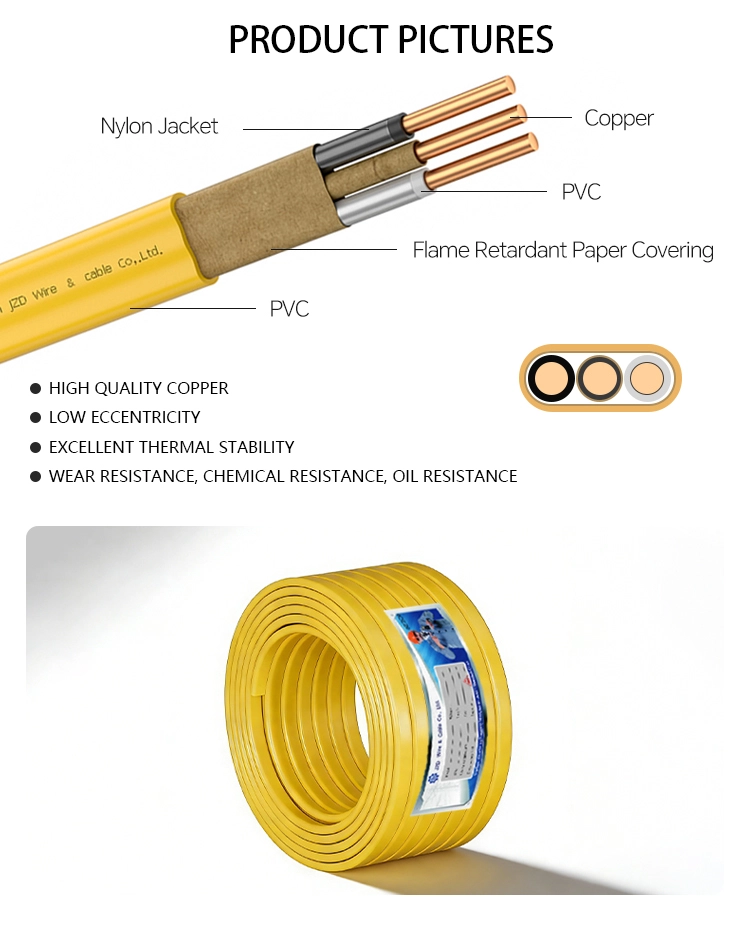
NM-B (Nonmetallic-Sheathed Cable) is a residential building wire designed for branch circuit wiring in dry indoor locations. It combines insulated copper conductors and a bare grounding conductor within a durable PVC outer jacket, allowing faster installation than pulling individual conductors through conduit.
Why NM-B Cable Fits Modular Construction
Electrical wiring in modular buildings must support efficient factory production while delivering reliable long-term performance. Several features make NM-B cable particularly suitable for this application.
1. Faster Factory Installation
The flat cable profile routes easily through wood framing and wall cavities, allowing electricians to complete branch circuit wiring quickly during factory production. Faster installation helps improve manufacturing efficiency and reduces production time.
2. Compact Cable Routing
Prefabricated wall assemblies often contain insulation, plumbing, structural components, and electrical wiring within limited space. Because multiple conductors are enclosed inside one outer jacket, NM-B cable simplifies cable routing while reducing congestion inside finished walls.
3. Reliable Residential Power Distribution
High-quality copper conductors provide stable electrical performance for lighting, receptacles, HVAC controls, smoke alarms, and household appliances. This helps support dependable branch circuit wiring throughout the service life of the building.
Typical Applications in Modular Buildings
NM-B cable is commonly used for residential-style modular buildings where dry indoor wiring methods are permitted.
| Modular Building Type | Typical Applications |
| Modular Homes | Interior lighting, receptacles, and branch circuits |
| Accessory Dwelling Units (ADUs) | Complete residential wiring systems |
| Modular Apartments | Interior electrical distribution |
| Student Housing | Lighting and general-purpose circuits |
| Workforce Housing | Residential branch circuit wiring |
| Portable Residential Buildings | Indoor electrical systems |
| Panelized Buildings | Factory-installed branch circuits |
Projects involving wet locations, underground installation, or exposed commercial wiring should use wiring methods approved for those environments.
Choosing the Right NM-B Cable
Selecting the correct cable depends on circuit design and electrical load.
| Cable Size | Typical Use |
| 14/2 NM-B | Lighting circuits |
| 12/2 NM-B | General receptacle circuits |
| 12/3 NM-B | Three-way switching and dedicated circuits |
| 10/2 NM-B | Water heaters and higher-load circuits |
| 10/3 NM-B | Electric dryers |
| 8/3 NM-B | Large residential equipment |
For modular building manufacturers, cable selection should also consider product certification, conductor quality, production consistency, and supplier reliability.
Choosing a Reliable NM-B Cable Supplier
Consistent cable quality is essential for factory-built construction. A dependable supplier helps manufacturers reduce production delays, maintain installation consistency, and meet project schedules.
When evaluating suppliers, consider:
- UL-listed products
- Copper conductor quality
- Consistent insulation thickness
- Accurate conductor sizing
- Stable production capacity
- OEM and private-label support
- Export experience
- Technical support
These factors contribute to smoother production and more reliable electrical systems across large-scale modular housing projects.
Why Choose JZD Cable
JZD Cable supplies UL-listed NM-B building wire for residential branch circuit applications. Designed for factory-built construction, our products support modular building manufacturers, distributors, and OEM partners with:
- UL Listed NM-B cable
- Copper conductors
- 600 V rating
- Durable PVC outer jacket
- Stable manufacturing quality
- OEM and private-label services
- Bulk supply for production projects
Whether you’re producing modular homes, ADUs, student housing, or other factory-built residential buildings, JZD Cable provides dependable building wire solutions for efficient production and long-term performance.
Conclusion
Electrical wiring is installed long before a modular building reaches the jobsite, making cable selection an important part of the manufacturing process.
For residential modular buildings in dry indoor locations, UL Listed NM-B cable provides fast installation, compact cable routing, reliable branch circuit performance, and simplified code compliance. Combined with a reliable manufacturing partner, it helps modular building manufacturers improve production efficiency while delivering safe and dependable electrical systems.
Contact us today to discuss the right NM-B cable solution for your modular building projects.
Frequently Asked Questions
1. Is NM-B the same as Romex®?
No. NM-B is the cable type defined by the NEC, while Romex® is a registered brand name. Many people use the names interchangeably, but NM-B cable is available from multiple manufacturers.
2. What is the difference between THHN and NM-B cable?
THHN is a single conductor designed for conduit installations. NM-B combines multiple insulated conductors in one outer jacket, making it a common choice for residential branch circuits in dry indoor locations.
3. What gauge is NM-B cable available in?
Common NM-B cable sizes include 14/2, 12/2, 12/3, 10/2, 10/3, and 8/3. The correct size depends on the circuit load and NEC requirements.
4. Why is NM-B cable commonly used in modular construction?
Its flat design allows faster installation and easier cable routing inside prefabricated wall assemblies. This helps improve production efficiency in factory-built residential buildings.
5. How do I choose the correct NM-B cable size?
Select the cable size based on the circuit load, breaker rating, and application. Always follow NEC requirements and local electrical codes.