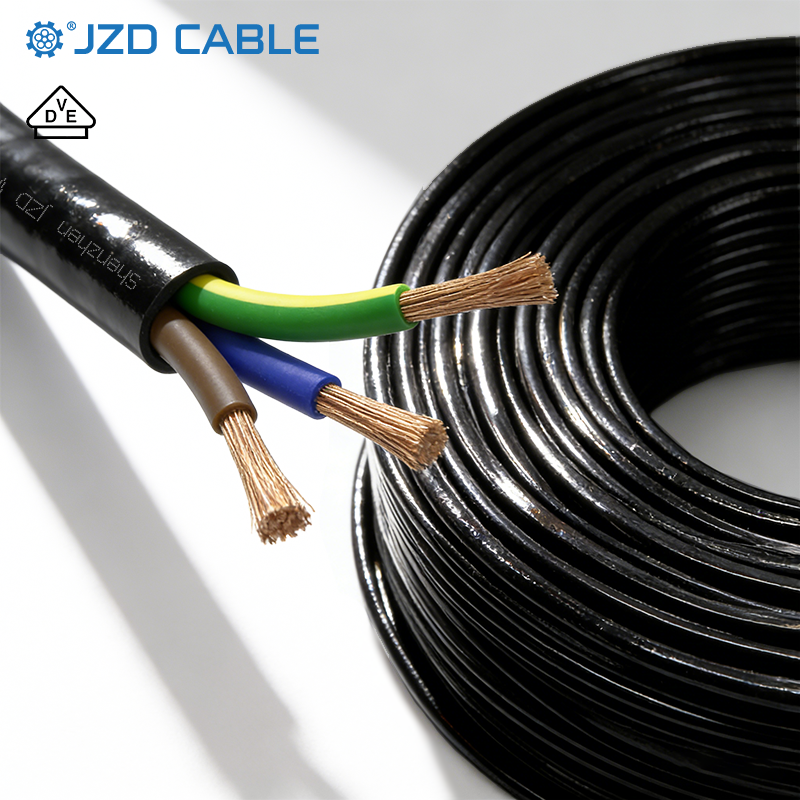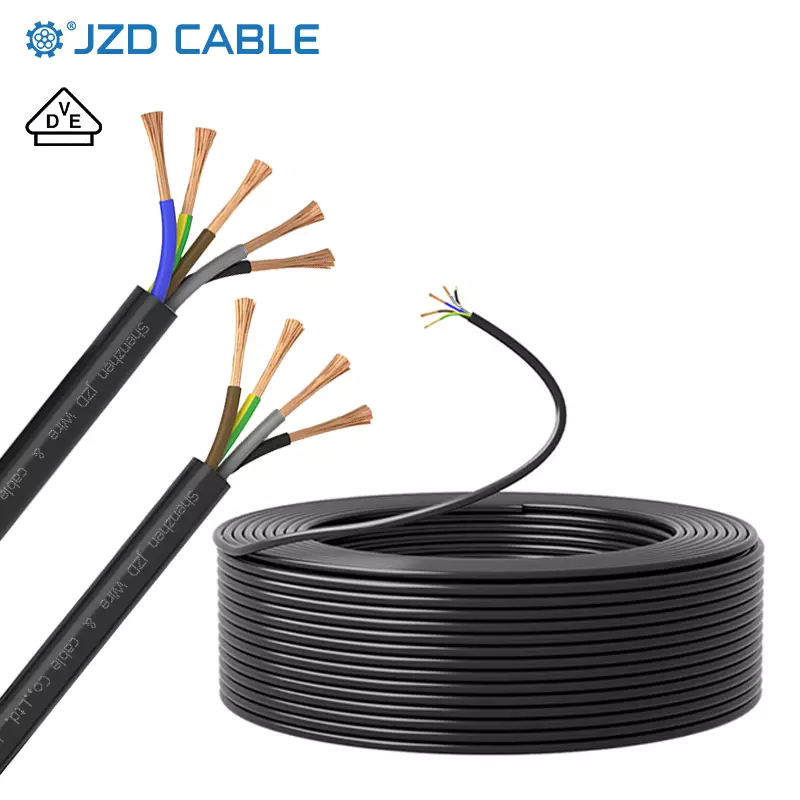


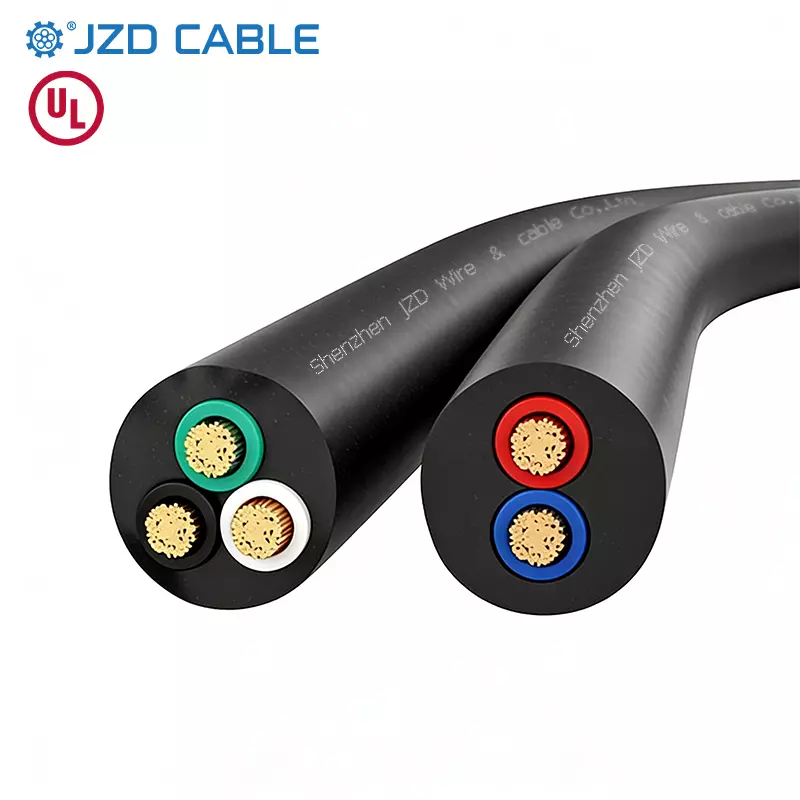
If you buy or specify UL 62 / CSA C22.2 No.49 flexible portable cords, the alphabet soup—S, J, E, O, OO, W—isn’t decoration. It’s a compact spec sheet. Small changes in those letters change voltage rating, material system (rubber vs TPE), temperature range, and where you can legally/confidently use the cord.
This guide decodes the codes, compares SJOOW vs SEOOW side‑by‑side, and gives you a quick decision checklist so you don’t overbuy—or worse, under-spec—your cable.
Portable cord letter codes: the “alphabet spec” behind SJOOW and SEOOW
North American portable cords use a letter system to describe voltage class, compound type, oil resistance, and weather/water resistance:
|
Letter(s)
|
Stands for
|
Practical meaning
|
|---|---|---|
|
S
|
Service (heavy-duty service)
|
Base family of flexible portable cords (often 600V when “J” is absent)
|
|
J
|
Junior service
|
Drops the rating to 300V (the “junior” class)
|
|
E
|
Elastomer / TPE
|
Jacket + typically insulation use TPE (thermoplastic elastomer) instead of traditional thermoset rubber
|
|
O
|
Oil-resistant jacket
|
Outer jacket formulated to resist oil swell/degradation
|
|
OO
|
Oil-resistant insulation & jacket
|
Both conductor insulation and outer jacket are oil-resistant
|
|
W
|
Weather/Water resistant
|
Outdoor-capable: resists moisture, splash, and (on listed cords) sunlight/weather exposure
|
Quick rule of thumb:
- No J → usually 600V (extra-hard usage family)
- J present → 300V (junior/hard-usage family)
SJOOW decoded: the 300V “junior,” rubber-built, oil + weather cord
SJOOW = S + J + OO + W
- S = Service family
- J = Junior ⇒ 300V rating
- OO = Oil-resistant insulation + jacket
- W = Weather/water resistant (outdoor-rated)
Typical SJOOW construction & performance (common industry profile)
- Voltage: 300V
- Conductors: Flexible stranded bare copper (fine-stranded / “Class K” style annealing for bendability)
- Insulation: Oil-resistant rubber-type compound (commonly EPDM/EPR based in many brands)
- Jacket: Oil-resistant rubber-type compound (CPE/neoprene-family in many constructions)
- Temperature range (common listing): around -40°C to +90°C (application/task-dependent)
Where SJOOW shines (typical uses)
- Portable power tools & small equipment
- Site lighting extensions, pumps, compressors, temporary setups
- Places where you want proven oil + water + abrasion + outdoor toughness—but the load really doesn’t need 600V headroom
Think of SJOOW as the workhorse junior service cord: tough enough for job sites, priced for volume, and easy to justify on 120/240V gear.
SEOOW decoded: the 600V TPE (elastomer) heavy-duty option
SEOOW = S + E + OO + W
- S = Service ⇒ 600V rating (no J)
- E = TPE / thermoplastic elastomer jacket + insulation system
- OO = Oil-resistant insulation & jacket
- W = Weather/water resistant
Typical SEOOW construction & performance
- Voltage: 600V
- Conductors: Fine-stranded copper for flexibility
- Insulation + Jacket: TPE (often described as “rubber-like feel, thermoplastic processing”)
- Temperature range (common listing): often shown around -50°C to +105°C depending on exact TPE compound and approvals
Where SEOOW shines
- Heavy industrial equipment, larger motors, conveyors, welders, temp-power distribution
- Harsh/outdoor: washdown areas, food-processing rinses, marine/salt spray zones, mining/aggregate, ports
- Applications that benefit from wider temp window + lighter weight per meter + strong tear/abrasion/oil profile of TPE systems
SEOOW is usually chosen when the spec says 600V, the environment is aggressive, and/or crews care about weight and cold-flex handling.
SJOOW vs SEOOW: core comparison (the table buyers actually use)
|
Comparison point
|
SJOOW
|
SEOOW
|
|---|---|---|
|
Letter decode
|
S (Service) + J (Junior/300V) + OO (oil-resist ins+jack) + W (weather/water)
|
S (Service/600V) + E (TPE/elastomer) + OO + W
|
|
Voltage class
|
300V (junior service)
|
600V (extra-hard service)
|
|
Insulation / Jacket material
|
Rubber-type compounds (EPDM/EPR insulation; CPE/neoprene-family jacket in typical builds)
|
TPE (thermoplastic elastomer) insulation + jacket
|
|
Temp range (common listings)
|
≈ -40°C ~ +90°C
|
≈ -50°C ~ +105°C (compound-dependent)
|
|
Cold flexibility
|
Good; rubber stays flexible but feels “heavier/stiffer” in extreme freeze compared to TPE in many cases
|
Often better low-temp hand-feel; TPE stays suppler in severe cold (location/environment dependent)
|
|
Oil / weather / abrasion
|
Oil-resistant (OO) + weather-resistant (W); solid industrial-grade durability
|
Oil-resistant (OO) + weather-resistant (W); TPE systems emphasize tear/abrasion/chemical profile and all-weather handling
|
|
Weight / handling
|
Heavier per meter (typical rubber jacketing)
|
Lighter per meter—easier to pull, coil, and transport on big reels
|
|
Best-fit load
|
Smaller loads / 300V-class gear (tools, lights, small pumps, general site extensions)
|
Larger loads / 600V-class gear (industrial machines, heavy motors, temp-power feeders, harsh washdown/outdoor)
|
|
Price positioning
|
Generally lower cost
|
Generally higher cost (performance compound + 600V class)
|
Quick decision checklist: which one do you actually need?
1.Is the equipment 600V-rated or the spec/project standard demands 600V service cords?
→ Go SEOOW (or SOOW if you want traditional rubber instead of TPE).
2.Is it 120/240V portable tools, lights, smaller pumps, and you just need a rugged outdoor oil cord?
→ SJOOW is usually the right economic sweet spot.
3.Extreme cold, frequent coiling/uncoiling, weight matters, washdown chemicals?
→ Lean SEOOW (TPE) if budget allows and the spec permits.
4.Can you “swap” SJOOW for SEOOW or vice versa?
→ Not automatically—because 300V vs 600V isn’t just a label; it reflects construction and test basis under UL 62 and NEC/inspector expectations. Match the called-out trade designation whenever a spec says “Type SJOOW” or “Type SEOOW.”
Ready to choose the right portable cord for your project?
At JZD Cable, we supply high-quality SJOOW, SEOOW, SOOW, and other UL 62 / CSA certified portable cords in various gauges and configurations. Whether you need a few hundred feet for a job site or bulk supply for OEM applications, our team can help you select the exact cord type, length, and termination options. Contact us today for a quote or technical consultation—we speak cable specs fluently.