

When selecting building wire for Canadian electrical installations, understanding the distinction between T90 and R90 is essential. Both are rated 90°C and comply with Canadian Standards Association (CSA) requirements, yet they serve fundamentally different applications due to their insulation materials and structural design.
This article provides a detailed side-by-side comparison of T90 and R90, covering standards, construction, environmental tolerances, installation methods, and typical use cases. Whether you are a contractor, engineer, or procurement specialist, this guide will help you make informed decisions for your next project.
Understanding the Code Designations
The names “T90” and “R90” follow a logical pattern:
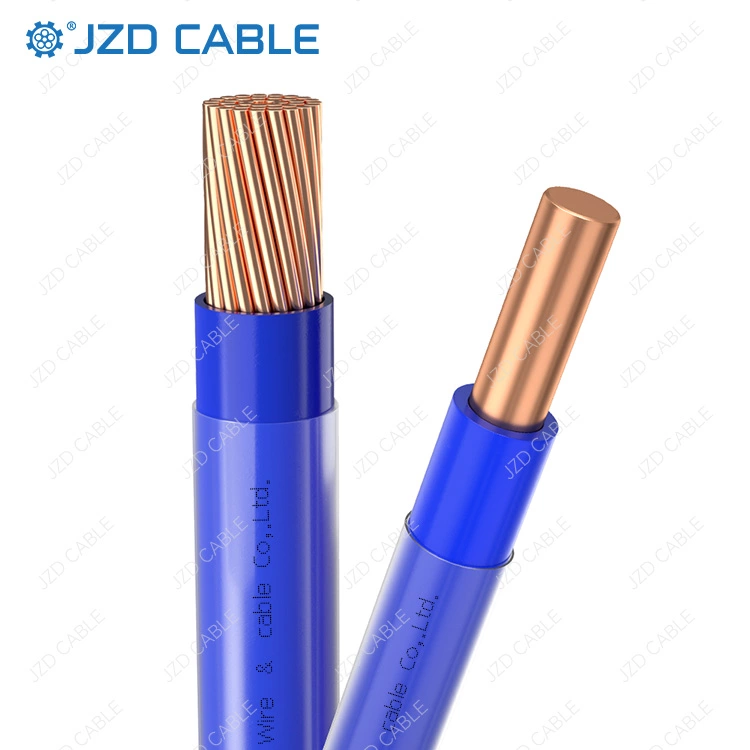
- T = Thermoplastic (PVC insulation with an outer nylon jacket – double-layer construction)
- R = Thermoset (Cross-linked polyethylene – XLPE – single-layer insulation)
- 90 = Maximum continuous conductor operating temperature of 90°C (in specified conditions)
Thus, T90 is a thermoplastic building wire with PVC + nylon, while R90 is a thermoset XLPE building wire without nylon.
Applicable CSA Standards
Each wire type is governed by its own CSA standard:
|
Wire Type
|
CSA Standard
|
Equivalent U.S. Standard
|
|---|---|---|
|
T90
|
CSA C22.2 No. 75 – Thermoplastic insulated wires
|
Harmonized with UL 83 (THHN/THWN)
|
|
R90
|
CSA C22.2 No. 38 – Thermoset insulated wires
|
Harmonized with UL 44 (XHH)
|
These standards define construction, testing, and performance requirements.
Detailed Comparison Table
|
Parameter
|
T90
|
R90
|
|---|---|---|
|
Insulation Structure
|
PVC inner + nylon outer jacket (dual-layer)
|
Single-layer XLPE (cross-linked polyethylene), no nylon
|
|
Temperature Rating
|
Dry: 90°C; Wet: 75°C (full load); Oil immersion: 60°C
|
Dry: 90°C only; No wet rating – damp locations prohibited
|
|
Moisture / Water Resistance
|
Suitable for damp indoor areas; not for outdoor sunlight, immersion, or UV exposure
|
Not water-resistant; not for damp or wet environments
|
|
Installation Method
|
May be installed exposed on walls, in conduit, or concealed in walls; not for direct burial or outdoor sun
|
Must be installed inside conduit or closed cable tray; bare exposed installation prohibited; not for direct burial or outdoor use
|
|
Low Temperature Flexibility
|
Minimum installation temperature: –10°C (becomes stiff and brittle below)
|
Minimum installation temperature: –40°C (excellent cold-weather flexibility)
|
|
Oil & Chemical Resistance
|
Nylon offers mild grease resistance; PVC vulnerable to strong acids, alkalis, and hot oil
|
XLPE exhibits excellent resistance to oils, acids, alkalis, ozone, and aging
|
|
Outer Diameter & Conduit Fill
|
Smaller OD due to thin insulation; allows more conductors per conduit; nylon reduces pulling friction
|
Larger OD due to thicker insulation; lower conduit fill capacity
|
|
Flame Retardancy
|
Standard FT1
|
Available in FT1 or FT4; superior flame stability for vertical tray installations
|
|
Typical Applications
|
Residential and commercial interior wiring (dry/slightly damp); ceiling exposed runs; primary wire for Canadian homes
|
Industrial machinery, high-temperature dry equipment, enclosed tray systems, commercial dry-area feeders
|
|
Cost
|
Lower cost – economical choice for general building wiring
|
Higher cost – justified by enhanced thermal and chemical performance
|
Critical Considerations for Specifiers
1. Temperature Ratings Are Conditional
Both wires carry a 90°C rating, but only in dry locations. For T90, the rating drops to 75°C in wet locations and 60°C in oil-immersed conditions. R90 has no wet rating whatsoever – using it in any damp environment violates the CSA listing and creates safety risks.
2. Cold Weather Installation
In regions where winter temperatures fall below –10°C, T90 becomes difficult to handle and may crack during pulling. R90 remains flexible down to –40°C, making it the preferred choice for northern Canadian projects or winter construction.
3. Conduit Fill Calculations
Because T90 has a smaller overall diameter, designers can often fit more conductors into the same conduit compared to R90. This can reduce material costs and labor for multi-conductor runs.
4. Flame Spread Requirements
For vertical risers or plenum spaces, local codes may require FT4 flame rating. T90 typically only meets FT1. R90 can be supplied with FT4 certification, providing greater fire safety in high-rise buildings.
5. No Direct Burial or Outdoor Exposure
Neither T90 nor R90 is suitable for direct burial, outdoor sunlight exposure, or continuous immersion. For those applications, use RW90, RWU90, or NMWU cables.
Application Guidance: Which Wire Should You Choose?
|
Use Case
|
Recommended Wire
|
|---|---|
|
Residential interior wiring, conduit, or exposed ceilings
|
T90
|
|
Commercial dry-area branch circuits in conduit
|
T90
|
|
Industrial control panels, high-temperature dry zones
|
R90
|
|
Oil refineries, chemical plants (dry, enclosed)
|
R90
|
|
Northern Canada winter construction (–30°C pulls)
|
R90
|
|
Vertical riser requiring FT4 flame rating
|
R90 (FT4)
|
|
Any damp, outdoor, or direct burial application
|
Neither – use RW90 or NMWU
|
Frequently Asked Questions
Q: Is R90 the same as RW90?
A: No. While both are XLPE-insulated under CSA C22.2 No. 38, RW90 includes the “W” suffix indicating wet-location and outdoor capability. The R90 described in this article is strictly dry-only. Always verify the exact marking on the cable jacket.
Q: Can T90 replace THHN in the United States?
A: Electrically similar (both are PVC + nylon, 90°C dry/75°C wet, 600V), but T90 carries a CSA mark. For U.S. projects requiring UL listing, use dual-certified CSA/UL products.
Q: Does T90 require a separate ground wire?
A: Yes, unless it is part of a multi-conductor cable assembly with an integral ground. T90 is primarily used as single-conductor building wire.
Q: Can I use R90 in a wet mechanical room?
A: No. R90 has no wet rating. For damp indoor environments, use T90 (rated 75°C wet) or a specifically listed wet-location cable.
Why Choose JZD Cable?
At JZD Cable, we specialize in manufacturing and supplying CSA-certified building wires, including both T90 (CSA C22.2 No. 75) and R90 (CSA C22.2 No. 38) in a wide range of sizes from 14 AWG to 500 kcmil copper. All our products meet the latest Canadian standards and are available with FT1 or FT4 flame ratings upon request.
Whether you need T90 for a residential subdivision or R90 for an industrial plant, we offer competitive pricing, short lead times, and full traceability documentation.
Contact our sales team today for a quotation or technical consultation!