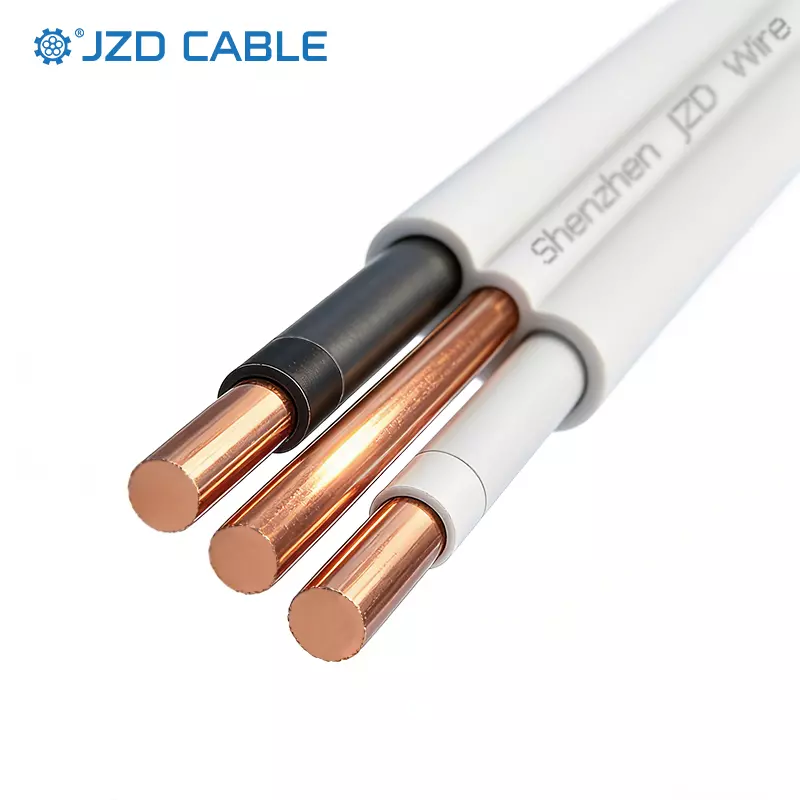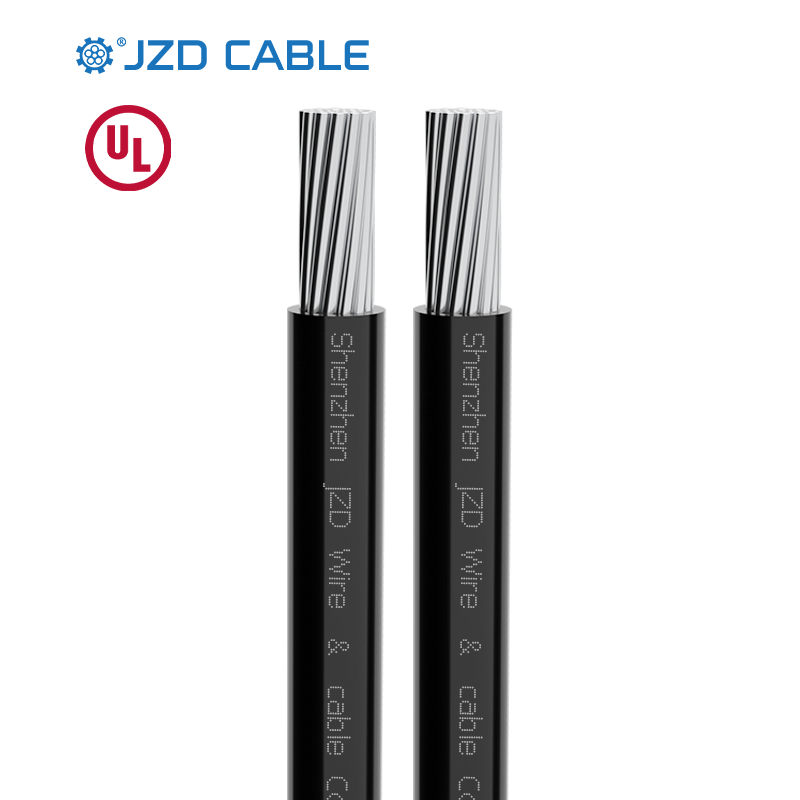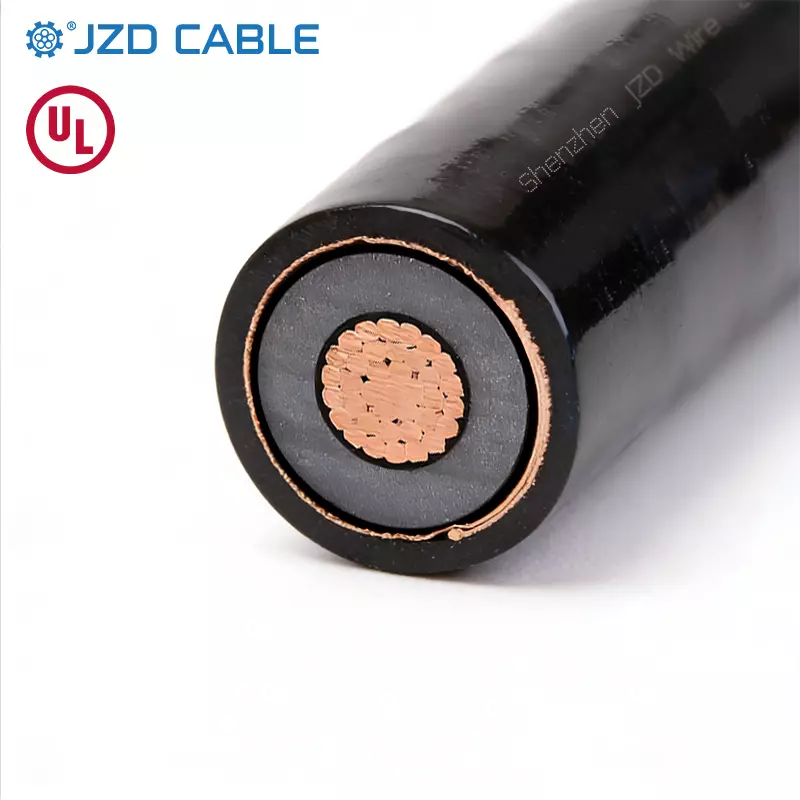


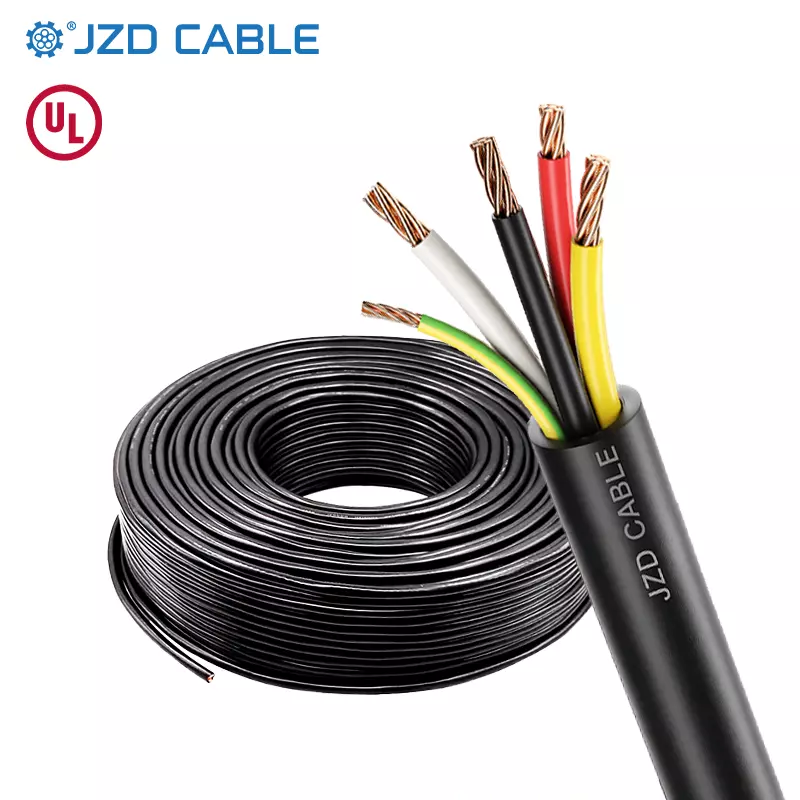
XHHW-2 is the most widely specified single-conductor building wire for 600V power distribution across the Americas. Available in both copper and aluminum, the two options share identical XLPE insulation, 90°C wet/dry rating, and 600V voltage rating. The engineering decision comes down to one question: for your application, which material delivers the better total cost of ownership? Aluminum XHHW-2 offers the same performance as copper—but requires larger conductors for equivalent ampacity, in return for lower material cost and lighter weight.
Material Foundation: AA-8000 Series Aluminum Alloy
AA-8000 Series – The Standard for Aluminum Building Wire
NEC 310.14 requires aluminum building wire to use AA-8000 series alloy – this is a mandatory code requirement. Through optimized trace alloying elements, AA-8000 series provides the dimensional stability under thermal cycling required for building wire applications. When used with AL/CU dual-rated terminations, it has been the standard for over 40 years, with proven reliability across millions of installations worldwide.
Reliability concerns from the 1960s and 1970s involved a different product – AA-1350 solid small-gauge branch circuit wire terminated on devices designed only for copper. AA-8000 is used in large stranded feeders and services with specially designed AL/CU dual-rated terminations – entirely different applications and failure modes.
The Core Engineering Trade-off: Aluminum Requires Upsizing
1. Conductivity Gap
Aluminum conducts approximately 61% as well as copper. At the same AWG size, aluminum XHHW-2 carries only 62–68% of copper’s ampacity. This is not a defect – it’s a fundamental engineering parameter that drives conductor sizing.
| Property | Copper XHHW-2 | Aluminum XHHW-2 (AA-8000) |
| Conductivity (IACS) | 100% | ~61% |
| Ampacity (same AWG) | Baseline | 62–68% of copper |
| Weight (same ampacity) | Baseline | ~33% |
| Termination requirement | Standard lugs | AL/CU dual-rated lugs |
2. Ampacity Comparison Table (75°C Column, 30°C Ambient)
NEC Table 310.15(B)(16) provides baseline ampacities at 75°C – the most commonly used temperature column for circuits over 100A, since most equipment terminations are rated 75°C.
| Conductor Size | Copper 75°C Ampacity | Aluminum 75°C Ampacity | Aluminum as % of Copper |
| 8 AWG | 50A | 40A | 80% |
| 6 AWG | 65A | 55A | 85% |
| 4 AWG | 85A | 70A | 82% |
| 2 AWG | 115A | 90A | 78% |
| 1/0 AWG | 150A | 120A | 80% |
| 2/0 AWG | 175A | 135A | 77% |
| 3/0 AWG | 200A | 155A | 78% |
| 4/0 AWG | 230A | 180A | 78% |
Key conclusion: Aluminum must be upsized by 1 to 2 AWG sizes to match copper ampacity.
| Ampacity | Copper (75°C) | Aluminum (75°C) | Size Gap |
| 100A | #3 AWG | #1 AWG | +2 AWG |
| 125A | #1 AWG | 2/0 AWG | +2 AWG |
| 150A | 1/0 AWG | 3/0 AWG | +2 AWG |
| 200A | 3/0 AWG | 250 kcmil | +2 sizes |
Engineering Constraints: Temperature Derating and Voltage Drop
1. Temperature Derating (NEC Table 310.15(B)(1))
All NEC ampacity tables assume an ambient temperature of 30°C (86°F) . When ambient temperatures exceed 30°C, the following correction factors apply for 90°C insulated conductors:
| Ambient Temperature | Correction Factor (90°C Insulation) | Typical Application |
| 31–35°C (88–95°F) | 0.96 | Rooftops, industrial plants in summer |
| 36–40°C (97–104°F) | 0.91 | Conduit in direct sunlight, tropical climates |
| 41–45°C (106–113°F) | 0.87 | High-temperature industrial environments |
| 46–50°C (115–122°F) | 0.82 | Extreme heat zones |
Engineering impact: Since aluminum is already upsized to match copper ampacity, temperature derating has a more significant effect on the final aluminum conductor size. The derating applies equally to copper, but aluminum starts with a larger base, so the absolute size gap widens further after correction.
Example: 100A load at 45°C ambient:
- Copper: #3 AWG (100A) × 0.87 = 87A → upsize to #2 AWG
- Aluminum: #1 AWG (100A) × 0.87 = 87A → upsize to 2/0 AWG
2. Voltage Drop
NEC recommends a maximum voltage drop of 3% for feeders. Aluminum’s higher resistivity – K = 21.2 at 75°C (copper = 12.9) – means aluminum feeders are more sensitive to voltage drop on long runs.
For feeders over 150–200 feet, voltage drop often governs conductor sizing instead of ampacity.
| Conductor Size (Aluminum) | Maximum Length for 3% Voltage Drop at 100A |
| #1 AWG | ~130 ft |
| 2/0 AWG | ~210 ft |
| 3/0 AWG | ~260 ft |
3. Conduit Fill
Upsized aluminum conductors require larger conduit – a physical constraint that must be factored into the design phase.
TCO Comparison: Aluminum vs. Copper
1. Material Cost
Aluminum XHHW-2 typically costs 40–60% less than copper for equivalent ampacity. For large projects using thousands of feet of feeder cable, savings can accumulate to substantial levels.
2. Weight and Installation Labor
At equivalent ampacity, aluminum weighs approximately one-third as much as copper:
- Lower shipping costs – more cable per truckload
- Easier handling on-site – smaller crew requirements
- Faster installation – reduced pulling tension
- Lower cable tray loading – reduced structural support requirements
3. Energy Loss
Copper’s lower resistance results in 2–5% lower line losses over the installation’s life. The energy loss difference per feeder is modest, but it accumulates over a 25–30 year service life – this must be weighed against aluminum’s upfront material savings.
4. Termination
Aluminum terminations require AL/CU dual-rated lugs and anti-oxidant compound where required by manufacturer instructions. Modern panels and breakers come standard with AL9CU terminals, so termination material cost increases are minimal.
5. Net TCO Summary
| Cost Factor | Copper XHHW-2 | Aluminum XHHW-2 (AA-8000) |
| Material cost | Baseline | 40–60% lower |
| Weight and shipping | Baseline | ~70% lighter |
| Installation labor | Baseline | Lower |
| Termination materials | Standard lugs | AL/CU lugs (minimal increase) |
| Energy loss (lifecycle) | Baseline | Moderately higher |
| Conduit size | Smaller | Larger |
| Net TCO for feeders (100A+) | Baseline | Significantly lower |
For large feeders and services (100A and above), aluminum typically delivers the lowest total cost of ownership – even after accounting for upsizing, energy losses, and larger conduit requirements.
Application Selection Guidelines
1. Where Aluminum XHHW-2 Excels
| Application | Reason |
| Large feeders, 100A and above | Material cost savings outweigh upsizing and energy loss |
| Cable tray installations | Weight savings significantly reduce tray loading and support costs |
| Long runs (>150 ft) | Aluminum upsized for voltage drop remains cost-effective vs. copper |
| Budget-constrained projects | Material savings directly improve project economics |
| New large-scale projects | Larger conduit sizes can be planned into the design phase |
2. Where Copper XHHW-2 is Preferred
| Application | Reason |
| Branch circuits (15–30A) | Small-gauge copper is the historical standard; simpler termination |
| Existing conduit retrofits | Smaller copper conductors fit existing conduit without modification |
| High-vibration environments | Copper’s higher tensile strength |
| Frequent flexing circuits | Copper’s better ductility |
Selection Decision Matrix: Copper vs. Aluminum XHHW-2
The following provides selection recommendations and engineering logic for copper vs. aluminum XHHW-2 under different project conditions. This matrix considers both engineering feasibility and economic viability.
1. Where Aluminum XHHW-2 Excels
| Application Scenario | Why Choose Aluminum | Engineering Logic |
| Large feeders (100A and above) | Maximum material cost savings | The larger the conductor, the more significant the copper-aluminum price gap. Aluminum upsized 1–2 sizes still costs substantially less than copper |
| Cable tray installations | Significant weight advantage | Aluminum weighs one-third as much as copper, reducing tray loading and support structure costs |
| Long runs (>150 ft) | Economics-driven | Aluminum upsized for voltage drop still costs less than copper overall |
| New construction | Design flexibility | Larger conduit sizes can be planned in advance, eliminating aluminum’s conduit fill disadvantage |
| Budget-sensitive projects | Lower initial investment | Material savings directly reduce project startup capital requirements |
| Multiple parallel circuits | Cumulative savings | The more circuits, the more significant the savings with aluminum |
2. Where Copper XHHW-2 Excels
| Application Scenario | Why Choose Copper | Engineering Logic |
| Branch circuits (15–30A) | Historical standard | Small-gauge copper termination is more straightforward; no AL/CU lugs required |
| Existing conduit system upgrades | Conduit constraints | Copper requires no upsizing and fits existing conduit without modification |
| High-vibration environments | Mechanical performance | Copper’s higher tensile strength provides better resistance to vibration fatigue |
| Frequent flexing/moving circuits | Ductility | Copper has better flexibility and resists breakage under repeated bending |
| Tightly confined spaces | Physical constraints | Smaller copper conductors offer more flexible routing in compact equipment |
| Specific customer specifications | Mandated requirements | Some project specifications explicitly require copper conductors |
3. Key Insight: Why Both Materials Are Needed
Aluminum and copper each serve different engineering application zones – they are not substitutes for one another, but complementary. Understanding this is critical for making decisions that balance engineering feasibility and economics in real projects:
| Dimension | Copper XHHW-2 | Aluminum XHHW-2 |
| Best suited for | Branch circuits, retrofits, high-vibration | Large feeders, new construction, cable trays |
| Core advantages | Smaller conductors, straightforward termination, mechanical performance | Lower cost, lighter weight, large-scale installation economics |
| Selection drivers | Space constraints, vibration, customer specifications | Budget, weight limits, new construction design |
Engineering practice principle: For applications above 100A, prioritize evaluating aluminum’s TCO. For branch circuits and high-vibration environments, prioritize evaluating copper’s suitability. The essence of project selection is not determining “which is better” – it is determining which option is optimal under given project constraints.
Selection Examples
1. Example 1: New Large Commercial Building
Project Information:
- Main feeders: 4 sets of 200A circuits
- Each run: 180 feet
- Full cable tray installation
Analysis:
- Copper requirement: 3/0 AWG × 180 ft × 4 sets
- Aluminum requirement: 250 kcmil × 180 ft × 4 sets
- Tray loading: Aluminum solution is one-third the weight of copper
Conclusion: Aluminum XHHW-2 is the better solution for this project.
2. Example 2: Branch Circuit Retrofit in Existing Building
Project Information:
- Adding 8 new 20A branch circuits
- Existing 1-inch conduit
- Limited equipment room space
Analysis:
- Copper: #12 AWG, fits existing conduit
- Aluminum: #10 AWG (upsized), conduit may be overfilled
- Aluminum terminations require AL/CU lugs, adding installation complexity
Conclusion: Copper XHHW-2 is more suitable in this scenario.
JZD XHHW-2 Aluminum Building Wire
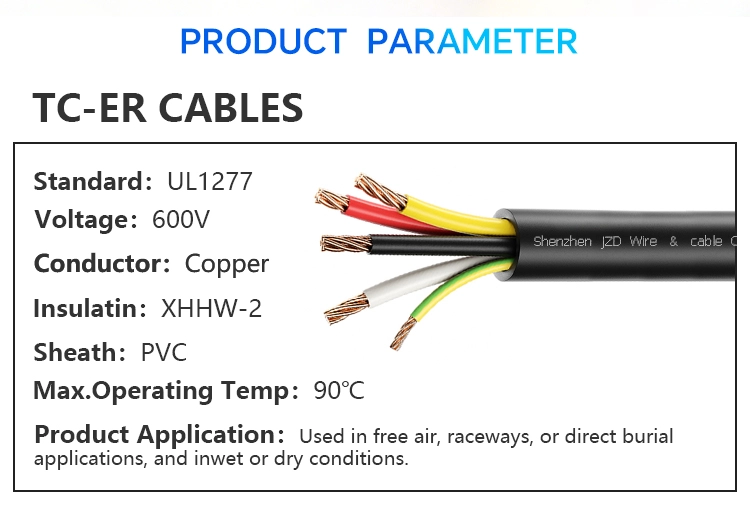
JZD Cable manufactures UL 44 certified XHHW-2 aluminum building wire for 600V conduit, cable tray, and raceway applications across the Americas.
Product Specifications
| Feature | Specification |
| Certification | UL 44 (Thermoset-Insulated Wires and Cables) |
| Voltage | 600V (1000V available for PV applications) |
| Conductor | AA-8000 series aluminum alloy (ASTM B801/B836) |
| Insulation | XLPE (cross-linked polyethylene) – 90°C wet/dry |
| Construction | Compact stranded, heat-treated for flexibility |
| Sunlight resistance | Available on 8 AWG and larger |
| Cable tray rating | CT-rated 1/0 AWG and larger |
| Cold bend | –40°C installation capability |
| Flame rating | FT1 standard; FT4 available |
| Marking | “AL XHHW-2” (AL/ALUMINUM prefix mandatory per NEC) |
Key Benefits for the Americas Market
- UL 44 listed – independently verified for safety and performance
- AA-8000 series – modern alloy with over 40 years of proven reliability
- 90°C wet/dry rating – versatile for all installation environments
- Cost-effective – 40–60% less than copper for equivalent ampacity
- Lightweight – one-third the weight of copper for easier installation
- Sunlight-resistant – suitable for outdoor exposed runs
- CT-rated – approved for cable tray installations
With over 25 years of manufacturing experience and exports across North America, Central America, and South America, JZD Cable provides reliable, code-compliant XHHW-2 aluminum building wire for commercial, industrial, and institutional projects.
Conclusion: Engineering the Trade-off
Aluminum XHHW-2 delivers the same 600V, 90°C wet/dry performance as copper – at 40–60% lower material cost.
The engineering trade-offs are clear:
- Aluminum must be upsized 1–2 AWG sizes to match ampacity
- Temperature derating further affects aluminum’s final sizing
- Voltage drop may become the deciding factor on long runs
- Aluminum’s net TCO is significantly lower for large feeder applications
- Copper still has its place in branch circuits, high-vibration, and frequent-flexing applications
AA-8000 series alloy has been the standard for over 40 years, with proven reliability across millions of installations when paired with AL/CU dual-rated terminations.
When your project requires 600V conduit or cable tray wiring and budget is a factor, aluminum XHHW-2 is the engineered solution.
Need XHHW-2 aluminum building wire? Contact JZD for technical specifications and sizing assistance.