


As AI compute clusters deploy, Server Rack power density is leaping structurally. AFCOM 2026 reports a 69% year-over-year jump to 27 kW, with high-density AI Server Racks approaching 246 kW. This amplifies rear heat accumulation and spatial constraints. Vertiv notes that parallel routing of power and data cables induces EMI capable of causing data errors. Within these boundaries, UL 2464 multi-core cable—with its compact structure, fine stranding, and shielding—has become the core carrier for Server Rack signals and controls. Understanding its applicability requires looking beyond spec sheets to the failure mechanisms.
What is UL 2464?
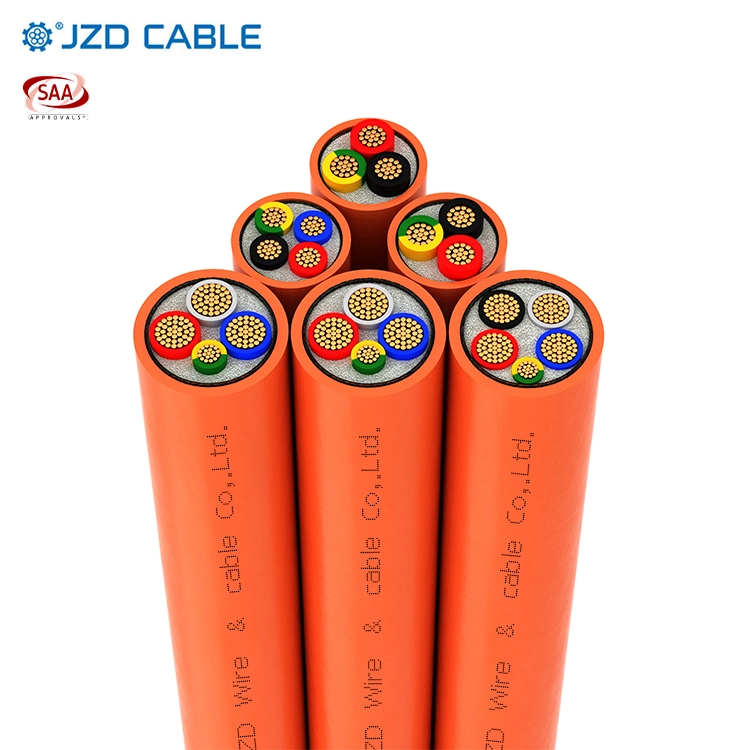
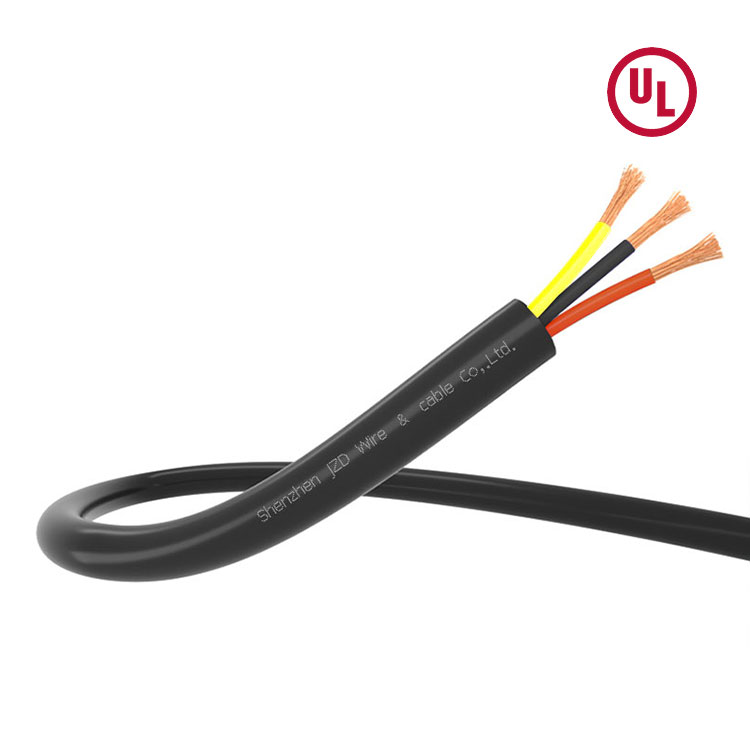
UL 2464 is a multi-core composite cable under the UL 758 (Appliance Wiring Material) framework. Its typical construction consists of finely stranded copper conductors (Class 5/6), PVC insulation, an overall PVC or LSZH jacket, and optional aluminum foil or braided shielding.
It is typically rated 300 V with an 80°C temperature rating. Inside a Server Rack, it does not carry primary power (that is the job of XHHW-2 or dedicated power cords) but serves as the core carrier for control circuits and signal links.
Three Severe Challenges in the Server Rack Environment
1. Heat Accumulation and Accelerated Insulation Aging
Due to server exhaust, the localized ambient temperature at the rear of the Server Rack can easily exceed 45°C. If cables operate long-term near their 80°C limit, plasticizers in the PVC insulation will volatilize rapidly, causing the insulation to harden and become brittle.
Engineering Mitigation: The compact circular structure of UL 2464, compared to loose single-core wires, reduces airflow obstruction (lowering wind resistance) in the Server Rack. In ultra-high-temperature racks (such as behind GPU servers), higher temperature-rated variants or Low Smoke Zero Halogen (LSZH) materials must be considered to prevent short circuits caused by thermal aging.
2. Fretting Fatigue Under High-Frequency Sliding
In a Server Rack, when servers slide in and out along rails, the cable bundles tied to the side of the Server Rack undergo repeated mechanical stretching. If building-grade coarse-stranded or solid wires are used, stress concentrates on a few strands, leading to metal fatigue and breakage within months.
Engineering Mitigation: UL 2464 generally uses Class 5 or Class 6 finely stranded copper. Hundreds of ultra-fine copper strands distribute the bending stress, allowing the cable to withstand hundreds of thousands of micro-displacements without internal breakage. This is a mandatory requirement for high-frequency maintenance scenarios within the Server Rack.
3. Crosstalk and Common-Mode Noise in Dense Cabling
In a fully populated 42U Server Rack, high-voltage (208V/415V) and low-voltage (RS-485, KVM, sensors) cables are often routed in parallel. High-frequency harmonics from power cables couple onto control lines, creating common-mode noise that causes monitoring data drift or KVM blackouts inside the Server Rack.
Engineering Mitigation: Shielded UL 2464 uses an aluminum foil plus drain wire structure. A critical engineering detail: the drain wire must be grounded at a single point on the control system side. If grounded at both ends, a ground loop is formed, introducing even greater low-frequency interference.
Standard Single-Core Wire vs. UL 2464 in a Server Rack
The three challenges correspond directly to UL 2464’s structural design: the compact circular jacket manages airflow, Class 5/6 fine stranding resists fretting fatigue, and the shield suppresses common-mode noise. The table below summarizes these differences and the performance of standard wiring solutions within a Server Rack:
| Comparison Dimension | Standard Single-Core / Building Wire (e.g., THHN) | UL 2464 Multi-Core Control Cable |
| Server Rack Space & Airflow | Multiple parallel runs; bulky bundles obstruct exhaust | Single multi-core integration; compact and round; low drag |
| Fretting Fatigue Resistance | Solid/coarse stranded; prone to breakage under sliding | Class 5/6 fine stranded; stress distributed; high flex life |
| EMI Suppression | Unshielded; susceptible to power harmonic coupling | Optional shield + drain wire; suppresses crosstalk |
| Bending Adaptability | Stiff; difficult installation at Server Rack corners | Highly flexible; adapts to tight enclosure spaces |
| Typical Application | Building conduits, fixed power distribution | Server Rack internal signals, control, sensors |
Typical Applications and Compliance Boundaries in the Server Rack
1. Smart PDU RS-485 Communication Links
The cascading control cables of a Server Rack PDU have extremely high requirements for signal integrity. The multi-core shielded structure of UL 2464 prevents interference from adjacent server power cords, ensuring accurate Modbus or SNMP data transmission.
2. Server Rack Environmental Monitoring (Temp/Humidity, Water, Access)
These sensor cables are often routed along the right angles and hinges of the Server Rack frame, requiring an extremely small bending radius. UL 2464’s small outer diameter (some 22 AWG variants are under 5 mm) allows it to easily pass through gaps in the Server Rack.
3. NEC Compliance (NEC 645 & NFPA 75)
In Information Technology Equipment Rooms, cabling inside the Server Rack routed under raised floors or in ceiling return air paths typically must meet CMP (Plenum-rated) flame standards. While UL 2464’s VW-1 rating satisfies basic vertical flame retardancy, if the Server Rack has a self-contained sealed airflow duct or is deployed in a highly regulated data center zone, one must verify that the cable jacket’s smoke density and toxicity (e.g., LSZH material) meet NFPA 75 fire inspection requirements.
Server Rack Cabling Selection and On-Site Installation Pitfalls
-
Conductor Resistance & Voltage Drop: Although it is a control cable, if used to power a 24V relay inside the Server Rack, the voltage drop over long distances must be calculated to prevent relay failure.
-
Cable Fastening: Never use sharp nylon zip ties to tightly cinch UL 2464 bundles. Inside the Server Rack, use Velcro and leave an adequate “service loop” at the bends.
-
Shield Handling: When terminating inside the Server Rack, never cut or fray the aluminum foil and drain wire. Use heat shrink tubing to properly insulate the shield and prevent accidental short circuits.
Conclusion
Cabling inside a Server Rack is essentially a micro-battle between thermodynamics, mechanics, and electromagnetics. UL 2464 control cable provides a compact and reliable communication and control foundation for the Server Rack through multi-core integration, high-flexibility stranding, and shielding structures. Aligning thermal derating, stress relief, and shield grounding strategies during the design phase is far more efficient than troubleshooting phantom signal faults on-site in the server room.
For UL 758 compliant UL 2464 multi-core control cables (including shielded, LSZH jacketed, and various gauges), or for technical support to match the specific cabling requirements of your Server Rack, please contact us.