

Month: November 2026

UL 2464

Optimizing Server Rack Cabling with UL 2464

As AI compute clusters deploy, Server Rack power density is leaping structurally. AFCOM 2026 reports a 69% year-over-year jump to 27 kW, with high-density AI Server Racks approaching 246 kW. This amplifies rear heat accumulation and spatial constraints. Vertiv notes that parallel routing of power and data cables induces EMI capable of causing data errors. […]
Read More +
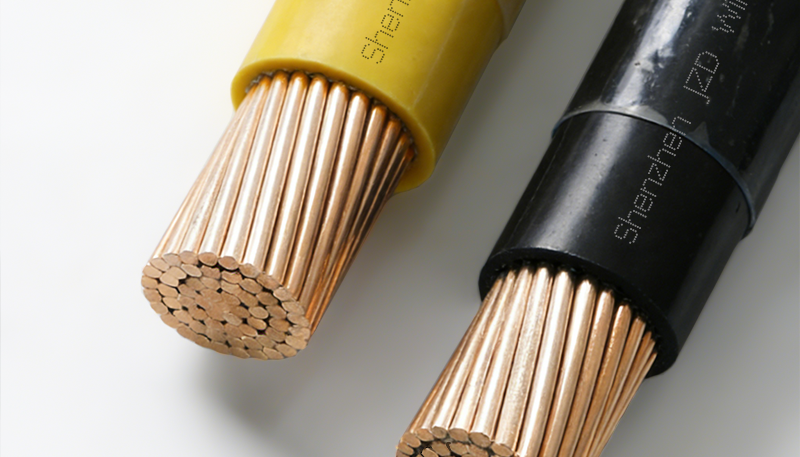
THHN

Electrical Cables Selection Guide: Types, Materials, and Engineering Applications

In commercial projects, Electrical Cables dictate both initial cost and long-term reliability. Designs often neglect stranding and jacket aging by focusing solely on gauge and voltage. This article covers cable structures, mainstream types, and insulation/jacket selection logic to help you make informed decisions. What are Electrical Cables? Electrical Cables are components composed of one or […]
Read More +
TPS CABLE

FR vs. FRLS vs. Fire Resistant Cable in Building Wiring

Cable selection in commercial buildings often stops at “flame retardant” vs. “fire resistant.” Yet in a real fire, maintaining circuit integrity under heat, smoke, and impact is what ensures safe evacuation and firefighting operations. Basic flame retardant (FR) standards alone cannot address smoke toxicity and circuit failure risks. What is FR (Flame Retardant) Cable? FR […]
Read More +
thhn

Solid Wire vs. Stranded Wire: Selection Logic for Electrical Projects

In most projects, choosing between solid and stranded conductors isn’t about “better” or “worse.” It is a trade-off between mechanical resilience, termination behavior, and installation economics. The deciding factor is always the application, not personal preference. What is a Solid Wire? A solid conductor consists of a single continuous metal core. It holds its shape, […]
Read More +
Modular Building

Modular Building Cable Selection Guide

In modular construction, factory prefabrication creates an irreversible constraint: once wall panels are sealed, internal cables cannot be maintained. Initial selection is therefore critical for lifecycle reliability. This guide addresses four core wiring challenges: prefab limitations, cross-module stress, confined space safety, and export compliance. In-Wall Prefab Wiring and Module Cross-Connections On the factory assembly line, […]
Read More +
Royal Cord Wire

Royal Cord in the Philippines: PNS 163 Selection Guide

In Philippine electrical projects, the selection of Royal Cord directly impacts the operational safety of terminal equipment, the thermal stability of the distribution system, and whether the project successfully passes local fire and electrical inspections (PEC). Because the Philippines is located in the tropics with year-round high temperatures and humidity, the insulation aging rate of […]
Read More +
garden wiring cable

SOOW vs. SJOOW: Portable Rubber Cable Selection

In industrial and construction settings, SOOW and SJOOW differ by a single letter (“J”) but represent vastly different physical boundaries. Misusing SJOOW in 480V/600V circuits risks insulation breakdown, while forcing bulky SOOW into tight spaces causes operator fatigue. To select correctly, we must look at their underlying material DNA. Thermoset Rubber: The Underlying DNA of […]
Read More +
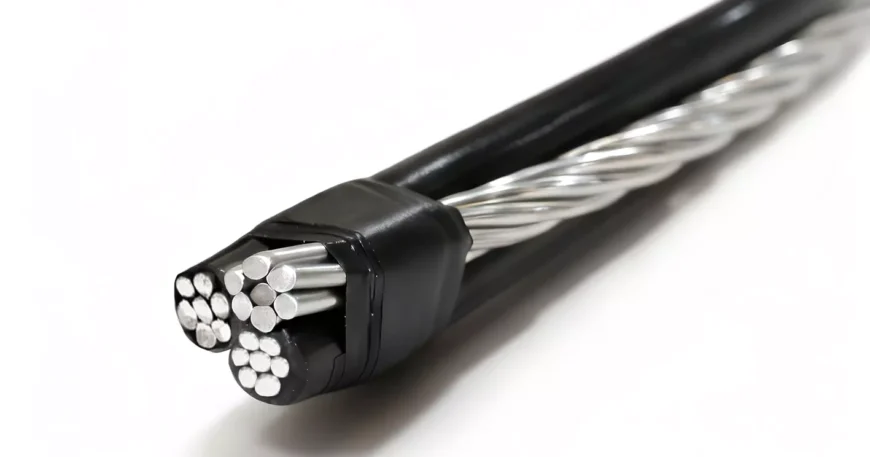
Aluminium Aerial Bundled Cable

ABC Cable for Low-Voltage Distribution

Bare conductors suffer from electrocution risks and tree outages. Aerial Bundled Cable (ABC) is not just insulated wire—it’s a system-level evolution of the distribution grid. For engineers, understanding its material mechanisms matters more than spec sheets. What is ABC Cable? ABC is an overhead distribution system where multiple insulated phase conductors and a neutral/messenger conductor […]
Read More +
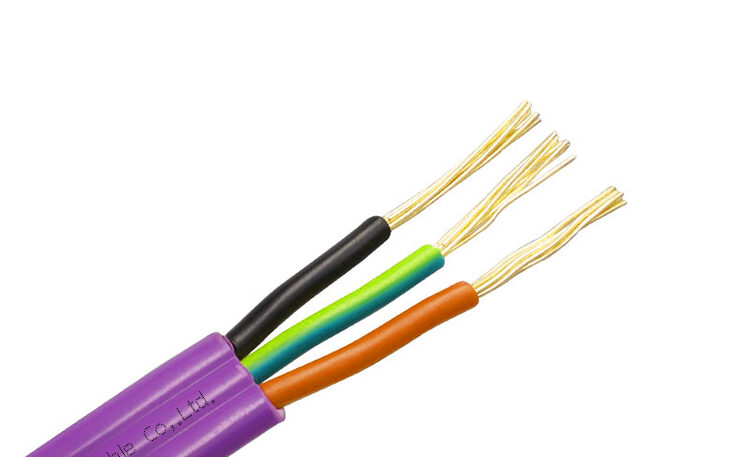
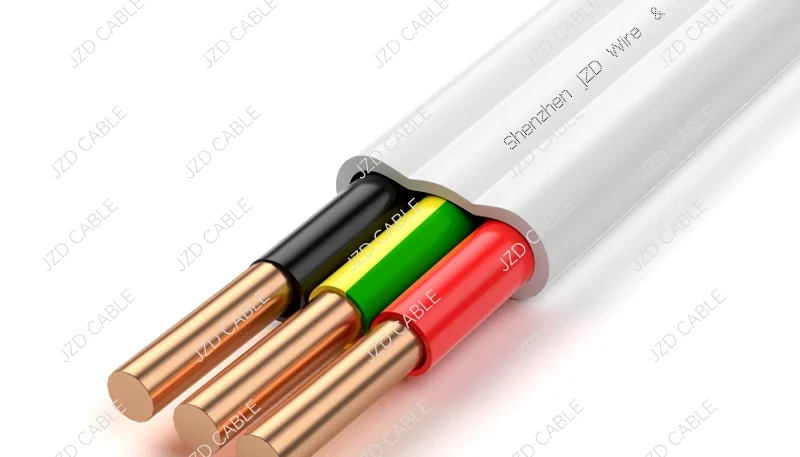
TPS Flat Cable

3V-90 vs. 5V-90: Sheath Selection for AS/NZS TPS Cables

In ANZ electrical projects, the 3V-90 and 5V-90 markings on TPS cables are often mistaken for core counts or voltage ratings. Under AS/NZS 3808, they are two PVC sheath material designations with different formulation priorities: 3V-90 is tuned for easy stripping, while 5V-90 is tuned for mechanical protection. Getting this distinction right matters for prefab […]
Read More +
SIS wire

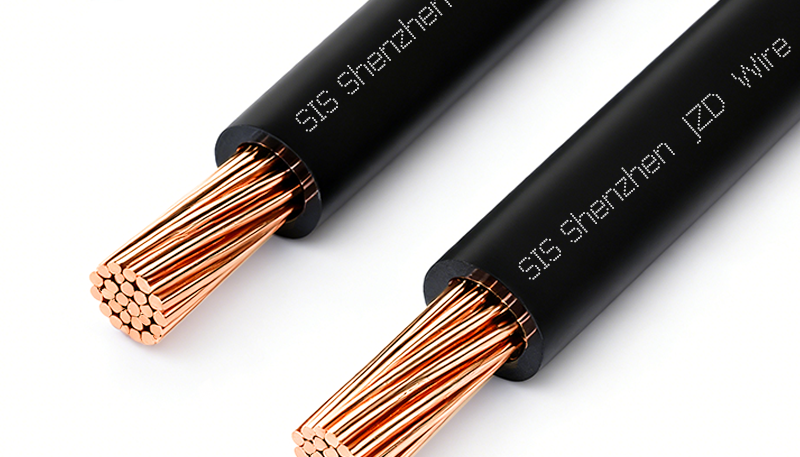
SIS Switchboard Wire: Specifications, Applications, and Selection Guide

Inside switchboards, switchgear, and Motor Control Centers (MCCs), conductor density is extremely high, terminals generate heat, and heat dissipation is far worse than in open building raceways. In these confined, heat-dense environments, standard building wire often fall short. To meet these harsh conditions, electrical codes and equipment standards require a specifically engineered single conductor—SIS wire. […]
Read More +
Cart
  • Your cart is empty Browse Shop
    Select the fields to be shown. Others will be hidden. Drag and drop to rearrange the order.
    • Image
    • SKU
    • Rating
    • Price
    • Stock
    • Availability
    • Add to cart
    • Description
    • Content
    • Weight
    • Dimensions
    • Additional information
    Click outside to hide the comparison bar
    Compare