

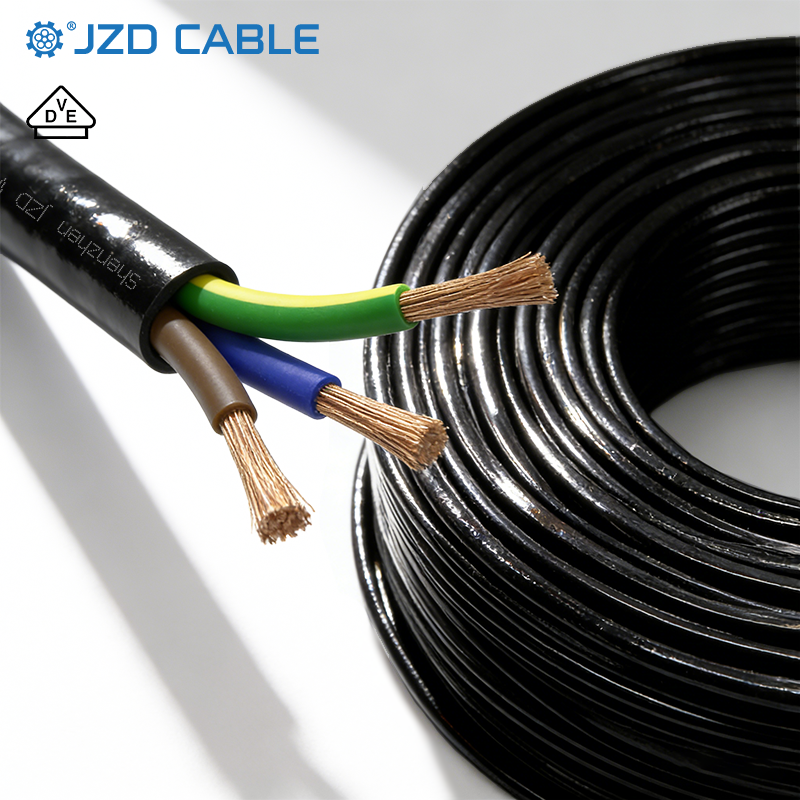
A Finnish sauna equipment manufacturer’s 2022 after‑sales data revealed a pattern: returned “faulty heaters” often tested fine at the factory. The actual problem was the connecting cables. After several years in service, many power cables showed sheath cracking at the wall penetration point, with insulation resistance dropped enough to cause intermittent tripping. The common factor: PVC sheaths.
In a sauna environment where internal temperatures typically reach 80–100°C, PVC’s continuous operating temperature limit is only 70°C (IEC 60227). Leading sauna heater manufacturers explicitly specify in their installation manuals: “Use H07RN‑F cables… Do not use PVC insulated cable as a connection cable for the sauna heater.”
To understand why H07RN‑F is commonly specified for sauna heater connections, we first need to look at the temperature distribution inside a sauna—and where power cables actually run.
Temperature Distribution Inside a Sauna
Temperatures inside a sauna vary significantly by location. Understanding this distribution is essential for proper cable selection:
| Location | Typical Temperature | Typical Equipment |
| Heater surface and within 30cm | >150°C, locally up to 170°C+ | Heater body |
| Walls and ceiling near heater | 90–100°C | Heater power supply lead |
| Walls and ceiling away from heater | 80–90°C | Lighting, ventilation fan |
| Outside sauna (equipment room, corridor) | Ambient | Controller, junction boxes |
H07RN‑F has a fixed‑installation operating temperature range of –40°C to +80°C (some manufacturers guarantee up to +90°C). Its applicable range covers most areas inside the sauna, except the immediate vicinity of the heater surface.
The most common sauna application for H07RN‑F is the power supply lead from the wall penetration to the heater terminal box—where ambient temperatures are typically in the 80–100°C range. Per EN 60335‑2‑53 (the standard for sauna heaters) and related manufacturer installation instructions, heater power supply leads should use rubber‑sheathed cables, type H07RN‑F or equivalent. This standard reference reflects industry recognition of H07RN‑F’s suitability for sauna heater supply applications.
How Sauna Conditions Align with Cable Material Selection
Cables inside a sauna face three main types of stress. The material choices in H07RN‑F map directly to these conditions:
1. Operating Temperature
Most of the sauna’s interior sits at 80–100°C. Standard PVC has a continuous operating temperature limit of 70°C (IEC 60227)—outside its design range in this environment.
H07RN‑F uses EPR insulation, which has a continuous operating temperature limit of 90°C (IEC 60502) and a short‑circuit temperature limit of 250°C. At 80–100°C, the sauna’s normal operating range remains within the cable’s design envelope. EPR maintains stable insulation resistance and dielectric strength at these temperatures, without the softening or performance degradation seen in PVC.
2. Wet‑Dry Cycling
A sauna goes through repeated dry‑to‑steam‑to‑dry cycles during use. Neoprene (chloroprene) sheathing offers better moisture and vapor resistance than conventional materials. The sheath’s ability to resist moisture vapor ingress directly affects the long‑term stability of the insulation layer under repeated wet‑dry cycling.
3. Thermal Cycling Fatigue
A sauna undergoes at least one full thermal cycle per day—from ambient to 100°C and back to ambient. A sauna used two hours daily experiences roughly 365 such cycles per year. The different coefficients of thermal expansion between copper conductors and insulation materials create shear stress at the conductor‑insulation interface with each cycle.
Both EPR and neoprene are thermoset materials. Unlike thermoplastics, they do not soften and flow when heated; their cross‑linked structures remain stable through temperature changes. The cumulative fatigue effect from thermal cycling is significantly lower than with thermoplastic materials.
Practical Applications of H07RN‑F in Saunas
1. Heater Power Supply
This is the primary application for H07RN‑F in saunas. Residential sauna heaters typically draw 6–8kW, with commercial units up to 15kW or more. The supply cable from the controller to the heater is usually a 3‑core or 5‑core multi‑core H07RN‑F (3‑core for single‑phase, 5‑core for three‑phase).
This cable carries several tens of amps continuously in an 80–100°C ambient environment. EPR insulation maintains stable electrical performance at these temperatures, while the neoprene sheath handles the moisture and steam environment. The Class 5 stranded conductor (multiple fine copper strands) simplifies bending and termination inside the heater terminal box.
2. Lighting and Ventilation Supply
Lighting fixtures and ventilation fans inside the sauna are typically mounted away from the heater, where ambient temperatures are relatively lower (80–90°C). H07RN‑F is equally suitable for supplying these auxiliary loads.
Installation Points to Watch
1. Heater Termination Details
The heater terminal compartment typically runs at 50–70°C. Several details are worth attention:
Terminals should use tinned copper. Bare copper oxidizes at elevated temperatures, increasing contact resistance and generating additional heat. A strain relief clamp should secure the cable where it enters the heater junction box, preventing cable weight from pulling directly on the terminations. The bending radius inside the junction box should be no less than 6× the cable diameter.
2. Wall Penetration Sealing—The Most Common Point of Failure
Where the cable passes through the sauna wall from outside to inside, the penetration point is a potential path for steam ingress. Hot steam can track along the cable sheath surface from the hot zone into the cold zone, condensing inside the wall cavity.
Correct approach: fill the wall penetration with high-temperature silicone sealant (rated ≥200°C), and fit the cable with a protective bushing to prevent sheath damage from the wall opening edge.
3. Conduit Installation
Cables inside the sauna should be run in conduit. Metal conduit is the preferred choice—it maintains dimensional stability at high temperatures (unlike some plastic conduits), provides mechanical protection, and offers some thermal insulation.
Per IEC 60364‑7‑703 and related installation standards, electrical equipment inside the sauna is generally required to have moisture protection appropriate for the environment (e.g., at least IPX4). While cables themselves do not carry an IP rating, conduit installation provides additional protection, particularly in a steam environment.
4. Controller Location
The controller contains sensitive electronics with typical operating temperature ranges of only 0–50°C. Installing it outside the sauna is a matter of matching equipment to its designed operating conditions.
H07RN‑F vs PVC: The Material Difference in Sauna Applications
The performance gap between these two materials in sauna environments comes down to fundamental material science:
PVC is a thermoplastic. It softens when heated and hardens again when cooled. Each thermal cycle (sauna from ambient to 100°C and back) represents one “soften‑harden” cycle for PVC. After hundreds of cycles, plasticizers leach out and molecular chains break—the macroscopic result is brittle, cracked sheathing.
EPR is a thermoset. It does not soften or flow when heated. Its cross‑linked structure remains stable at elevated temperatures. For EPR, the same thermal cycle is simply a temperature swing—there is no cumulative soften‑harden fatigue mechanism.
The difference is directly reflected in temperature ratings:
| Property | PVC (IEC 60227) | EPR (IEC 60502) |
| Continuous operating temperature limit | 70°C | 90°C |
| Short‑circuit temperature limit | 160°C | 250°C |
In sauna applications, this means PVC cables, when installed in an 80–100°C environment, are being used beyond their design temperature. It is not a case of “shorter life”—it. It is a case of “operating outside the intended range from day one.”
Selection Reference: JZD H07RN‑F
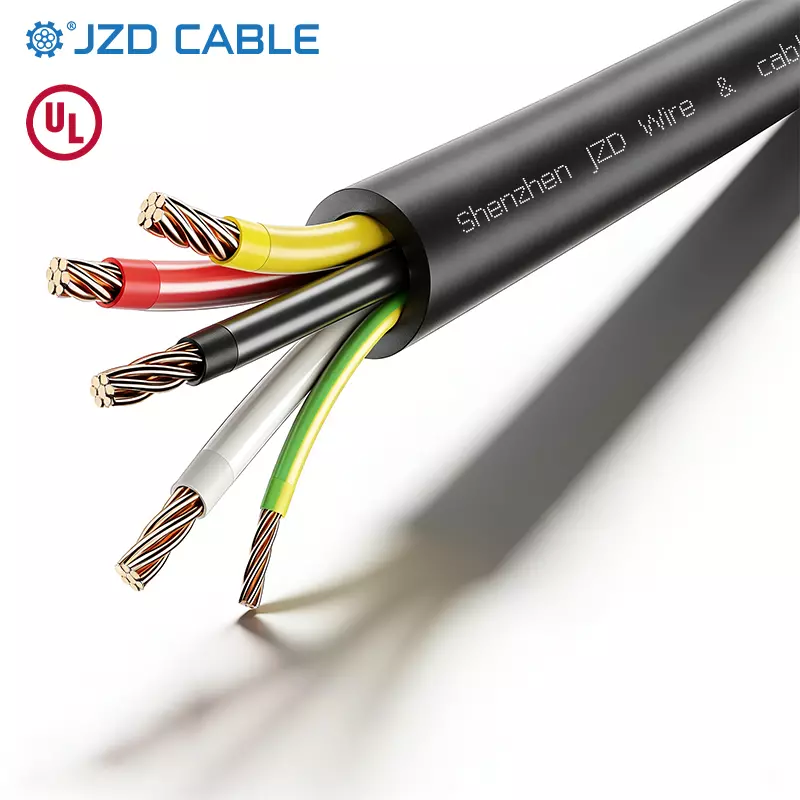
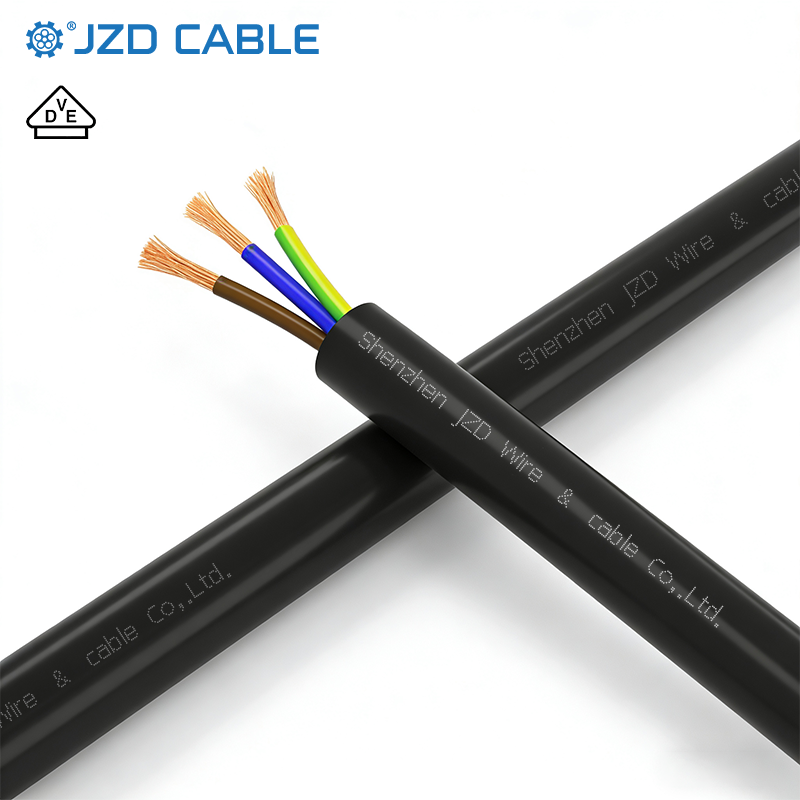
JZD’s H07RN‑F carries VDE, HAR, and CB certifications:
- Conductor: Class 5 fine‑stranded annealed copper
- Insulation: EPR (ethylene‑propylene rubber), continuous operating temperature 90°C, short‑circuit temperature 250°C
- Sheath: Neoprene (chloroprene rubber, CR)
- Operating temperature (fixed): –40°C to +90°C
- Operating temperature (flexing): –25°C to +60°C
- Flame retardancy: IEC 60332‑1‑2
Related reading: H07RN-F Cable CB Certification: One Certificate, Global Market Access
Conclusion
The core question for sauna cable selection is not whether a cable “works” in the installation but how long it can maintain stable performance under 80–100°C ambient temperature, repeated wet-dry cycling, and daily thermal cycling.
H07RN‑F, with EPR insulation and neoprene sheathing, is designed for this class of operating conditions. EN 60335‑2‑53 and related manufacturer specifications list it as the recommended cable for sauna heater supply—a reflection of industry recognition of its suitability for sauna applications.
For sauna projects, cable selection is not about whether the cable works today but whether it will still be working reliably years from now. The aging resistance of H07RN‑F’s EPR insulation and neoprene sheath in sauna environments is measurably superior to conventional materials—and that translates to significantly longer service life.
Contact JZD for technical support and certified cable solutions.