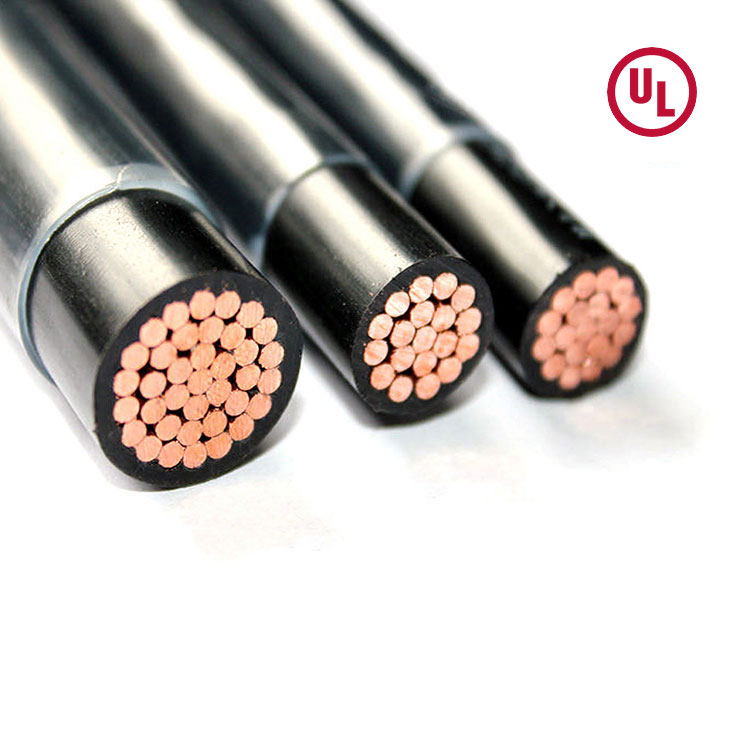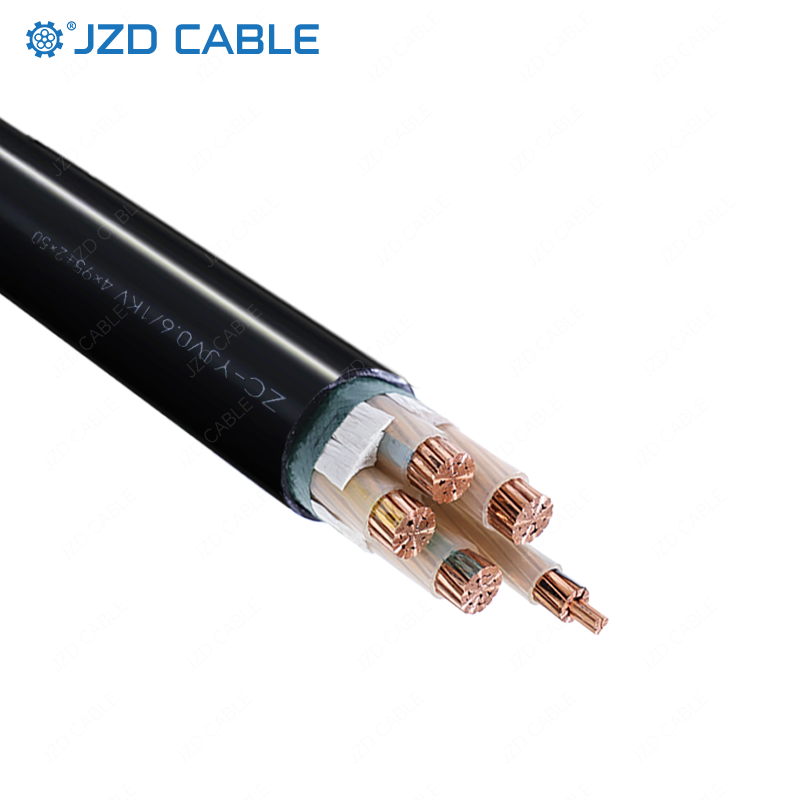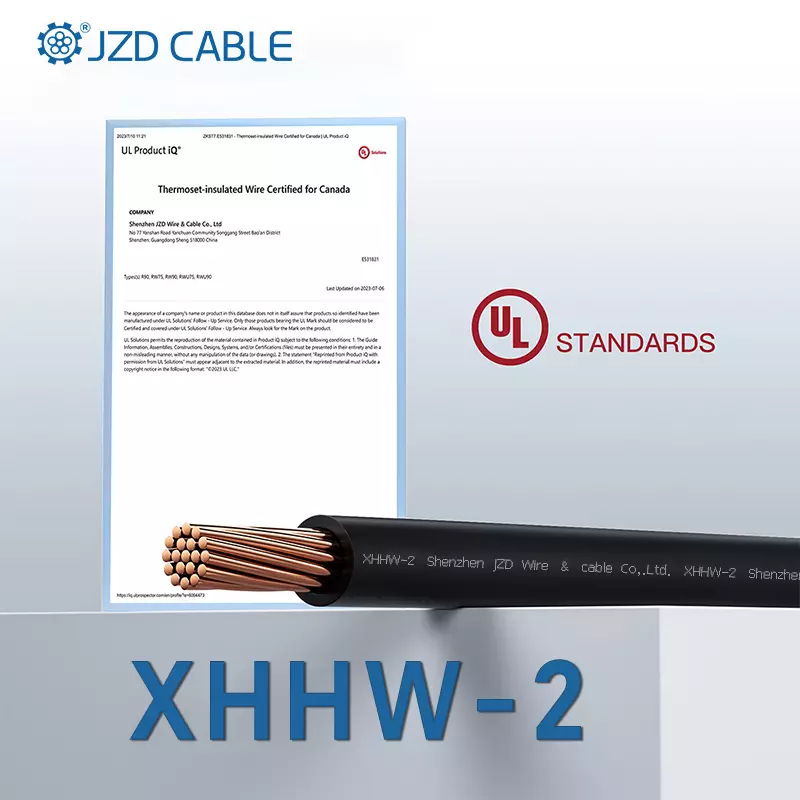


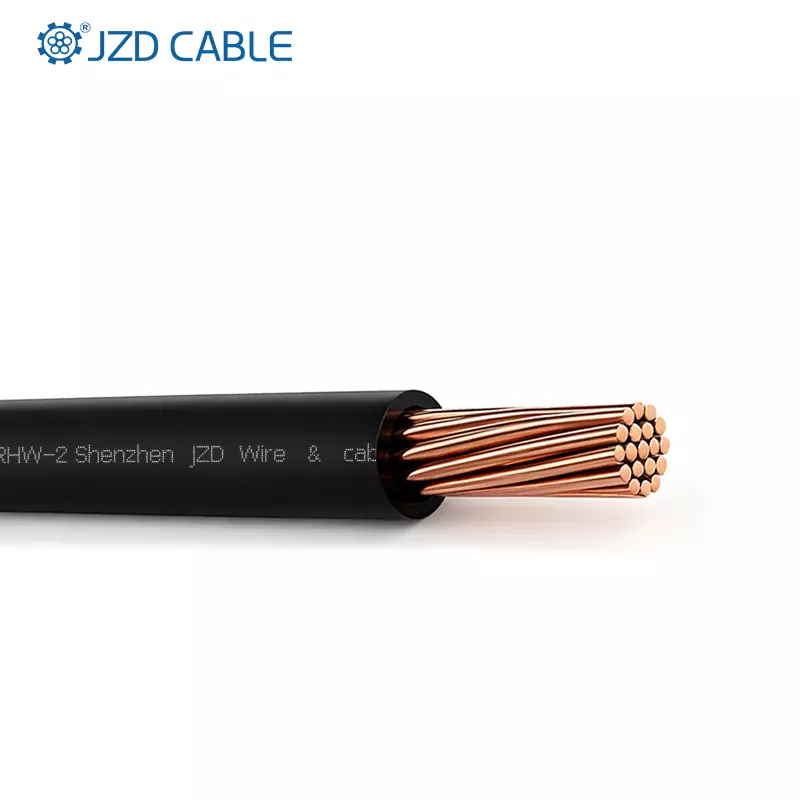
When specifying building wire for North American commercial or industrial projects, three common UL44 types often cause confusion: RHH, RHW, and RHW-2. They share the same basic construction — stranded copper or aluminum conductor with EPR (ethylene propylene rubber) or XLPE (cross-linked polyethylene) insulation, no PVC jacket, rated 600V (also available 1000V/2000V) — but differ critically in moisture resistance and temperature rating.
Choosing the wrong one can lead to premature insulation failure, code violations, or costly rework. This guide breaks down exactly what each designation means, how they compare, and which one to select for your specific installation environment.
All information is based on UL44 and NEC Table 310.15 standards.
Decoding the Name
|
Letter
|
Meaning
|
|---|---|
|
R
|
Rubber-like insulation (EPR or XLPE)
|
|
H
|
Heat-resistant (90°C dry rating)
|
|
W
|
Water-resistant (wet location rated)
|
|
-2
|
Unified 90°C rating for both dry and wet locations
|
So:
- RHH = Rubber, Heat-resistant (dry only)
- RHW = Rubber, Heat-resistant, Water-resistant (wet at 75°C)
- RHW-2 = Rubber, Heat-resistant, Water-resistant, unified 90°C (dry and wet)
Full Comparison Table
|
Parameter
|
RHH
|
RHW
|
RHW-2
|
|---|---|---|---|
|
Core meaning
|
Dry-only heat-resistant
|
Heat + water-resistant, wet at 75°C
|
Unified 90°C dry/wet, most versatile
|
|
Dry location temperature
|
90°C
|
75°C
|
90°C
|
|
Wet location temperature
|
Not permitted (no W)
|
75°C
|
90°C
|
|
Moisture/water resistance
|
None – insulation formula focuses on heat aging, no moisture additives
|
Moderate – contains moisture-resistant additives per UL44
|
Enhanced – upgraded formulation for long-term wet operation at full 90°C
|
|
Ampacity reference
|
NEC 90°C column (dry only)
|
NEC 75°C column for both dry and wet
|
NEC 90°C column for all environments (no de-rating needed)
|
|
Voltage rating
|
600V (1000V/2000V optional)
|
600V (1000V/2000V optional)
|
600V (1000V/2000V optional)
|
|
Sunlight resistance
|
No (unless marked SUN RES separately)
|
No (unless marked SUN RES)
|
Often marked SUN RES – suitable for outdoor sunlight exposure
|
|
Typical applications
|
Indoor dry switchgear, fan motors, dry transformers, machine rooms
|
Legacy retrofit in damp conduits, basements, non-high-temp outdoor (75°C limited)
|
Outdoor feeders, underground conduit, photovoltaic lines, wet industrial plants, new-build commercial backbone
|
|
Selection priority
|
Only for dedicated dry high-temp zones
|
Rarely chosen for new projects
|
First choice for universal dry/wet/outdoor applications
|
Key Differences Explained
1. Temperature Rating – The Critical Distinction
The biggest difference is how each type handles wet locations:
- RHH: Rated 90°C dry only. If moisture is present, the insulation can degrade rapidly. Never use RHH in damp basements, outdoor raceways, or underground conduits.
- RHW: Rated 75°C in both dry and wet. This means in wet locations you must use the NEC 75°C ampacity column, which gives lower current-carrying capacity than the 90°C column. For example, a #6 AWG copper RHW in wet location has about 65A instead of 75A (90°C column).
- RHW-2: Rated 90°C in both dry and wet. This is the highest performance: you never have to de-rate for moisture. Same ampacity everywhere, simplifying design and often allowing a smaller gauge.
2. Moisture Protection Formulation
All three use EPR or XLPE insulation, but the additive packages differ:
- RHH: Formula optimized for thermal aging resistance. No anti-moisture components. Water absorption over time causes insulation breakdown.
- RHW: Contains moisture-resistant additives meeting UL44 wet location requirements. However, the maximum wet temperature is capped at 75°C.
- RHW-2: Uses an advanced formulation that combines both heat resistance and long-term moisture protection, certified for continuous 90°C operation even when submerged or in high-humidity environments.
3. Ampacity and Sizing Impact
Because RHW-2 allows 90°C ampacity in all conditions, it can often carry more current than RHW of the same gauge in wet locations, or allow downsizing. Example:
|
Condition
|
#6 AWG Copper @ 75°C (RHW wet)
|
#6 AWG Copper @ 90°C (RHW-2 wet)
|
|---|---|---|
|
Ampacity (NEC 310.16)
|
~65A
|
~75A
|
That’s a 15% increase without changing conductor size — significant for long feeder runs.
4. Sunlight (UV) Resistance
Standard RHH, RHW, and RHW-2 are not automatically sunlight-resistant. To be used outdoors exposed to direct sun, the cable must be marked “SUN RES” on the jacket. Many RHW-2 products carry this marking by default, but always verify with the manufacturer. At JZD Cable, we can supply RHW-2 with SUN RES for rooftop solar and outdoor tray applications.
Application Guide – Which One Should You Choose?
|
Installation Environment
|
Recommended Type
|
|---|---|
|
Dry indoor switchgear, motor control centers
|
RHH (most economical)
|
|
Dry transformer vaults, high-temp dry zones
|
RHH or RHW-2
|
|
Damp basements, underground conduit (non-critical)
|
RHW (if budget constrained)
|
|
Outdoor exposed raceway (with SUN RES)
|
RHW-2 (SUN RES)
|
|
Wet industrial plants, wash-down areas
|
RHW-2
|
|
Photovoltaic DC/AC combiner boxes, outdoor feeders
|
RHW-2 (often 1000V/2000V)
|
|
New commercial building backbone
|
RHW-2 – universal choice
|
|
Retrofit replacing old RHW
|
RHW or RHW-2
|
Frequently Asked Questions
Q: Can RHH be used in conduit underground?
A: No. Underground conduit is considered a wet location per NEC. RHH has no wet rating. Use RHW-2 instead.
Q: Is RHW-2 the same as XHHW-2?
A: Similar but not identical. Both are 90°C dry/wet, but XHHW-2 uses XLPE insulation (cross-linked polyethylene) while RHW-2 can use either EPR or XLPE. RHW-2 often has a thicker insulation wall for added robustness. Check the manufacturer’s datasheet for exact dimensions and approvals.
Q: Do I need SUN RES for outdoor use in conduit?
A: If the conduit is exposed to direct sunlight (e.g., above-ground PVC or metal conduit on a roof), the cable inside is generally protected by the conduit. However, if the cable exits the conduit or runs in open cable tray outdoors, SUN RES marking is required. When in doubt, choose RHW-2 with SUN RES.
Q: Can RHW replace RHW-2 in a pinch?
A: Only if you recalculate ampacity using the 75°C column and ensure the wet temperature does not exceed 75°C. For new work, always use RHW-2 to avoid confusion.
Why Source RHH / RHW / RHW-2 from JZD Cable?
At JZD Cable, we manufacture UL44-certified building wires in all three variants:
- RHH – dry indoor, cost-effective
- RHW – legacy replacement, 75°C wet
- RHW-2 – premium all-purpose, 90°C dry/wet, SUN RES available
We stock bare copper and AA8000 aluminum conductors from 14 AWG to 750 kcmil, in both EPR and XLPE insulations, with custom voltage ratings (600V / 1000V / 2000V) and jacket colors upon request.
Every reel comes with full traceability, UL listing, and compliance with NEC 2023.
Visit jzdcable.com/products or contact our engineering team for specification assistance.