

In Philippine electrical engineering practice, cable selection is never as simple as “just powering up”—it’s about safety compliance, long‑term reliability, and passing project inspections. Faced with fixed wiring and mobile power supply scenarios, engineers and procurement professionals often struggle with the most fundamental question: Which one should I choose?
Both appear to transmit electricity, but their design logic, engineering parameters, and certification systems are completely different. Choosing the wrong one not only leads to equipment failures but may also directly violate the Philippine Electrical Code (PEC), resulting in inspection failures and project rework. This article dives deep into the application boundaries, technical differences, and common misconceptions of Royal Cord and THHN from an engineering perspective, helping you make the right decision in the Philippine market.
What Scenarios Are Royal Cord and THHN Used For?
1. Fixed In-Wall Wiring—Why THHN Is Mandated by the PEC
This is the most common electrical installation method in Philippine commercial and residential buildings—cables are pulled through conduits embedded in walls, ceilings, and floors, and once enclosed, they never move.
Engineering requirements:
- Cables must withstand the mechanical stress of pulling through conduit
- In confined spaces with continuous current, they must tolerate higher temperatures
- Terminations must remain stable long-term, without loosening from vibration or thermal cycling
- Must pass electrical inspection and meet PEC compliance requirements
The right cable: THHN
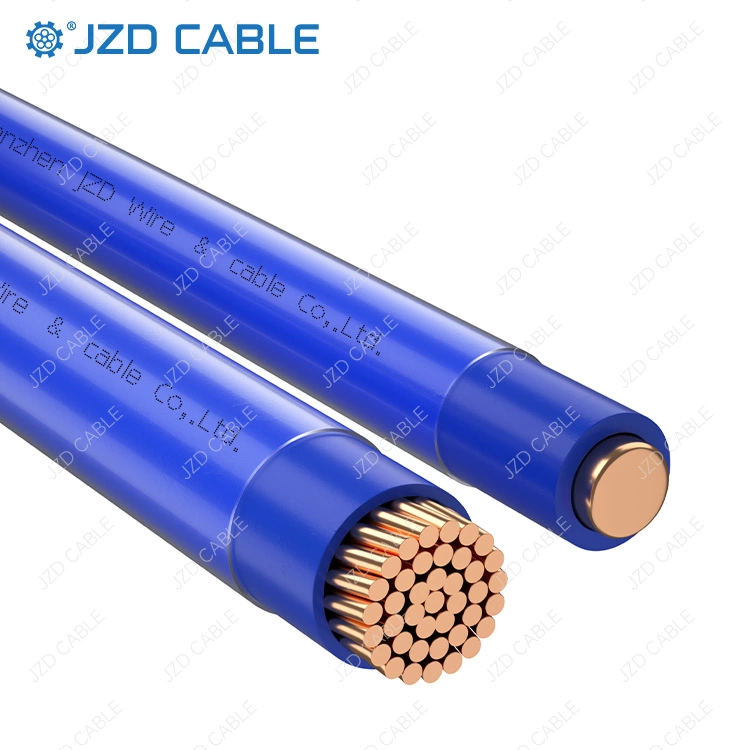
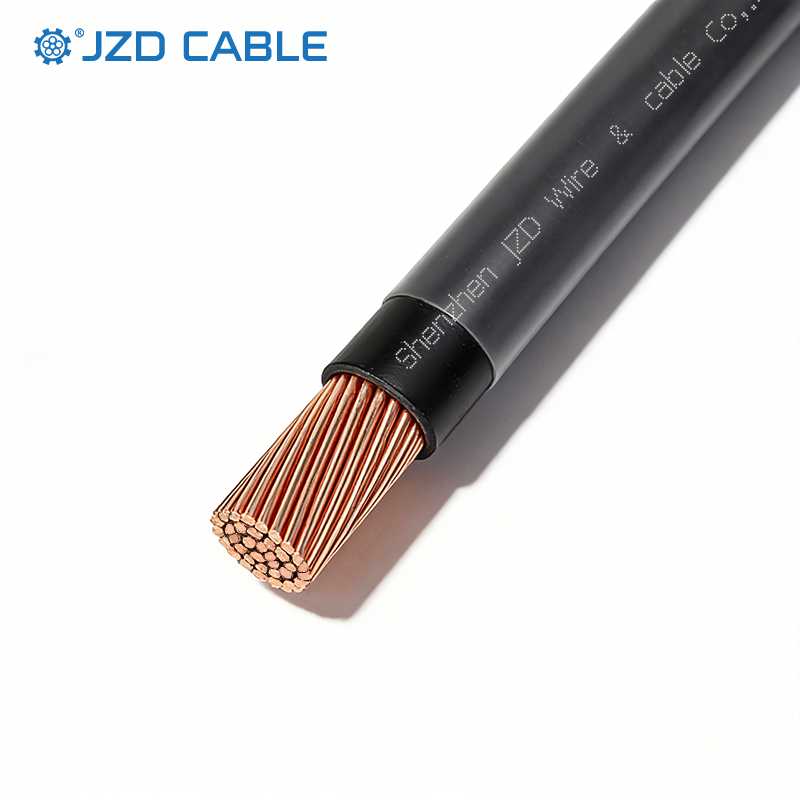
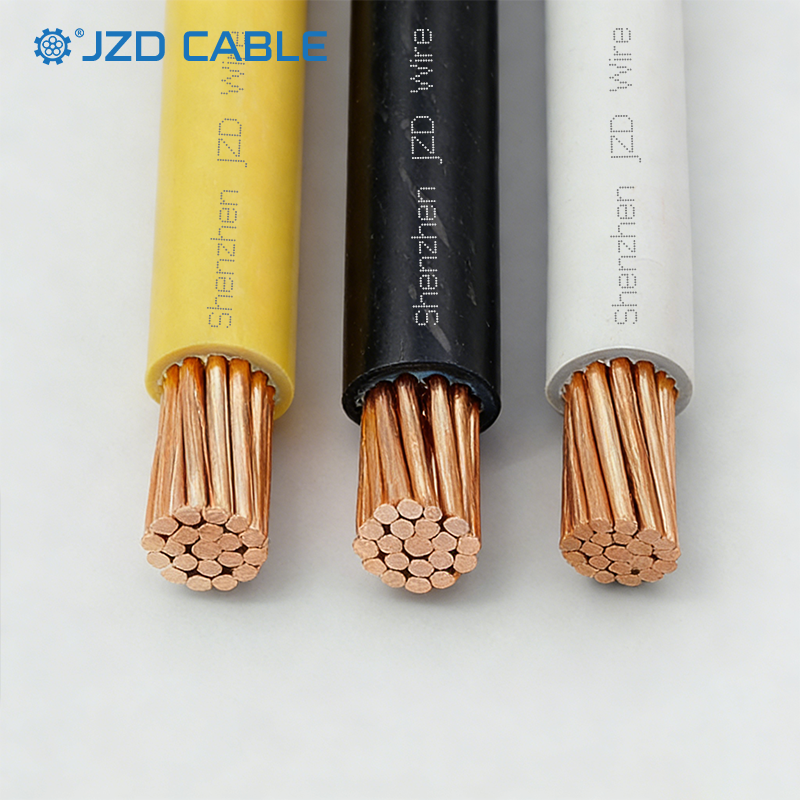
THHN’s rigid construction and nylon jacket are designed exactly for this scenario—smooth pulling through conduit, abrasion resistance, stable terminations. JZD’s Philippine copper conductor THHN/THWN-2 is DTI-certified, compliant with PNS 189:2000, featuring high-conductivity copper conductors with PVC insulation and a nylon jacket. Temperature range covers -40°C to 90°C (dry/wet), with sizes ranging from 14 AWG to 4/0 AWG (2.0 mm² to 120 mm²), meeting complete building wiring needs from lighting circuits to main feeders.
PEC mandate: The Philippine Electrical Code explicitly requires that cables for lighting and power systems be THHN/THWN type, compliant with PNS 189:2000, with a minimum conductor size of 3.5 mm².
2. Portable Equipment and Temporary Power – Royal Cord’s Core Application
In Philippine factories, construction sites, commercial facilities, and homes, numerous devices require flexible power supplies—equipment that moves, cables that bend frequently, or temporary setups that are constantly assembled and disassembled.
Engineering requirements:
- Cables must withstand repeated bending without conductor fatigue failure
- Maintain electrical performance under frequent plugging/unplugging and movement
- Multi-conductor configurations (2-core, 3-core, 4-core) for different equipment needs
- Jacket must resist abrasion and light impact
The right cable: Royal Cord
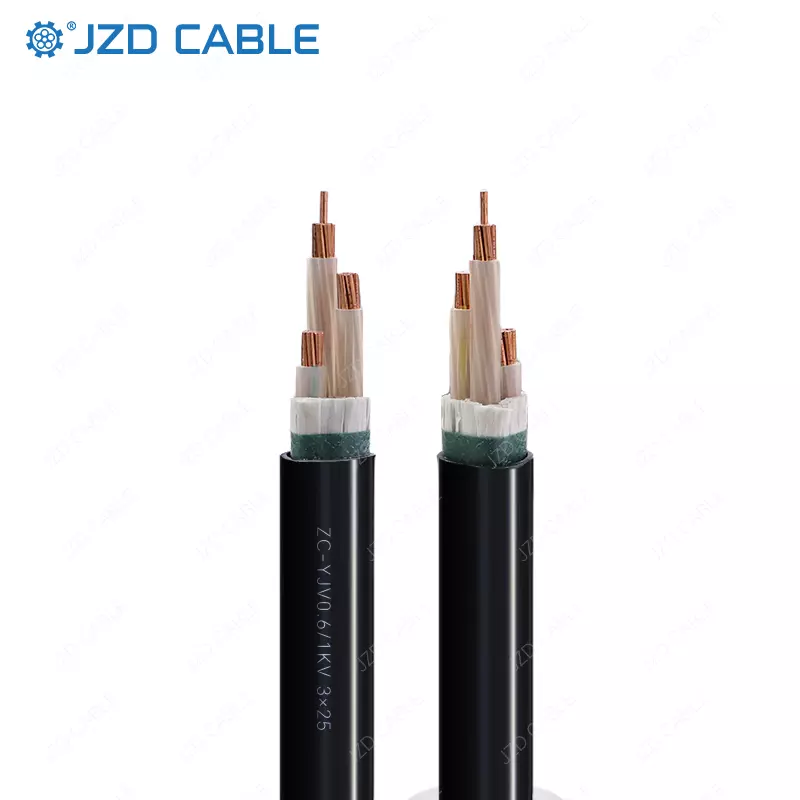
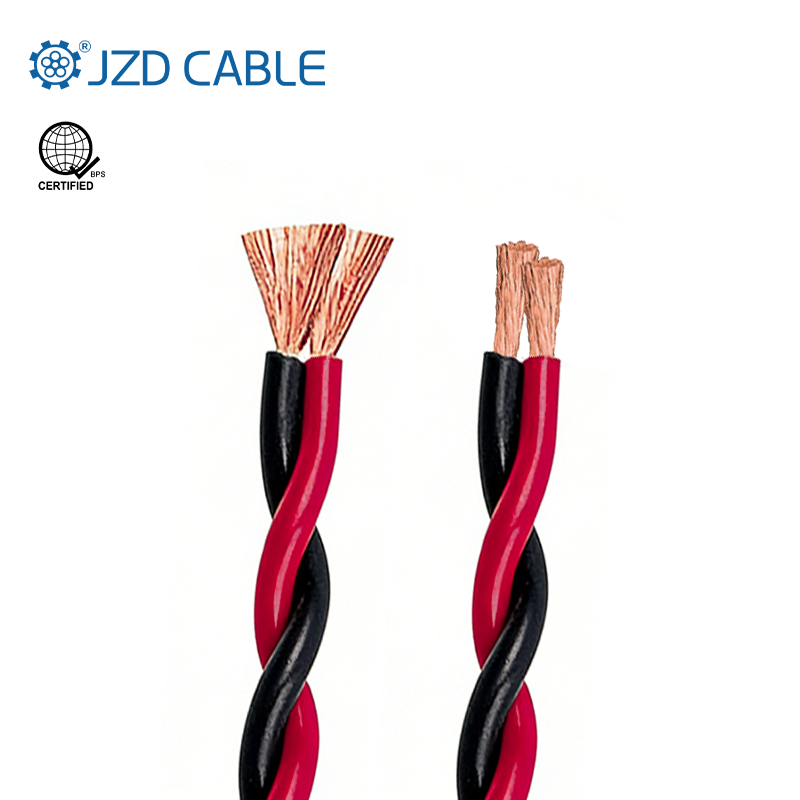
Royal Cord’s 56-strand construction is designed exactly for this scenario—flexible, bend-resistant, multi-conductor, double-layer jacket protection. JZD’s Royal Cord is BPS PNS 163 certified, featuring high-conductivity stranded copper conductors. The 56-strand construction delivers excellent bending life. Rated 600V with 60°C/75°C dual temperature rating, available in 2-core, 3-core, and 4-core configurations, with a double-layer lead-free flame-retardant PVC jacket.
Mandatory certification: In the Philippine market, Royal Cord must carry BPS PNS 163 certification—without it, the product cannot be legally sold or used.
Royal Cord vs THHN: Core Technical Parameter Comparison
| Parameter | Royal Cord | THHN/THWN-2 |
| Application | Portable equipment, temporary power, flexible connections | Fixed in-wall wiring, conduit systems |
| Certification | BPS PNS 163 | DTI-certified, PNS 189:2000 |
| Voltage Rating | 600V | 600V |
| Temperature Range | 60°C/75°C | -40°C to 90°C (dry/wet) |
| Conductor Construction | 56-strand stranded copper | High-conductivity copper conductor |
| Jacket Construction | Double-layer lead-free flame-retardant PVC | PVC insulation + nylon jacket |
| Bending Performance | High (5,000+ cycles) | Low (not suitable for repeated bending) |
| Conduit Pulling | Poor (strands can tangle) | Excellent (rigid, smooth) |
| Size Range | 2-core, 3-core, 4-core | 14 AWG to 4/0 AWG (2.0 mm² to 120 mm²) |
| PEC Compliance | Not permitted for fixed wiring | ✅ PEC compliant |
How to Determine Whether Your Project Needs Royal Cord or THHN
1. Installation Location Determines Cable Selection
| Installation Location | Choice | Rationale |
| In-wall conduit, fixed | THHN/THWN-2 | PEC mandate, nylon jacket resists abrasion |
| Flexible lead between equipment and wall | Royal Cord | Needs bending and movement, 56-strand flexibility |
| Panelboard fixed terminations | THHN/THWN-2 | Stable terminations, no bending required |
| Temporary jumpers between equipment | Royal Cord | Repeated installation and removal |
2. Fixed Installation → THHN, Frequent Movement → Royal Cord
| Usage Pattern | Choice | Rationale |
| Installed and never moved | THHN/THWN-2 | Rigid construction, reliable terminations |
| Equipment that moves or is carried | Royal Cord | 56-strand construction resists bending fatigue |
| Occasional movement (portable tools) | Royal Cord | Flexibility is essential |
| Fixed equipment requiring vibration resistance | THHN/THWN-2 | Nylon jacket + rigid terminations |
3. Certification Requirements in the Philippine Market
| Project Type | Cable Choice | Certification Requirement |
| Philippine commercial/residential buildings | THHN/THWN-2 | DTI-certified, PNS 189:2000 |
| Philippine government/public projects | THHN/THWN-2 | DTI-certified (mandatory) |
| Factory equipment power supply | Royal Cord | BPS PNS 163 |
| Household appliance power cords | Royal Cord | BPS PNS 163 |
| Construction site temporary power | Royal Cord | BPS PNS 163 |
4. How Bending Radius and Installation Space Affect Cable Selection
| Space Condition | Choice | Rationale |
| Tight conduit, multiple bends | THHN/THWN-2 | Rigid conductors pull more smoothly |
| Limited bending space (inside equipment) | Royal Cord | Multi-strand bends in tight radius |
| Long conduit runs | THHN/THWN-2 | Nylon jacket reduces friction |
4 Engineering Scenarios Where Royal Cord and THHN Cannot Be Interchanged
1. Fixed In-Wall Wiring Must Use THHN – PEC Requirement
Mistake: Using Royal Cord instead of THHN for in-wall conduit wiring.
Technical reason: Royal Cord’s 56-strand construction tangles during pulling and is prone to jacket damage; the 75°C temperature rating lacks margin in confined spaces.
Regulatory consequence: Violates PEC; electrical inspection fails.
2. Portable Equipment Power Must Use Royal Cord—Otherwise It May Break
Mistake: Using THHN rigid wire for equipment that needs to move.
Technical reason: THHN’s rigid conductors fatigue and break under repeated bending; the nylon jacket may crack under repeated flexing.
Engineering consequence: Cable breakage, equipment downtime, safety hazard.
3. Philippine Government Projects Require DTI-Certified THHN – Mandatory
Mistake: Using THHN without DTI certification or Royal Cord with only BPS certification.
Regulatory requirement: Government projects explicitly require DTI-certified THHN/THWN-type cables compliant with PNS 189:2000.
Consequence: Bid rejection or inspection failure.
4. Wet/Outdoor Environments Require THHN/THWN-2
Mistake: Using standard THHN in wet or outdoor locations.
Technical reason: Standard THHN has limitations in wet environments.
Correct choice: JZD’s THHN/THWN-2 dual-rated product meets both dry and wet location requirements, with a -40°C to 90°C temperature range and UV resistance for outdoor service entrance and exterior equipment.
4 Common Misconceptions in Philippine Cable Selection
1. Misconception: Royal Cord Can Substitute THHN for In-Wall Wiring
Fact: The two cable types are designed for entirely different applications. Using Royal Cord for fixed wiring violates the PEC.
Consequence: Electrical inspection failure, project rework.
2. Misconception: THHN Can Be Used for Everything
Fact: THHN is designed for fixed installation and is not suitable for portable equipment requiring frequent bending.
Consequence: Premature cable failure, equipment downtime.
3. Misconception: Any Certification Will Do for Philippine Projects
Fact: Royal Cord requires BPS PNS 163 certification; THHN requires DTI certification (PNS 189:2000).
Consequence: Wrong certification means electrical inspection failure.
4. Misconception: THHN Cannot Be Used in Wet Environments
Fact: THHN/THWN-2 dual-rated products meet both dry and wet location requirements, with a -40°C to 90°C temperature range.
Consequence: Choosing the wrong rating leads to insulation degradation and safety risks.
JZD Cable’s Dual-Standard Cable Solutions
JZD Cable has 25 years of manufacturing experience, exporting to more than 100 countries and regions, offering both BPS-certified Royal Cord and DTI-certified THHN:
1. BPS-Certified Royal Cord
| Key Parameter | Specification |
| Certification | BPS PNS 163 (Philippines mandatory) |
| Voltage Rating | 600V |
| Temperature Rating | 60°C/75°C dual rating |
| Conductor | 56-strand stranded copper |
| Jacket | Double-layer lead-free flame-retardant PVC |
| Configurations | 2-core, 3-core, 4-core |
Applications: Construction site portable tools, factory equipment flexible leads, appliance power cords, control cabinet internal wiring
2. DTI-Certified THHN/THWN-2
| Key Parameter | Specification |
| Certification | DTI-certified, PNS 189:2000 |
| Voltage Rating | 600V |
| Temperature Range | -40°C to 90°C (dry/wet) |
| Insulation | PVC insulation + nylon jacket |
| Size Range | 14 AWG to 4/0 AWG (2.0 mm² to 120 mm²) |
Applications: Residential in-wall wiring, commercial building conduit systems, industrial feeders, outdoor service entrance
Summary
Royal Cord is for mobile/flexible applications (portable tools, equipment leads, temporary power) and requires BPS PNS 163 certification. THHN/THWN-2 is for fixed/rigid installations (in-wall conduit, panelboards, raceway systems) and requires DTI certification per PNS 189:2000.
They are not interchangeable: fixed wiring demands THHN (PEC-mandated); portable equipment needs Royal Cord (or the conductor will fatigue and break). Certifications also differ—BPS and DTI each cover specific categories.
Selection starts with the application and the certification requirements. For technical specifications and certification support on Royal Cord or THHN, contact JZD Cable.