

When your battery system demands extreme temperature tolerance, exceptional flexibility, and long-term reliability, ordinary PVC or rubber cables fall short. Enter the silicone battery cable — a high-performance DC cable built around silicone rubber insulation that thrives where other materials fail.
From electric vehicle battery packs to Arctic solar arrays, drone racing quads to industrial robot arms, silicone battery cables deliver unmatched performance across the widest operating temperature window of any common battery cable type.
This guide covers everything you need to know: construction, specifications, advantages, and real-world applications.
What Is a Silicone Battery Cable?
A silicone battery cable is a high-current DC cable with silicone rubber (SiR) insulation, designed for battery-to-load connections in demanding environments. Its defining characteristics:
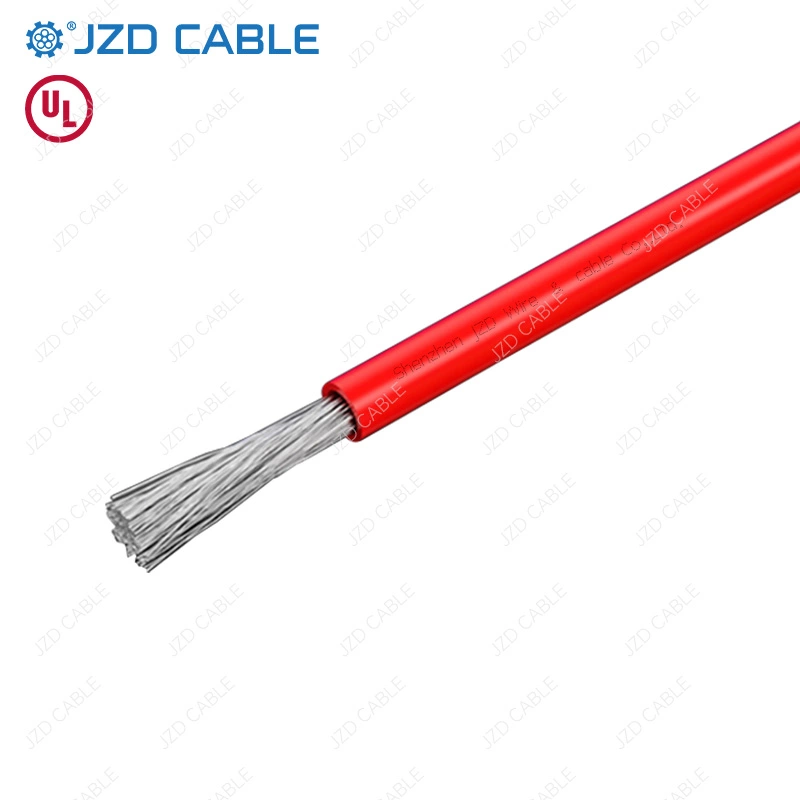
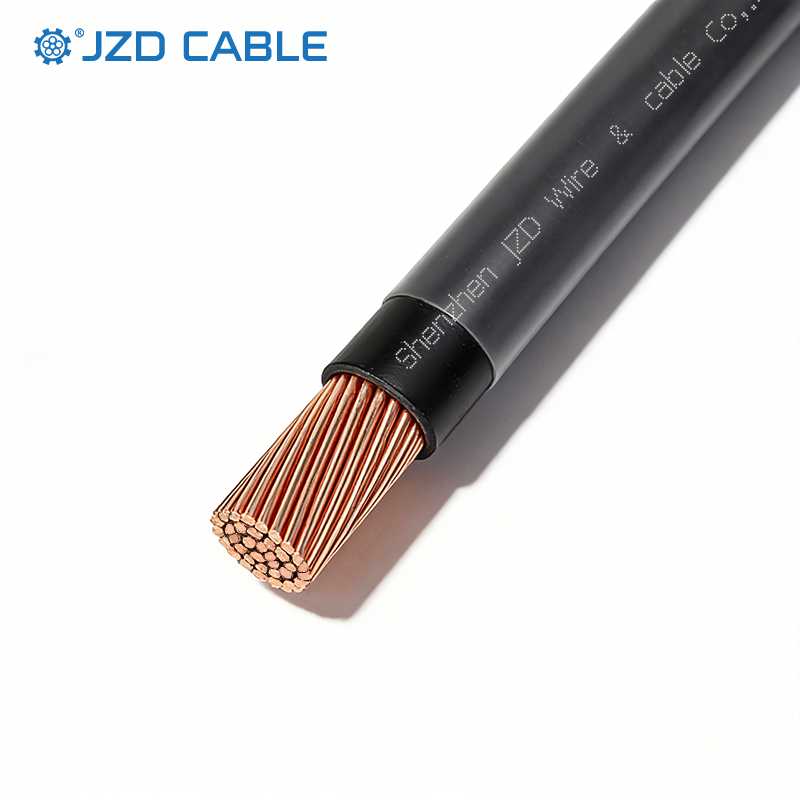
- Ultra-fine stranded tinned copper conductor (e.g., 0.08 mm individual filaments, up to 400 strands for 14 AWG) — extremely flexible, vibration-resistant, low impedance
- Silicone rubber insulation — stable from –60°C to +200°C, self-extinguishing, chemically inert
- Optional silicone outer jacket — adds abrasion, tear, and oil resistance for harsh industrial use
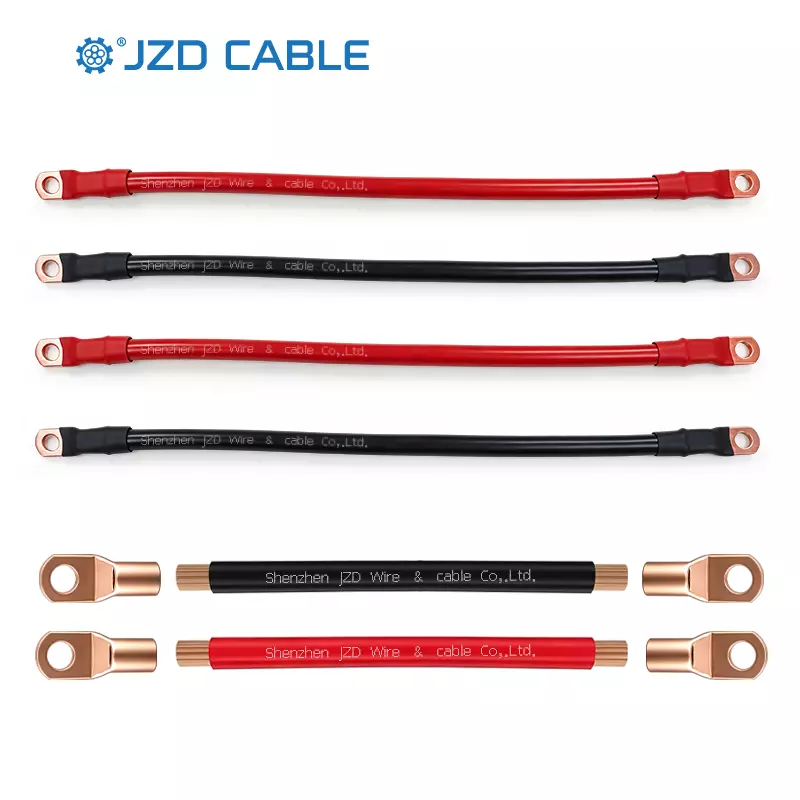
Cross-sections typically range from 2.5 mm² to 240 mm² (AWG 14 to 500 kcmil), with red/black color coding.
Construction & Materials
|
Component
|
Description
|
|---|---|
|
Conductor
|
Extra-fine multi-strand tinned copper (ultra-soft construction). Individual strand diameter as small as 0.08 mm. Exceptionally high strand count (e.g., 14 AWG ≈ 400 strands) for ultimate flexibility and fatigue life.
|
|
Insulation
|
High-performance silicone rubber (thickness 0.8–2.0 mm). Withstands extreme heat, extreme cold, and high voltage. Standard grade: –60°C to +180°C; premium grade: –60°C to +200°C; short-term peak: 250°C.
|
|
Jacket (optional)
|
Additional silicone or TPE layer for enhanced abrasion, tear, and oil resistance in heavy-duty applications.
|
Core Electrical & Physical Parameters
|
Parameter
|
Value
|
|---|---|
|
Rated Voltage
|
600 V DC/AC (standard); high-voltage versions up to 1000 V
|
|
Temperature Range
|
Standard: –60°C to +180°C
Premium: –60°C to +200°C Short-term peak: up to 250°C |
|
Flame Retardancy
|
UL94 V-0, VW-1, IEC 60332-1 — self-extinguishing, no dripping, low smoke, non-toxic
|
|
Bending Radius
|
≥ 3 × cable outer diameter — ultra-flexible, can withstand hundreds of thousands of flex cycles without cracking
|
|
Flexibility
|
3–5× softer than PVC cable of the same gauge; remains supple even at –60°C
|
|
Conductor Sizes
|
2.5 mm² – 240 mm² (AWG 14 – 500 kcmil)
|
Key Advantages of Silicone Battery Cables
1. Extreme Temperature Range (–60°C to +200°C)
No other common battery cable material matches this span. Silicone stays flexible in Arctic cold and does not melt or soften in engine-bay heat. This makes it the only choice for applications that experience both extremes — e.g., outdoor solar in winter + summer, or EV battery packs that heat up during fast charging.
2. Exceptional Flexibility & Flex Life
Thanks to ultra-fine copper stranding and naturally soft silicone, these cables are dramatically easier to route in tight spaces. They can be bent repeatedly (hundreds of thousands of cycles) without conductor fatigue or insulation cracking — critical for robotics, drone battery leads, and moving cable tracks.
3. Superior Flame Retardancy (V-0)
Silicone rubber achieves UL94 V-0 — the highest flammability rating for plastics. In a short-circuit or overheating event, the cable does not ignite, does not drip molten material, and produces minimal smoke. This is vital for enclosed battery compartments, lithium-ion systems, and fire-sensitive installations.
4. Excellent Long-Term Aging
- UV & ozone resistant — outdoor lifespan 8–10 years without cracking
- Moisture & humidity proof — no water absorption, no insulation degradation
- Oil, acid & alkali resistant — suitable for industrial and automotive fluids
- Chemically inert — does not corrode copper or react with battery electrolyte fumes
5. Higher Current Capacity (≈20% More Than PVC)
Silicone’s superior heat dissipation allows the same conductor cross-section to carry approximately 20% more current than PVC-insulated cable at the same temperature rise. This can translate to downsizing the conductor gauge for a given load, saving weight and space.
Typical Applications
Silicone battery cables excel wherever high temperature, extreme cold, frequent flexing, or stringent fire safety are required:
|
Sector
|
Specific Applications
|
|---|---|
|
New Energy Vehicles (NEVs)
|
Battery pack internal busbars, BMS connections, inverter DC links, motor controller cables (high voltage, high current, high temperature)
|
|
Energy Storage Systems
|
Battery rack interconnects, storage inverter DC input, outdoor containerized ESS (continuous high current, UV exposure)
|
|
Electric Mobility
|
Forklifts, golf carts, low-speed EVs — battery to controller and motor (vibration, frequent bending)
|
|
Drones & UAVs
|
LiPo battery connectors, power distribution boards (ultra-lightweight, ultra-flexible, high current density)
|
|
Robotics & Automation
|
Robot arm cable chains, servo drive power, mobile robot battery leads (millions of flex cycles)
|
|
Solar & Off-Grid
|
PV combiner to battery, charge controller DC lines, outdoor exposed runs (wide temperature swings, UV)
|
|
Industrial High-Temp
|
Furnace control panels, kiln battery backup, foundry equipment (ambient >100°C)
|
|
Aerospace & Defense
|
Military vehicle battery wiring, avionics battery connections (extreme environment reliability)
|
Silicone vs. PVC vs. Rubber Battery Cables – Quick Comparison
|
Feature
|
Silicone Battery Cable
|
PVC Battery Cable
|
Rubber Battery Cable
|
|---|---|---|---|
|
Temperature Range
|
–60°C to +200°C
|
–20°C to +105°C
|
–40°C to +105°C
|
|
Flexibility
|
Extremely soft (3–5× PVC)
|
Moderate (stiffens in cold)
|
Good (balanced)
|
|
Bending Radius
|
≥ 3× OD
|
≥ 6× OD
|
≥ 4× OD
|
|
Flame Rating
|
UL94 V-0 (self-extinguish, no drip)
|
VW-1 (may drip)
|
Varies (IEC 60332-1)
|
|
Current Capacity
|
~20% higher than same-size PVC
|
Baseline
|
Comparable to PVC
|
|
Outdoor Lifespan
|
8–10 years
|
3–5 years
|
5–8 years
|
|
Mechanical Toughness
|
Soft — prone to cuts
|
Good abrasion
|
Excellent tear/crush
|
|
Cost
|
2–3× PVC
|
Lowest
|
Mid-range
|
|
Best For
|
Extreme temp, flex, fire safety
|
Budget indoor
|
Heavy-duty dragging
|
Small-Gauge Silicone Battery Cables (≤6 mm² / ≤8 AWG)
Small silicone cables (0.5–6 mm² / 18–8 AWG) dominate consumer electronics, drones, and robotics:
- LiPo battery balance leads and main power wires
- RC aircraft, FPV drones, and competition robots
- Wearable device battery connections
- Portable power bank internal wiring
- Sensor and signal wires in high-flex applications
Their ultra-fine stranding and soft jacket make them ideal for tight, moving assemblies.
Large-Gauge Silicone Battery Cables (≥10 mm² / ≥8 AWG)
Large silicone cables (10–240 mm² / 8 AWG–500 kcmil) handle main power paths in demanding systems:
- EV battery pack positive/negative main leads
- Inverter DC input cables (up to 1000 V)
- Large-scale energy storage rack interconnects
- Industrial robot arm power feeds
- Marine hybrid propulsion battery wiring
Despite the higher unit cost, the ability to carry more current per gauge and survive harsh conditions often results in overall system savings.
How to Select the Right Silicone Battery Cable
- Determine continuous current & ambient temperature — Use silicone-specific ampacity charts (usually 125°C or 150°C column). Remember silicone’s ~20% advantage over PVC.
- Check voltage rating — Standard 600 V is sufficient for most 12V–48V systems. For EV/powerwall (up to 1000 V DC), specify the HV grade.
- Evaluate flex requirements — If the cable moves with a robot arm or drone battery connector, choose the finest stranding (many tiny strands) for maximum flex life.
- Assess mechanical exposure — For routes subject to sharp edges or dragging, add a silicone or TPE jacket. For protected internal wiring, bare silicone insulation is adequate.
- Confirm flame rating — For enclosed battery boxes, UL94 V-0 is strongly recommended. Silicone inherently meets this.
Frequently Asked Questions
Q: Can silicone battery cable replace PVC cable in any application?
A: Yes, electrically it can — but the cost is 2–3× higher. Use silicone only where its unique properties (temp, flex, fire safety) justify the premium. For benign indoor environments, PVC remains the economical choice.
Q: Is tinned copper mandatory for silicone cable?
A: Almost always yes. The high-temperature curing process for silicone can oxidize bare copper. Tinned copper ensures long-term conductivity and solderability.
Q: What is the maximum current for a 25 mm² silicone cable?
A: Approximately 140–160 A (depending on ambient temperature, bundling, and acceptable temperature rise). Always refer to the manufacturer’s rating table.
Q: Can silicone battery cable be direct-buried?
A: Not typically — silicone is soft and lacks the mechanical armor for burial. Use RWU90 or USE-2 for direct burial. Silicone is best for above-ground, protected, or enclosed runs.
Q: Does silicone cable require special connectors?
A: No — standard ring terminals, battery lugs, and Anderson connectors work fine. The soft insulation strips easily.
Why Choose JZD Cable for Your Silicone Battery Cable Needs?
At JZD Cable, we manufacture premium silicone battery cables engineered for the toughest conditions:
- Conductor: Ultra-fine tinned copper, Class 6 stranding (0.08 mm filaments)
- Insulation: High-purity silicone rubber, –60°C to +200°C, UL94 V-0
- Sizes: 2.5 mm² to 240 mm² (AWG 14 to 500 kcmil)
- Voltage: 600 V / 1000 V options
- Colors: Red, black, blue, yellow, or custom
Whether you need bulk spools for EV production or custom-cut leads with terminated ends for a robotic cell, we deliver consistent quality and rapid turnaround.
Request a quote or technical datasheet today. Visit jzdcable.com/products/battery-cable or contact our sales team.