

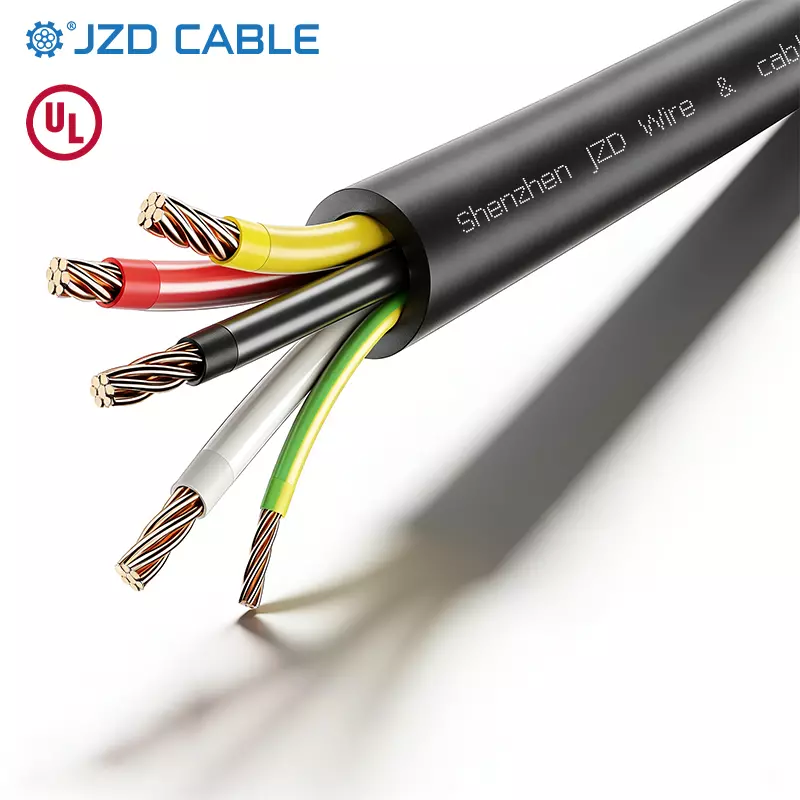
After hurricanes, floods, wildfires, and other severe weather events, damaged facilities often require temporary power before permanent electrical systems are restored. Generators, pumps, lighting, and construction equipment depend on reliable temporary power cables to support recovery work.
Unlike permanent wiring, temporary power cables must adapt to changing routes, equipment locations, and outdoor conditions. For contractors, EPC companies, and facility operators, choosing the right cable requires considering both electrical performance and installation requirements.
How Disasters Create Temporary Power Challenges
Natural disasters can affect electrical systems in different ways. Flooding may damage distribution equipment and underground wiring, while hurricanes can impact outdoor connections, service equipment, and building electrical infrastructure.
In many recovery projects, the goal is not to restore the entire electrical system immediately but to bring critical functions back online first.
For example, a flooded industrial facility may need temporary power for drainage pumps and ventilation before repair work begins. A storm-damaged commercial building may require temporary lighting and construction equipment power while damaged electrical systems are replaced.
During this stage, temporary power cables provide the connection between generators, temporary distribution systems, and the equipment needed for recovery.
Temporary Power Applications During Recovery Projects
1. Restoring Operations Before Permanent Repairs
After a major storm or flood, electrical restoration usually happens in phases.
A recovery site may begin with basic emergency loads and later expand to support more equipment as rebuilding progresses.
A typical temporary power arrangement may include:
Generator → Temporary Distribution Panel → Cable System → Equipment
The cable used in this system needs to handle changing site conditions while maintaining stable power connections.
2. Managing Long Cable Routes on Large Sites
On large recovery projects, the generator is rarely located exactly where power is needed.
Generators are often placed in open areas for ventilation, safety, and fuel access, while temporary panels and equipment remain closer to the damaged facility.
This creates longer cable routes across active work areas, where cables may be exposed to:
- Construction traffic
- Weather conditions
- Equipment movement
- Frequent layout changes
Proper cable routing becomes important because recovery projects often continue for weeks or months.
3. Supporting Changing Power Needs During Rebuilding
The electrical requirements of a recovery site change as the project moves forward.
A site that initially requires power for pumps and emergency lighting may later need electricity for repair tools, temporary buildings, motors, and industrial equipment.
Because these changes happen frequently, temporary power systems need cable solutions that allow easier modification without rebuilding the entire distribution layout.
How Cable Tray Systems Improve Temporary Power Distribution
1. What Is Cable Tray?
A cable tray is a support system used to route and organize electrical cables in commercial, industrial, and construction applications. Cable tray systems are commonly used for power and control cable installations where organized routing, accessibility, and system expansion are important considerations.
For temporary power projects, cable tray systems provide a practical way to manage cable routes between generators, temporary panels, and equipment areas.
Instead of placing cables across busy work zones, cable trays create a defined pathway that improves organization and makes future adjustments easier.
This is especially valuable on large recovery sites where new equipment and additional power connections may be added during reconstruction.
2. Why Tray Cable Is Used for Temporary Power Systems
Large recovery projects often require power distribution across multiple areas, including construction zones, temporary facilities, pumps, and industrial equipment.
Using individual conductors for every connection can create more complex routing and make future modifications more difficult.
Tray Cable combines multiple conductors into a single cable assembly, making it a practical choice for organized power distribution.
When installed with cable tray systems, Tray Cable helps projects maintain cleaner layouts while allowing easier expansion as power requirements increase.
For example, during the restoration of a flood-damaged manufacturing plant, Tray Cable can distribute power from temporary panels to different sections of the facility while repair work continues.

When TC-ER Cable Provides More Flexibility
1. TC-ER Cable for Changing Cable Routes
Not every cable connection can remain inside a cable tray.
During recovery work, cables often need to transition between supported routes and exposed sections. This is where TC-ER Cable (Tray Cable – Exposed Run) provides additional flexibility.
TC-ER Cable is commonly used for connections involving:
- Temporary distribution panels
- Generators
- Motors
- Control equipment
- Field devices
For example:
Generator → TC-ER Cable → Cable Tray → Temporary Panel
This type of configuration allows contractors to adapt temporary power systems as site conditions change.
2. Supporting Industrial Equipment Recovery
For industrial facilities, restoring essential equipment quickly can be critical.
Temporary power may be needed to operate drainage systems, restart motors, maintain control equipment, or support repair operations before permanent electrical work is completed.
In these situations, cable routes may change as different areas of the facility return to operation. TC-ER Cable provides a practical option where flexible routing and exposed connections are required.
Temporary Power Cable Selection by Application
The right cable solution depends on where the cable is installed, how power is distributed, and how the recovery project is expected to develop.
| Application Scenario | Installation Situation | Recommended Solution | Why It Works |
| Generator connections to temporary panels | Cable routes may include exposed sections | TC-ER Cable | Provides flexibility where cable paths change during recovery |
| Main power distribution across large sites | Multiple circuits require organized routing | Tray Cable with cable tray | Keeps temporary power systems structured and easier to expand |
| Equipment connections during rebuilding | Equipment locations may move as work progresses | TC-ER Cable | Supports flexible connections between power systems and equipment |
| Temporary facilities and construction areas | Multiple loads require planned distribution | Tray Cable | Helps maintain organized cable management |
| Extended recovery projects | Systems may require future modifications | Tray Cable + TC-ER Cable combination | Balances structured routing with connection flexibility |
Practical Considerations Before Choosing Temporary Power Cable
Temporary power systems are often expected to operate in demanding environments, so cable selection should consider the complete application.
The installation location, exposure to weather, routing method, project duration, and future equipment changes all affect the appropriate cable choice.
For example, a cable installed inside a cable tray may focus on organized distribution, while a connection running between a generator and a temporary panel may require more routing flexibility.
Choosing the right cable at the beginning can reduce unnecessary changes during the recovery process.
JZD UL1277 TC-ER Cable for Disaster Recovery Applications
In temporary power projects, contractors often need a cable solution that can support both organized routing and changing field conditions.
JZD UL1277 TC-ER Cable is designed for industrial power and control applications requiring flexible installation options.
The cable features UL 1277 compliance, 600V rating, copper conductor construction, PVC + Nylon insulation, and PVC outer jacket.
It is suitable for applications such as temporary power distribution, industrial restoration projects, equipment connections, and recovery construction sites.
By combining Tray Cable capabilities with exposed run flexibility, TC-ER cable provides contractors with a practical option for complex temporary electrical systems.
Conclusion
Disaster recovery projects require electrical systems that can adapt as conditions change.
From emergency power restoration to long-term rebuilding, temporary power cables play an important role in connecting generators, distribution systems, and equipment.
Using the right combination of cable solutions—such as Tray Cable for organized distribution and TC-ER Cable for flexible connections — helps contractors create temporary power systems that are easier to manage throughout the recovery process.
Contact us to discuss your temporary power cable needs, including Tray Cable and TC-ER Cable solutions for demanding project environments.