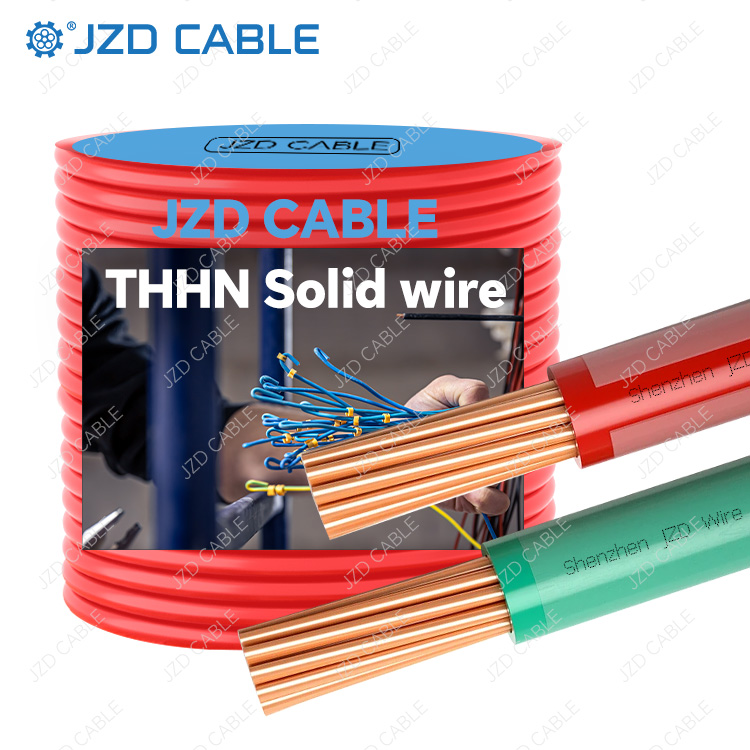


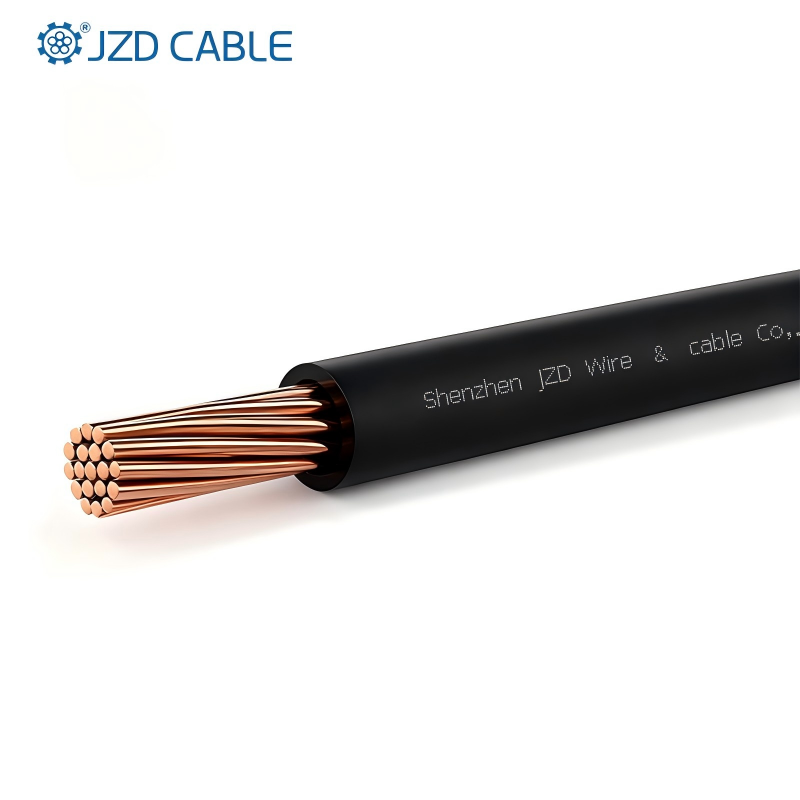
TW wire is a traditional type of building wire used in electrical distribution systems in the United States. It features a copper conductor with thermoplastic insulation and a 60°C temperature rating for both dry and wet locations.
While TW was once commonly used for general building wiring, its lower temperature rating limits its flexibility in modern electrical installations. Today, THHN/THWN-2 is more commonly used in commercial and industrial conduit wiring because of its higher temperature rating and additional installation protection.
What Is TW Wire?
TW is a single-conductor building wire. T refers to thermoplastic insulation, while W indicates moisture-resistant properties.
Its basic construction consists of a solid or stranded annealed copper conductor covered with a single layer of thermoplastic insulation. Unlike THHN/THWN-2, it does not have a separate nylon jacket.
Key specifications:
- Voltage rating: 600V
- Temperature rating: 60°C (dry and wet locations)
- Conductor: Solid or stranded copper
- Insulation: Thermoplastic
- Outer jacket: No nylon layer
Why Is TW Wire Less Common Today?
TW’s 60°C temperature rating and simpler insulation construction limit its suitability for some modern electrical installations.
1. Lower Ampacity
TW falls under the 60°C column in NEC Table 310.16, giving it a lower starting ampacity than 90°C building wire.
This can become a limitation in commercial buildings where conduits pass through hot mechanical rooms, rooftops or densely wired areas. When ambient temperatures exceed the table’s 30°C reference condition, additional ampacity correction may be required.
2. No Nylon Outer Jacket
TW uses a single layer of thermoplastic insulation, while THHN/THWN-2 includes an additional nylon jacket.
The nylon layer provides extra surface protection and reduces friction during conduit pulling, making installation easier in long or complex conduit runs. Resistance to specific oils and chemicals depends on the wire’s actual product markings and certifications.
3. Limited Temperature Flexibility in Wet Locations
TW is suitable for wet locations, but its temperature rating remains 60°C. THWN-2, by comparison, is rated 90°C in both dry and wet locations.
For underground raceways and other wet-location installations, THWN-2 provides greater flexibility in conductor ampacity calculations, subject to applicable NEC requirements.

TW vs. THHN/THWN-2: Key Differences
The main differences involve temperature ratings, insulation construction and installation performance.
| Specification | TW | THHN/THWN-2 |
| Voltage | 600V | 600V |
| Dry temperature | 60°C | 90°C |
| Wet temperature | 60°C | 90°C |
| Insulation | Thermoplastic | Thermoplastic |
| Nylon jacket | No | Yes |
| Typical application | General building wiring | Commercial and industrial conduit wiring |
THHN and THWN-2 are separate designations: THHN is rated 90°C in dry locations, while THWN-2 is rated 90°C in both dry and wet locations. Many modern building wires carry both markings.
How Temperature Ratings Affect Ampacity
According to NEC Table 310.16, copper conductors have different ampacity values depending on their insulation temperature rating.
| Copper conductor | 60°C | 75°C | 90°C |
| 12 AWG | 20A | 25A | 30A |
| 10 AWG | 30A | 35A | 40A |
| 8 AWG | 40A | 50A | 55A |
Note: Values are based on a 30°C ambient temperature and no more than three current-carrying conductors under the applicable table conditions. Actual allowable ampacity must account for relevant correction factors and terminal limitations.
For example, a 10 AWG copper conductor has a table ampacity of 30 A at 60°C and 40 A at 90°C. However, with 75°C-rated equipment terminals, the applicable ampacity is generally limited to 35A before other adjustments.
The 90°C rating provides a higher starting point for permitted correction and adjustment calculations but does not automatically increase the circuit’s final allowable current.
When Should You Choose TW or THHN/THWN-2?
TW may still be found in existing electrical systems and maintenance projects where its use complies with the original design and applicable codes.
For new installations, THHN/THWN-2 is generally a more practical choice for:
- Commercial building conduit wiring.
- Industrial power distribution.
- Electrical panels and control cabinets.
- Underground raceways and wet-location applications.
- Circuits require greater flexibility in ampacity calculations.
When replacing existing TW wiring, engineers should review conductor sizing, terminal ratings, circuit protection and installation conditions rather than simply substituting wires of the same size.
THHN/THWN-2 Building Wire from JZD Cable
JZD Cable offers UL 83-compliant THHN/THWN-2 building wire in sizes from 14 AWG to 4/0 AWG, featuring 100% annealed copper conductors with Class B stranding.
The wire is rated 600V and 90°C for dry and wet locations, with a specified operating temperature range of -40°C to 90°C. Applicable UL listing and CSA certification are available for corresponding product configurations.
For outdoor applications requiring additional sunlight resistance, JZD also offers THHN/THWN-2 wire with a thicker, sunlight-resistant nylon jacket, tested to UL 1581 WA-1 requirements.
Contact JZD Cable for product specifications, certification documents or free samples for your next building wire project.