

In electrical engineering and procurement, few questions come up as often as the difference between “wire” and “cable”—yet even seasoned professionals often struggle to explain it.
The answer depends on perspective. Structurally, wire is typically a single conductor; cable is an assembly of multiple conductors. Under the NEC, wire requires conduit; cable may be directly installed. In UL classification, the distinction depends on construction, standard, and intended use.
Getting it wrong means failed inspections, wasted material, and project delays.
This article examines the wire vs. cable distinction across three dimensions: standards systems, construction, and practical applications.
Three Foundational Concepts: Conductor, Wire, Cable
Conductor: The current-carrying part—copper, aluminum, tinned copper, or copper-clad aluminum. Solid or stranded. Sized in AWG or mm² (ASTM B258).
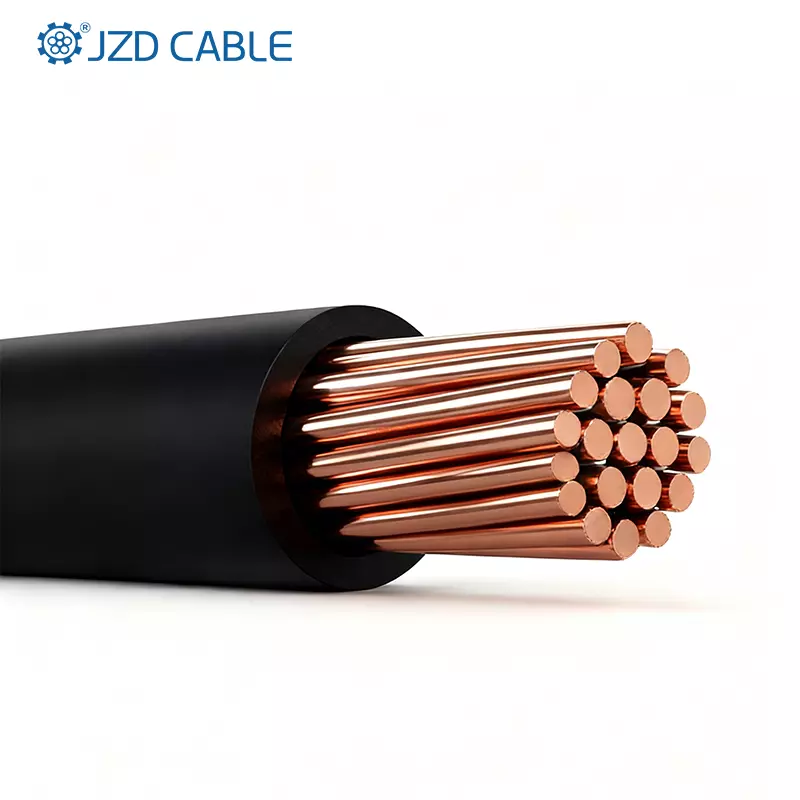
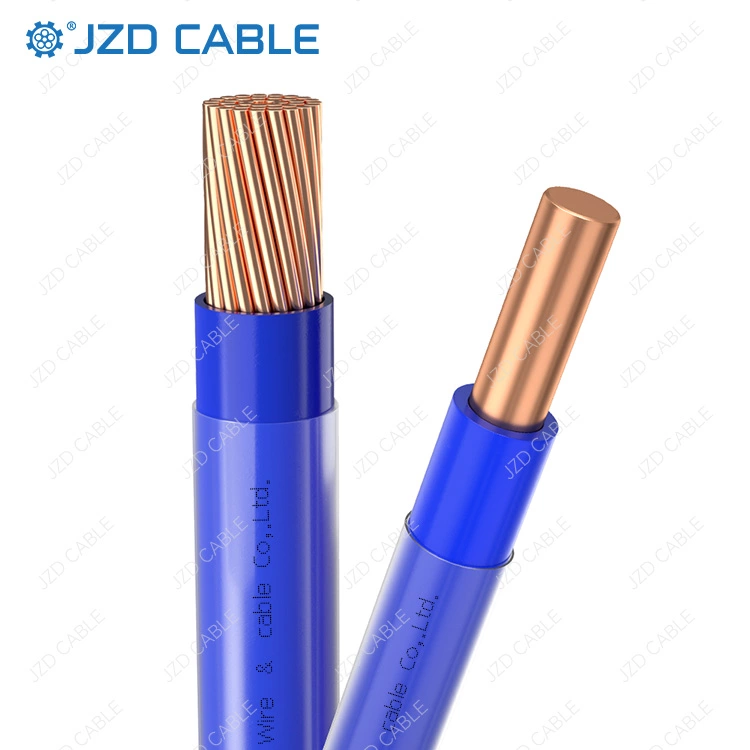
Wire: A single conductor or single insulated conductor (e.g., 12 AWG THHN). May be bare or insulated. Emphasizes the conductor itself—size, material, basic insulation. Not a complete system; requires other components (e.g., conduit).
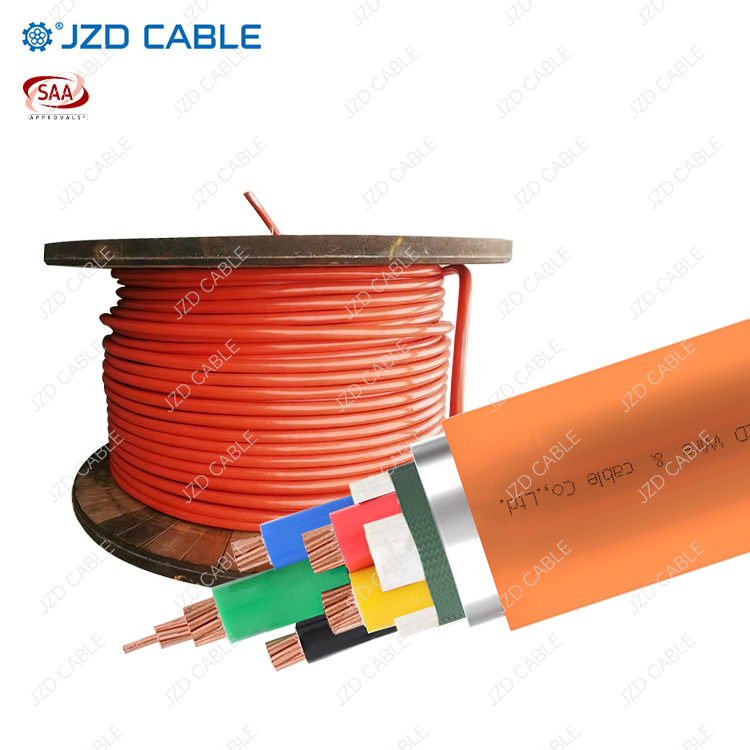
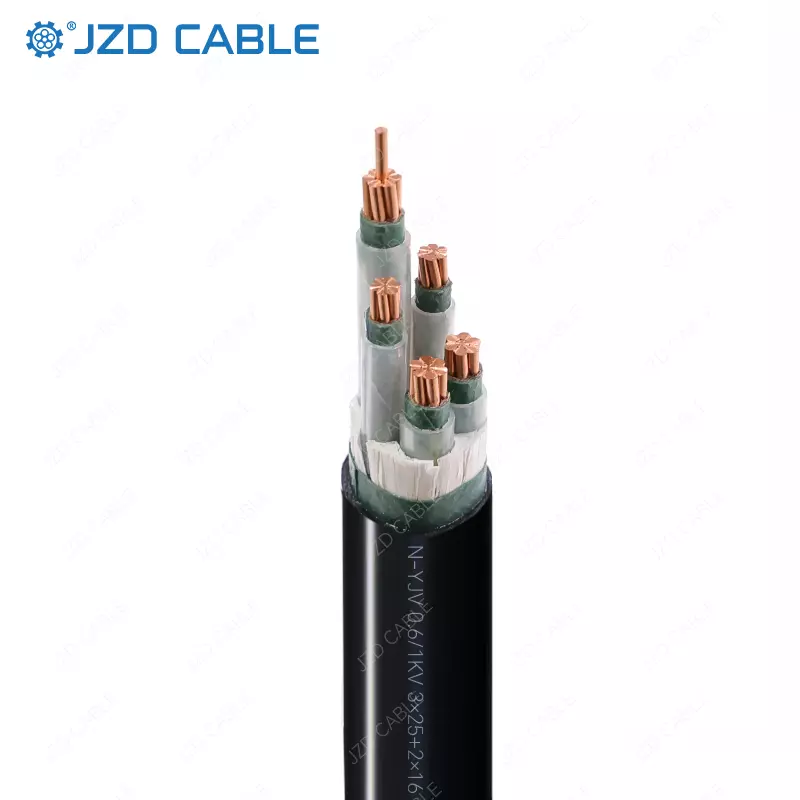
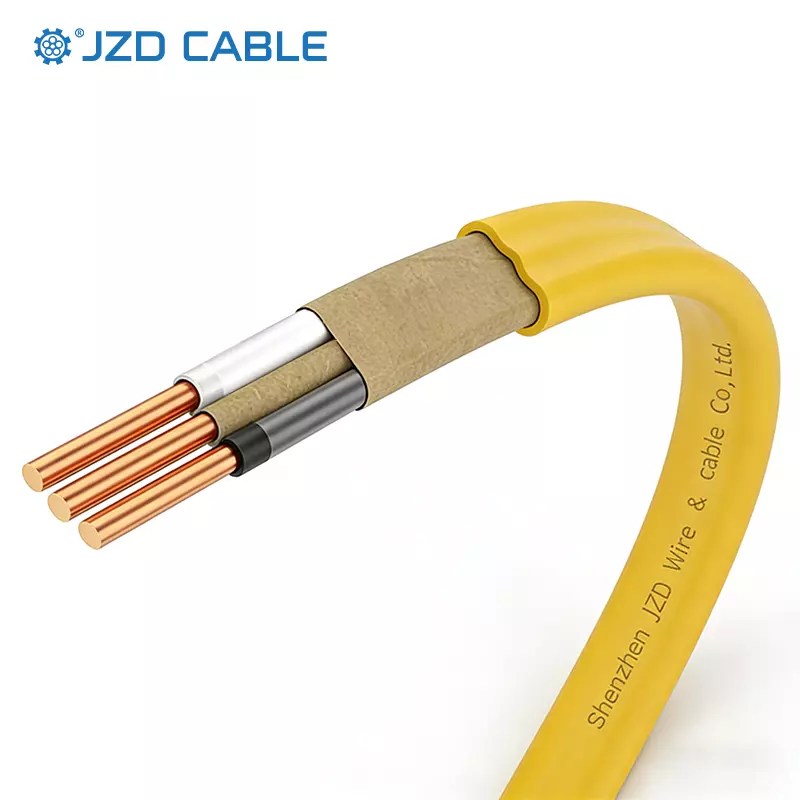
Cable: A complete electrical assembly. Per IEC 60050, an assembly of two or more conductors (stranded), which may or may not be insulated. In North America, typically includes multiple insulated conductors, fillers, shielding, jackets, sometimes armor—ready for direct installation.
UL Standards: Classification and Definition
UL (Underwriters Laboratories) is the core certification body for wire and cable products in the North American market. Within the UL system, whether a product is called wire or cable is determined by its construction, UL standard designation, and intended use.
1. What the Type Designations Mean
THHN/THWN-2 (Wire, UL 83): Single insulated conductor with PVC insulation and nylon jacket. Requires conduit. Sizes: 14 AWG to 4/0 AWG. Applications: commercial conduit wiring, industrial control panels.
NM-B (Cable, UL 719): Multi-conductor assembly with bare ground and overall PVC jacket. Direct-install (no conduit per NEC 334). Sizes: 14 AWG to 2 AWG. Applications: residential branch circuits, commercial power distribution.
MC Cable (Cable, UL 1569): Insulated conductors in interlocked metal armor. Direct-install in commercial ceiling spaces. Includes integral bare copper ground. Applications: commercial buildings, industrial facilities, data centers.
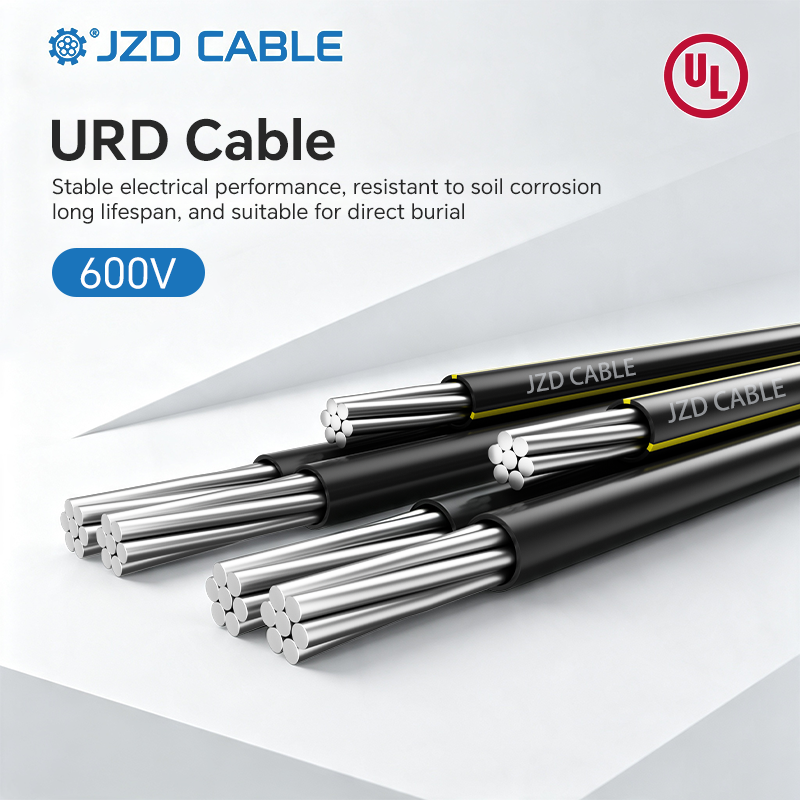
SER Cable (Cable, UL 854): Service entrance cable. AA-8000 aluminum alloy conductors. 600V, 90°C wet/dry. Applications: above-ground service entrance, panel feeders, sub-panels.
Core principle: In the UL system, wire vs. cable is determined by construction completeness and product category — not conductor count. Single-conductor USE-2 is Cable (has jacket, direct-burial rated); multi-conductor control cable may still be Wire (no complete jacketing system).
2. UL Listed vs. UL Recognized
Within the UL system, there are two certification levels that directly affect selection:
UL Listed applies to complete products that can be directly installed in the field—for example, THHN, NM-B, and MC. These products bear the UL Listed mark and can be directly used in NEC building wiring applications.
UL Recognized applies to products intended as components inside equipment—the most common example is AWM (Appliance Wiring Material), covered under UL 758.
Engineering implication: When procuring products for building wiring, you cannot assume that AWM can substitute for THHN or NM-B based on appearance alone.
NEC: Installation Method Determines Classification
The NEC (National Electrical Code, NFPA 70) does not directly define “wire” or “cable,” but it distinguishes between the two through different articles that cover different wiring methods, thereby defining their practical differences at the installation level.
1. Installation Method Differences
Single-conductor building wires (THHN, etc.) require conduit—the insulation alone does not provide mechanical protection. Applications: commercial conduit wiring, industrial control panels.
Non-metallic sheathed cables (NM-B, etc.) are permitted for direct installation under specific conditions. Applications: residential branch circuits, commercial distribution, retrofits.
Metal-clad cables (MC, etc.) can be directly installed in commercial ceiling spaces and other areas—no conduit required. Applications: commercial buildings, industrial facilities, data centers, renewable energy.
Service entrance cables (SER, etc.) are specialized cables for service entrance applications (UL 854).
Engineering implication: The wire vs. cable distinction directly determines the installation method — conduit required or not, ceiling-space direct installation permitted or not, armor needed or not — which affects both material costs and installation labor.
2. The “-2” Suffix
In type designations such as THWN-2 and XHHW-2, the “-2” suffix indicates that the product is rated 90°C in both wet and dry locations. The practical impact on selection is that “-2” rated products have higher ampacity in wet locations than non-“-2” products of the same size.
For cable products, the NEC has an additional rule: even if the insulation is rated 90°C, ampacity must still be based on the 60°C column (NEC Table 310.16)—a rule that must be noted during selection.
IEC: International Electrotechnical Terminology
For projects involving international standards (Europe, Southeast Asia, the Middle East, and other markets), it is also useful to understand the IEC definitions. IEC’s perspective differs from UL/NEC in that it focuses more on terminology itself rather than product certification and installation compliance.
Per the IEC 60050 International Electrotechnical Vocabulary:
Conductor is “a conductive part intended to carry a specified electric current,” which may be a solid single wire or a stranded assembly of multiple wires.
Wire is “a flexible cylindrical conductor with or without external insulation,” whose cross-section may be any shape, though the term is generally not used for strip or flat conductors.
Cable is “an assembly of two or more conductors (strands),” which may or may not be insulated.
In practice, projects that follow IEC standards (e.g., Southeast Asia) differ from those that follow North American standards (U.S., Canada) in cable selection logic and terminology. Understanding these differences is valuable for selection decisions that involve cross-standard system conversion or comparison.
ASTM: Conductor Materials and Dimensions
ASTM (American Society for Testing and Materials) standards do not address wire vs. cable product classification; they focus on the conductor itself—material, size, construction, and electrical performance.
1. Key Standards
| Standard | Content |
| ASTM B258-18(2026) | Nominal diameters and cross-sectional areas of AWG conductors—the core standard for AWG conductor sizing |
| ASTM B8 | Construction and requirements for concentric-lay-stranded copper conductors |
| ASTM B231/B231M | Construction and requirements for aluminum 1350 conductors |
| ASTM F1883-20(2025) | Selection and comparison of AWG vs. metric conductor sizes |
2. AWG Size vs. Overall Diameter
In practice, this distinction is often overlooked. A 12 AWG THHN single conductor and a 12/3 NM-B cable, both nominally 12 AWG, can have significantly different overall diameters—when calculating conduit fill, you must use the finished cable’s actual overall diameter, not the AWG size.
Naming Conventions for Common North American Products
The following table summarizes the actual naming conventions for common products in the North American market:
| Product Type | Common Name | Standard | Reason |
| THHN, THWN-2 | Wire | UL 83 | Single insulated conductor requires conduit |
| XHHW-2 | Wire | UL 44 | Single XLPE insulated conductor |
| NM-B | Cable | UL 719 | Multi-conductor + overall PVC jacket can be directly installed. |
| MC | Cable | UL 1569 | Multi-conductor + metal armor, self-protected |
| SER | Cable | UL 854 | Service entrance cable |
| SJOOW, SOOW | Cord | UL 62 | Portable cord, for temporary power |
Key observation: Single-conductor THHN is called Wire, but single-conductor USE-2 is classified as Cable. This further demonstrates that “number of conductors” is not the determining factor—the determining factors are the product’s construction completeness and intended use.
Selection Decision Framework
In practice, the value of understanding the wire vs. cable distinction lies in making correct engineering selections. The following table summarizes the key decision criteria based on the analysis above:
| Criterion | Wire | Cable |
| Construction | Single conductor (may have insulation) | Multiple conductors (may have jacket, shielding, armor) |
| NEC Installation | Must be installed in conduit or raceways | May be directly installed (depending on type) |
| Typical Applications | Conduit wiring, building branch circuits | Residential wiring, commercial feeders, tray installations |
| Standards | UL 83, UL 44 | UL 719, UL 854, UL 1277, UL 1569 |
| Type Designations | THHN, XHHW-2 | NM-B, SER, MC, TC-ER |
Selection Logic
Need a single conductor for conduit → Choose wire (THHN, XHHW-2, etc.), verify conduit fill and temperature rating.
Need a complete assembly for direct installation → Choose Cable (NM-B, MC, SER, etc.), verify jacket or armor mechanical protection rating. For example, MC cable’s aluminum interlocked armor resists crushing, impact, rodents, and environmental damage.
Need service entrance power supply → Choose SER Cable, verify UL 854 certification and XHHW-2 insulation rating.
Need portable power supply. Choose Cord (SJOOW, SOOW, etc.), verify oil resistance, weather resistance, and flex life.
Projects involving IEC standards → Confirm the applicable standards system for the project location (North America: UL/NEC; International: IEC) to avoid certification system confusion.
Points to Watch in Selection
1. Installation Differences Between Wire and Cable
Wire requires conduit for mechanical protection; cable’s jacket or armor provides its own protection. In commercial building ceiling spaces, cable (such as MC) is typically required rather than wire in conduit. MC cable’s metal armor provides mechanical protection while eliminating the need for conduit. Using the wrong type can result in failed electrical inspections.
2. AWM vs. Building Wire
AWM (Appliance Wiring Material) is designed as component wiring inside equipment, not for field installation or general NEC wiring applications. Building wiring must use UL Listed products that carry NEC-type designations.
3. AWG vs. Finished Overall Diameter
ASTM B258 states that AWG describes the conductor size, not the finished cable’s overall diameter. Finished cable overall diameter depends on insulation, jacket, shielding, and overall construction. When designing conduit fill, you must use the finished cable’s actual overall diameter.
4. Certification Levels
In the North American market, products typically need to meet multiple standard systems simultaneously. For example, THHN/THWN-2 must comply with UL 83 and also meet NEC Article 310 requirements. MC Cable must comply with UL 1569. When selecting, verify that the product meets both the applicable UL standard and the relevant NEC Article requirements.
Summary
The distinction between wire and cable arises from the intersection of multiple standard systems:
- UL defines type designations through product construction and standard classification
- NEC distinguishes their practical use through installation method requirements
- IEC provides terminology-level definitions
- ASTM focuses on the conductor’s technical parameters
In practice, the real value of understanding these differences is this: select products based on the standards system and installation method your project requires—not by the “wire” or “cable” label alone. Different applications demand different construction, UL standards, and NEC classifications. JZD Cable offers a full range of UL-certified solutions to meet those requirements.