

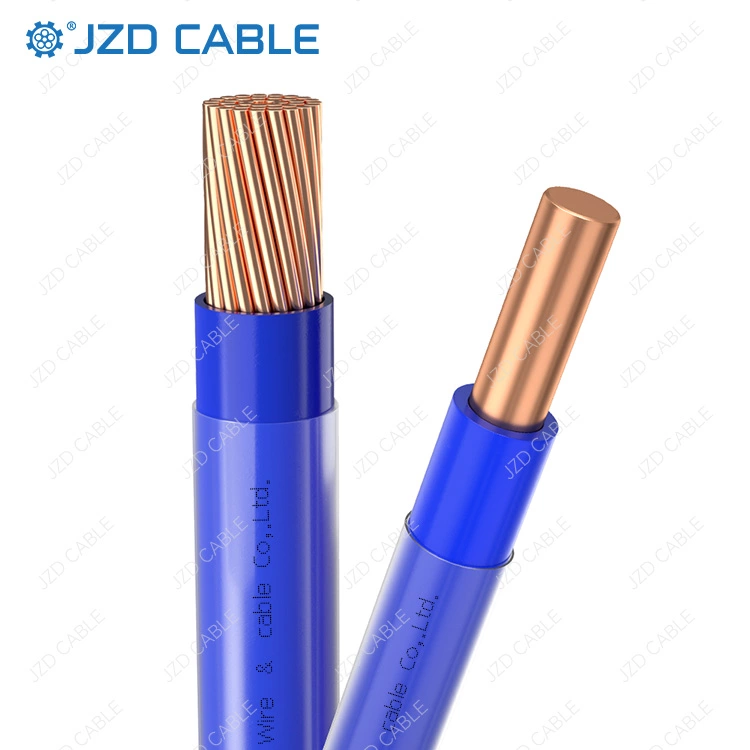
In commercial and industrial power distribution, the choice between THHN/THWN-2 and XHHW-2 is often driven by price or habit. But the real differentiator is insulation material—thermoplastic PVC versus thermoset XLPE—and how it behaves over decades of operation in wet, hot, or chemically exposed environments.
Both wires are rated 600V and 90°C, and both meet UL standards. The difference lies in long-term reliability, installation characteristics, and lifecycle cost. This article compares the two from an engineering practice perspective.
Insulation: PVC vs. XLPE
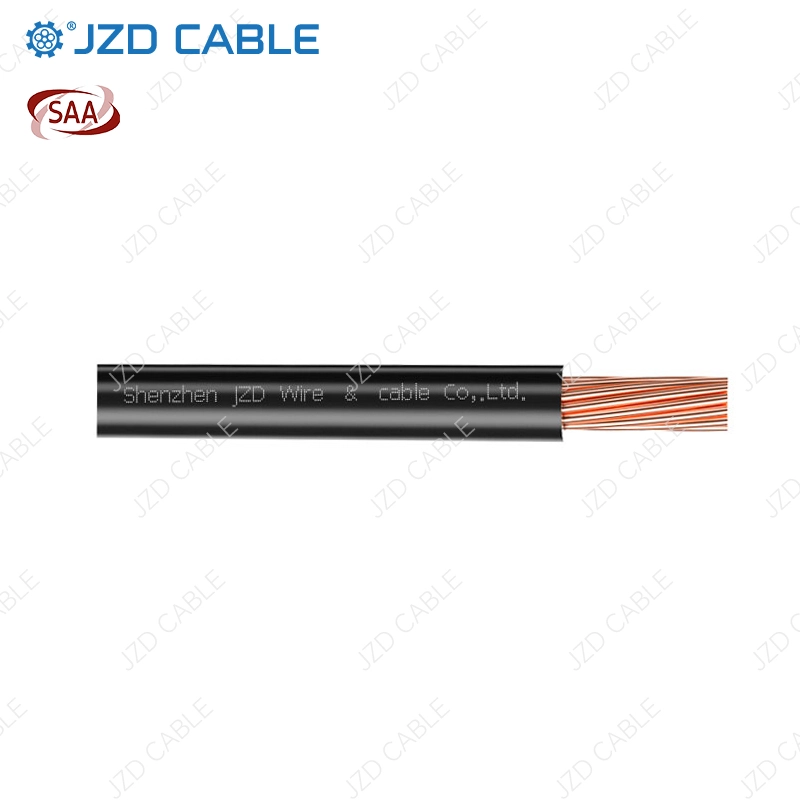
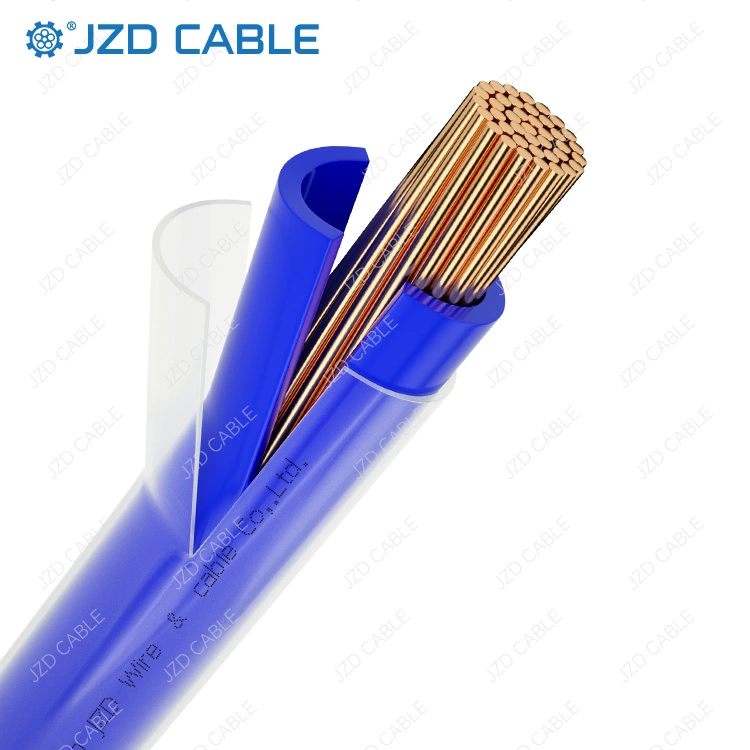
THHN/THWN-2 uses thermoplastic PVC insulation with a nylon jacket. Thermoplastic materials soften when heated and harden when cooled; the process is reversible. PVC flexibility depends on plasticizers, which can migrate and leach out under prolonged heat or oil contact, causing the insulation to harden and crack. THHN/THWN-2 follows UL 83.
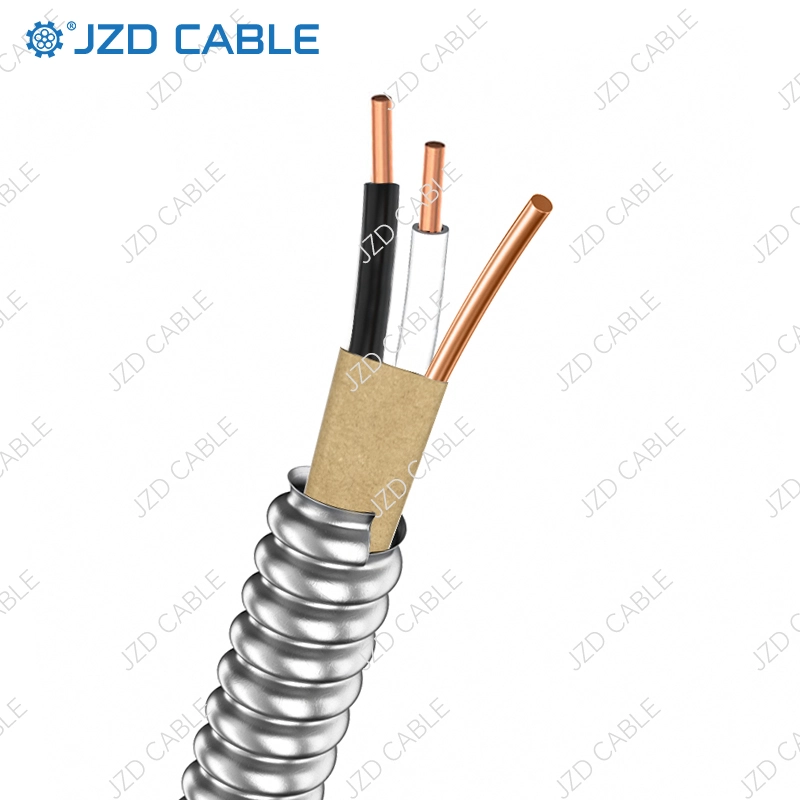
XHHW-2 uses cross-linked polyethylene (XLPE), a thermoset material. During manufacturing, chemical cross-linking forms a three-dimensional network with covalent bonds between molecular chains. Once cured, XLPE will not melt when reheated. It does not rely on plasticizers, so it resists thermal aging, oxidation, and chemical exposure far better. XHHW-2 follows UL 44.
A key quantitative indicator: XHHW-2 XLPE insulation must maintain insulation resistance above 10 MΩ/kft after immersion in 90°C water. This test directly measures the insulation’s ability to retain resistance under high-temperature, wet conditions. For wet locations, it translates to more stable leakage current control over time.
Wet Locations: Clarifying the 90°C Rating
A common misunderstanding is that THHN is limited to 75°C in wet locations. That applies only to the older THWN without the “2” suffix. Dual-rated THHN/THWN-2 is rated 90°C wet, identical to XHHW-2. Both can start from the 90°C column in NEC Table 310.16 for ampacity derating. There is no temperature-column difference.
The real wet-location difference is long-term insulation reliability. PVC may lose dielectric strength faster under continuous moisture and heat. XLPE’s cross-linked structure resists moisture penetration and thermal aging, maintaining insulation resistance more stably. For underground raceways, outdoor feeders, and wet industrial spaces, this directly affects insulation life and maintenance cycles.
XHHW-2 also carries a 600V/1kV dual voltage rating, providing headroom for future voltage upgrades.
Ampacity: Same Calculation, Different Long-Term Margin
Both wires start from the 90°C column and follow the same derating steps:
-
Termination temperature limit – NEC 110.14(C). Most breakers and distribution equipment have terminations rated 60°C or 75°C. Even with 90°C wire, the final ampacity is usually based on the 75°C column.
-
Ambient temperature correction – NEC Table 310.15(B)(1). Above 30°C, apply the appropriate factor (e.g., ~0.96 for 31–35°C, ~0.91 for 36–40°C).
-
Bundled conductor correction – NEC Table 310.15(C)(1) when more than three current-carrying conductors share a raceway.
The corrected ampacity values are identical for both wires. The engineering difference emerges over time: XLPE ages more slowly under continuous load near allowable ampacity, giving XHHW-2 a larger long-term safety margin. This does not change the table numbers, but it affects insulation condition after 10 or 20 years.
Installation and Mechanical Performance
XLPE is generally more flexible than PVC, making XHHW-2 easier to pull through complex raceways with multiple bends. Lower pulling force reduces mechanical stress on the insulation during installation.
THHN’s nylon jacket gives it a smaller overall diameter than XHHW-2 of the same gauge. In projects with tight raceway fill, THHN may allow more conductors in the same conduit, reducing raceway count.
XLPE also resists chemicals, ozone, and abrasion better than PVC. In industrial environments with oil or solvents, XHHW-2 degrades more slowly. Both wires pass the VW-1 vertical flame test, but XLPE produces less toxic smoke when burned—an advantage in densely occupied or poorly ventilated spaces.
Certification Verification
- THHN/THWN-2: UL 83 (Thermoplastic-Insulated Wires and Cables).
- XHHW-2: UL 44 (Thermoset-Insulated Wires and Cables).
Verify UL listing (not just recognition), conductor material per ASTM B3 or B8, VW-1 flame compliance, 600V/1kV rating for XHHW-2, and batch-to-batch consistency in specifications and test documentation.
Lifecycle Cost
THHN/THWN-2 has a lower initial unit price. XHHW-2 costs more because of XLPE manufacturing, but that premium can be offset by longer insulation life and lower maintenance in wet, hot, or chemically exposed environments.
Installation cost cuts both ways: XHHW-2’s flexibility may reduce pulling labor in complex raceways, while THHN’s smaller diameter can reduce raceway count in tight-fill projects. The net effect depends on the specific design.
Maintenance and replacement cost is the most significant dimension. In continuously operating critical facilities—data centers, renewable energy, outdoor distribution—avoiding one unplanned downtime replacement can offset the initial price difference. In dry indoor environments with mild conditions, THHN/THWN-2 often remains the more economical choice.
Selection Guide
| Consideration | Recommended Wire |
| Dry indoor, moderate temperature | THHN/THWN-2 |
| Tight raceway fill, smaller diameter | THHN/THWN-2 |
| Long-term wet or damp locations | XHHW-2 |
| High temperature, oil, chemical exposure | XHHW-2 |
| Continuous operation, low maintenance | XHHW-2 |
| Future voltage upgrade headroom (1kV) | XHHW-2 |
Quick Comparison
| Item | THHN/THWN-2 | XHHW-2 |
| Insulation | Thermoplastic PVC + nylon | Thermoset XLPE |
| UL standard | UL 83 | UL 44 |
| Voltage | 600V | 600V/1kV |
| Wet-location temp | 90°C (dual-rated) | 90°C |
| Insulation resistance (90°C water) | — | >10 MΩ/kft |
| Flexibility | Moderate | Better |
| Outer diameter | Smaller | Larger |
| Chemical/ozone resistance | Moderate | Excellent |
| Smoke toxicity | Higher | Lower |
Related reading: Philippine THHN vs American THHN: What’s the Difference?
Conclusion
Both wires meet UL standards. THHN/THWN-2 is economical for dry indoor and tight raceway projects. XHHW-2 offers superior long-term insulation reliability in wet, hot, or chemically exposed environments, often lowering lifecycle cost despite a higher initial price. The choice should be based on installation environment, lifecycle reliability requirements, and total cost—not unit price alone.
For UL-certified XHHW-2 or THHN/THWN-2 building wire, contact us for specifications, certifications, or bulk supply.
FAQ
1. Is THHN or XHHW more expensive?
THHN/THWN-2 has a lower upfront cost. XHHW-2 costs more but can save on lifecycle in wet or harsh environments.
2. What is the difference between THWN and THWN-2 wire?
THWN is rated 75°C wet. THWN-2 is rated 90°C wet. The “2” means a higher wet-location temperature rating.
3. Is there a difference between XHHW and XHHW-2?
Yes. XHHW-2 is rated 90°C wet, while XHHW is typically 75°C wet. XHHW-2 also meets UL 44 for thermoset insulation.