

Cable jackets are often overlooked, assumed to be “just PVC.” Yet standard PVC wires easily scrape or tear in conduits. To solve this, North American THHN/THWN-2 wire adds an ultra-thin (0.1–0.3 mm) nylon jacket over PVC insulation, drastically improving mechanical and chemical resistance.
What is a nylon-jacketed cable?
Strictly speaking, “nylon cable” does not mean the entire cable is made of nylon. It refers to building wire with an ultra-thin nylon (polyamide/PA) jacket on the outermost layer. Its typical construction is annealed copper conductor → PVC (or XLPE) insulation → nylon jacket.
This construction is extremely common in the North American market (such as THHN/THWN-2 under UL 83) and is practically the standard for industrial and commercial wiring. The reason for adding a layer of nylon over PVC is that while traditional PVC insulation offers good electrical performance and low cost, it falls short in physical abrasion resistance, oil resistance, and pulling smoothness. The addition of the nylon jacket is like putting a “bulletproof vest” on the wire—it compensates for PVC’s physical weaknesses while retaining its excellent insulating properties.
In practice, this nylon layer does not serve as primary insulation; it acts as a mechanical and chemical protective barrier. Understanding this is the key to why it is called “flexible armor.”
The Essence of Nylon Jackets
The molecular structure of nylon (polyamide, PA) contains repeating amide groups (-CONH-), which form strong hydrogen bonds between polymer chains. This high crystallinity gives it a tensile strength far exceeding standard thermoplastics. Measured data shows that nylon jackets can reach a tensile strength of 50–80 MPa, compared to only 20–30 MPa for PVC—a difference of 2 to 3 times. In engineering terms, this means the nylon jacket will not tear under extreme installation pulling forces.
More critically is the coefficient of friction. Nylon’s self-lubricating surface gives it a kinetic friction coefficient as low as 0.15–0.25, well below PVC’s 0.4+. When pulling cables through long conduits, this low-friction characteristic translates directly into lower pulling tension, significantly reducing installer fatigue and preventing jacket damage from excessive friction. This is a core reason why North American THHN cable is so widely used in conduit: it protects the underlying PVC insulation from being scraped during installation while making the pull itself incredibly smooth.
Furthermore, the ultra-thin nylon layer has excellent adhesion to inner PVC insulation. The two layers are tightly bonded and will not delaminate or wrinkle when bent, truly achieving “thin yet tough.”
Nylon vs. PVC
| Performance Dimension | Nylon Jacket | Standard PVC Jacket |
| Tensile Strength | 50–80 MPa | 20–30 MPa |
| Coefficient of Friction (vs. Conduit) | 0.15–0.25 | 0.4+ |
| Abrasion Resistance | Excellent, akin to “flexible armor” | Moderate, wears through under repeated friction |
| Oil / Gasoline Resistance | Excellent, resists hydrocarbons | Depends on formulation, generally limited |
| Long-Term Operating Temp | 90°C (some variants up to 105°C) | 70°C (standard) or 90°C (heat-resistant grades) |
| Chemical Resistance | Resists dilute acids, alkalis, and greases | Resists general chemicals, weaker against oils |
The oil and gasoline resistance of nylon jackets is a key engineering advantage over standard PVC. UL standards specifically include a “Gasoline and Oil Resistant II” rating, which nylon-jacketed THHN meets. In environments with oil exposure—such as mechanic shops, auto service centers, or petrochemical facilities—standard PVC jackets will gradually harden and crack as plasticizers are leached out by oils. The nylon jacket blocks this failure path at the material level, maintaining structural and insulation stability even under prolonged oil contact.
Typical Types and Selection Boundaries
Nylon jackets are not limited to a single cable type. Depending on the insulation material and overall construction, common types cover a range of applications from dry indoor spaces to direct burial:
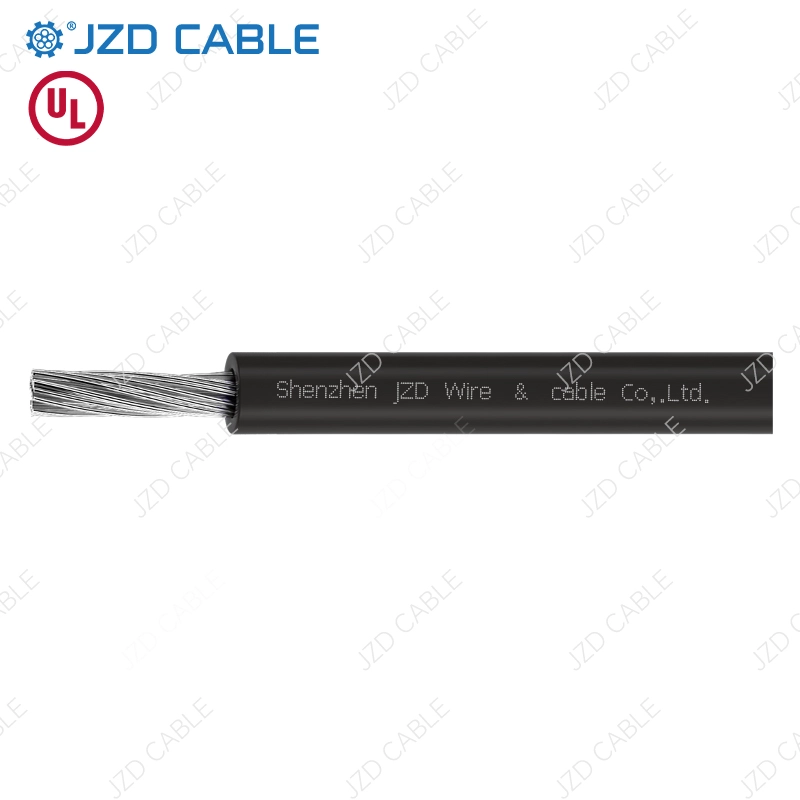
- THHN/THWN-2: PVC insulation + nylon jacket, 600V, 90°C dry/wet. The absolute workhorse for commercial and industrial branch circuits, feeders, and machine tool wire. The nylon jacket provides mechanical protection and low-friction pulling performance, vastly improving installation efficiency.
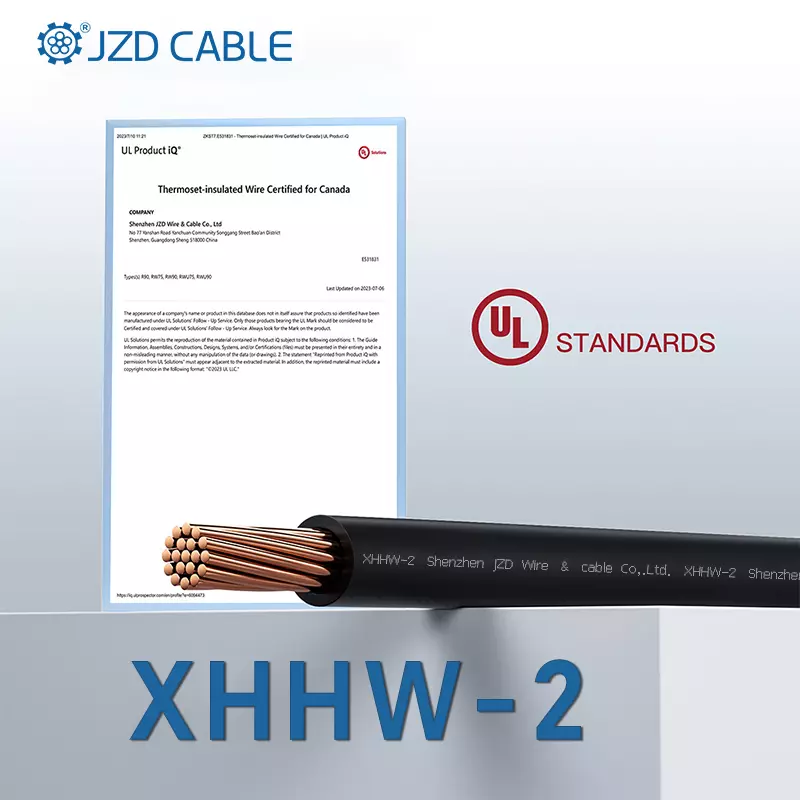
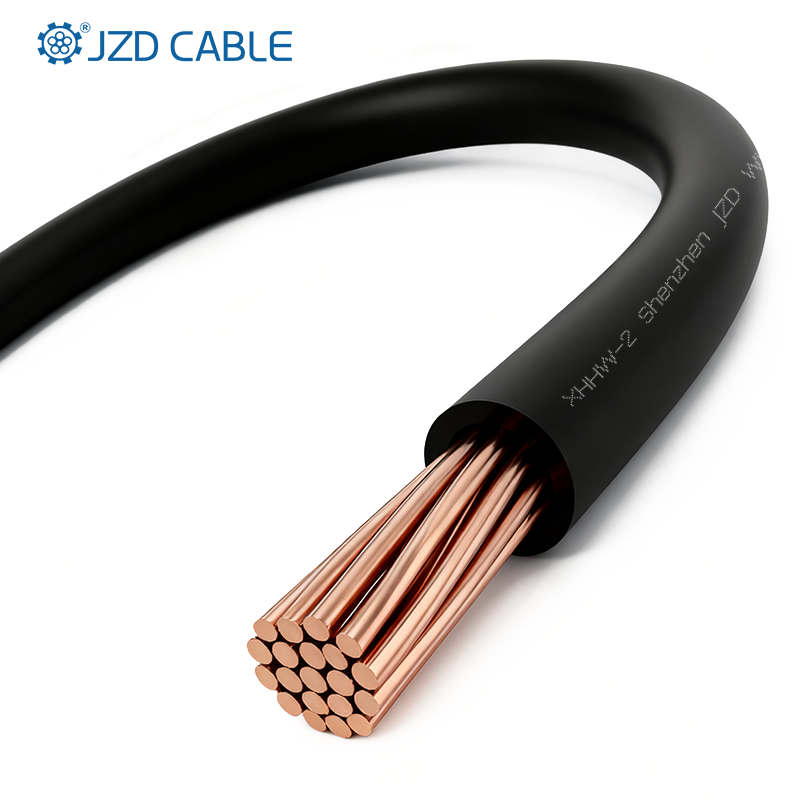
- XHHW-2: XLPE insulation + nylon jacket, 600V/1000V, 90°C dry/wet. Suited for complex industrial environments and applications requiring higher short-circuit withstand (250°C). The combination of thermoset XLPE insulation and the mechanical strength of the nylon jacket makes it a reliable choice for harsh conditions.
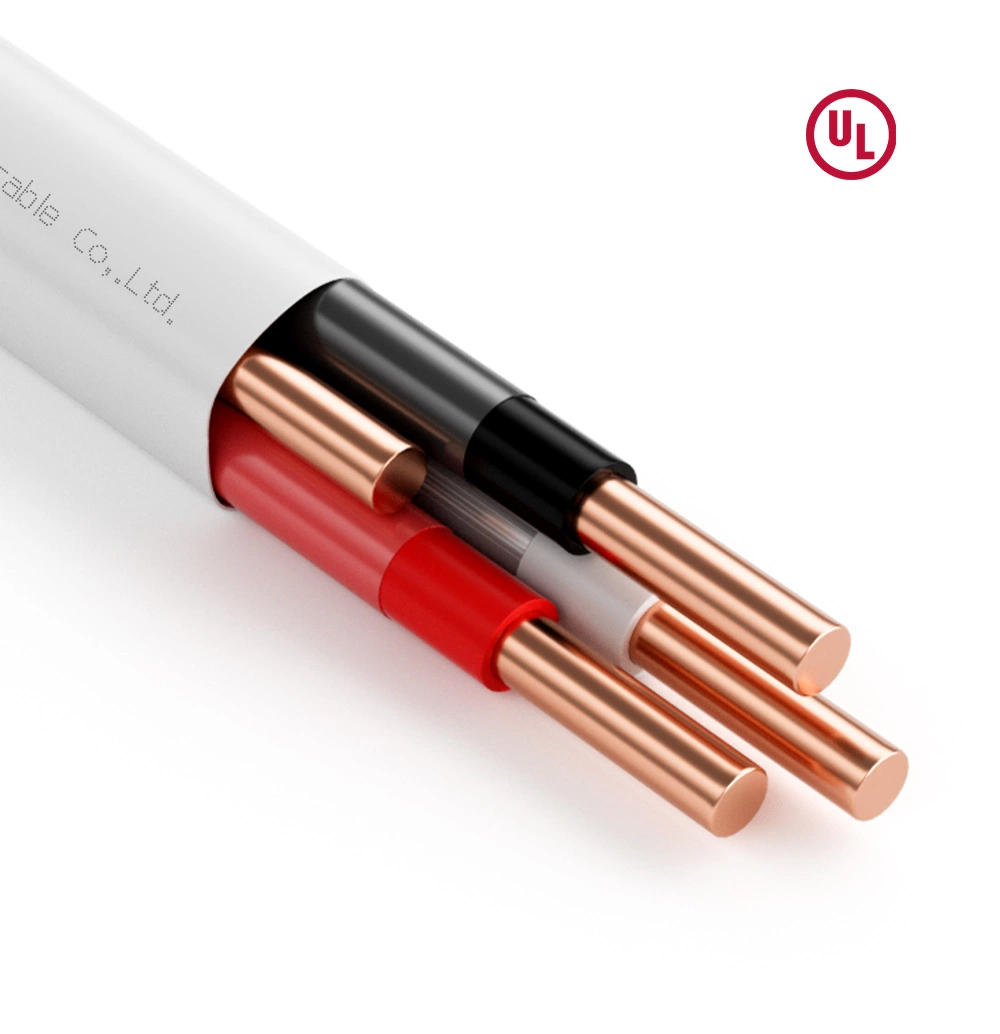
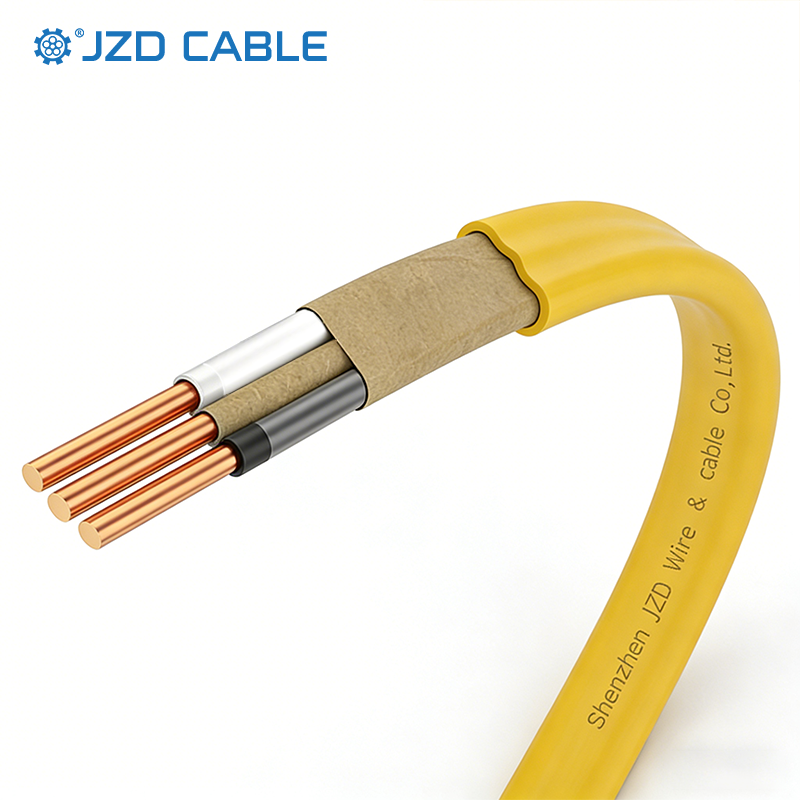
- NM-B: Multi-core PVC insulation + nylon jacket, 600V, used for fixed wiring inside building structures, offering better crush resistance than standard jackets.
- UF-B: PVC insulation + nylon jacket, used for underground feeders and direct burial, where the nylon layer provides extra moisture and soil-stress protection.
A key distinction during selection: A nylon jacket does not equal Low Smoke Zero Halogen (LSZH). Nylon itself is a polyamide, containing nitrogen but no halogens, but whether the overall cable meets LSZH requirements depends on the entire material system of the insulation and jacket, not just the nylon layer. In densely populated or egress-restricted confined spaces (such as data centers or subway tunnels), LSZH cables remain the more appropriate choice; the strength of the nylon jacket lies in mechanical durability and chemical resistance, not smoke toxicity control during a fire.
Certification and Procurement Verification
The compliance baseline for nylon-jacketed THHN/THWN-2 in the North American market is UL 83. This standard specifies requirements for conductors, PVC insulation, nylon jacket thickness, mechanical properties, and flame ratings (typically VW-1). For projects entering the Canadian market, the CSA C22.2 No. 75 listing must also be confirmed.
During bulk procurement, the following items should be verified:
- UL 83 Listing: Covering the complete THHN/THWN-2 testing requirements, not just “UL Recognized.”
- Nylon Jacket Thickness: An ultra-thin design (around 0.1–0.3 mm) is the industry norm. Excessive thickness or localized buildup indicates poor extrusion craftsmanship.
- Interlayer Adhesion: Check that the nylon layer is tightly bonded to the PVC layer to prevent delamination during bending.
- Conductor Material: Annealed copper, meeting ASTM B3 (solid) or B8 (stranded).
- Oil Rating: If the project involves oily environments, confirm the product is marked “Gasoline and Oil Resistant II.”
- Batch Consistency: Jacket thickness, conductor lay length, and print markings should remain stable across reels.
JZD supplies UL 83 listed THHN/THWN-2 nylon-jacketed cables ranging from 14 AWG to 1000 kcmil, with annealed copper conductors. The nylon jacket provides low-friction pulling performance and mechanical protection, suitable for conduit, tray, and feeder wiring.
Conclusion
The value of nylon-jacketed cable is not about being “more premium than PVC,” but rather using an ultra-thin layer of material to solve two of the most practical pain points in wiring engineering: mechanical damage during installation and chemical aging during operation. For projects requiring conduit pulling, exposure to oils, or long-term reliability, choosing nylon-jacketed THHN/THWN-2 or XHHW-2 is a pragmatic decision balancing initial cost and lifecycle reliability.
For specifications or certification documents for UL 83 listed nylon-jacketed cables, please contact us.