

In most projects, choosing between solid and stranded conductors isn’t about “better” or “worse.” It is a trade-off between mechanical resilience, termination behavior, and installation economics. The deciding factor is always the application, not personal preference.
What is a Solid Wire?
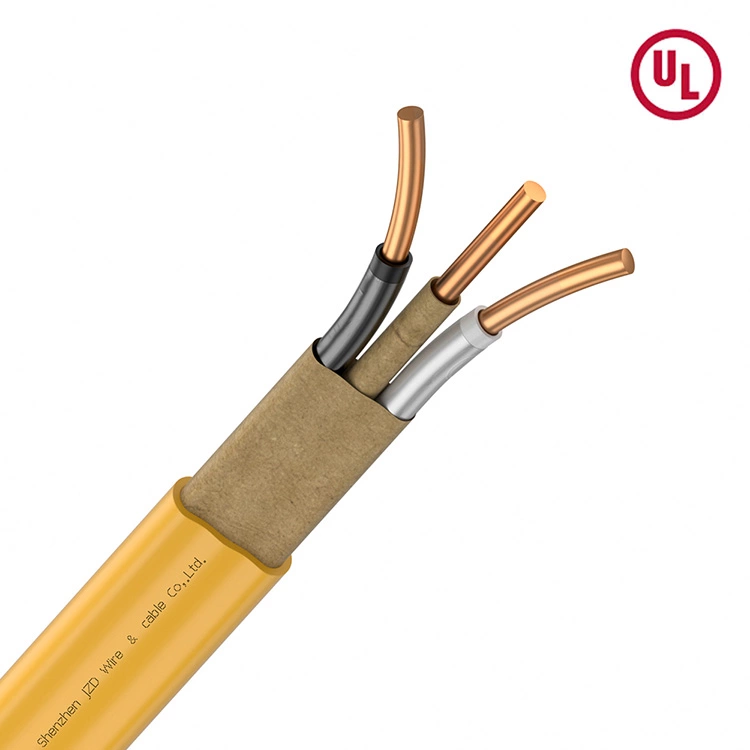
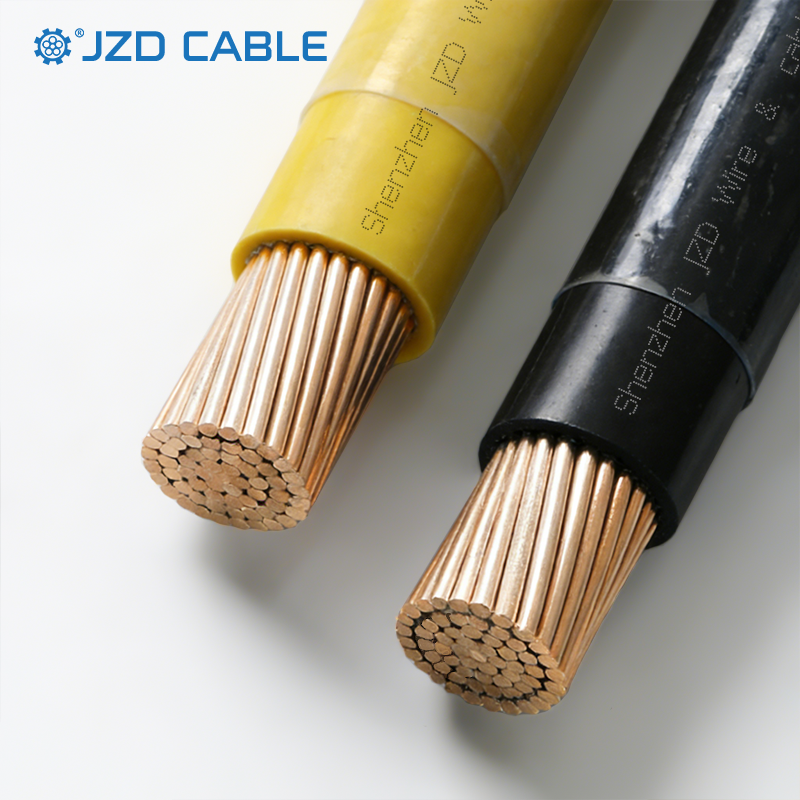
A solid conductor consists of a single continuous metal core. It holds its shape, terminates simply, and does not require special crimping tools.
In engineering standards (such as IEC 60228), solid Wire are classified as Class 1. With no internal gaps, it has a smaller outer diameter for the same cross-section and offers stable geometry. This makes it highly suitable for fixed wiring installations that will not move after installation and require long-distance routing.
What is a Stranded Wire?
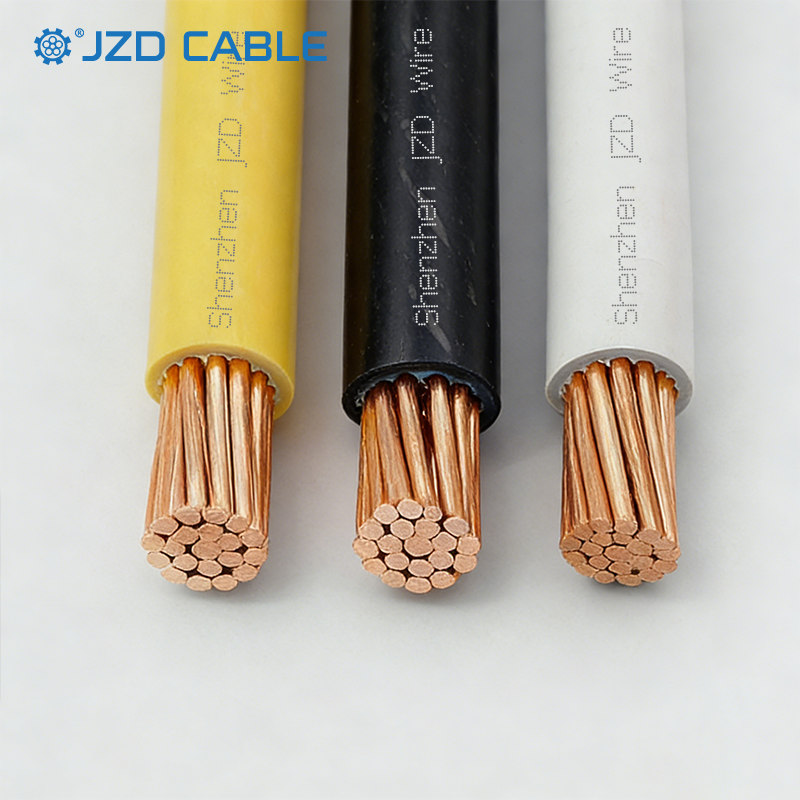
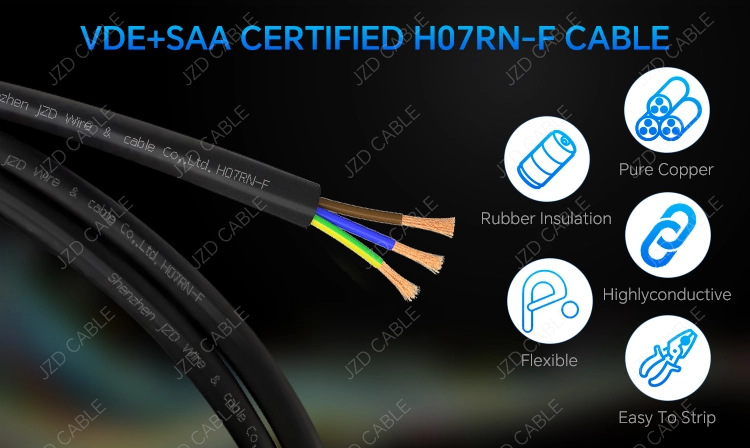
A stranded conductor is made of multiple fine wires (such as copper or aluminum) twisted together at a specific lay length. It is more flexible than a solid wire of the same cross-section and can absorb external mechanical vibration.
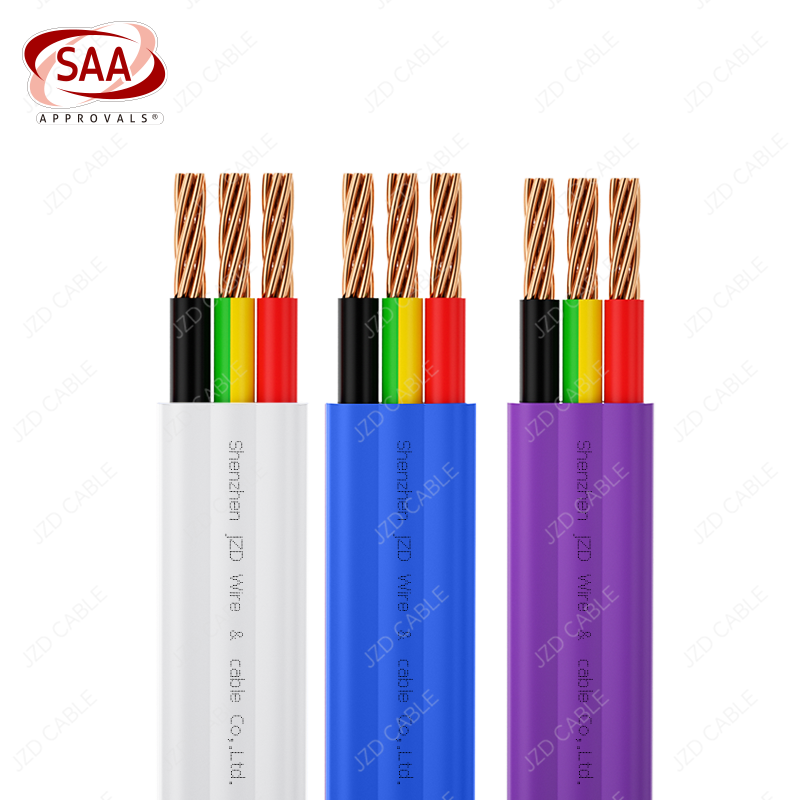
According to IEC 60228, stranded conductors for fixed installations are Class 2; flexible stranded conductors for mobile equipment, control panels, and portable cords are Class 5 or Class 6 (fine-stranded). Whenever a cable needs to be frequently moved, routed through tight spaces, or subjected to mechanical stress, a stranded conductor is typically chosen.
Stranded vs. Solid: Key Differences
Having understood their basic definitions, their differences in actual engineering practice primarily manifest in the following core dimensions:
1. A Misconception Worth Correcting: High-Frequency Performance
A persistent assumption is that stranded wire performs better at high frequencies because stranding increases surface area. In ordinary stranded wire, the strands remain in electrical contact, so the bundle behaves like a solid conductor of the same diameter. The skin effect is effectively identical.
Only Litz wire—where each strand is individually insulated and transposed—can truly mitigate skin and proximity effects. Litz wire is a specialized construction for high-frequency electronics, not a general-purpose alternative to standard stranded building wire.
2. Ampacity, Heat Dissipation, and Distance
Solid wire is often described as having “higher current capacity,” while stranded wire has more surface area for heat dissipation. This description is inaccurate. Under the same insulation and installation conditions, ampacity depends primarily on conductor cross-sectional area, not whether the conductor is solid or stranded.
The real difference lies in AC resistance and self-inductance. For a given cable size, stranded conductors have slightly higher AC resistance and self-inductance than a solid round conductor. In short, low-frequency runs, this difference is negligible. However, in long feeders, the higher resistance of stranded conductors translates into measurable voltage drop. This is why solid wire is often preferred for long, fixed runs where voltage drop governs sizing.
3. Mechanical Reliability: Vibration and Fretting
Solid wire is rigid. Under repeated vibration or flexing, the single core concentrates bending stress and can work-harden and fracture. Stranded wire distributes that stress across many thinner elements, giving it substantially longer fatigue life in moving or vibrating service. This is why portable cords and control panels with vibration exposure use finely stranded conductors.
However, stranded wire is not unconditionally superior to vibration. When strands are in contact and subjected to small oscillatory movements, fretting fatigue can initiate cracks between adjacent wires. The practical implication is that stranded wire performs best when the strand bundle is allowed to move as a unit under a flexible jacket, rather than being tightly clamped at a single point where fretting concentrates.
4. Termination: Hidden Labor and Reliability Costs
Solid wire terminates simply. It holds its shape in binding screws and pressure terminals, and for small gauges, it can be connected directly without a ferrule. This simplicity reduces labor and eliminates a common failure point.
Stranded wire requires appropriate terminals. All strands must remain intact, and the termination must be listed for stranded conductors. Ferrules or compression lugs are standard practice. A stranded conductor wrapped around a screw terminal, or terminated without a ferrule, is a high-resistance joint waiting to overheat.
5. Cost and Manufacturing
Solid wire is cheaper to manufacture and generally lower in material cost. Stranded wire requires drawing, bunching, and twisting multiple strands, adding processing cost. For fixed installation where flexibility is not required, solid wire is the economically rational choice. For dynamic or confined routing, the higher unit cost of stranded wire is offset by reduced installation labor and longer service life.

Application-Based Selection
| Application Condition | Recommended Conductor | Rationale |
| Fixed building wiring in conduit or wall | Solid (Class 1) | Lower cost, simple termination, stable geometry |
| Long feeder runs where voltage drop governs | Solid (Class 1) | Lower AC resistance and inductance |
| Control panels with vibration exposure | Stranded (Class 5) | Fatigue resistance under movement |
| Portable cords and equipment connections | Fine-stranded (Class 5/6) | Flexibility and flex life |
| Cable trays with occasional repositioning | Stranded (Class 2/5) | Balance of flexibility and cost |
| High-frequency signal or RF circuits | Litz wire (if applicable) | Only Litz wire mitigates skin effect |
Engineering Solutions
Select cable structures based on specific application scenarios:
Fixed Installations & Long-Distance Feeders (Solid / Class 2)
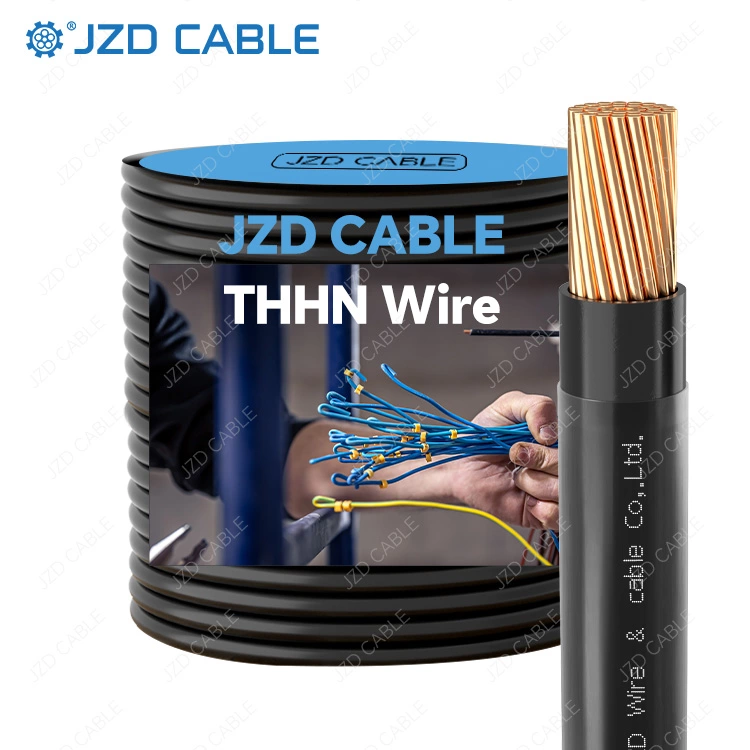
- Recommended: THHN/THWN-2, XHHW-2
- Advantages: 90°C rating, excellent termination stability; ideal for conduit and tray.
Vibration, Frequent Movement, or Tight Spaces (Class 5/6)
- Recommended: UL 1015, UL 2464, SOOW/SJOOW
- Advantages: Fine stranding for high fatigue resistance; ideal for control panels and mobile equipment.
Compliance & Contact
- All products meet UL/IEC standards with customized specs and certifications available.
- Contact us for application matching and specific product specifications.
FAQ
1. Is stranded wire better for high-frequency signals?
Not in ordinary construction. Standard stranded wire behaves like a solid conductor at high frequency because the strands remain in electrical contact. Only Litz wire, with individually insulated and transposed strands, meaningfully reduces skin effect.
2. Can solid and stranded wire be mixed?
They can be used in the same electrical system, but terminations must be compatible with each conductor type. Mixing within a single circuit is not recommended unless the terminal is listed for both.
3. Why does stranded wire sometimes have lower ampacity in tables?
Ampacity differences usually arise from termination temperature limits or installation conditions, not from stranding itself. A 90°C-rated stranded conductor still has the same base ampacity as a solid conductor of the same size and insulation, subject to the same derating rules.
4. What is the main failure mode of stranded wire vibration?
Fretting fatigue between adjacent strands or between the conductor and its support hardware. Under sustained small-amplitude movement, this can reduce fatigue strength by roughly a factor of 1.6 compared with unfretted wire.