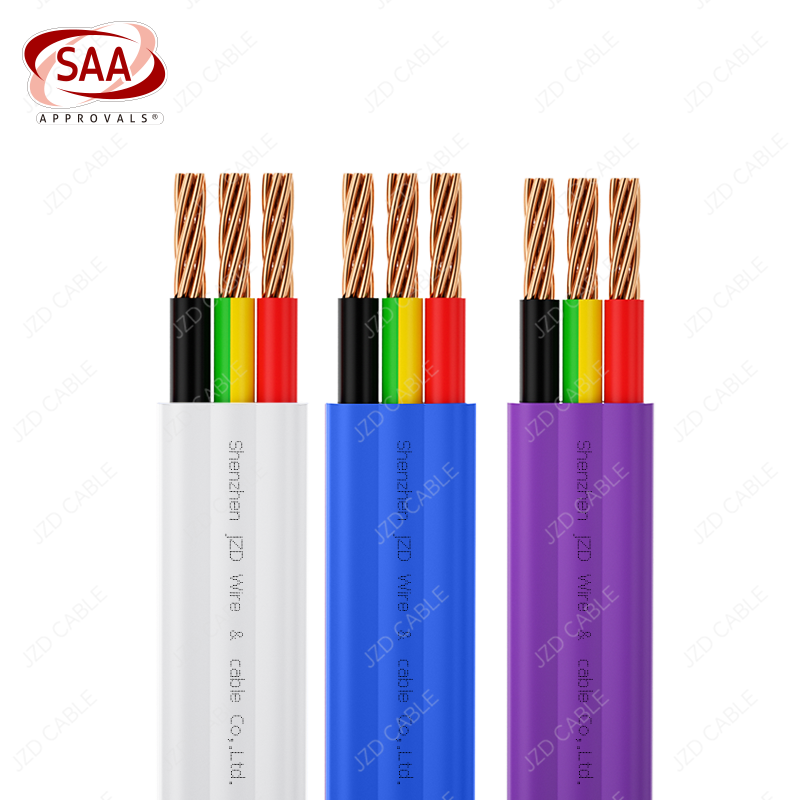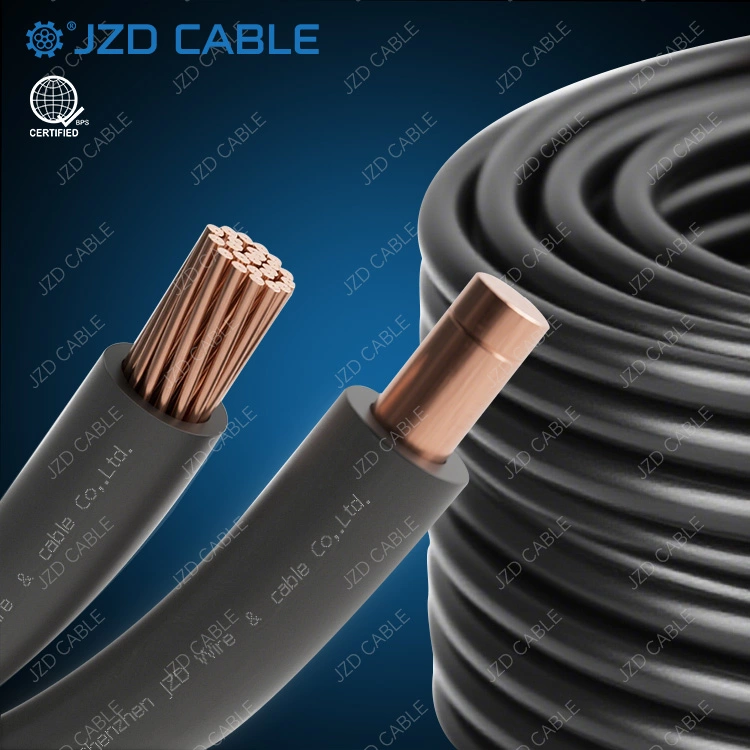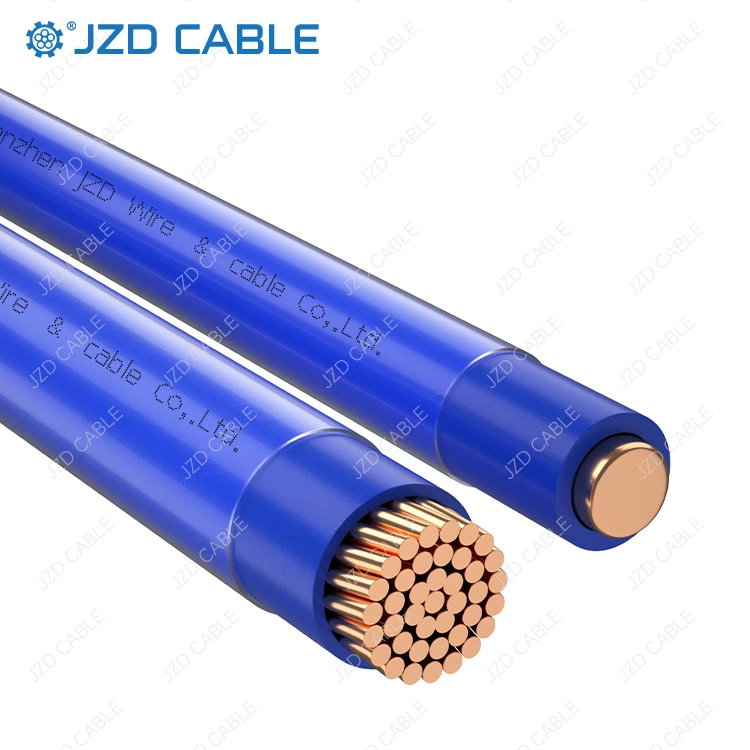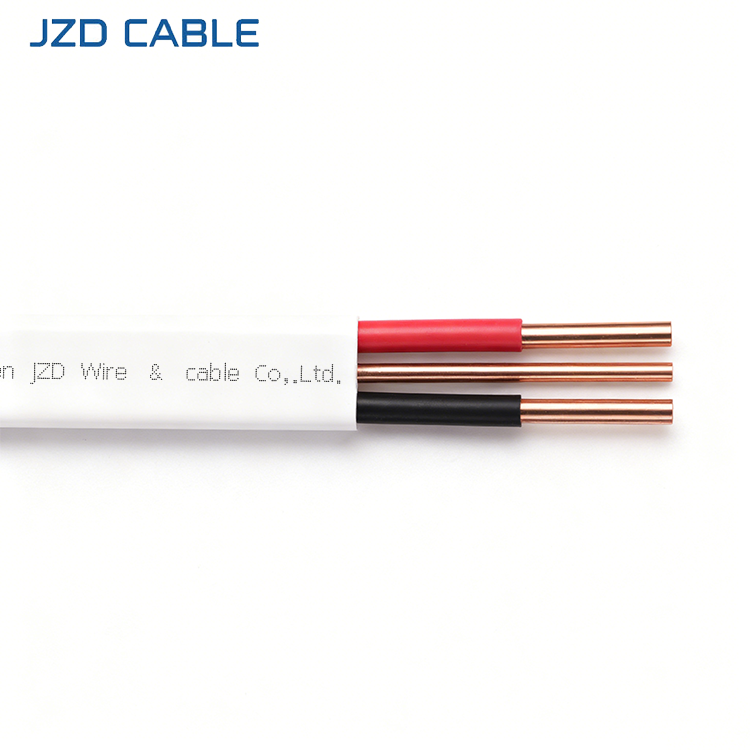


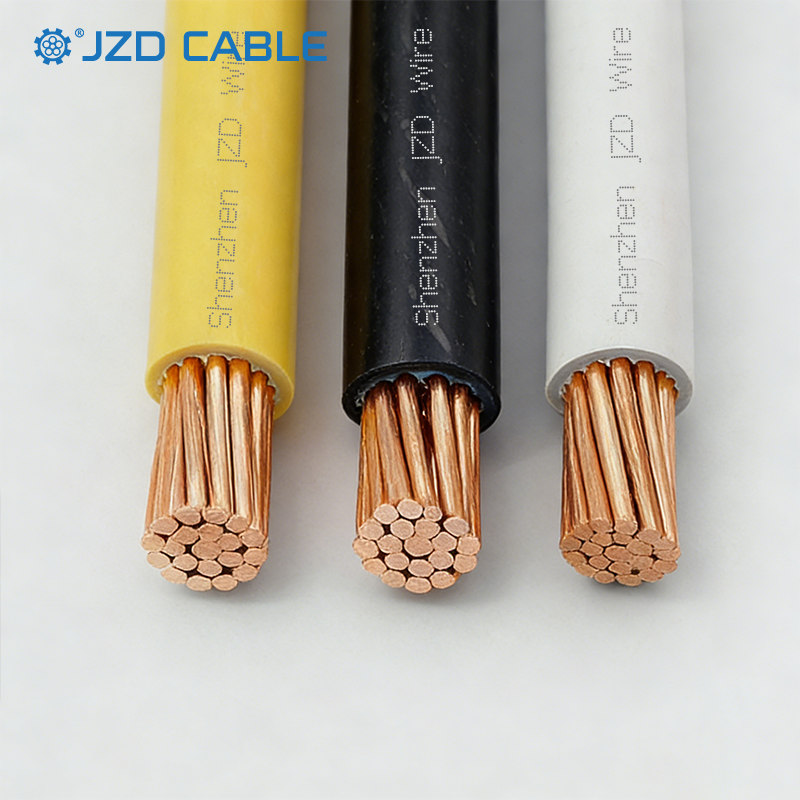
Wire selection often overlooks conductor construction—solid or stranded—which affects installation, termination, fatigue life, and reliability. Solid wire uses a single core: rigid, easy to terminate, for fixed installation. Stranded wire uses multiple thin strands: flexible, vibration-resistant, for moving equipment and continuous flex. Neither is universally superior; wrong choice causes routing issues, breakage, or premature failure. This article covers conductor classification, electrical performance, mechanical properties, standards, termination, and lifecycle cost.
Conductor Structure Classification: IEC 60228 and ASTM Standards
IEC 60228 classifies conductors into four categories, covering applications from rigid to highly flexible.
| Class | Construction | Typical Strand Diameter | Flexibility | Typical Application |
| Class 1 | Solid | — | Low | Fixed building wiring, permanent circuits |
| Class 2 | Stranded (7–127 strands) | Relatively thick | Moderate | Fixed installation in conduit or tray |
| Class 5 | Fine-stranded (>100 strands at ≥16 mm²) | Thin | High | Portable cords, control panels, equipment connections |
| Class 6 | Extra-fine stranded (>200 strands at ≥4 mm²) | Very thin | Very high | Cable chains, robotics, continuous flex |
For a 2.5 mm² conductor, a typical Class 5 construction is approximately 46 strands of 0.26 mm, while Class 6 is approximately 140 strands of 0.16 mm. In North America, ASTM B3 specifies solid copper conductors and ASTM B8 specifies stranded copper conductors. NEC 310.3(C) requires that, where installed in raceways, conductors 8 AWG and larger be stranded, unless specifically permitted or required elsewhere in this Code to be solid. Power and lighting circuits 10 AWG and smaller typically use solid copper conductors.
Stranded conductors can be further classified as concentric-lay, bunched, unilay, rope-lay, and compact-stranded. Concentric-lay is the most common construction, with each layer twisted in the opposite direction to reduce torsional stress. Bunched stranding is used in flexible cables, where strands are not arranged in layers but bundled randomly, offering better flexibility but a slightly larger diameter. Compact stranding uses dies to compress the conductor, reducing diameter and conduit fill.
Once conductor construction is determined, electrical performance differences mainly appear in resistance and voltage drop.
Electrical Performance: Resistance Difference Between Solid and Stranded
At the same nominal cross-section, a solid conductor has lower DC resistance than a stranded conductor. The reason is that strands in a stranded conductor follow a helical path, increasing the effective length of the current path. According to conductor property data in NEC Chapter 9 Table 8, the DC resistance of stranded copper is approximately 2–3% higher than that of solid copper of the same cross-section.
At 50/60 Hz power frequency, skin effect is limited. The skin depth of copper at 60 Hz is approximately 8.5 mm. For conductors with a diameter less than 17 mm, skin effect is negligible. Therefore, the AC resistance difference between solid and stranded conductors mainly comes from the additional length caused by stranding, not from skin effect.
For most commercial and industrial installations, the 2–3% resistance difference is already reflected in standard ampacity tables and does not significantly affect selection. However, in long feeder runs or voltage-drop-sensitive projects, this difference may influence conductor sizing. For example, on a 200 ft, 200A feeder, the voltage drop difference between solid and stranded may reach 0.1–0.2%, requiring verification when approaching limits.
Mechanical Properties: Bending Radius, Fatigue, and Vibration
1. Bending Radius
Solid conductors have limited bending capability. For fixed installation, the minimum bending radius is typically 4–6 times the outer diameter. Repeated bending or sharp bends can cause work hardening and conductor breakage.
Stranded conductors, especially Class 5 and Class 6, tolerate tighter bends. For fixed installation of flexible cable, the minimum bending radius is typically 3–4 times the outer diameter. For continuous flexing applications, the dynamic bending radius requirement is typically 6–10 times the outer diameter.
2. Fatigue Life
When a cable bends, outer strands are under tension and inner strands under compression. The thinner the individual strand, the lower the surface strain, and the longer the fatigue life. At the same bending radius and cycle count, Class 6 conductors last significantly longer than Class 5, and Class 5 far outlasts Class 2. In cable chain applications, standard cable may fail after tens of thousands of cycles, while a properly specified high-flex cable can exceed one million cycles.
3. Vibration
Solid conductors are prone to fatigue fracture in vibrating environments. Equipment connections for motors, pumps, and compressors should use stranded conductors. The multiple strands in a stranded conductor distribute vibration stress and extend service life.
Mechanical properties determine installation method. Termination method must match conductor construction.
Termination and Connection
Termination methods differ by conductor construction.
Solid conductors are simple to terminate. Solid conductors 10 AWG and smaller can be connected directly with binding screws or studs, and wrapping is permitted with upturned lugs. The conductor holds its shape and does not loosen easily after insertion.
Stranded conductors require appropriate terminals or connectors. All strands must remain intact; broken strands are not acceptable. Stranded cable should be terminated with lugs, ferrules, or pressure-type connectors. Wrapping stranded cable around screw-type terminals is not acceptable unless the terminal is explicitly rated for stranded conductors. For Class C stranded conductors terminated on binding screws, the uninsulated strands must be completely enclosed within the termination, or the strands at the terminal must be made solid.
Aluminum conductors require additional attention: aluminum stranded conductors need bi-metal or aluminum-specific lugs, and antioxidant compound is recommended. Copper terminations are relatively simple.
Once termination requirements are clear, standards and codes must also be verified.
Standards and Code Requirements
NEC has clear requirements for conductor construction. Under 310.3(C), conductors 8 AWG and larger installed in raceways must be stranded, unless the Code specifically permits or requires solid conductors. Power and lighting circuits 10 AWG and smaller typically use solid copper conductors. NEC 110.14 requires termination methods to match the conductor type.
For UL standards, UL 83 covers thermoplastic-insulated wires, UL 44 covers thermoset-insulated wires, and UL 486A-486B covers termination devices, including requirements for aluminum and copper conductors.
IEC 60228 is the internationally used conductor classification standard, adopted by the EU and many export markets. IEC 60228 Class 5 and Class 6 correspond to high-flexibility applications, while Class 1 and Class 2 correspond to fixed installation.
After meeting standards and codes, selection also requires comparing lifecycle cost.
Lifecycle Cost Analysis
| Cost Dimension | Solid Wire | Stranded Wire |
| Material cost | Lower | Higher (more complex manufacturing) |
| Installation labor | Simple for fixed installation | Easier for flexible installation, saves labor |
| Termination cost | Low | Requires lugs/connectors, higher cost |
| Maintenance cost | Prone to fatigue in vibration | Resistant to vibration, lower maintenance |
| Replacement frequency | Long life in fixed installation | Life depends on selection in dynamic applications |
| Suitable application | Fixed, static | Moving, vibrating, continuous flex |
In fixed installations with no vibration and no movement, solid wire costs less and performs adequately. In moving equipment, vibrating environments, or continuous-flex applications, stranded wire has a higher initial cost but reduces replacement and downtime, potentially lowering lifecycle cost.
Application Selection
1. When Solid Wire Is Suitable
- Fixed residential and commercial wiring in walls
- Permanent electrical circuits that do not move after installation
- Panel and switchboard internal wiring
- Control circuits 10 AWG and smaller
- Cost-sensitive fixed installations
2. When Stranded Wire Is Suitable
- Portable tools, machinery, and equipment connections
- Control panel wiring requiring routing around components
- Vibration-prone equipment such as motors, pumps, and compressors
- Cable chains, robotics, and automated handling equipment (Class 5 or Class 6)
- Conduit or tray installation for conductors 8 AWG and larger
- Outdoor exposed runs subject to thermal expansion or wind-induced movement
Selection Verification Points
- Conductor class per IEC 60228 or equivalent
- Conductor material: annealed copper per ASTM B3 (solid) or ASTM B8 (stranded)
- Insulation type and temperature rating matching the application
- Voltage rating matching the system
- Strand count and individual strand diameter for flexible applications
- Bending radius requirements matching the installation method
- Termination compatibility: lugs, ferrules, or connectors rated for the conductor class
- Batch consistency in conductor stranding, insulation thickness, and marking
FAQ
1. Which is cheaper, solid or stranded wire?
Solid wire is generally cheaper. It uses a single conductor, while stranded wire requires drawing, bunching, and twisting multiple strands, adding manufacturing cost.
2. How do you determine if the wire is solid or stranded?
Strip the insulation and inspect the conductor. A solid conductor is one rigid metal core. A stranded conductor consists of multiple thin strands twisted together. Cable marking may also indicate conductor class.
3. Can I connect solid wire to stranded wire?
Yes, if the connector or terminal is rated for both. Use a wire nut, terminal block, or connector listed for mixed conductor types. Do not twist solid and stranded together under a screw unless the terminal is rated for both.
For solid or stranded wire specifications, conductor class verification, or bulk supply options for commercial and industrial projects, please contact us.