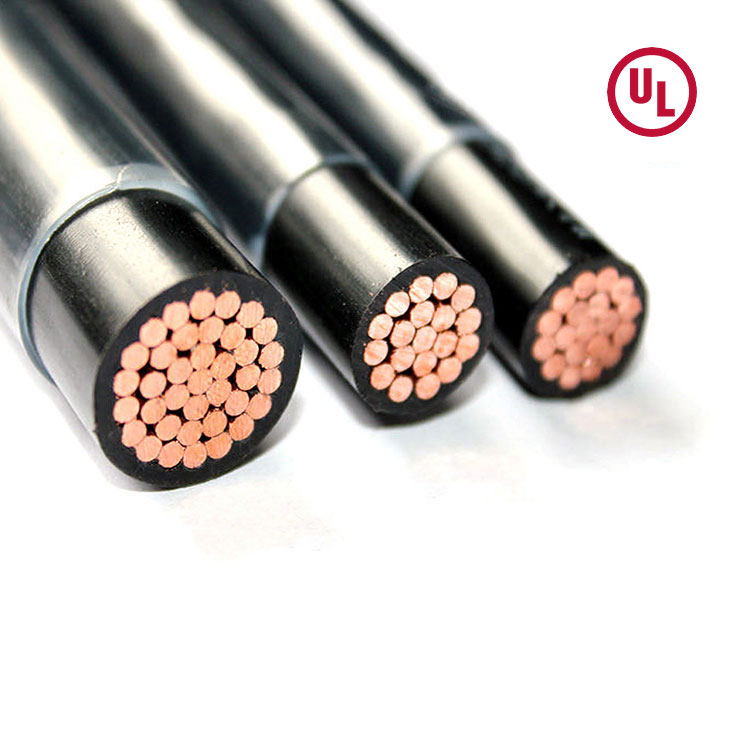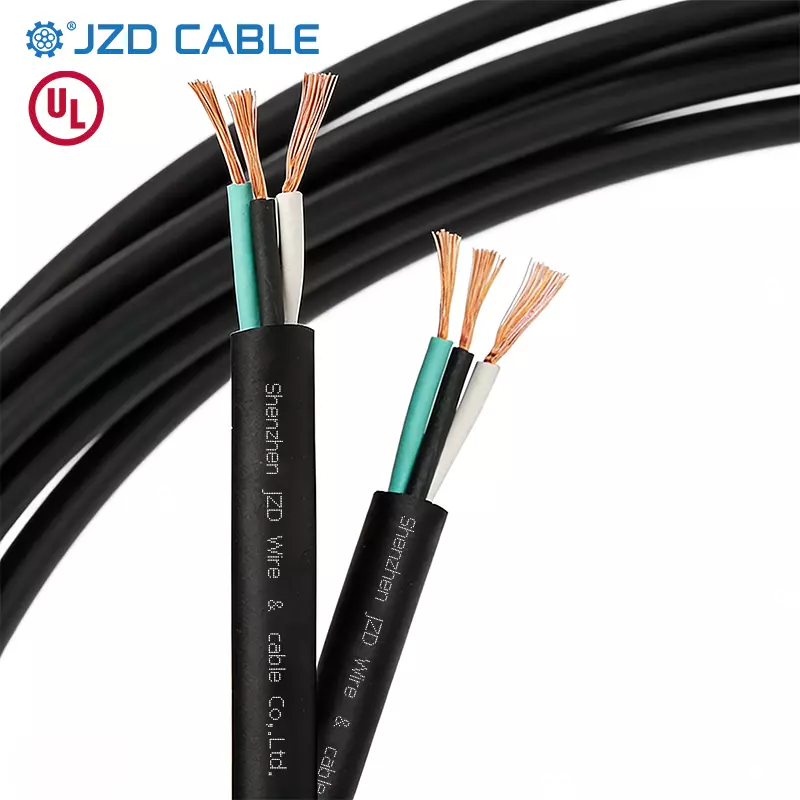


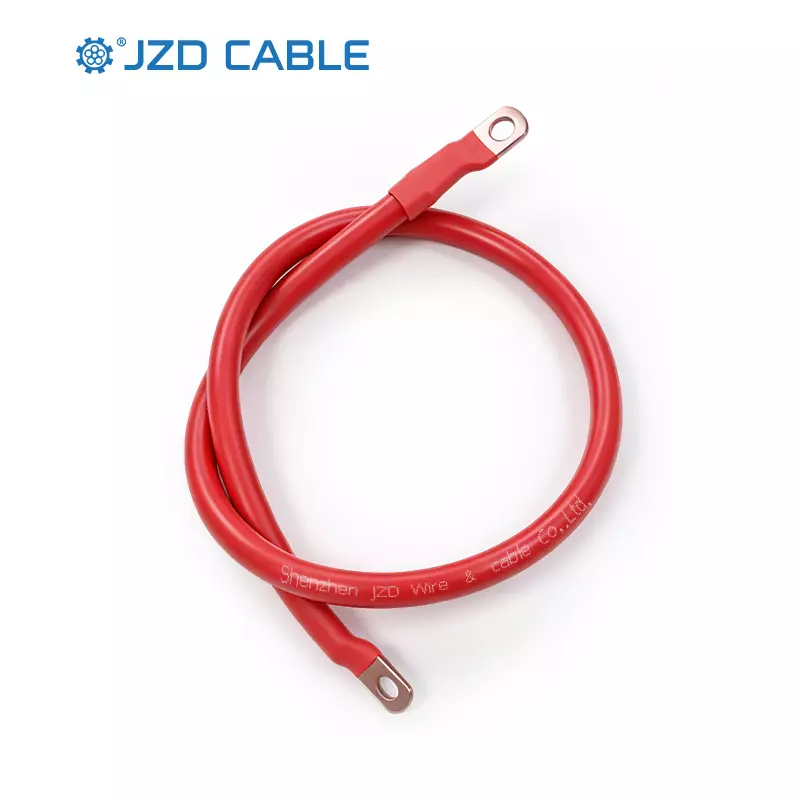
While small-gauge battery cables handle signals and auxiliary circuits, large-gauge battery cables — defined as conductors with a cross-section of ≥10 mm² (AWG 8 and larger) — are the workhorses of high-current DC power transmission. They carry the main current between batteries, starters, inverters, motors, and distribution points in systems ranging from passenger cars to megawatt-scale energy storage.
Selecting the right large-gauge cable for your application is critical: undersizing leads to voltage drop and overheating; oversizing wastes money and space. This guide explores the seven major application domains for large-gauge battery cables, with recommendations on insulation material (PVC, silicone, or rubber) for each environment.
What Defines a Large-Gauge Battery Cable?
Large-gauge battery cables are characterized by:
- Conductor cross-section: ≥10 mm² (metric) or ≤8 AWG (American)
- Common metric sizes: 10, 16, 25, 35, 50, 70, 95, 120, 150, 185, 240 mm²
- Common AWG sizes: 8, 6, 4, 2, 1, 1/0, 2/0, 3/0, 4/0, 250 kcmil, 350 kcmil, 500 kcmil
- Primary function: High-current DC power delivery with minimal voltage drop
- Typical current range: 50 A to over 600 A depending on gauge, insulation, and duty cycle
Application Scenarios by Industry
1. Fuel Vehicles, Commercial Trucks & Construction Machinery
Operating conditions: High starting current, continuous vibration, engine oil and fuel exposure, engine compartment heat (up to 100°C+ near manifolds)
Recommended cable types: Oil-resistant rubber (NBR/CR/Neoprene), heat-resistant PVC (up to 105°C), silicone for hot spots near exhaust
Specific applications:
|
Vehicle Type
|
Cable Use
|
|---|---|
|
Passenger cars, SUVs
|
Battery to starter motor, alternator output, main chassis ground strap
|
|
Heavy trucks, buses
|
Dual battery parallel cables, main positive/negative battery leads
|
|
Construction machinery (excavators, bulldozers)
|
Battery to starter, hydraulic pump motor power, cab main feed
|
|
Agricultural tractors, harvesters
|
Main battery cables exposed to dirt, oil, and vibration
|
|
Trailers, RVs
|
Battery interconnect cables for dual-battery systems
|
Common sizes: 25 mm² – 70 mm² (AWG 4 – 2/0)
2. New Energy Vehicles (EVs) & Low-Speed Electric Vehicles
Operating conditions: High continuous discharge current, enclosed battery pack (potential heat buildup), wide temperature swings, vibration, strict fire safety requirements
Recommended cable types: Silicone (primary), flame-retardant rubber for some auxiliary circuits
Specific applications:
|
Vehicle Type
|
Cable Use
|
|---|---|
|
Electric passenger cars, vans
|
Battery pack internal busbars, module-to-module interconnects, main pack positive/negative output to inverter
|
|
Electric trucks, sanitation trucks
|
High-voltage auxiliary power circuits, DC-DC converter input/output
|
|
Electric forklifts, pallet jacks
|
Battery to controller, motor power cables (frequent flexing, vibration)
|
|
Golf carts, sightseeing cars
|
Battery pack main leads, motor controller input
|
|
Electric wheelchairs, mobility scooters
|
Battery to motor driver (tight spaces, occasional flex)
|
Common sizes: 25 mm² – 120 mm² (AWG 4 – 4/0); EV pack internal often uses 10–50 mm² silicone
Note: For EV battery packs, silicone cable with UL94 V-0 rating is strongly preferred due to fire safety concerns and the need for flexibility in confined spaces.
3. Energy Storage Systems (Residential, Commercial & Utility-Scale)
Operating conditions: Continuous high current (hours-long discharge), outdoor or semi-outdoor exposure (UV, temperature extremes), multiple battery strings in parallel, stringent fire codes
Recommended cable types: Outdoor-rated rubber (EPR/CR), flame-retardant PVC (indoor), silicone for high-temperature or fire-critical zones
Specific applications:
|
System Type
|
Cable Use
|
|---|---|
|
Residential home battery (e.g., Tesla Powerwall, BYD)
|
Battery cluster main output, inverter DC input, string combiner cables
|
|
Commercial storage cabinets
|
Rack-to-rack interconnect, battery-to-inverter busbars
|
|
Containerized utility-scale ESS
|
Module-to-module links, main DC bus, PCS (power conversion system) input
|
|
Solar-plus-storage off-grid
|
Battery bank main positive/negative, charge controller to battery
|
Common sizes: 35 mm² – 150 mm² (AWG 2 – 300 kcmil); utility-scale may use 250–500 kcmil
4. Backup Power, UPS & Telecom Battery Plants
Operating conditions: Standby duty (infrequent cycling), enclosed rooms (temperature-controlled), fire safety important, often 48 V DC systems
Recommended cable types: Flame-retardant PVC (most common), rubber for heavy-duty industrial UPS
Specific applications:
|
System Type
|
Cable Use
|
|---|---|
|
Data center UPS
|
Lead-acid or lithium battery string interconnect, battery cabinet to UPS input
|
|
Telecom base stations (48 V)
|
Battery bank main cables, rectifier-to-battery DC bus
|
|
Emergency generators
|
Starting battery cables, generator control panel DC power
|
|
Industrial backup power
|
Battery rack main output to critical load panel
|
Common sizes: 25 mm² – 95 mm² (AWG 4 – 3/0)
5. Marine, Yacht & RV / Campervan
Operating conditions: Salt spray, high humidity, constant motion, confined engine rooms, some areas high temperature (engine bay), UV exposure for deck runs
Recommended cable types: Tinned copper (mandatory for corrosion resistance), rubber (CR/Neoprene for salt resistance), silicone for engine room high-temp
Specific applications:
|
Vessel/Vehicle Type
|
Cable Use
|
|---|---|
|
Sailboats, powerboats
|
House battery bank main leads, thruster battery cables, windlass power
|
|
Yachts, luxury cruisers
|
Inverter/charger DC input, bow thruster battery cables
|
|
RVs, campervans, motorhomes
|
House lithium battery main output, inverter input, solar charge controller to battery
|
|
Workboats, fishing vessels
|
Engine start batteries, hydraulic pump motor cables
|
Common sizes: 35 mm² – 120 mm² (AWG 2 – 4/0); always specify tinned copper for marine use
6. Industrial Equipment & Mobile Power Units
Operating conditions: Frequent movement, dragging on ground, oil/grease exposure, crushing hazards, outdoor storage
Recommended cable types: Heavy-duty rubber (YCW type, Neoprene jacket) — toughest mechanical protection
Specific applications:
|
Equipment Type
|
Cable Use
|
|---|---|
|
Mobile welding machines
|
Battery-to-inverter DC cables (dragged across shop floor)
|
|
Portable power generators
|
Starting battery, DC output to load
|
|
Mining vehicles, quarry equipment
|
Battery main cables (abrasive dust, water spray)
|
|
Crane, hoist controls
|
DC power to pendant control or auxiliary winch
|
|
Industrial battery chargers
|
Charger output cables to battery bank
|
Common sizes: 25 mm² – 95 mm² (AWG 4 – 3/0); heavy-duty rubber jackets are thicker for abrasion resistance
7. Rail Transit & Special Purpose Vehicles
Operating conditions: Extreme vibration, wide temperature range (–40°C to +80°C), high safety standards, long operational life (20+ years)
Recommended cable types: Flame-retardant silicone (for high-temp zones), specialized locomotive rubber cables (BS/EN standards)
Specific applications:
|
Vehicle Type
|
Cable Use
|
|---|---|
|
Metro trains, light rail
|
Onboard battery bank main cables, auxiliary power distribution
|
|
Locomotives (diesel-electric)
|
Starter battery, control battery, engine room DC feeders
|
|
Mine locomotives
|
Battery traction power cables (explosion-proof considerations)
|
|
Military vehicles, armored personnel carriers
|
24 V / 28 V DC main power distribution (extreme environment)
|
Common sizes: 50 mm² – 185 mm² (AWG 1/0 – 350 kcmil); often require specialized certifications (EN 50264, NF F 63-826, etc.)
Material Selection Guide for Large-Gauge Battery Cables
|
Operating Environment
|
Recommended Insulation
|
Key Considerations
|
|---|---|---|
|
Engine compartment, high heat (>80°C)
|
Silicone or EPR rubber
|
Silicone for >105°C; EPR good to 105°C
|
|
Arctic cold, outdoor winter (–40°C)
|
Silicone or EPR rubber
|
PVC becomes brittle below –20°C
|
|
Oil, fuel, hydraulic fluid exposure
|
NBR rubber or CR (Neoprene)
|
PVC degrades with prolonged oil contact
|
|
Salt spray, marine environment
|
CR (Neoprene) with tinned copper
|
Corrosion resistance is critical
|
|
Dragging, abrasion, crushing
|
Heavy rubber jacket (YCW type)
|
Thick jacket for mechanical protection
|
|
Indoor, climate-controlled, budget
|
PVC (flame-retardant grade)
|
Lowest cost, adequate for benign conditions
|
|
Fire-critical (battery room, data center)
|
Silicone (V-0) or LSZH rubber
|
Low smoke, zero halogen, no dripping
|
|
Continuous flexing (cable track, robot)
|
Silicone (ultra-fine stranding)
|
Highest flex life; rubber too stiff
|
Quick Reference: Common Large-Gauge Sizes and Typical Current Ratings
|
AWG
|
mm²
|
Typical Continuous Current (PVC, 75°C)
|
Typical Continuous Current (Silicone, 125°C)
|
|---|---|---|---|
|
8
|
10
|
55 A
|
70 A
|
|
6
|
16
|
75 A
|
95 A
|
|
4
|
25
|
100 A
|
125 A
|
|
2
|
35
|
135 A
|
170 A
|
|
1
|
42
|
155 A
|
195 A
|
|
1/0
|
53
|
175 A
|
225 A
|
|
2/0
|
67
|
210 A
|
265 A
|
|
3/0
|
85
|
245 A
|
310 A
|
|
4/0
|
107
|
285 A
|
360 A
|
Note: Values are approximate for single conductor in free air at 30°C ambient. Derate for bundling, high ambient temperature, or enclosed conduit. Always consult manufacturer data.
Frequently Asked Questions
Q: What is the largest gauge battery cable commonly available?
A: For battery cables, sizes up to 500 kcmil (approx. 253 mm²) are common in large UPS and utility storage systems. Beyond that, multiple cables are paralleled.
Q: Can I use PVC battery cable for a 200 A inverter installation?
A: Possibly, but you’d need a very large gauge (e.g., 4/0 AWG) and must ensure the ambient temperature is moderate. Silicone or EPR rubber would allow a smaller gauge for the same current due to higher temperature rating.
Q: Why do large battery cables use tinned copper?
A: Tinning prevents oxidation at connection points (battery terminals, lugs) where dissimilar metals and acidic fumes accelerate corrosion. For marine and outdoor use, tinned is mandatory.
Q: What is the difference between battery cable and welding cable for large gauges?
A: Welding cable has even finer stranding (Class K or M) for extreme flexibility and is jacketed with rubber for dragging. Battery cable (especially PVC) is stiffer and intended for fixed or occasional flexing. For heavy mobile equipment, welding cable is often preferred.
Q: How do I calculate voltage drop for a long battery cable run?
A: Use the formula: VD = (2 × L × I × R) / 1000, where L is one-way length in meters, I is current in amps, R is resistance per km (Ω/km). Keep VD below 3% for critical loads.
Why Choose JZD Cable for Large-Gauge Battery Cables?
At JZD Cable, we manufacture large-gauge battery cables in all major insulation families, from 10 mm² to 240 mm² (AWG 8 to 500 kcmil):
- PVC battery cable: Economical, VW-1 rated, bare or tinned copper
- Silicone battery cable: –60°C to +200°C, UL94 V-0, ultra-fine stranding for flexibility
- Rubber battery cable: NBR, CR (Neoprene), EPR — heavy-duty for oil, abrasion, and outdoor exposure
All available in red/black, custom colors, bulk spools, or terminated assemblies with lugs. We support OEM, distributor, and project-specific requirements with fast lead times.
Need a quote or technical consultation for your large-gauge battery cable project?
Contact us at jzdcable.com/contact — specify gauge, length, insulation type, and environment, and our engineering team will respond within 24 hours.