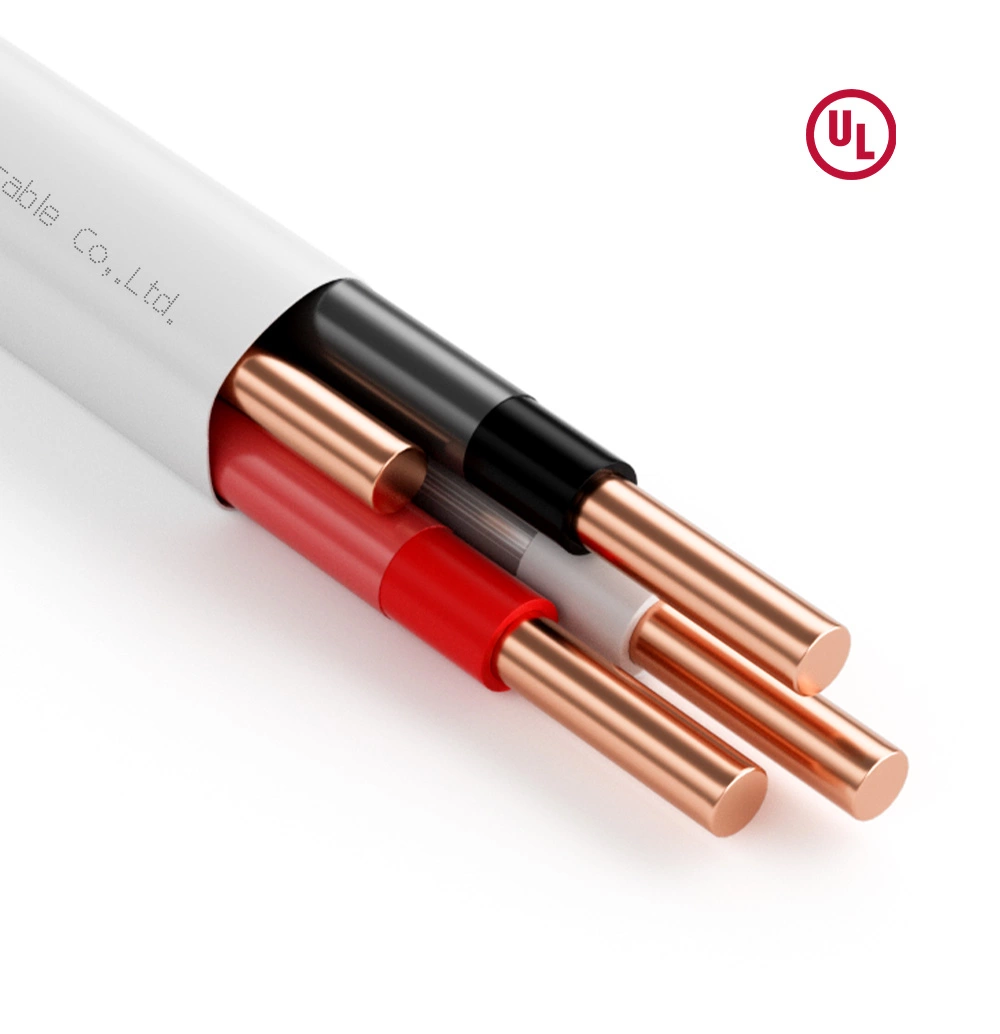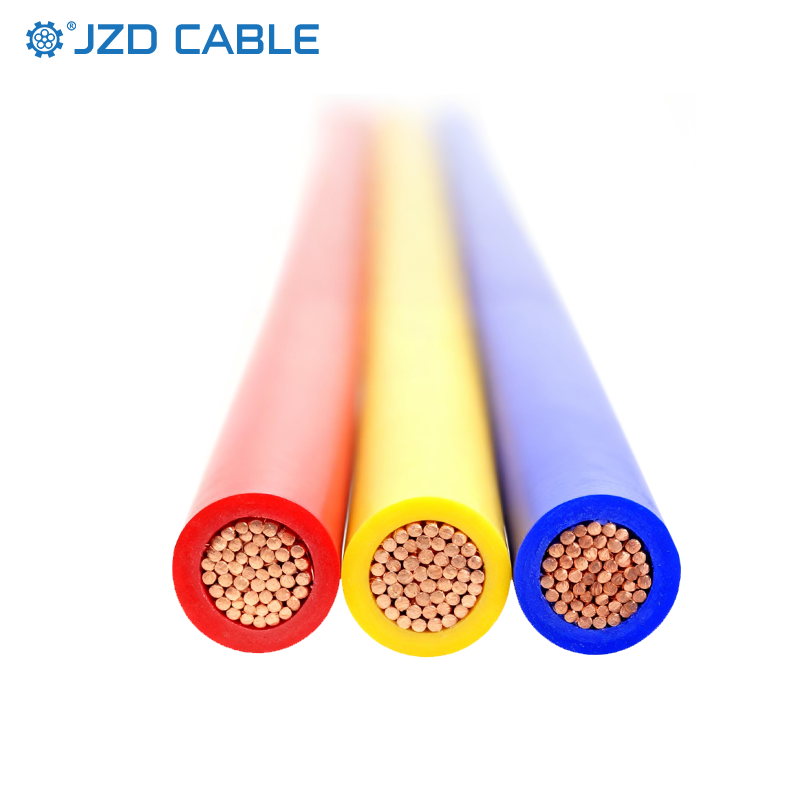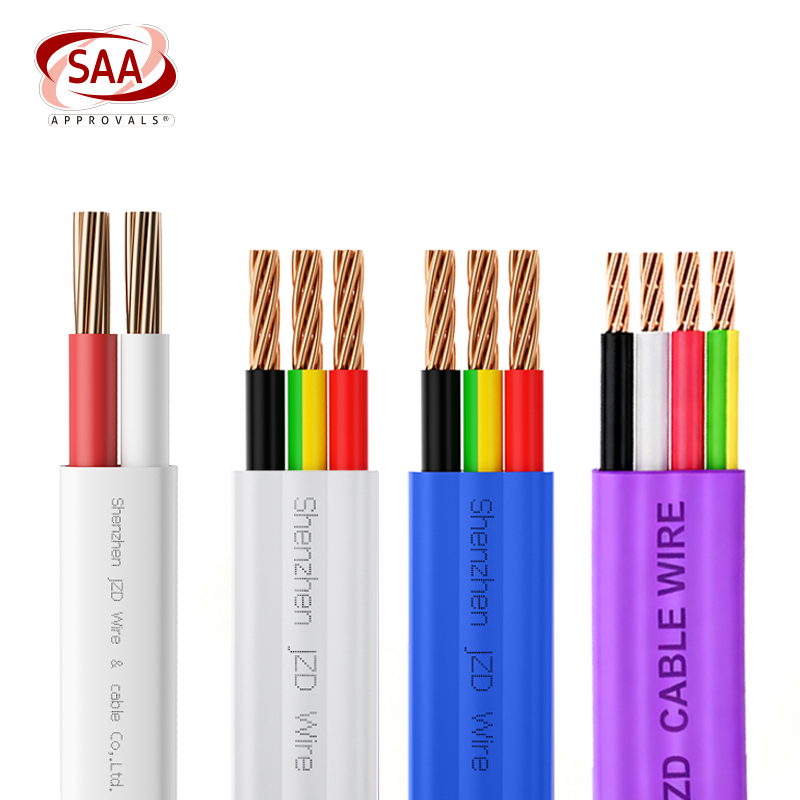


If you work with building wire in North America, you’ve likely encountered both NM-B and NMD90. On the surface, they look almost identical—copper conductors, PVC/nylon insulation, a flame-retardant PVC jacket, and a 90°C temperature marking. But in practice, they belong to two different regulatory systems and are not interchangeable.
If you’re looking for the right nonmetallic-sheathed cable for a Canadian project—or trying to understand how NMD90 compares to the NM-B you already know—this guide will clarify the key differences and help you avoid costly specification mistakes.
Similar in Function, Different in System
Let’s start with an accurate way to describe the relationship:
NM-B and NMD90 are comparable nonmetallic-sheathed building cables in North America, but they are governed by different national standards and electrical codes.
It’s common to hear NMD90 described as “the Canadian version of NM-B.” In casual conversation, that’s fine—it gets the general idea across. But technically, it’s not precise. Both are the dominant nonmetallic-sheathed cables in their respective markets, but their product standards, certification systems, installation codes, and voltage ratings all differ.
A table makes the differences clear:
| Item | NM-B (U.S.) | NMD90 (Canada) |
| Product standard | ANSI/UL 719 | CSA C22.2 No. 48 |
| Installation code | NEC Article 334 | Canadian Electrical Code, Part I |
| Voltage rating | 600 V | 300 V |
| Temperature marking | 90°C | 90°C |
| Common profile | Flat or flat-oval | Round or flat |
Both NM‑B and NMD90 are available in flat and round profiles (depending on the manufacturer). Flat shapes ease routing inside wall cavities; round shapes simplify conduit fill and vertical riser installations. These profile differences are design choices, not code requirements. NM‑B is governed by ANSI/UL 719 (U.S.), while NMD90 meets CSA C22.2 No. 48 (Canada; current edition 2025 – older markings like “‑M90” are historical). The bottom line: use NMD90 for Canadian projects and NM‑B for U.S. projects – they are not interchangeable.
Flat vs. Round: Application-Driven Choices, Not Regulatory Rules
Both NM‑B and NMD90 are available in flat and round versions. Flat profiles ease routing inside wall cavities; round profiles simplify conduit fill and vertical riser support. These shape differences are installer preferences, not code requirements. Code jurisdiction dictates the cable type (NMD90 for Canada, NM‑B for the U.S.)—the shape choice within that type is secondary.
What the 90°C Marking Really Means
This is where most of the confusion around NM-B and NMD90 lives.
Both cables carry a 90°C marking. NMD90 even has “90” in its name. But that number refers to the maximum allowable conductor temperature—not a blanket permission to run the cable at full 90°C ampacity in every situation.
For NMD90, 90°C is the thermal limit of the insulation and jacket system under the conditions recognized by the product standard. Actual ampacity is determined by the Canadian Electrical Code.
For NM-B, the situation is even more specific. Although the conductor insulation is rated 90°C, the U.S. NEC explicitly limits the ampacity of NM cable to that of a 60°C conductor. The 90°C rating may be used for temperature adjustment and correction calculations, but the final ampacity cannot exceed the 60°C limit. NFPA and UL documentation confirm this rule.
Here’s a practical example: under the NEC’s 60°C ampacity limit for copper NM-B, 14 AWG is limited to 15 A, 12 AWG to 20 A, and 10 AWG to 30 A. Even though the conductor itself could handle more thermally, the NEC limit stands.
So: a 90°C marking does not mean 90°C ampacity. This misconception shows up on projects in both countries, and the consequences are rarely minor.
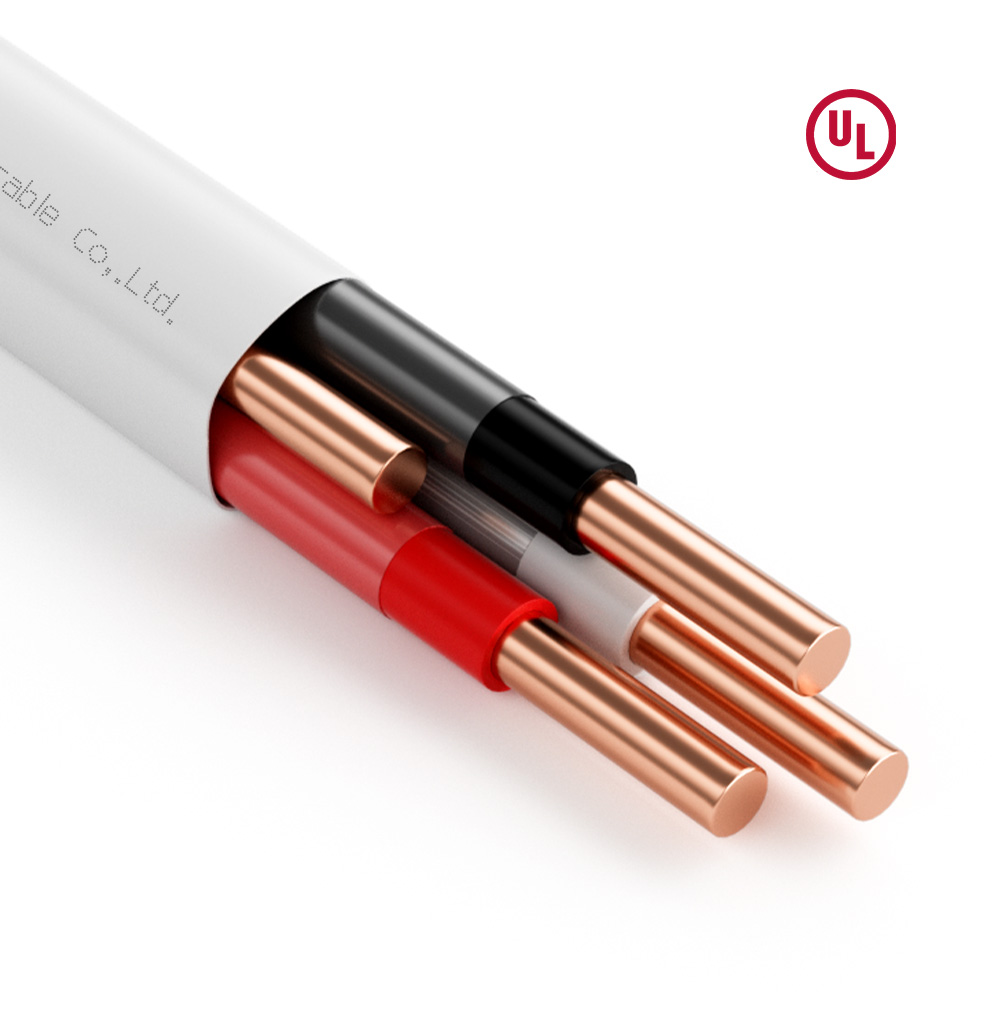
NMD90 Construction
The typical construction of NMD90 is straightforward, and every component has a purpose:
- Conductor: Annealed copper, commonly 14 AWG through 6 AWG, with some manufacturers offering larger sizes
- Insulation: PVC with a nylon jacket; the conductor insulation type typically corresponds to THHN/THWN
- Outer sheath: Moisture-resistant, flame-retardant PVC
- Grounding: Includes a bare copper grounding conductor
- Voltage: 300 V
- Temperature: Maximum 90°C
- Flame test: FT1 rated
- Profile: Round
- Configurations: 2-conductor + ground / 3-conductor + ground
The “D” in NMD90 stands for dry location. NMD90 is intended for dry or concealed damp interior environments—not outdoor or direct burial applications.
Jacket color is often used in the industry to distinguish sizes: 14 AWG is white, 12 AWG is yellow, 10 AWG is orange. But it’s important to note that the Canadian Electrical Code does not mandate this color coding. It’s a manufacturer and industry convention. Always verify against the printed markings and certification documents.
Where NMD90 Can and Cannot Be Used
NMD90’s application range can be summarized as exposed work in dry locations and concealed work in dry or damp locations. In practical terms:
- Residential outlets, switches, lighting, and branch circuits
- Interior wiring in houses and apartments
- General power distribution in offices, retail spaces, and institutional buildings
- Conduit installations where the round profile simplifies fill calculations
- Vertical risers between floors in multi-story buildings
- Retrofit projects where existing routing suits round cable
But NMD90 has a hard boundary: it is not an outdoor cable. Direct burial, continuous weather exposure, and wet locations are all outside its design scope. If a project includes outdoor or underground sections, the Canadian Electrical Code points to other cable types—such as NMWU, AC90, or TECK90—not NMD90.
This boundary matters because using NMD90 in the wrong environment isn’t just “not ideal.” It’s a code compliance issue. You won’t see a legitimate NMD90 product sheet claiming suitability for outdoor or direct burial use. That restraint is a sign of a manufacturer that understands the standard.
NMD90 vs. NMWU: Different Tools for Different Jobs
Since NMWU has come up, let’s clarify the division of labor.
| Item | NMD90 | NMWU |
| Primary use | General interior building wiring | Wet locations, outdoor, direct burial |
| Typical locations | Dry exposed, concealed | Weather-exposed, underground |
| Voltage rating | 300 V | 300 V |
| Standard | CSA C22.2 No. 48 | CSA C22.2 No. 48 |
Canadian government construction specifications routinely list both cable types side by side: NMD90 for interior work, NMWU for outdoor and underground. NMWU’s jacket is designed for more demanding conditions. They each have their role, and they don’t substitute for each other.
If a project includes both indoor and outdoor segments, the correct approach is to select the appropriate cable type for each segment—not to force one cable to cover everything.
Installation Is More Than Pulling Wire
The Canadian Electrical Code, Part I, has a dedicated section for nonmetallic-sheathed cable installations. Rules 12-552 through 12-576 apply to NMD90 and NMWU, covering bending, supports, protection, boxes and fittings, bonding, and more.
In other words, installing NMD90 isn’t just about pulling the cable and stapling it in place. There are bending radius requirements. Support spacing is specified. Areas with potential mechanical damage need additional protection. Boxes and fittings must be approved types. Specific values should be checked against the current CEC and any provincial amendments, but the principle is clear: installation quality is part of code compliance, not a matter of installer preference.
Cold-weather handling is another easily overlooked detail. Industry references typically list a minimum recommended installation temperature of -25°C for 2-conductor NMD90 and -10°C for 3-conductor, with a recommendation to store the cable above 0°C for at least 24 hours before installation in cold conditions. In Canadian winters, these details directly affect the long-term reliability of the cable.
How to Verify the NMD90 You Have Is Legitimate
For anyone responsible for accepting cable on a job, the markings on the jacket are the first line of defense. Key items to check:
- CSA certification mark
- Cable type (NMD90)
- Conductor size and count (e.g., 14/2, 12/3)
- Voltage rating (300 V)
- Manufacturer identification
- Flame rating (FT1)
- Temperature rating (90°C)
Beyond the markings, there’s one more thing: the actual conductor construction must match what’s printed. There have been documented cases where cable marked as 12/2 NMD90 contained a 14 AWG neutral conductor, leading to a product recall. These incidents are rare, but when they happen, they affect the safety margin of an entire circuit. Sourcing cable through channels with traceable certification is the simplest and most effective way to reduce that risk.
A Practical Decision Path for Canadian Projects
If you remember only one thing from this article, make it this: Canadian projects use NMD90. American projects use NM-B. That’s determined by code, not preference.
For a specific Canadian project, walk through this sequence:
-
Interior, dry or concealed damp locations → NMD90
-
Outdoor, wet, or direct burial → NMWU or another code-permitted type
-
Confirm the product standard → CSA C22.2 No. 48, current edition
-
Check the jacket markings: certification mark, type, size, voltage, manufacturer, flame and temperature ratings
-
During installation → follow CEC requirements for bending, support, protection, and termination
-
In cold weather → pay attention to low-temperature handling limits and allow time for temperature conditioning
For readers in the U.S. or those who deal with both systems, the most valuable takeaway is the “parallel relationship” between NM-B and NMD90. They do similar jobs, but they operate on completely separate tracks. Trying to find a shortcut between those tracks rarely ends well.
Final Thoughts
NMD90 and NM-B are not the same product with different names. They were born out of two independent electrical regulatory systems, follow different standards, and answer to different code requirements. NMD90 is a CSA-certified 300 V round cable serving Canadian interior building wiring. NM-B is a UL-certified 600 V flat cable doing a similar job in American residential and commercial construction. Similar, but never the same.
Understanding this difference isn’t just about passing inspection or avoiding rework. It means you know why you’re choosing a particular cable, and you understand the conditions under which it is safe, compliant, and reliable. That kind of certainty is the most basic—and most important—thing for anyone who takes electrical work seriously.
If you need NMD90 or NM-B for an upcoming project, contact us today to discuss your requirements or request free samples.
-4-3.jpg)