

Price alone won’t tell you if a power cable passes inspection, lasts, or keeps total costs down. Ampacity, voltage drop, and short-circuit rating are often overlooked—leading to failures. This guide covers cable types and selection by voltage class, construction, and key parameters.
Start with Voltage Class: Low, Medium, High
The first step in cable selection is always confirming the voltage class. Voltage class determines insulation thickness, conductor size, shielding requirements, and the applicable testing standards.
| Category | Voltage Range | Typical Applications |
| Low Voltage | Up to 1 kV | Residential, commercial buildings, industrial distribution |
| Medium Voltage | 1 kV – 35 kV | Industrial plants, transformers, substations, distribution networks |
| High Voltage | Above 35 kV | Transmission networks, large-scale power distribution |
1. Low Voltage Cables: Construction and Applications
Low voltage cables are the most common, covering everything from residential wiring to industrial distribution. The main construction types include:
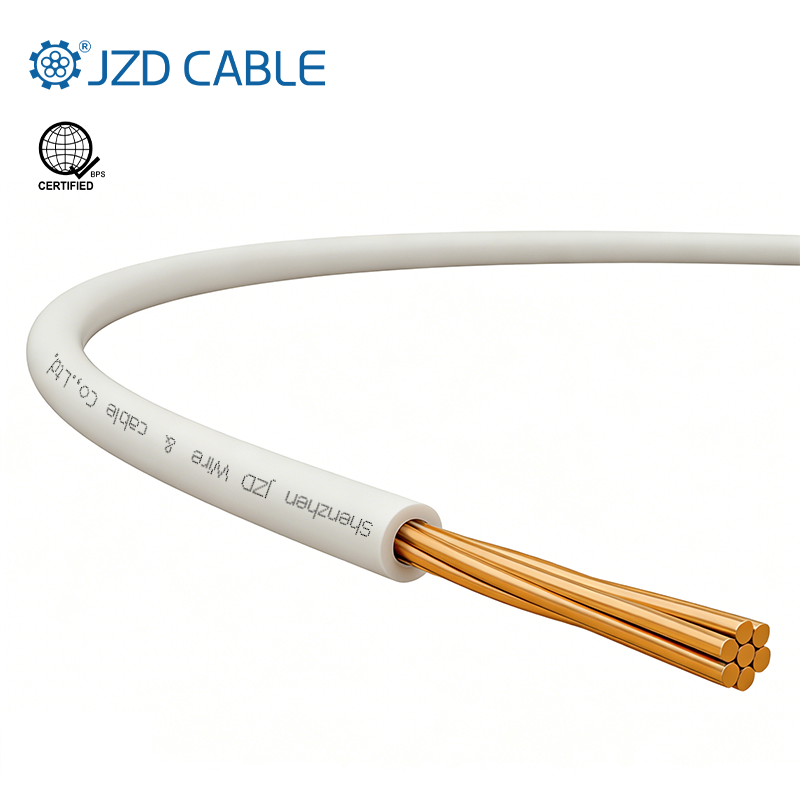
- PVC insulated: General-purpose, 70°C continuous rating, cost-effective for indoor and protected environments.
- XLPE insulated: 90°C continuous rating, 250°C short-circuit rating, superior dielectric performance for demanding environments.
- Flexible cables: Stranded conductors (Class 5 or 6), for applications requiring repeated bending and movement.
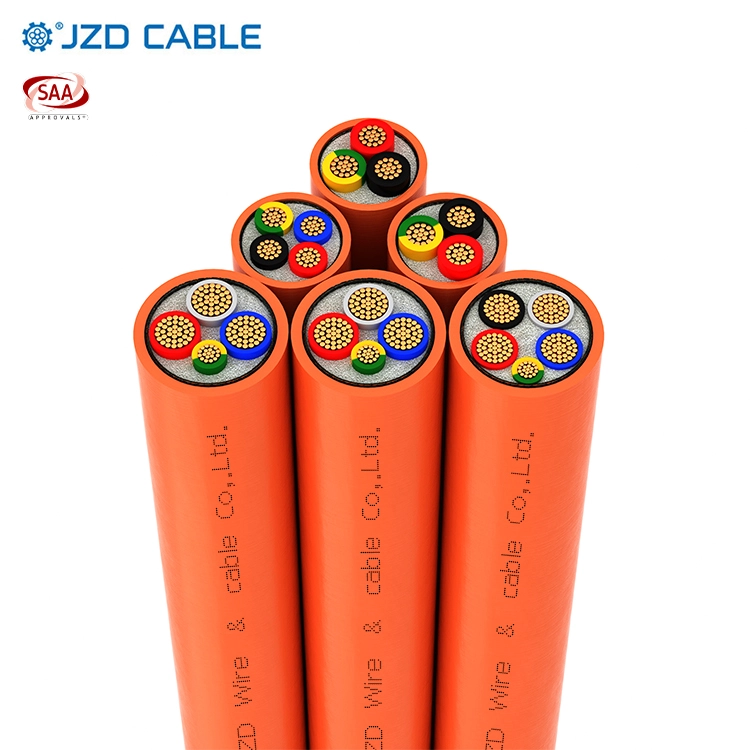
- Armoured LV cables: Steel wire armour (SWA) or aluminium wire armour (AWA), for direct burial and mechanically demanding installations.
The ampacity difference between PVC and XLPE is significant, especially at larger cross-sections.
2. Medium Voltage Cables: The Shielding System Is What Matters
The biggest difference between medium voltage and low voltage cables isn’t thicker insulation—it’s the shielding system. There is a semi-conductive layer over the conductor, a semi-conductive layer over the insulation, and a metallic screen. This system controls electric field stress. Without it, MV cables cannot operate safely.
Insulation thickness in MV cables is not arbitrary. It is determined by two factors: voltage class and insulation level. Insulation level comes in three grades—100%, 133%, and 173%—corresponding to different system grounding arrangements and expected overvoltages. For example, a 5 kV cable with 100% insulation level has an insulation thickness of approximately 2.29 mm; with 173% insulation level, approximately 3.56 mm. If the system is ungrounded or impedance-grounded, a higher insulation level is required.
For standards: international projects typically use IEC 60502-2 (covering 6 kV to 30 kV), while North American projects use UL 1072. Cables marked “MV-90” are rated 90°C; “MV-105” are rated 105°C for applications requiring higher conductor temperatures.
3. High Voltage Cables: XLPE Is Mainstream, But Not the Only Option
High voltage cables are used in transmission networks where reliability and dielectric performance are paramount. Today, XLPE insulated cables are the mainstream choice—they offer low dielectric loss, good heat resistance, and relatively straightforward installation and maintenance, making them the standard for underground transmission.
But in some special applications, two other technologies remain in use:
- Oil-filled (OF) cables: Paper-insulated, oil-filled, used for extra-high voltage (e.g., above 220 kV) and long-distance transmission. They have a longer history than XLPE and offer very stable dielectric performance, but maintenance is complex—new projects rarely use them now.
- Gas-insulated lines (GIL): Conductors placed inside metal pipes filled with insulating gas. They are suitable for extremely constrained corridors—city centers or hydropower station outlets. High ampacity, but high cost, so they are considered only in special scenarios.
When selecting HV cables, beyond voltage class, you also need to look at insulation level (same 100%, 133%, 173% grades as MV), conductor cross-section, metallic sheath type (lead or aluminum), and outer sheath material (PVC or PE). These parameters determine long-term reliability.
Construction: Every Layer Has a Purpose
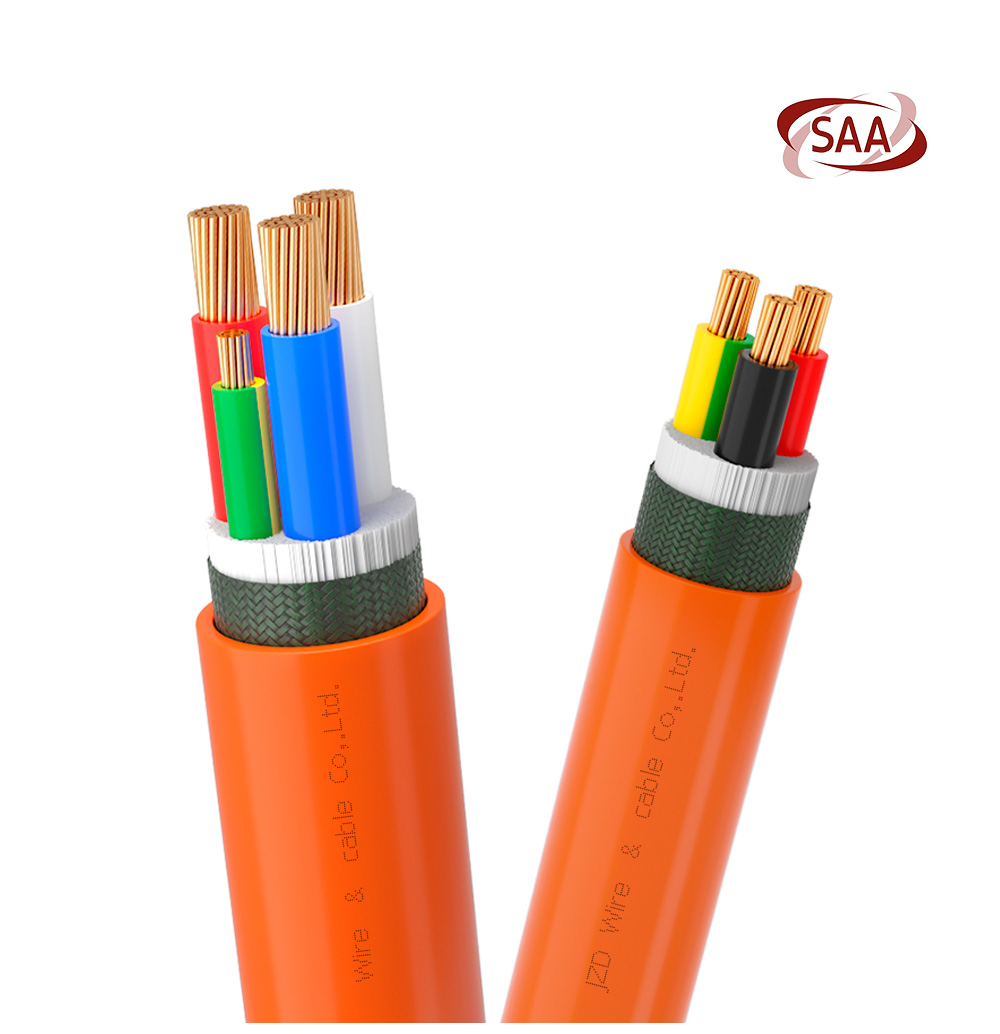
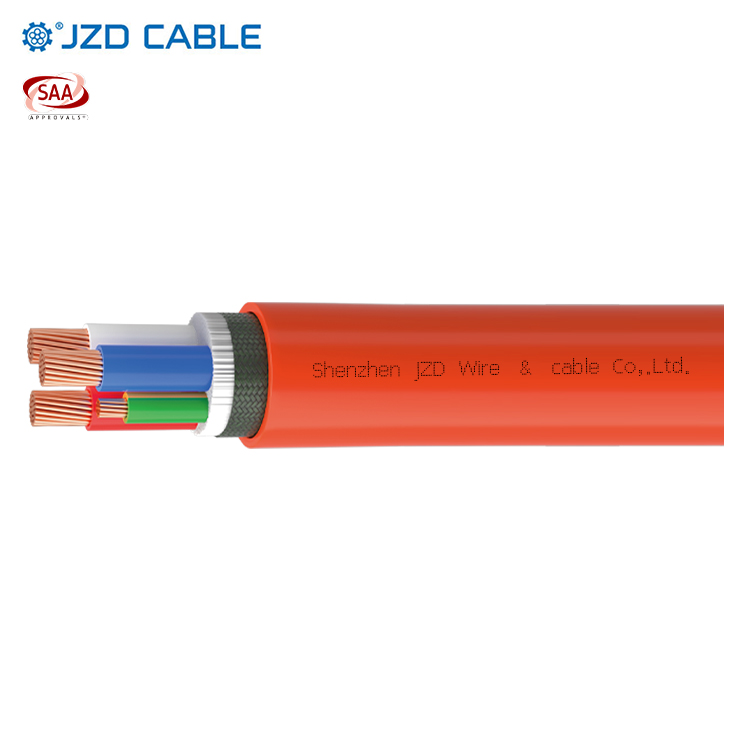
A cable isn’t just a few layers wrapped together—each layer has a specific function. From the inside out, a typical power cable includes:
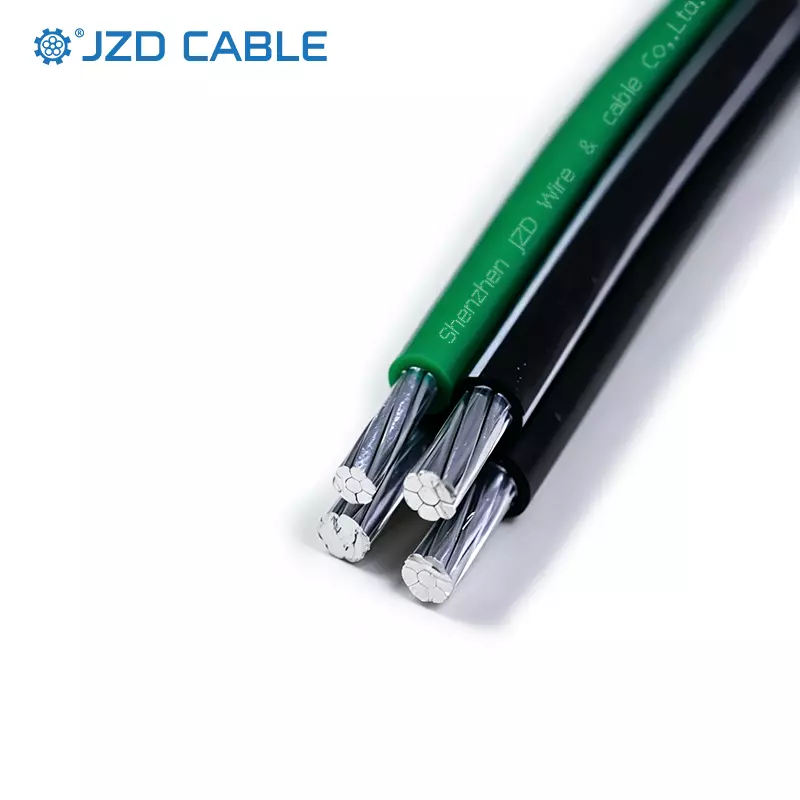
- Conductor: Current-carrying part, copper or aluminum, stranded.
- Conductor shield: Extruded semi-conductive layer to equalize the electric field at the conductor surface.
- Insulation: Dielectric layer—XLPE, PVC, EPR, or rubber.
- Insulation shield: Extruded semi-conductive layer to control the electric field at the insulation surface.
- Metallic screen: Copper tape or wire, providing a fault current path.
- Fillers: Maintain circular shape and add stability.
- Armour: Mechanical protection—steel wire (SWA) or aluminum wire (AWA).
- Outer sheath: Environmental protection—PVC, PE, or LSZH.
How to choose insulation material? PVC is inexpensive, 70°C. XLPE has better heat resistance, 90°C. EPR is flexible, good for dynamic applications. LSZH is low-smoke zero-halogen, used in public buildings and confined spaces.
One hard rule for armor selection: Single-core AC cables must never use steel wire armor. The magnetic field induces circulating currents in the steel, causing heating and power loss. Use AWA (aluminum wire armor) for single-core and SWA (steel wire armor) for multi-core. If you get this wrong, the cable will mysteriously heat up in service.
The Parameters That Actually Matter in Selection
1. Ampacity Is Not Just a Table Lookup
Ampacity tables give values under standard conditions: 30°C ambient, single circuit, specific installation method. In real projects, you must correct at least three things:
- Ambient temperature: Higher temperatures reduce ampacity. For example, a cable rated 125A at 30°C, when multiplied by a 0.91 factor, drops to 114A.
- Grouping: More than three current-carrying conductors bundled together reduces heat dissipation, requiring derating. NEC provides derating tables for cables bundled for continuous lengths exceeding 24 inches.
- Tray cover: Covered cable trays trap heat, also requiring derating.
Insulation material also affects ampacity. As mentioned earlier, the difference between PVC and XLPE is significant. Specifically, for cables above 50 mm², XLPE carries about 25% more current than PVC at the same conductor size. For example, at 50°C ambient, a 95 mm² PVC cable derated to approximately 170 A can be replaced by an equivalent XLPE cable carrying approximately 221 A. This means choosing XLPE may let you drop one or two sizes—saving on copper and installation costs that often offset the higher material price of XLPE.
In short: if you take the table value without correction, you will almost certainly overheat the cable.
2. Voltage Drop: The Deciding Factor on Long Runs
Voltage drop is the loss of voltage as current travels through the cable. Short runs may not matter, but on long runs, voltage drop often governs—not ampacity.
The formulas are simple:
- Single-phase: V_drop = 2 × I × R × L / 1000
- Three-phase: V_drop = 1.73 × I × R × L / 1000
Low-voltage networks typically allow 3–5% voltage drop; critical equipment or very long runs may require 1–2%. If the calculation exceeds the limit, you must increase conductor size—even if ampacity still has margin, voltage drop no longer allows it.
3. Short-Circuit Thermal Rating: Don’t Let the Cable Burn Under Fault
Cables must withstand not only normal load but also the thermal shock of short-circuit current. IEC 60724 provides short-circuit temperature limits for 1 kV and 3 kV cables. For XLPE insulation, the short-circuit temperature limit is typically 250°C for durations not exceeding 5 seconds.
The minimum conductor size is calculated from the prospective fault current, protection clearing time, and conductor thermal capacity. If fault level is high and protection is slow, the conductor size may need to be larger than ampacity alone would require.
Certification Systems at a Glance
Different markets have different certification requirements. Always confirm before specifying:
- IEC standards: Internationally recognized; widely used in Europe, Southeast Asia, the Middle East, and Africa.
- UL standards: Mandatory in North America; includes UL 83, UL 44, UL 854, UL 1072, and others.
- BS standards: Common in the UK and Commonwealth countries, such as BS 5467.
- AS/NZS standards: For Australia and New Zealand, such as AS/NZS 5000.
If a cable is destined for multiple markets, choose products that hold multiple certifications to avoid duplicate testing.
Matching Cable Type to Application
| Application | Recommended Type | Key Considerations |
| Residential branch circuits | NM-B, THHN/THWN-2 | Conduit or direct-install per NEC |
| Commercial buildings | MC Cable, THHN/THWN-2 | Armour for exposed ceiling spaces |
| Industrial distribution | XLPE/SWA/PVC, TC-ER | Mechanical protection, derating |
| Underground distribution | URD Cable, armored cables | Direct burial, moisture resistance |
| Solar PV | PV Wire, USE-2 | UV resistance, wide temperature range |
| Medium voltage distribution | XLPE/CTS/PVC, EPR | Shielding, insulation level |
| High voltage transmission | XLPE, OF, GIL | Insulation level, sheath type |
| Hazardous areas | LSZH, armored cables | Low smoke, mechanical protection |
Summary
Power cable selection is ultimately about balancing several variables: voltage class, conductor material, insulation type, armor method, installation conditions, and circuit parameters. Each variable affects the final choice. Certification systems determine whether the product can enter the target market at all.
Rather than comparing prices on a quote sheet, start by understanding your own operating conditions—then find a supplier who understands those conditions, offers the relevant certifications, and can provide technical support through specification and installation. That’s how you avoid problems at inspection or in service. JZD Cable is that kind of supplier—matching cable type to your project conditions, providing certified products for your target markets, and supporting you from specification through installation.
Contact JZD Cable for certified products and technical support from specification through installation.