

U.S. electricity demand is rising at its fastest four-year pace since 2000, driven largely by data centers. EIA forecasts 1.9% load growth in 2026 and 2.5% in 2027. LBNL estimates data centers could reach 11.8% of U.S. electricity use by 2030 (range: 9.5–15.3%). DOE projects an additional 100 GW of peak capacity by 2030, half from data centers.
Behind these numbers is a sharper challenge: rack power density. Traditional facilities were built for 5–15 kW per rack; AI racks now exceed 140 kW, with next-generation platforms targeting 250 kW+. Cable selection—ampacity, short-circuit withstand, flame rating, and thermal margin—is now a critical engineering decision.
This article covers cable roles, common types, selection criteria, installation, and planning considerations.
The Role of Power Cables
Power enters through medium-voltage service, is stepped down to low voltage (480V or 415V), and is distributed through switchgear, UPS systems, and PDUs to IT equipment. Each stage has different requirements for voltage, ampacity, short-circuit withstand, and flame retardancy.
UPS systems provide backup power and stabilize voltage. AI loads demand reliability exceeding 99.9999%, allowing only about 31 seconds of annual downtime. Cables feeding UPS circuits operate continuously at high current, requiring insulation that withstands sustained thermal stress without degradation.
Common Cable Types
1. THHN/THWN-2
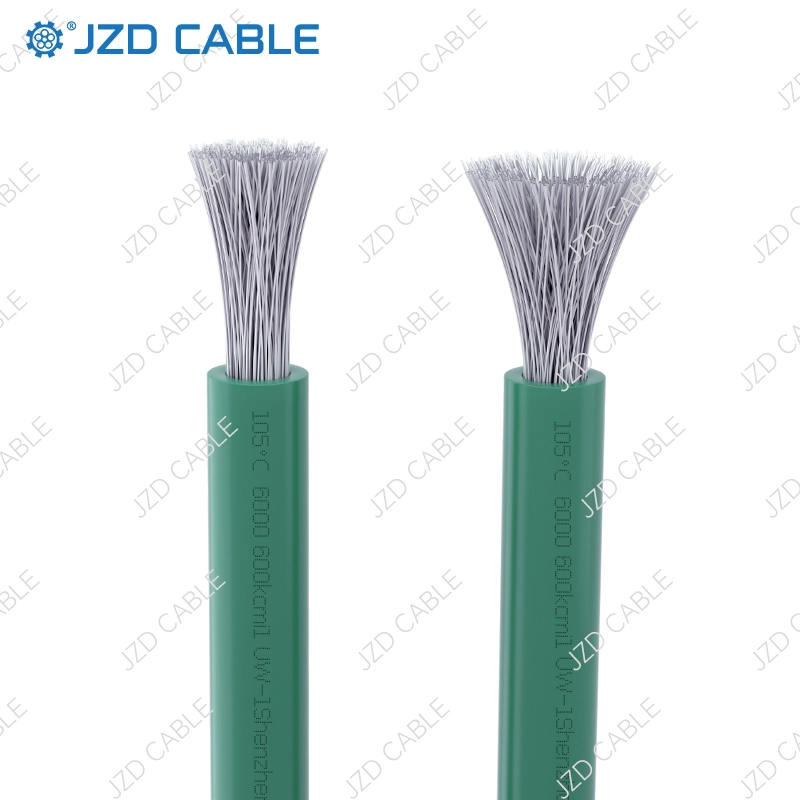
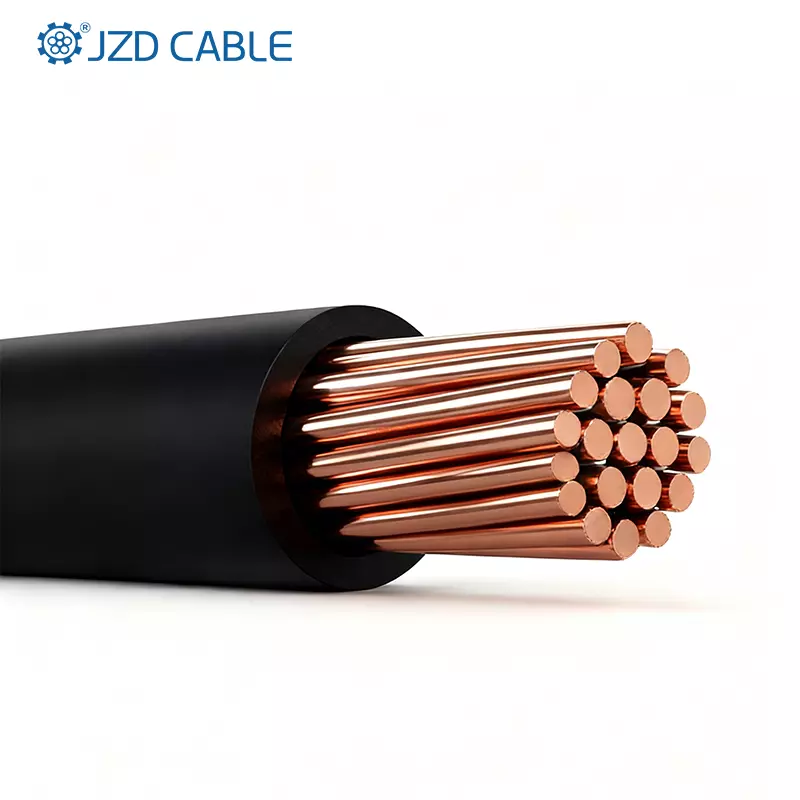
THHN/THWN-2 UL 83 thermoplastic insulation, rated 90°C dry/wet. Used for conduit branch circuits. Main limitation: short-circuit withstand typically designed for 150°C per ICEA S-95-658. Passes VW-1 flame test but is not suitable for underfloor or ceiling return air paths, where CMP-rated cable is required. In data centers, THHN is limited to explicitly permitted conduit areas.
2. XHHW-2
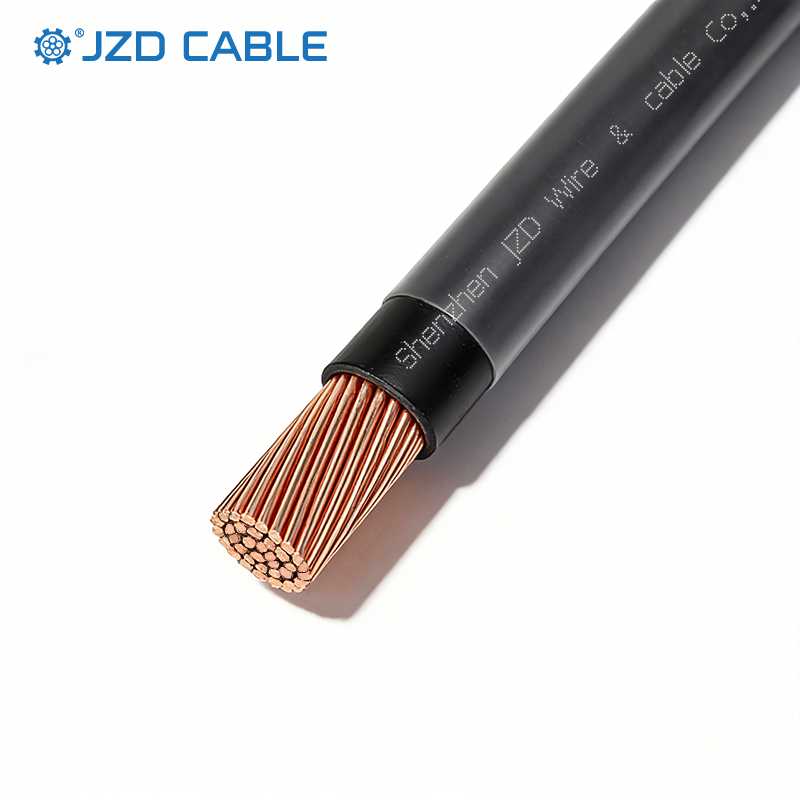
XHHW-2 UL 44 thermoset XLPE insulation, rated 90°C dry/wet, short-circuit withstand 250°C. Better thermal and mechanical stability, remains flexible at -40°C. Used as single-conductor in conduit or tray, and as XHHW-2 for exposed tray. For high-density AI racks, engineers increasingly switch from THHN to XHHW-2, often using parallel conductors (e.g., 2×350 kcmil instead of 1×500 kcmil). Flame rating depends on jacket and overall design; feeder cables often need NFPA 262 or UL 1685 compliance. In UPS feeders and main distribution, 250°C short-circuit withstand is a hard requirement.
3. TC-ER
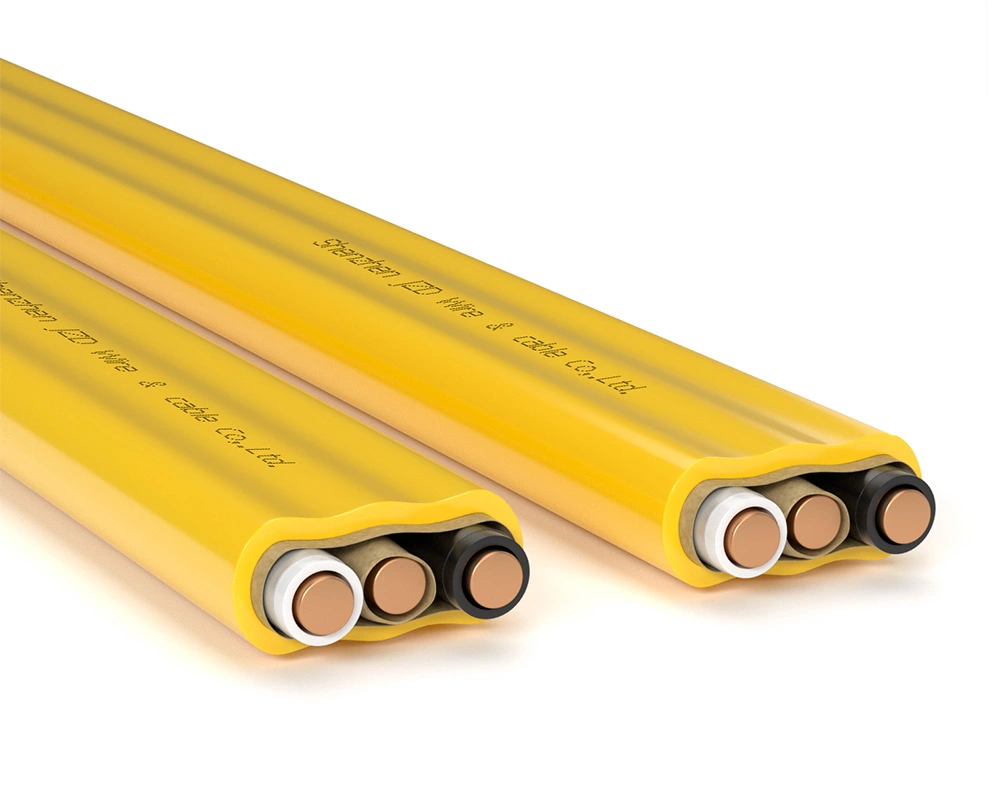
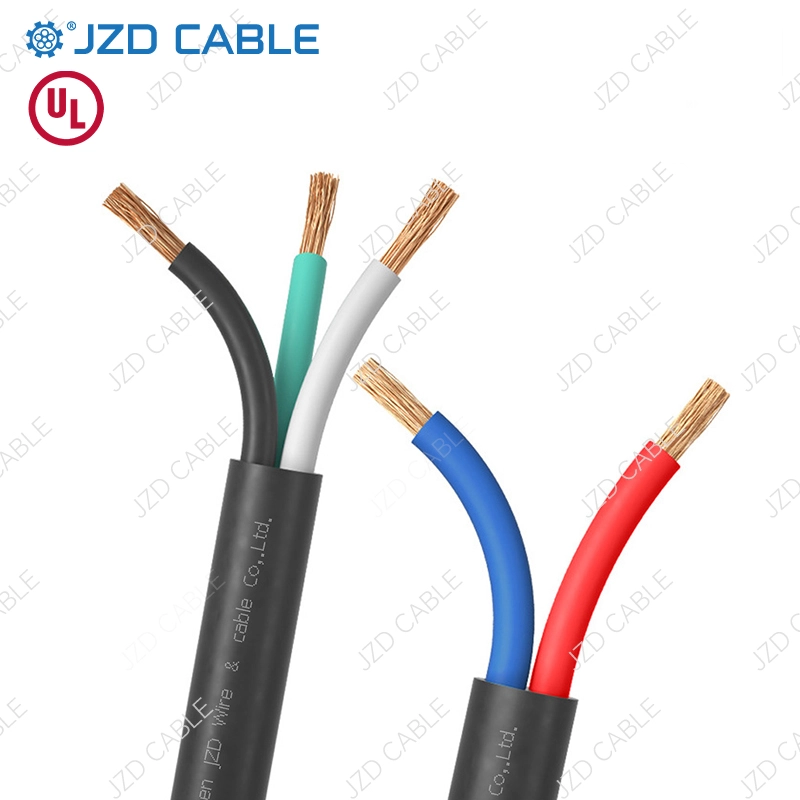
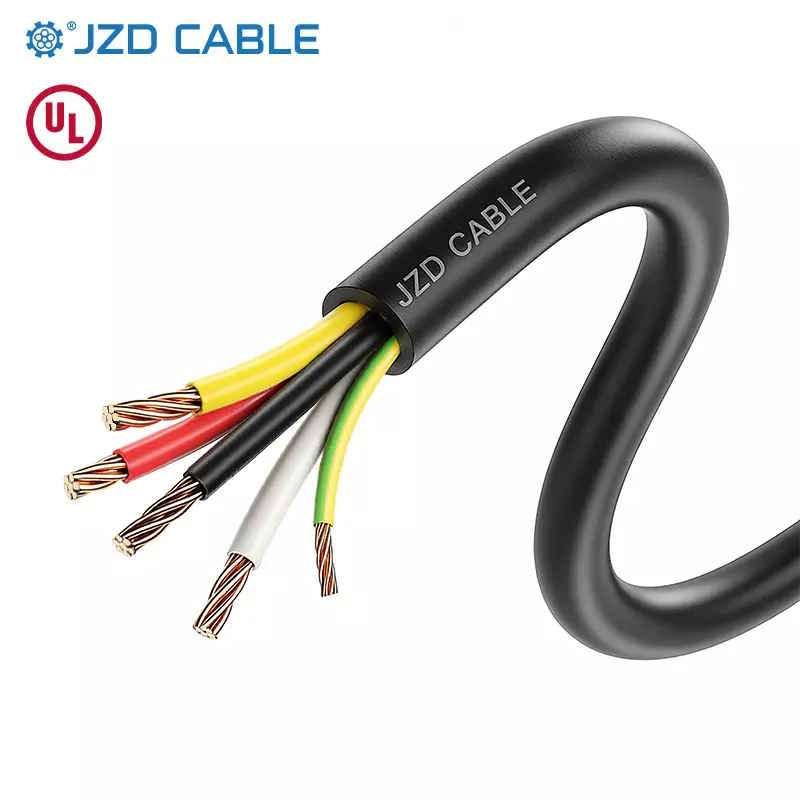
TC-ER UL 1277 listed, approved for exposed tray without conduit per NEC 336.10. Eliminates conduit in tray-to-equipment transitions. Must meet IEEE 1202 or CSA FT4 flame tests. In densely packed trays, flame retardancy and heat dissipation must both be satisfied.
4. Busway and Other Distribution Methods
Busway is increasingly common for high-density AI racks. Compact modular design supports up to 1250A. Plug-in tap units allow rapid capacity expansion without re-routing cables. Smaller than cable and conduit, improving airflow and cooling. Must comply with UL 857 for thermal, short-circuit, and fire safety. Firestop required when crossing fire compartments.
Cable Selection Criteria
1. Voltage and Ampacity
Ampacity must be derated per NEC 310.15 for ambient temperature, conductor count, and heat sources. Dense tray installation makes bundled derating routine. In AI data centers, derating must be precise. Voltage drop limits: 3% branch, 5% combined feeder and branch. Long runs may require upsizing.
2. Installation Method and Environment
Conduit cables have lower allowable ampacity than free air or open tray. Thermal insulation requires additional derating. Choice between conduit (THHN/THWN-2, XHHW-2 single conductor) and exposed tray (TC-ER) depends on routing, schedule, and maintenance access. Different methods require different cable types and flame ratings.
3. Temperature and Fire Rating
XHHW-2’s 90°C rating provides thermal margin for high-density racks. Short-circuit withstand: UL 44 thermoset (XHHW-2, RHW-2) at 250°C; UL 83 thermoplastic (THHN/THWN-2) typically 150°C.
Fire rating depends on location. Under raised floors: NEC 645 listing required. Type DP (UL 1690) suitable for underfloor; DP-1 rated 600V, passes 70,000 Btu/h vertical tray flame test, flame spread ≤8 ft.
Return air paths require CMP cable with lowest flame spread and smoke density, tested to NFPA 262 (flame spread ≤5 ft in horizontal duct). Underfloor requires Type DP or equivalent. These are mandatory.
For higher personnel safety, LSZH cable releases minimal smoke and halogen, useful in enclosed spaces or strict insurance scenarios.
Cable Installation and Routing
Cable trays must be grounded and bonded. NEC 392.13(A) permits higher ampacity in single-layer uncovered trays when spacing ≥ one cable diameter. Sufficient free-air spacing between bundles promotes heat dissipation. Solid unventilated covers require derating. Data centers require separate mesh or wire trays for power and data, kept at specified distances.
Power and data cables must be separated to reduce EMI. Weak-current trays separated from strong-current trays by ≥300 mm. Signal cables should avoid routing along walls. All metallic piping, conduit, wireway, and tray within 6 feet of the Signal Reference Grid must be bonded to the SRG.
Key Planning Considerations
1. Future Expansion
Power density continues to rise. NEC 2026 reorganizes medium-voltage requirements: Articles 265–268 replace deleted Article 235, covering branch circuits above 1000V AC / 1500V DC, feeders, outdoor circuits, and service entrances. Article 270 provides grounding and bonding guidance. Plan for larger conduit, additional tray capacity, and spare breakers—retrofitting later costs far more.
The industry is moving toward 800V DC distribution as a supplement to AC. As GPU rack power approaches megawatt levels, traditional 415/480V AC faces pressure in cable count, interface complexity, and footprint. 800V DC will coexist with AC. Cable planning should specify insulation systems capable of withstanding higher DC voltages and transients.
2. Code and Listing Requirements
NEC 2026 tightens Article 645 for IT equipment rooms, aligning closely with NFPA 75. New arc-flash labeling (Section 110.16) requires nominal voltage, arc-flash boundary, incident energy, and assessment date. Accurate labeling is essential where oversized overcurrent devices increase incident energy.
Confirm UL listing, verify installation method approvals, and maintain documentation. Cable trays must be grounded per NFPA 70; bonding jumpers must meet equipment grounding conductor requirements. Data center acceptance standards are far higher than ordinary buildings—any mismatch can cause rework or rejection.
Conclusion
Data centers demand strict cable selection. AI racks over 140 kW make insulation temperature, short-circuit withstand, derating, and flame retardancy critical. THHN/THWN-2 for dry branch circuits; XHHW-2 for feeders and UPS; TC-ER for trays; busway for high-density expansion. Flame ratings: CMP in return air, Type DP under floors, TC-ER meeting IEEE 1202/FT4 in exposed trays. LSZH for low smoke. As 800V DC approaches, cables must support current and future loads.
JZD Cable meets these requirements with 25+ years of cable manufacturing, certifications including CCC, UL, CSA, TUV, VDE and ISO 9001, and data-center products such as XLPE power and network cables. High-purity copper, controlled production and testing, and export/data-center project experience support reliable, standards-compliant performance.
For data center power cable specifications, certification documents, or application-specific recommendations, please contact us.