

In North American low-voltage (600V) power distribution, two cable types are ubiquitous: URD Cable and SER Cable. While both serve critical roles in delivering electricity, they are engineered for fundamentally different environments. Choosing incorrectly can lead to code violations, safety hazards, and premature failure. This guide provides a clear comparison to help you select the right cable for your specific application.
Core Definition & Purpose
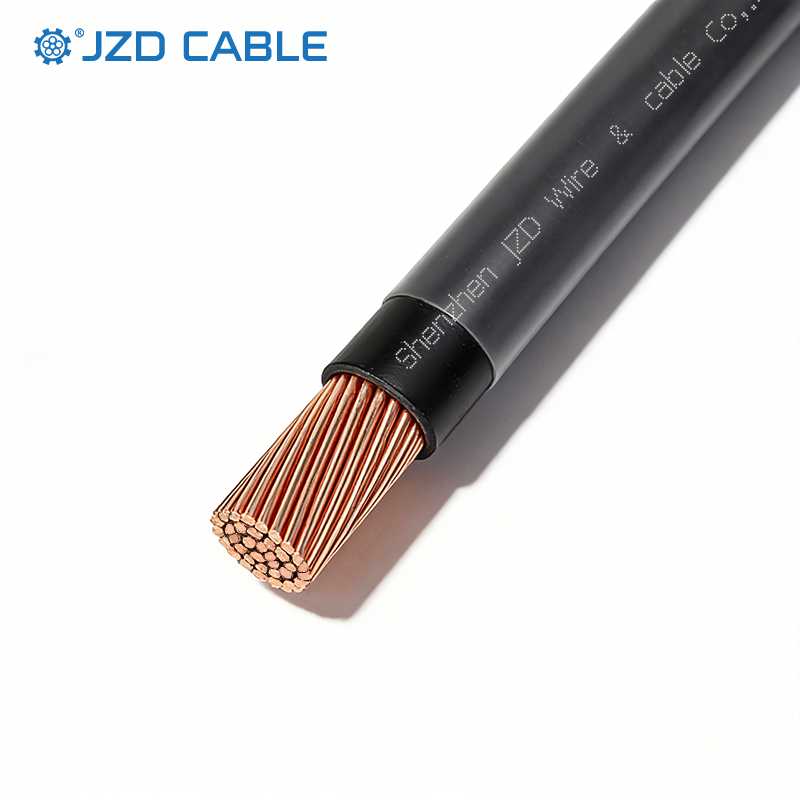
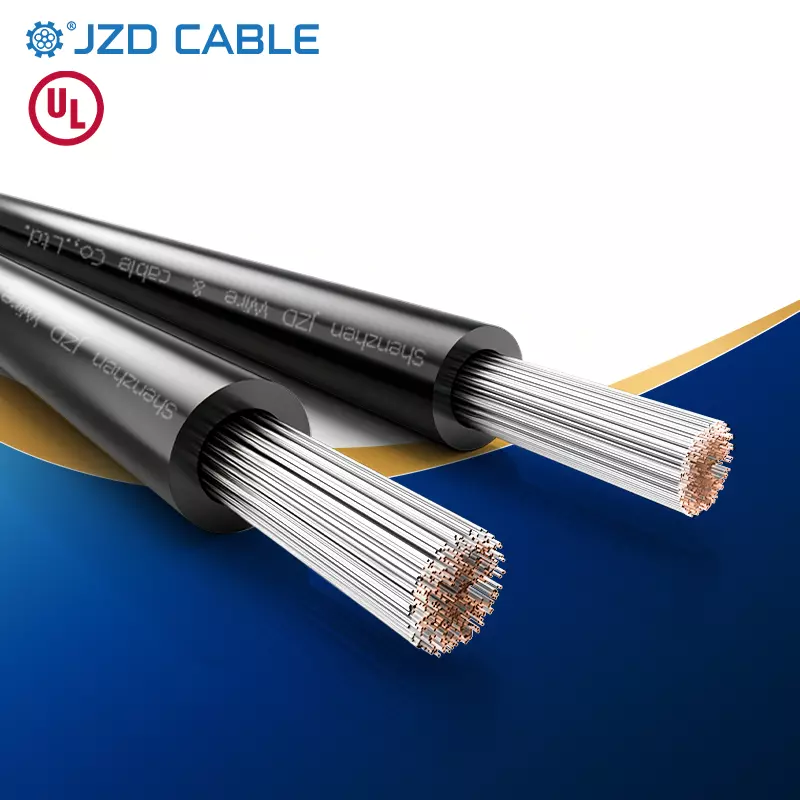
- URD Cable (Underground Residential Distribution): This is the workhorse for underground, direct-burial applications. Its primary role is to serve as the underground feeder from a pad-mounted transformer to residential meter bases or commercial service points. It is designed to be buried directly in the earth.
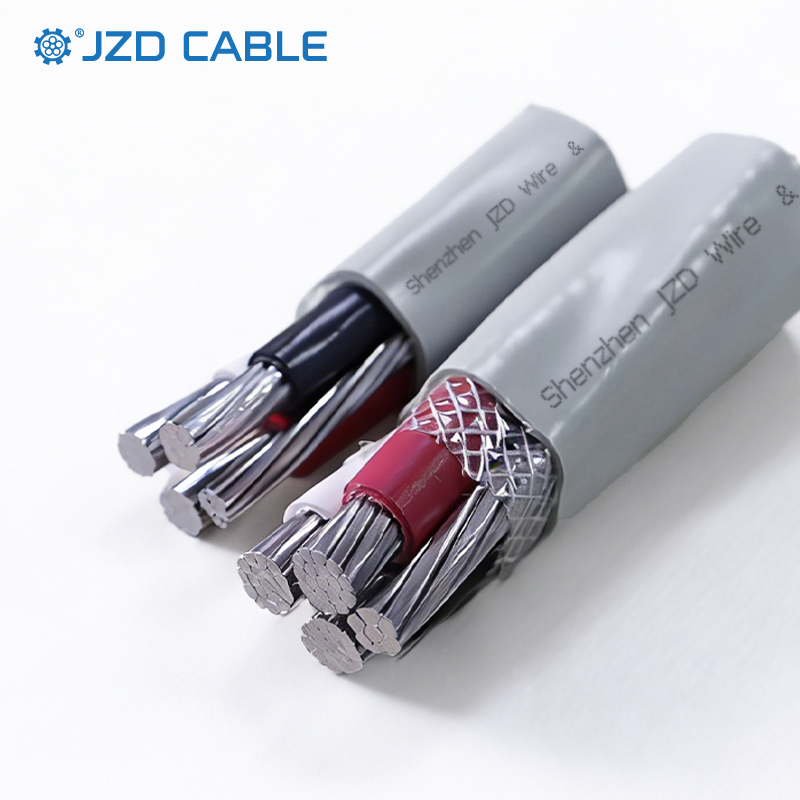
- SER Cable (Service Entrance Cable, Style R): This cable is designed for above-ground and aerial service entrances. It is used to run power from an overhead utility connection or an exterior meter to the main electrical panel inside a building. It is suitable for aerial spans, exposed runs on walls, or within conduit. Crucially, SER cable is prohibited from direct burial.
Key Specifications & Structural Comparison
The table below highlights the fundamental differences in their construction and ratings:
|
Feature
|
URD Cable
|
SER Cable
|
|---|---|---|
|
Primary Application
|
Direct Burial (Underground)
|
Aerial, Exposed, In Conduit (Above Ground)
|
|
Rated Voltage
|
600V
|
600V
|
|
Conductor Material
|
Primarily AA-1350 / AA-8000 Series Aluminum Alloy
|
AA-8000 Series Aluminum Alloy or Copper
|
|
Insulation
|
Black XLPE (90°C), rated for wet/dry/buried conditions.
|
Color-coded XLPE (Black, Red, Blue, White) for phase identification.
|
|
Neutral & Ground Design
|
Concentric Neutral: Bare wires spiraled around insulated conductors. Combines neutral return, grounding, and physical shield.
|
Separate Insulated Neutral + Bare Ground: Has individual insulated neutral conductor(s) and a separate bare equipment grounding conductor.
|
|
Cable Assembly
|
2, 3, or 4 insulated conductors twisted together. No overall jacket or a thin one; relies on robust XLPE for burial protection.
|
2 to 4 insulated conductors + 1 bare ground conductor, twisted together with fillers. Has an overall gray, sunlight-resistant PVC jacket.
|
|
Key Standards
|
UL 600V, ICEA, RUS
|
UL 854, NEC Article 338
|
|
Direct Burial Rated?
|
Yes (Core purpose)
|
No (NEC prohibited)
|
|
Suitable for Aerial/Exposed?
|
Not recommended (lacks UV-resistant jacket)
|
Yes (Core purpose)
|
How to Choose: URD or SER?
Your choice is dictated by the installation path and code requirements.
Choose URD Cable when:
- Running power underground via direct burial from a transformer to multiple homes or buildings.
- Installing long-distance underground feeders in subdivisions or commercial parks.
- The entire run will be below grade, in conduit, or in a trench.
Choose SER Cable when:
- Creating an overhead service drop from the utility pole to a building.
- Running cable exposed on exterior walls or through attic spaces to the main panel.
- Feeding a sub-panel or distribution board inside a structure (where allowed by code).
- You need clearly separated insulated neutral and bare ground conductors.
Critical Rule: Never Swap Applications.
- Do NOT use URD for aerial runs. It lacks a UV-resistant jacket and will degrade quickly when exposed to sunlight.
- Do NOT bury SER cable. Its PVC jacket is not designed for long-term soil contact and moisture, leading to insulation failure and safety risks. This violates the National Electrical Code (NEC).
Conclusion: Purpose-Built for Safety and Performance
URD and SER cables are both excellent solutions within their designed realms. URD is the specialist for buried, wet environments, offering a streamlined, protected design for underground grids. SER is the specialist for exposed, aerial, and indoor feeds, providing physical protection and code-compliant conductor separation.
Selecting the correct cable ensures system reliability, longevity, and, most importantly, compliance with electrical codes. Always consult project specifications and local regulations.
JZD Cable supplies a full range of UL-listed URD and SER cables designed and manufactured to meet the rigorous demands of their respective applications. Contact our team for expert guidance on your next low-voltage distribution project.