

In Pakistan, solar energy is changing how households and businesses access electricity. Rising electricity prices, unreliable grid supply, and falling solar equipment costs have encouraged more users to install solar panels and reduce their dependence on the traditional power grid.
According to a BBC report published in November 2026, solar power’s share of Pakistan’s electricity generation increased from around 1% in 2018 to 28% in 2025. Approximately 7 million households now have solar panels.
From residential rooftops to agricultural irrigation and industrial operations, solar power is becoming increasingly important. As the market expands, demand is also growing for inverters, battery storage, solar cables, and other electrical components needed to support complete solar power systems.
Why Are Solar Panels Becoming So Popular in Pakistan?
Pakistan’s growing solar market is largely driven by rising energy costs and concerns about electricity supply reliability.
1. Lower Electricity Bills and Greater Energy Independence
For households, solar panels can reduce the amount of electricity purchased from the public grid during the day. For commercial buildings and manufacturers, lower electricity costs can also help control operating expenses.
The BBC reported on Faisal Shahzad, a resident of rural Punjab, who uses a 340W solar panel to power an air cooler during the day. He plans to install another 10–15 panels and add a battery storage system to increase his household’s energy independence.
His household reportedly pays around PKR 15,000–18,000 in monthly electricity bills. For users facing similar costs, solar power offers a practical way to reduce grid consumption.
2. Supporting Agriculture and Industrial Operations
Solar applications in Pakistan extend well beyond residential rooftops.
In agriculture, solar-powered water pumps provide electricity for irrigation, particularly in areas with limited grid access or high conventional electricity costs.
Industrial businesses are also adopting solar power to reduce daytime electricity expenses. The BBC reported that Kohinoor Textile Mills in Islamabad uses a large solar array to supply electricity to hundreds of machines. The company is also planning to add industrial battery storage.
These examples show how solar energy is becoming an important power source for residential, agricultural, and industrial applications.
3. Are Solar Panels Worth It?
For many households and businesses in Pakistan, installing solar panels can offer long-term economic benefits. However, the actual return on investment depends on several factors:
- Electricity Consumption: Users with higher daytime electricity demand can generally make better use of the power generated by solar panels.
- Installation Cost: Solar panels, inverters, batteries, mounting structures, cables, and labor all contribute to the initial investment.
- Battery Storage: Batteries provide backup power and store excess electricity, but increase the overall system cost.
- Grid Policies: Net-metering and electricity export policies can affect how surplus power is used and the system’s payback period.
Whether solar panels are worth installing ultimately depends on electricity consumption, system configuration, and local regulations.
How Do Solar Panels Work?
Solar panels contain photovoltaic cells that absorb sunlight and convert it into direct current (DC) electricity through the photovoltaic effect.
However, the electricity generated by solar panels must pass through other components before it can be used by buildings or stored for later consumption.
A typical solar power system includes:
- Solar Panels: Absorb sunlight and generate DC electricity.
- DC Solar Cables: Transfer electricity from solar panels to combiner boxes or inverters.
- Solar Inverter: Converts DC electricity into alternating current (AC) for most household and commercial electrical equipment.
- Battery Storage: Stores excess electricity for later use in systems equipped with batteries.
- Electrical Distribution System: Distributes electricity to building circuits or exports surplus power to the grid, subject to local grid requirements.
In grid-connected systems, surplus electricity may be supplied to the public grid depending on local regulations and grid connection conditions.
Solar panels generate electricity, while cables and connectors provide the electrical connections needed to transfer it. The reliability of a solar power system therefore depends not only on the panels but also on the design and installation of its electrical components.
What Affects Solar Panel Installation Cost?
The cost to install solar panels in Pakistan depends on system capacity, equipment selection, installation conditions, and whether battery storage is included.
Residential rooftop systems and large commercial or industrial projects have different equipment capacities and electrical requirements. As a result, installation costs should be evaluated based on the complete system rather than the price of solar panels alone.
| Cost Component | Key Cost Factors |
| Solar Panels | Rated power, conversion efficiency, manufacturer, and product warranty |
| Inverter | System capacity, conversion efficiency, grid compatibility, and protection features |
| Battery Storage | Battery type, usable capacity, cycle life, and backup requirements |
| Mounting Structure | Roof conditions, wind resistance, and corrosion protection |
| Solar Cables | Conductor material, cross-sectional area, voltage rating, and outdoor performance |
| Installation | Labor, cable routing, protective devices, grounding, and system commissioning |
Residential systems are generally designed around household electricity consumption, available roof space, and backup power requirements.
Commercial and industrial projects often involve higher electrical loads, longer cable runs, and more complex distribution systems. Cable sizing for these installations must account for current-carrying capacity, voltage drop, ambient temperature, and installation methods.
A realistic solar panel installation budget should therefore include equipment, installation, and expected maintenance costs.
How Large Is Pakistan’s Solar Market?
Pakistan’s solar demand has grown from individual household installations into a large distributed energy market.
According to the International Energy Agency (IEA) in its Electrification special report, Pakistan imported approximately 51 GW of solar modules between 2021 and 2025. Since many systems are installed behind the meter, their actual installed capacity is difficult to measure through conventional grid data.
The IEA estimates that Pakistan’s distributed solar capacity reached approximately 28–38 GW in 2025. Rooftop installations account for around 80% of this capacity, while residential users represent approximately half of the relevant installations.
The State Bank of Pakistan also provided estimates in its The State of Pakistan’s Economy, Annual Report 2025–26:
| Indicator | Estimated Figure |
| Solar Capacity in 2025 | 38 GW |
| Solar Capacity in March 2026 | 51 GW |
| Average Operating Capacity in FY2026 | 44.5 GW |
| Estimated Annual Solar Generation | 66–78 TWh |
| Annual Net Energy Import Savings | USD 4.5–5.5 billion |
The IEA and State Bank figures come from different reports and estimation methods, so they should not be treated as a single continuous statistical series.
The estimated USD 4.5–5.5 billion in annual savings represents net energy import savings after accounting for imports of solar panels, batteries, inverters, and related equipment. It is not simply revenue generated from solar electricity.
Solar Demand Across Different Applications
As the market expands, solar installations are becoming more diverse:
| Application | Main Requirements |
| Residential Solar | Rooftop power generation, lower electricity bills, and backup storage |
| Commercial Solar | Reduced operating costs for offices, hotels, and commercial buildings |
| Industrial Solar | Lower daytime electricity expenses for factories and manufacturing facilities |
| Agricultural Solar | Irrigation pumps and electricity supply in remote areas |
| Utility-Scale Solar | Large ground-mounted solar power plants |
These projects require more than solar panels. Inverters, energy storage systems, DC and AC cables, and electrical connectors are also essential parts of the supply chain.
How Long Do Solar Panels Last?
Modern solar panels are designed for long-term operation, and many manufacturers offer performance warranties of around 25–30 years. However, a solar panel’s performance warranty does not represent the service life of the entire solar power system.
Inverters, batteries, mounting structures, cables, and connectors also affect system reliability and maintenance costs.
1. Environmental Factors Affect Solar System Performance
Some regions of Pakistan experience intense sunlight, high temperatures, and significant dust exposure. These conditions can affect the long-term performance of different solar system components.
- High Temperatures: Can accelerate material aging and affect electrical equipment performance.
- UV Exposure: Prolonged sunlight can degrade insulation and sheath materials that are not designed for outdoor use.
- Dust and Moisture: May affect electrical connection points and increase maintenance requirements.
- Temperature Changes: Repeated temperature variations can place stress on materials and electrical connections.
For rooftop and ground-mounted installations, DC cables are often exposed to outdoor conditions for extended periods. Selecting cables with suitable environmental and electrical ratings is therefore important.
2. Why Do Solar Panel Cables Matter?
Standard building wires are not automatically suitable for every photovoltaic DC application. Solar panel cables must be selected according to system voltage, operating temperature, outdoor exposure, and applicable standards.
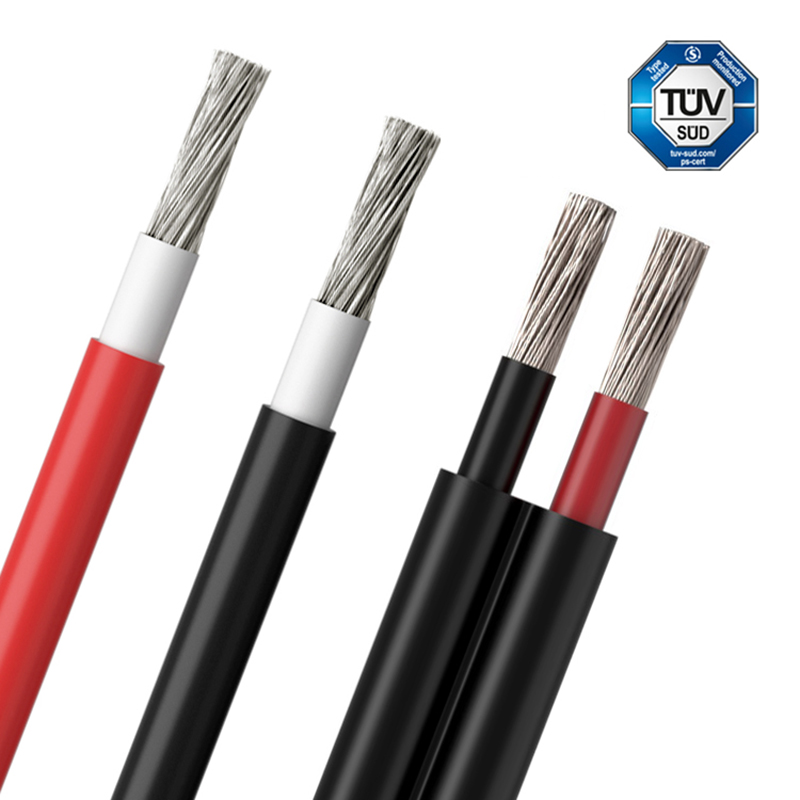
For example, H1Z2Z2-K is a dedicated photovoltaic cable type designed for solar power applications. Relevant products are designed and tested according to standards such as IEC 62930 and EN 50618.
Compared with ordinary building wires that are not intended for photovoltaic outdoor use, compliant solar cables offer several important characteristics:
- UV and Ozone Resistance: Designed to withstand prolonged outdoor exposure.
- Temperature Resistance: Suitable for the temperature requirements of photovoltaic installations.
- DC Voltage Rating: Provides insulation and electrical ratings appropriate for PV systems.
- Flexible Construction: Makes cable routing and installation between system components easier.
Selecting suitable cables and connectors helps reduce the risk of premature insulation degradation, connection failures, and unnecessary maintenance.
Choosing the Right Solar Panel Cables for Solar Projects
Solar cable selection depends on system voltage, current, cable length, installation environment, and applicable standards.
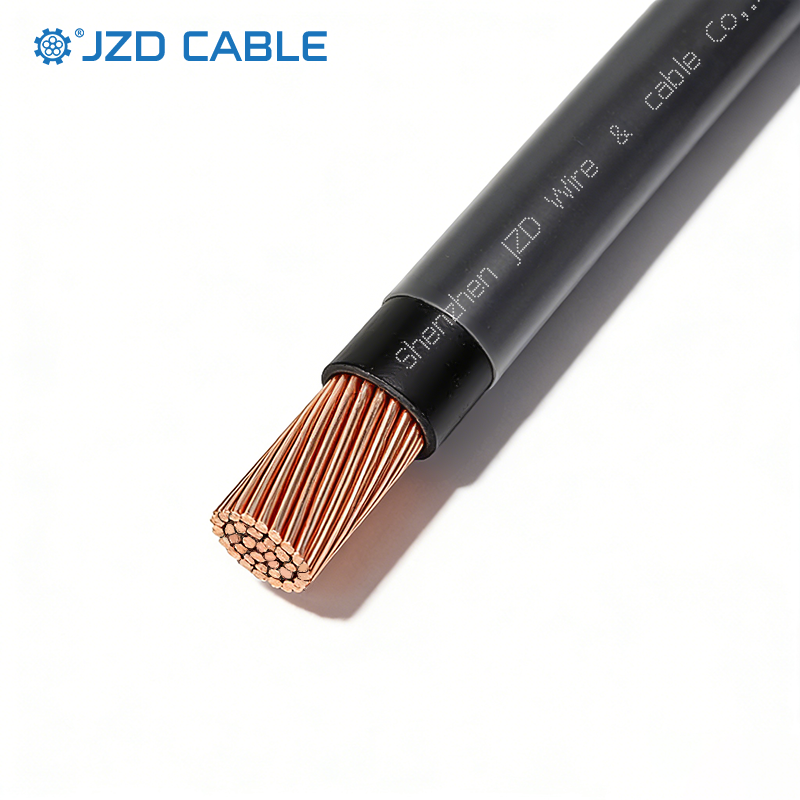
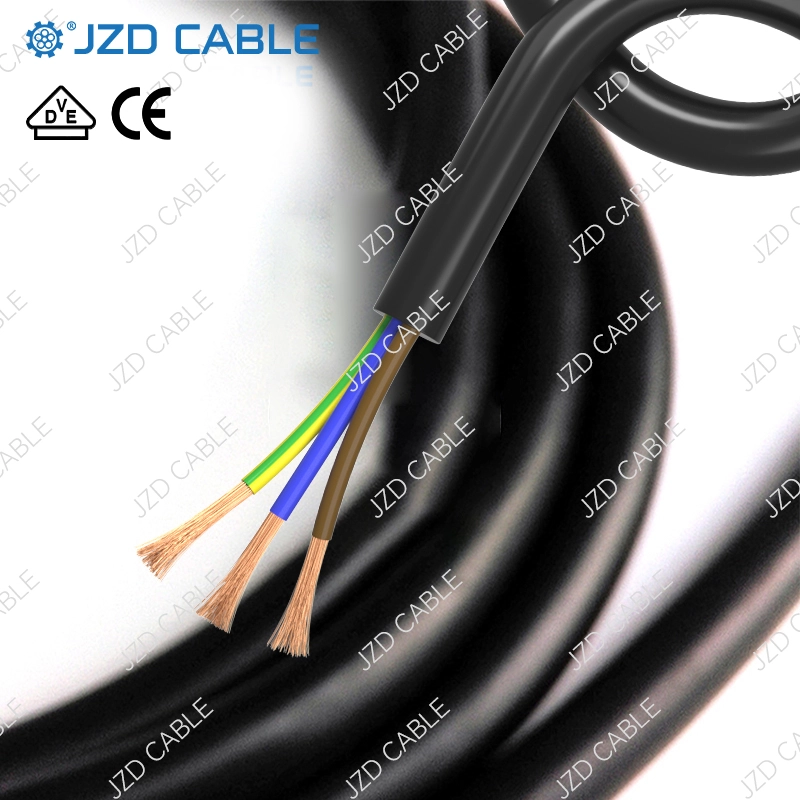
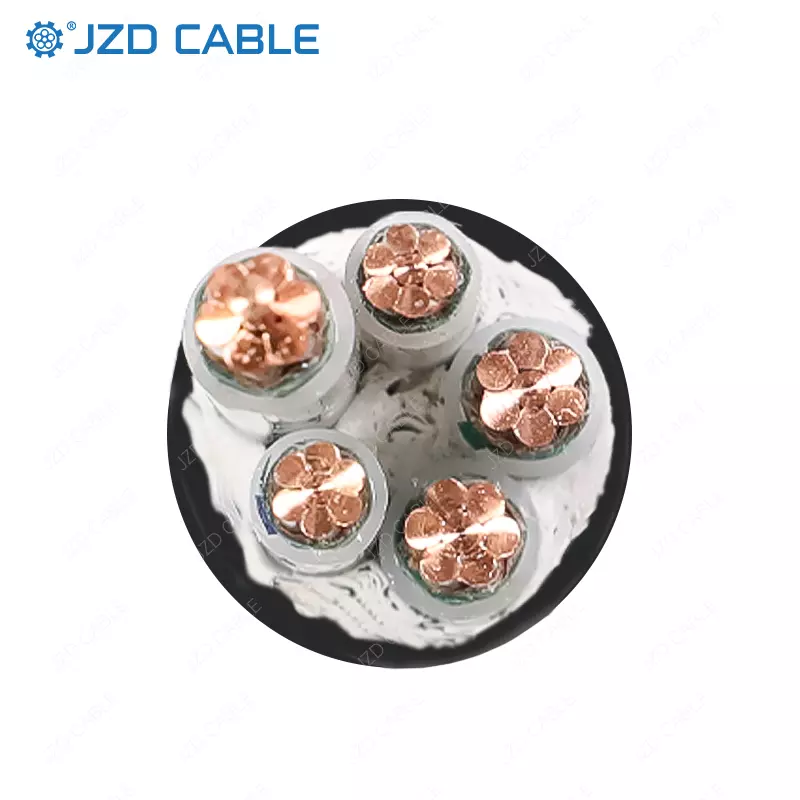
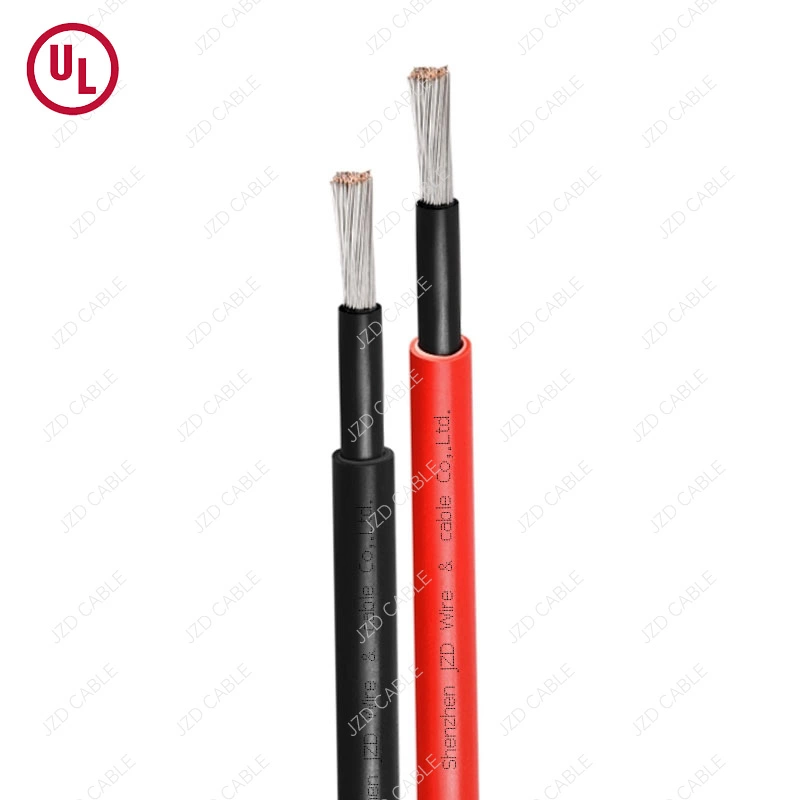
JZD Cable’s Photovoltaic Series covers several cable types and accessories for different solar projects:
| Product | Key Features / Applications |
| H1Z2Z2-K Solar Cable | IEC 62930 / EN 50618, 1500V DC, XLPO insulation and sheath |
| Twin Core Solar Cable | Two-core construction for suitable PV wiring configurations |
| 4mm²–95mm² Solar Cable | Multiple conductor sizes for residential, commercial, and large-scale projects |
| UL4703 PV1-F Wire | For projects requiring UL 4703 compliance |
| Solar Panel Extension Cable | Pre-terminated cable for PV panel connections |
| PV Panel Connectors | 1000V / 1500V DC, IP68 |
When selecting solar cables, buyers should verify conductor size, current-carrying capacity, voltage drop, temperature rating, and installation requirements. Cable specifications must match the actual system design rather than being selected solely by project capacity.
For projects with specific IEC, EN, or UL requirements, the applicable cable standard and product certification should also be confirmed before procurement.
Conclusion
Pakistan’s growing solar market reflects a shift in how households, agricultural businesses, and industrial users manage their electricity needs.
As solar installations expand, demand is also increasing for inverters, battery storage, cables, and electrical connectors.
Solar panels generate electricity, but reliable cables and electrical connections are essential for transferring that power safely and supporting long-term system performance. For solar distributors, EPC contractors, installers, and project procurement teams, selecting cables that meet project standards and environmental requirements is an important part of system design.
For solar cable specifications, product selection, or project requirements, contact JZD Cable to discuss a suitable solution for your solar installation project.