

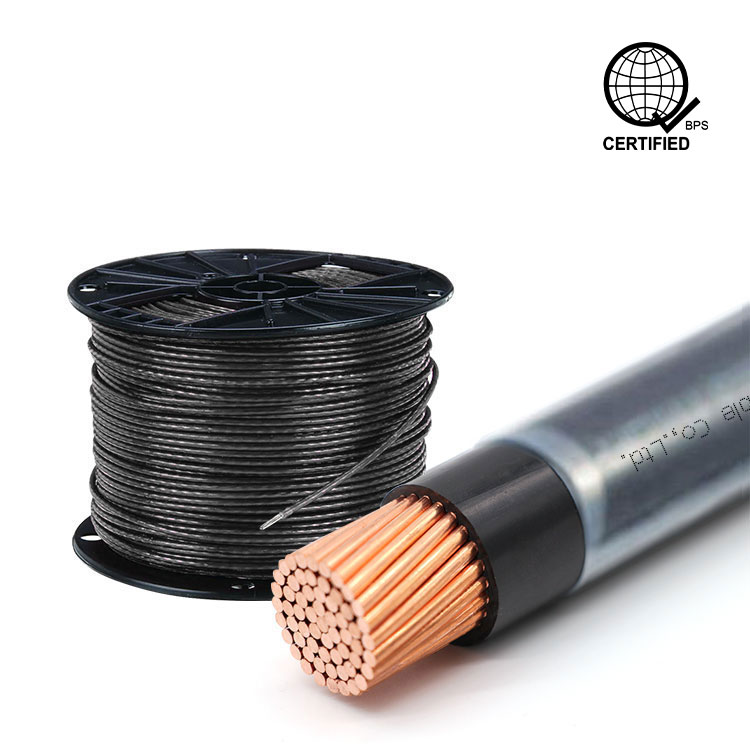
THW and THWN belong to the same UL 83 family of thermoplastic-insulated wires. Both are rated 600V. Both carry a 75°C conductor temperature rating. The only difference in their designation is a single letter—”N” for nylon jackets.
That one letter changes three things in real-world engineering: how the wire pulls through conduit, how long it lasts in wet locations, and whether it can be used where oil or gasoline is present.
If you’re specifying UL 83-listed 75°C thermoplastic building wire for a North American project, understanding the engineering difference between THW and THWN is the first step to getting it right.
Decoding Letters
The letter codes tell you exactly what each wire is and what it can do:
| Letter | Meaning | THW | THWN |
| T | Thermoplastic (PVC) insulation | ✓ | ✓ |
| H | Heat-resistant (75°C) | ✓ | ✓ |
| W | Wet location approved | ✓ | ✓ |
| N | Nylon jacket | ✗ | ✓ |
Same insulation, same temperature, same wet-location rating. The only difference is the nylon jacket.
UL 83 recognizes THW, THW-2, THWN, and THWN-2 as distinct wire types, each with its own specified requirements.
The Nylon Jacket: Three Engineering Dimensions
A nylon jacket is not just “extra protection.” It changes wire performance in three measurable ways.
1. Dimension 1: Pulling Friction
During conduit pulls, THW’s PVC insulation contacts the conduit wall directly. PVC has a coefficient of friction of approximately 0.4–0.5. Nylon is approximately 0.2–0.3 — a reduction of about 40–50%.
What this means in the field:
- Lower pulling tension for the same run length
- Less mechanical stress on conductors at terminations
- Lower risk of insulation damage during installation
- Feasibility of longer pulls (over 100 feet)
2. Dimension 2: Service Life in Wet Locations
THW’s “W” rating means it is approved for wet locations. But PVC insulation does absorb moisture over time. The approval is based on acceptable performance with some degradation.
THWN’s nylon jacket adds a moisture barrier. In the same wet environment:
- Moisture takes longer to reach PVC insulation
- Water penetration is slowed significantly
- Long-term insulation integrity is better preserved
What this means in the field: In continuously wet environments—underground conduit, outdoor equipment, cooling towers, washdown areas—THWN outlasts THW.
3. Dimension 3: Oil and Chemical Resistance
PVC has moderate resistance to mineral oil, gasoline, and common industrial chemicals. But prolonged exposure can extract plasticizers from the PVC, causing the insulation to harden, crack, and lose flexibility.
Nylon offers significantly better resistance to mineral oil, gasoline, and most industrial chemicals.
What this means in the field:
- THWN can be marked “Gasoline and Oil Resistant Type I” (60°C mineral oil) or “Type II” (75°C mineral oil)
- THW carries no such marking and should not be used where oil or gasoline exposure is possible
- THWN is the required choice in automotive plants, fuel handling facilities, and equipment rooms
Note: Type I vs. Type II refers to the temperature rating—Type I is for 60°C oil exposure; Type II is for 75°C oil exposure. Select based on actual operating temperature.
Temperature Ratings: The “-2” Upgrade Is the Real Difference
| Wire Type | Dry Location | Wet Location |
| THW | 75°C | 75°C |
| THW-2 | 90°C | 90°C |
| THWN | 75°C | 75°C |
| THWN-2 | 90°C | 90°C |
| THHN | 90°C | Not rated |
In standard form, THW and THWN have the same temperature rating—75°C. The nylon jacket does not affect temperature rating; the PVC insulation determines it.
The real temperature upgrade is the “-2” version: both THW-2 and THWN-2 are rated 90°C in both wet and dry locations.
What this means in the field: THW-2 and THWN-2 carry approximately 20% more ampacity than their standard counterparts at the same conductor size. For circuits requiring higher current or operating in elevated ambient temperatures, the “-2” version is the correct choice.
THHN (90°C dry) is not rated for wet locations—that is the key difference between THHN and THWN-2. THWN-2 meets both 90°C and wet-location requirements; THHN meets only the 90°C dry condition.
Applications: From Residential to Industrial, Dry to Wet
Now that we understand how the nylon jacket affects friction, moisture resistance, and oil tolerance, let’s look at where these differences matter in real projects.
1. Where THW Is Used
THW is a general-purpose building wire for cost-sensitive applications where environmental conditions are not severe.
Residential and light commercial: Basic wet-location protection without high heat requirements. Typical uses include general lighting and power circuits in conduits.
General-purpose wiring: Branch circuits and feeders in raceways and conduit at 600V and below. THW remains common in some markets (e.g., the Philippines) for conduit and raceway installations.
Equipment control wiring: Control panels, HVAC equipment, refrigeration units, machine tool controls, and automatic washers.
Cost note: THW is typically 5–8% less expensive than THWN. But for wet locations or long pulls, the nylon jacket’s installation and reliability benefits far outweigh the material cost difference.
2. Where THWN Is Used
When conditions get tougher—wet, outdoor, oily, or industrial—THWN covers a much wider range of applications.
Wet locations and outdoor installations: THWN is the standard for wet locations. Typical uses include outdoor conduits, underground duct banks, pump circuits, and utility connections. In tropical or marine environments, THWN-2 is the more common choice.
Commercial and industrial buildings: THWN (especially THHN/THWN-2 dual-rated) is used for services, feeders, and branch circuits in conduit and cable trays. Specific applications include concealed conduit wiring in offices, retail spaces, and high-rise buildings; control panels, transformers, and motor circuits requiring oil and heat resistance; and industrial distribution where oil, heat, and moisture are present.
Infrastructure and renewable energy: THWN/THWN-2 is used in transportation systems, airport runway lighting, tunnel electrification, and other infrastructure projects; DC and AC interconnections in solar PV systems; and combiner boxes and wind turbine hookups.
HVAC systems: THWN is essential for wet-location compliance on condenser units; rooftop installations are also used for HVAC control wiring.
RV and mobile home wiring: THHN/THWN-2 is suitable for interior and exterior wiring in RVs, mobile homes, and recreational vehicles.
Selection Guide: THW or THWN?
| Condition | Recommended | Engineering Reason |
| Dry indoor, short pulls | THW | Nylon jacket not required |
| Dry indoor, long conduit pulls | THWN | Nylon reduces friction and protects insulation |
| Wet, outdoor, or underground | THWN | Nylon provides critical moisture barrier |
| Oil, gasoline, or chemical exposure | THWN | THW is not oil-resistant; THWN can carry oil-resistant marking |
| Control panels, machine tools, HVAC | THWN | Nylon provides abrasion and oil protection |
| Pump circuits, outdoor service entrance | THWN | Continuous wet locations require nylon |
| Solar, wind, or renewable energy | THWN-2 | Outdoor exposure requires highest protection |
| -2 rating (90°C) required | THWN-2 | Most versatile; modern projects standardize on it |
The Modern Reality: THHN/THWN-2 Has Replaced THW
In practice, THW wire is increasingly difficult to find. The most common building wire on the market today is THHN/THWN-2 dual-rated:
THHN/THWN-2 = 90°C dry (THHN) + 90°C wet (THWN-2) + nylon jacket
One wire covers dry, damp, wet, and high-temperature applications. For contractors and specifiers, this means:
- One wire type for multiple environments
- Lower risk of using the wrong wire
- Simplified inventory management
Summary
The core difference between THW and THWN is the nylon jacket. The nylon jacket delivers measurable engineering value in three areas: reduced pulling friction (40–50% lower), extended service life in wet locations, and oil/chemical resistance.
| Feature | THW | THWN |
| Temperature rating | 75°C | 75°C |
| Nylon jacket | No | Yes |
| Pulling friction | Higher | ~40–50% lower |
| Wet-location life | Baseline | Longer |
| Oil/gasoline resistant | No | Yes (Type I/II) |
| Best applications | Dry indoor, short pulls, control panels | Wet, outdoor, long pulls, oil-exposed, renewable energy |
For most modern projects, THHN/THWN-2 dual-rated wire is the simplest and safest choice—it provides all the capabilities of THW and THWN, plus a 90°C temperature rating.
Need UL 83-listed 90°C wet-rated nylon-jacketed wire for your North American project? Contact JZD Cable for free samples and technical specifications.