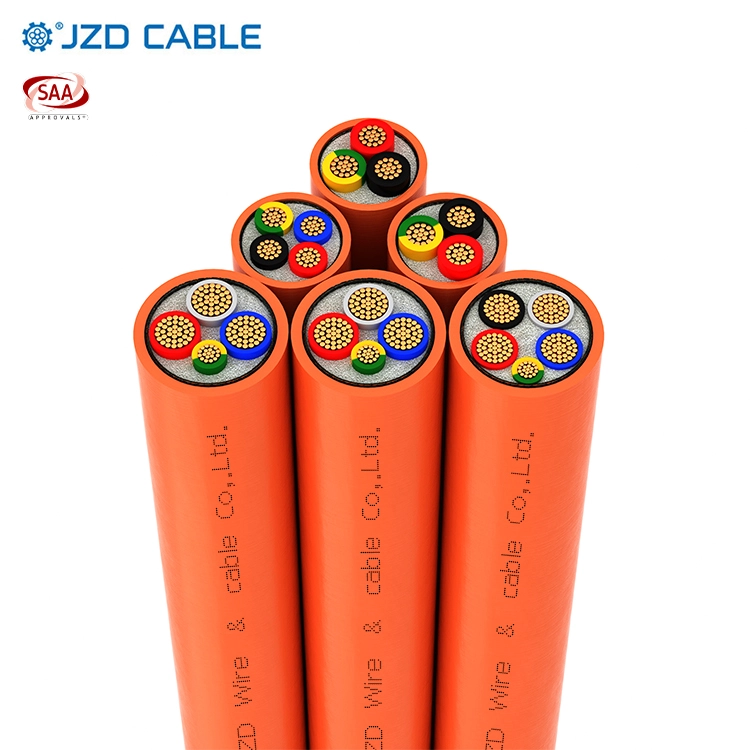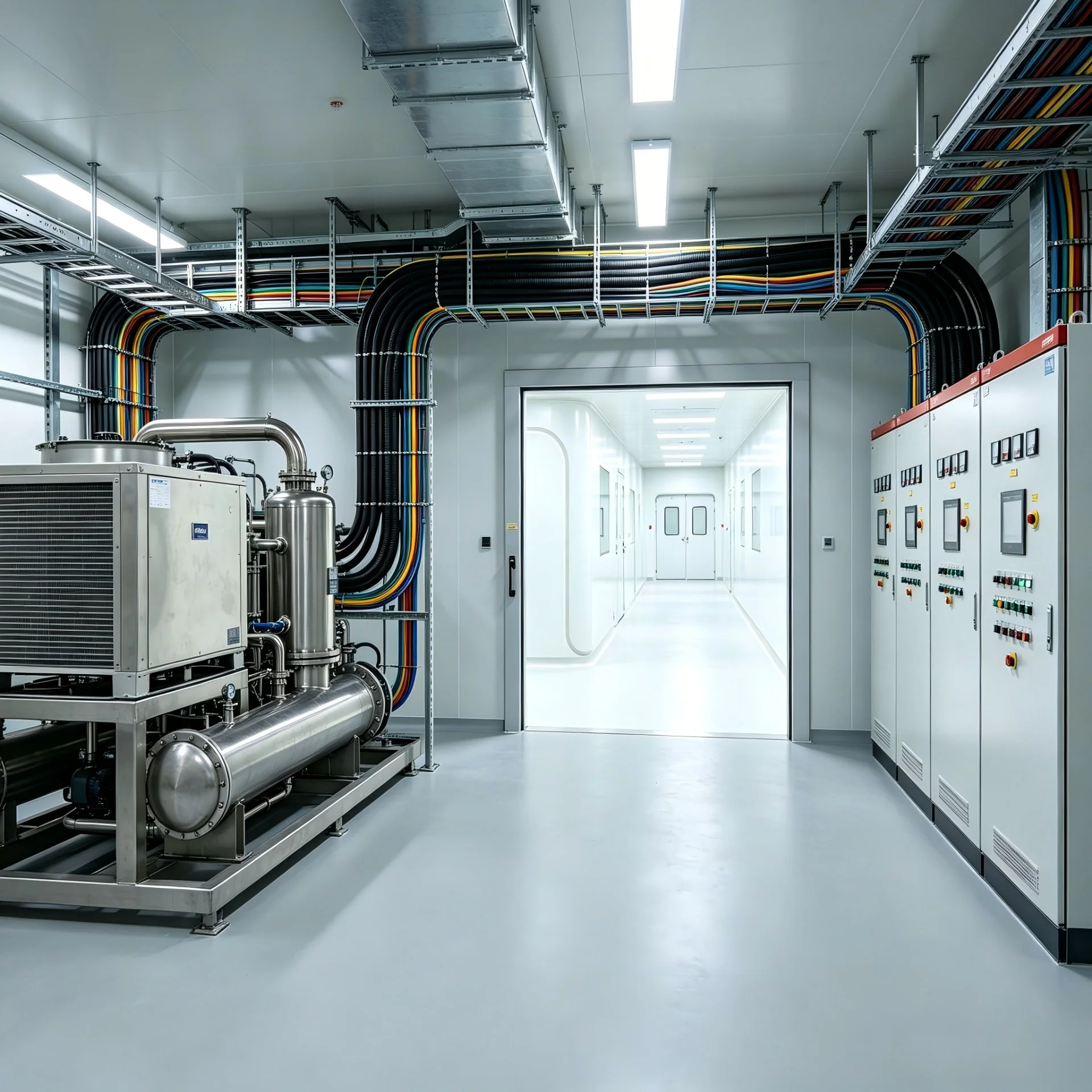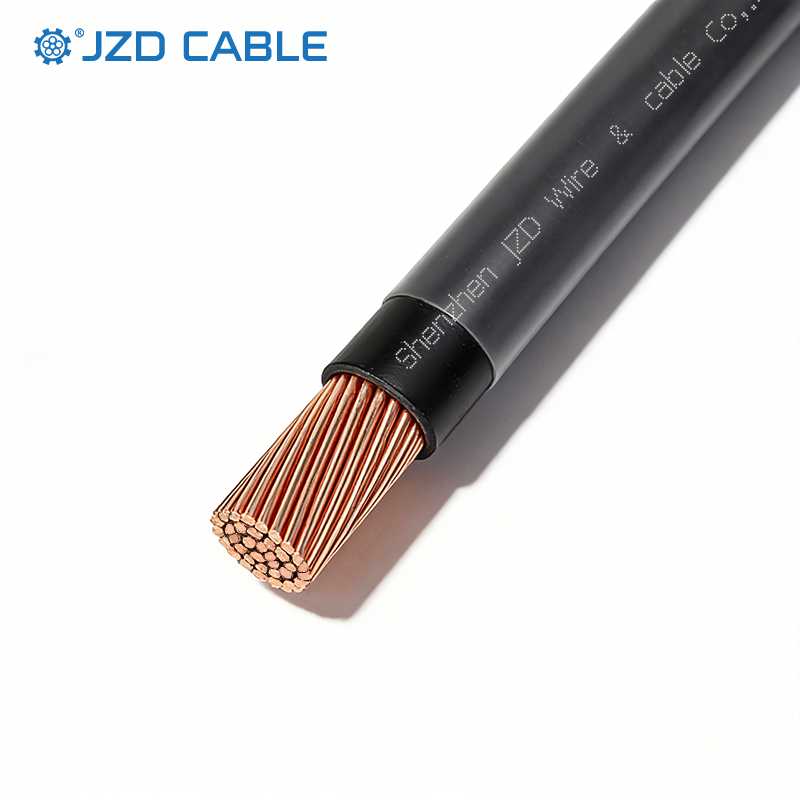


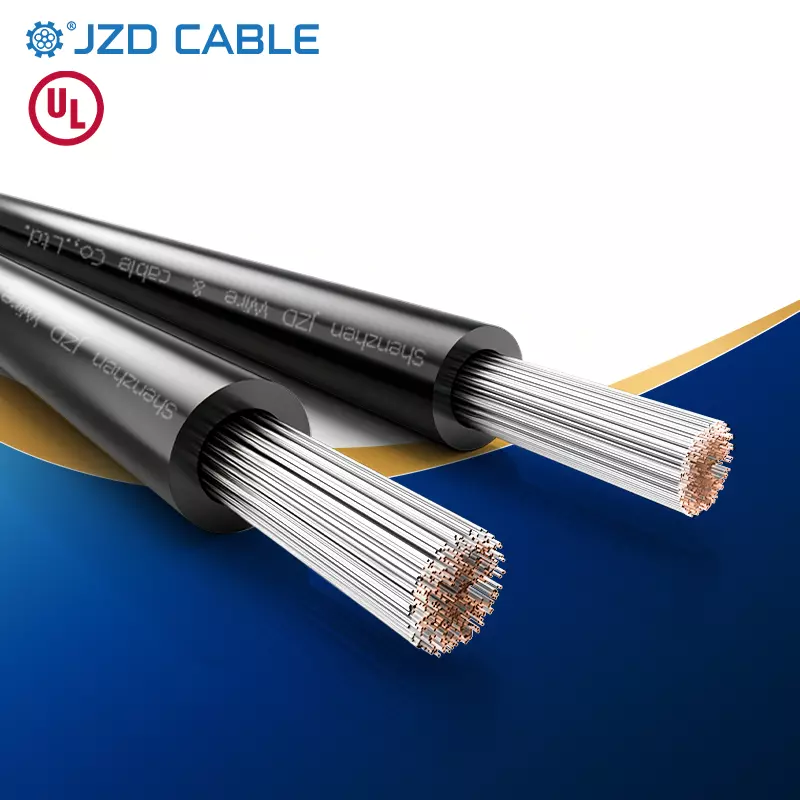
As North American energy storage deployments accelerate — from residential power walls to utility-scale containerized battery systems — one cable specification keeps appearing on every bill of materials: UL 10269. This single-core PVC-insulated AWM (Appliance Wiring Material), governed by UL 758, has become the de facto standard for energy storage system (ESS) DC-side internal wiring.
But why UL 10269? Why not the familiar UL 1015 (600V), or the PV-specific UL 4703? The answer lies in a unique combination of 1250V DC rating, 105°C thermal endurance, VW-1 flame retardancy, and a massive 30 AWG to 2000 kcmil size range — engineered precisely for the high-voltage DC bus architectures that define modern storage systems.
This guide breaks down exactly where and why UL 10269 earns its place in battery energy storage — from cell-to-module jumpers all the way to the PCS DC input.
What is UL 10269?
Per UL Product iQ (Subject 758, Style 10269) :
|
Parameter
|
Specification
|
|---|---|
|
Standard
|
UL 758 — Appliance Wiring Material
|
|
Style
|
10269 — Single conductor with extruded insulation
|
|
Voltage rating
|
1000V AC / 1250V DC
|
|
Temperature rating
|
80°C / 90°C / 105°C (105°C is the ESS-preferred grade)
|
|
Flame rating
|
Horizontal flame (VW-1 vertical flame commonly tested by manufacturers)
|
|
Optional oil resistance
|
Oil Resistant 60°C or 80°C
|
|
Conductor
|
30 AWG – 2000 kcmil, solid or stranded round
|
|
Conductor material
|
Bare copper or tinned copper (tinned recommended for ESS)
|
|
Insulation
|
PVC — graduated wall thickness from 20 mils (30–10 AWG) to 125 mils (1100–2000 kcmil)
|
|
Marking
|
“AWM 10269 [AWG] 1000V 105°C VW-1 [UL File No.]”
|
|
Use
|
Internal Wiring of Appliances; or Internal Wiring of Appliances where exposed to oil at ≤60°C or ≤80°C
|
📌 The key differentiator: 1250V DC rating. Standard UL 1015 tops out at 600V DC — wholly inadequate for modern ESS DC buses operating at 800–1000V DC. UL 10269 bridges this gap within the UL 758 AWM framework, making it the only PVC-insulated AWM Style purpose-built for high-voltage DC internal wiring .
Why ESS Demands UL 10269 — Four Irreplaceable Advantages
1. 1250V DC Rating Matches Modern ESS Architecture
Commercial and utility-scale ESS DC buses operate at 500–1000V DC (commonly 800V DC in latest designs). UL 1015’s 600V DC rating has no margin. UL 4703 (PV wire) is rated for outdoor exposed PV string wiring — not for internal equipment wiring. UL 10269’s 1250V DC rating provides:
- Adequate dielectric margin for 800–1000V DC buses
- Headroom for transient overvoltage events during charge/discharge cycling
- Compliance within the UL 758 AWM framework (NEC Article 705 recognizes AWM as ESS internal wiring)
2. 105°C Rating Withstands Battery Enclosure Heat
Battery enclosures generate significant heat during rapid charge/discharge. UL 10269’s 105°C continuous rating (with 80°C and 90°C options) ensures:
- Stable insulation integrity inside thermally stressed enclosures
- Compatibility with liquid-cooled ESS cabinets where ambient can reach 90°C+
- Longer service life than 60°C/80°C-rated alternatives
3. VW-1 Flame Retardancy for Thermal Runaway Defense
ESS fire risk is dominated by thermal runaway propagation. UL 10269’s VW-1 vertical flame rating (self-extinguishing within 60 seconds, no flaming droplets) provides a critical line of defense:
- Limits flame spread between battery modules
- Reduces the chance of cascade ignition
- Meets UL 9540A ESS fire safety test expectations for internal component flame behavior
4. Massive Size Range: 30 AWG to 2000 kcmil
From signal-level monitoring wires to 1000A+ main DC buses, UL 10269 covers every gauge in the ESS:
- 30 AWG – 16 AWG: BMS signal wiring, cell balancing, module internal jumpers
- 14 AWG – 4/0 AWG: Module-to-cluster interconnects, cluster internal wiring
- 250 kcmil – 1000 kcmil: Cluster-to-combiner and combiner-to-PCS DC main feeders
- 1100 kcmil – 2000 kcmil: Utility-scale ESS main DC buses
One Style. Every connection point. This is why ESS manufacturers standardize on UL 10269 across their entire product line.
Four Core Application Points in an Energy Storage System
UL 10269 appears at four critical DC-side connection points in a typical ESS architecture :
Point 1: Cell-to-Module Connection (Intra-Module Wiring)
Location: Inside battery modules — connecting individual cells in series/parallel configurations.
Requirements:
- Small gauge (typically 12, 14, 16 AWG)
- High flexibility for dense module packing
- Stranded tinned copper for oxidation resistance
- 105°C rating to survive module internal heat
UL 10269 specification: 12–16 AWG, stranded tinned copper, 105°C PVC, VW-1
✅ The fine-stranded construction and 105°C rating make UL 10269 ideal for the tight, heat-dense environment inside battery modules.
Point 2: Module-to-Cluster & Cluster Interconnect (Intra-Cabinet Wiring)
Location: Within the ESS cabinet — connecting multiple modules into battery clusters, and interconnecting clusters in parallel/series.
Requirements:
- Medium gauge (10 AWG – 4/0 AWG)
- 105°C rating for liquid-cooled cabinet environments
- VW-1 flame retardancy to limit thermal runaway propagation
- Flexible stranded conductor for cabinet routing
UL 10269 specification: 10 AWG – 4/0 AWG, stranded tinned copper, 105°C PVC, VW-1, optional oil-resistant PVC for hydraulic-cooled systems
✅ Real-world example: A Shenzhen ESS project used 10 AWG UL 10269 to wire LFP battery modules, with the 105°C rating matching the thermal profile of densely packed battery rooms .
Point 3: Cluster to DC Combiner Box (Cabinet Main Bus)
Location: From battery clusters to the DC combiner/junction box — the primary DC collection point.
Requirements:
- Large gauge (250 kcmil – 500 kcmil)
- 1250V DC rating to handle high-voltage DC bus
- 105°C rating for sustained high-current operation
- VW-1 flame retardancy
UL 10269 specification: 250–500 kcmil, stranded tinned copper, 105°C PVC, 1250V DC, VW-1
✅ This is where UL 10269’s 1250V DC rating becomes indispensable. Standard 600V-rated wires simply cannot be used here.
Point 4: DC Combiner to PCS (Power Conversion System) DC Input
Location: From the DC combiner box to the PCS inverter DC input terminals.
Requirements:
- Large gauge (4/0 AWG – 1000 kcmil+)
- 1250V DC rating matching the ESS DC bus voltage
- High current carrying capacity for continuous charge/discharge cycles
- VW-1 flame retardancy
- Flexible stranded conductor for PCS cabinet wiring
UL 10269 specification: 4/0 AWG – 1000 kcmil, stranded tinned copper, 105°C PVC, 1250V DC, VW-1
✅ UL 10269 replaces UL 1015 at this critical junction — providing the necessary DC voltage headroom and superior current handling that high-power PCS units demand.
UL 10269 vs Alternatives in ESS Applications
|
Wire Type
|
Voltage
|
Suitability for ESS DC-Side
|
Verdict
|
|---|---|---|---|
|
UL 1015
|
600V AC/DC
|
Insufficient for 800–1000V DC ESS buses
|
❌ Inadequate voltage rating
|
|
UL 1007
|
300V AC/DC
|
Far too low for ESS power circuits
|
❌ Signal-level only
|
|
UL 4703 (PV Wire)
|
1000V DC
|
Designed for outdoor PV string wiring — not for internal equipment wiring per UL 758 scope
|
❌ Wrong application framework
|
|
UL 10269
|
1000V AC / 1250V DC
|
Engineered for ESS internal DC wiring within UL 758 AWM
|
✅ Purpose-built for ESS
|
|
UL 3817 / UL 3640
|
1000V+ DC
|
XLPE/silicone high-temp ESS cables — complementary for extreme environments
|
△ Higher cost, use where >105°C or extreme flexibility needed
|
|
UL 11627
|
1000V DC
|
ESS-specific AWM — alternative to 10269 with different insulation
|
△ Comparable, project-specific choice
|
Bottom line: For standard ESS DC-side internal wiring at ≤105°C, UL 10269 is the optimal balance of voltage rating, thermal performance, flame safety, and cost-effectiveness. For extreme environments (>105°C, severe flexing, outdoor exposure), XLPE or silicone ESS-dedicated styles (UL 3817, UL 3640) complement rather than replace UL 10269 .
Technical Advantages That Matter for ESS Engineers
1. Low Eccentricity Extrusion — Uniform Dielectric Strength
UL 10269’s PVC insulation is extruded with tight concentricity control (graduated wall thickness from 20 mils to 125 mils depending on gauge). This ensures:
- Uniform electric field distribution — no localized stress points
- No partial discharge under sustained 1250V DC
- Consistent dielectric breakdown performance across the entire conductor length
2. Optional Oil-Resistant PVC Formulation
ESS cabinets with liquid cooling systems face hydraulic fluid exposure. UL 10269’s optional oil-resistant PVC (passing UL oil immersion at 60°C or 80°C) prevents:
- Jacket swelling and softening from coolant contact
- Insulation degradation in hydraulic-cooled environments
- Premature failure in liquid-cooled ESS architectures
3. Tinned Copper for Long-Term Reliability
While UL 10269 permits bare copper, tinned copper is strongly recommended for ESS applications:
- Prevents oxidation in humid battery enclosure environments
- Ensures stable connection resistance over decades of thermal cycling
- Facilitates reliable crimp termination at combiner boxes and PCS terminals
4. Wide Temperature Range: –15°C to +105°C
ESS deployments span from desert solar-plus-storage (ambient >45°C, enclosure internal >90°C) to arctic microgrids (ambient –40°C). UL 10269’s –15°C to +105°C operational range (with installation down to –40°C for cold-flex variants) covers the vast majority of global ESS deployments .
5. VW-1 Flame — Critical for ESS Fire Safety
With thermal runaway as the dominant ESS failure mode, VW-1 flame retardancy provides:
- Self-extinguishment within 60 seconds of ignition source removal
- No flaming droplet propagation
- Alignment with UL 9540A ESS fire safety test expectations
Sizing Reference for ESS Applications
|
ESS Connection Point
|
Typical Current
|
Recommended UL 10269 Gauge
|
|---|---|---|
|
Cell-to-module jumper
|
10–50A
|
12–16 AWG
|
|
Module internal wiring
|
50–150A
|
10–6 AWG
|
|
Cluster interconnect (intra-cabinet)
|
150–300A
|
4 AWG – 4/0 AWG
|
|
Cluster to DC combiner
|
300–600A
|
250–500 kcmil
|
|
DC combiner to PCS
|
600–1200A
|
500 kcmil – 1000 kcmil
|
|
Utility-scale main DC bus
|
1200A+
|
1100–2000 kcmil
|
Note: Actual gauge selection must account for bundling derating per NEC Article 705.35, ambient temperature correction, and manufacturer-specific requirements.
Installation & Compliance Notes
UL 758 AWM Status: UL 10269 is a UL Recognized Component (not a UL Listed stand-alone cable). It must be used inside UL Listed ESS equipment. The ESS enclosure itself carries the UL 9540 Listing; UL 10269 provides the compliant internal wiring component .
NEC Compliance:
- NEC Article 705 (Energy Storage Systems): Recognizes AWM-style wiring for ESS internal connections
- NEC Article 310: Ampacity tables apply for conductor sizing
- NEC Article 690.74: For PV-connected ESS, DC wiring requirements apply
CSA Compliance (Canada): UL 10269 as an AWM is recognized under CSA C22.2 No. 210 for Canadian ESS deployments.
Marking Requirements: Every UL 10269 conductor must be surface-printed with:
AWM 10269 [AWG] 1000V 105°C VW-1 [UL File No.]Termination: Standard copper lugs (for bare copper) or tinned copper lugs (for tinned copper). No special bi-metal requirements (unlike aluminum). Torque to manufacturer specifications.
Frequently Asked Questions
Q: Can UL 10269 be used for outdoor ESS wiring?
A: UL 10269 is an AWM for internal equipment wiring per UL 758 scope. For outdoor exposed runs (e.g., between containers), use UV-rated PV wire (UL 4703) or LSZH ESS cables. UL 10269 is appropriate inside weatherproof enclosures and combiner boxes .
Q: Is UL 10269 suitable for DC voltages above 1250V?
A: No. UL 10269’s maximum rating is 1250V DC. For higher-voltage ESS architectures (1500V DC systems emerging in utility-scale), XLPE-insulated ESS-dedicated cables (UL 3817, UL 3640) with 1500V+ DC ratings are required .
Q: Why not just use UL 1015 for ESS?
A: UL 1015 is rated only 600V DC — wholly inadequate for 800–1000V DC ESS buses. Using it would be a code violation and safety hazard. UL 10269’s 1250V DC rating is the minimum compliant choice .
Q: Can UL 10269 replace UL 4703 in PV-connected ESS?
A: No. UL 4703 is the correct wire for outdoor PV string wiring exposed to UV and weather. UL 10269 is for internal ESS equipment wiring. A typical PV-ESS system uses UL 4703 from the PV array to the combiner, then UL 10269 from the combiner into the ESS enclosure and PCS .
Q: What temperature rating should I specify for ESS?
A: 105°C is strongly recommended. ESS enclosures run hot during rapid charge/discharge; the 105°C rating provides necessary thermal headroom. 90°C is acceptable for lower-density residential systems; 80°C is insufficient for most modern ESS.
Q: Bare copper or tinned copper for ESS?
A: Tinned copper is strongly recommended. ESS enclosures experience humidity and thermal cycling that accelerates bare copper oxidation. Tinned copper maintains stable connection resistance over the 10–20 year expected ESS lifespan.
Q: Does UL 10269 need to be in conduit inside the ESS cabinet?
A: Generally no — UL 10269 as AWM is rated for internal equipment wiring and is typically routed in cable trays, tie-wrapped to structural members, or routed through internal conduit for physical protection in high-traffic areas. Follow the ESS manufacturer’s internal routing specifications and UL 9540 requirements.
Q: Can UL 10269 be used for the AC output side of the PCS?
A: For AC output (typically 480V AC or 600V AC), UL 1015 (600V) or XHHW-2 would be more appropriate. UL 10269’s advantage is specifically its DC voltage rating. Use the right tool for each side of the PCS.
JZD Cable UL 10269 Product Range for Energy Storage
At JZD Cable, we manufacture UL 10269 to full UL 758 compliance, optimized for ESS applications:
Standard UL 10269 (Available Now):
- Gauges: 30 AWG – 2000 kcmil (full range)
- Conductor: Bare copper or tinned copper (recommended for ESS)
- Stranding: Solid (30–10 AWG), stranded Class B (8 AWG+), fine-stranded available
- Temperature: 80°C / 90°C / 105°C (ESS-preferred)
- Voltage: 1000V AC / 1250V DC
- Flame: VW-1 vertical flame (per manufacturer test)
- Optional: Oil-resistant PVC (60°C or 80°C oil immersion)
- Colors: Black, Red, Blue, Yellow, Green, White, Orange — full spectrum for DC polarity identification
- Insulation: Graduated wall thickness per UL 758 (20 mils to 125 mils)
- Marking: “AWM 10269 [AWG] 1000V 105°C VW-1 [JZD UL File No.]”
ESS-Optimized Configurations:
|
Application
|
Recommended Spec
|
|---|---|
|
Cell-to-module jumper
|
12–16 AWG, tinned Cu, 105°C, fine-strand
|
|
Module interconnect
|
10–6 AWG, tinned Cu, 105°C, stranded
|
|
Cluster interconnect
|
4 AWG – 4/0 AWG, tinned Cu, 105°C
|
|
Cluster to combiner
|
250–500 kcmil, tinned Cu, 105°C
|
|
Combiner to PCS
|
4/0 AWG – 1000 kcmil, tinned Cu, 105°C
|
|
Liquid-cooled ESS
|
Add oil-resistant PVC option
|
Compliance & Documentation:
- UL 758 Listed (UL File Number on request)
- Tested to UL 1581 (VW-1 flame, dielectric, aging, cold bend, oil immersion)
- RoHS & REACH compliant
- CSA C22.2 No. 210 available for Canadian ESS projects
- Mill test reports, UL recognition letters, and conformance certificates provided
- Cut-to-length service, custom printing, and reel packaging
We serve ESS manufacturers, PCS/inverter OEMs, BMS suppliers, and utility-scale storage integrators worldwide with bilingual (EN/ES/FR) documentation and fast lead times.
📩 Need help specifying UL 10269 for your energy storage system?
Contact the JZD team at https://jzdcable.com/contact-us/ — tell us your ESS architecture (residential / C&I / utility-scale), DC bus voltage, connection point (cell/module/cluster/combiner/PCS), current rating, and environmental conditions (ambient temperature, liquid cooling, oil exposure), and we’ll recommend the optimum UL 10269 gauge, temperature grade, and conductor type.